Loading...
Gildo vs Julius Caesar
Julius Caesar leads by 37.9 pts · 2 figures compared
…
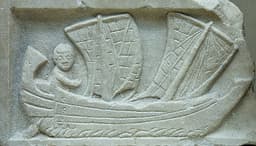
Gildo
General · Ancient
44.9Total

Julius Caesar
General · Ancient
82.8Total
Basic Information
Born
350
-100
Died
398
-44
Era
Ancient
Ancient
Nationality
Western Roman Empire
Roman Republic
Occupation
General
General
Civilization
Western
Western
Score Comparison
Military (10%)
45.0
88.0
Political (20%)
35.0
78.0
Influence (20%)
45.5
85.0
Legacy (20%)
34.2
82.0
Leadership (15%)
68.0
80.0
Strategy (15%)
50.0
85.0
TOTAL
44.9
82.8
Gildo — Complete Timeline
397 AD
Rebelled as Count of AfricaWar◆ Major
Gildo, a Berber prince and Roman Count of Africa, rebelled against the Western Roman Emperor Honorius. He withheld grain shipments to Rome, threatening the city's food supply, and declared allegiance to the Eastern Empire.
RevoltRoman EmpireNorth Africa
Impact: regionaldestructive
398 AD
Defeated and Killed by His BrotherWar◆ Major
The Western Roman general Stilicho sent an army under Gildo's own brother, Maseezel, to suppress the rebellion. Maseezel defeated Gildo's forces, and Gildo was captured and executed, ending the revolt.
BattleRoman EmpireNorth Africa
Impact: regionaltragic
Julius Caesar — Complete Timeline
58 BC
Gallic WarsWar◆ Major
Caesar, as proconsul of Gaul, launched a series of campaigns that conquered all of Gaul (modern France, Belgium, and parts of Switzerland). He fought numerous battles, including against the Helvetii, the Belgae, and the Gallic chieftain Vercingetorix. The wars brought immense wealth and a loyal army to Caesar.
Gallic WarsConquestRoman Expansion
Impact: regional
49 BC
Crossing the RubiconPolitical Action◆ Major
Caesar led Legio XIII across the Rubicon River into Italy, defying the Roman Senate's order to disband his army. This act triggered a civil war against Pompey and the Optimates, ultimately leading to Caesar's dictatorship and the end of the Roman Republic.
Roman Civil WarEnd of RepublicPower Struggle
Impact: global
48 BC
Battle of PharsalusWar◆ Major
Caesar's outnumbered army defeated the larger forces of Pompey the Great at Pharsalus in Greece. Caesar's tactical use of a reserve line to counter Pompey's cavalry charge proved decisive. Pompey fled to Egypt, where he was assassinated, leaving Caesar as the undisputed master of the Roman world.
Roman Civil WarBattleDecisive Victory
Impact: regional
44 BC
Appointment as Dictator for LifePolitical Action◆ Major
The Roman Senate appointed Caesar dictator perpetuo (dictator for life), granting him unprecedented personal power. This move concentrated military, legislative, and judicial authority in one person, effectively ending the Roman Republic's traditional system of checks and balances and alarming many senators.
DictatorshipEnd of RepublicPower Consolidation
Impact: regionaldestructive
Assassination on the Ides of MarchPolitical Action◆ Major
A group of Roman senators, led by Marcus Junius Brutus and Gaius Cassius Longinus, stabbed Caesar to death at a meeting of the Senate in the Theatre of Pompey. The assassination was intended to restore the Republic, but instead triggered another civil war that led to the rise of the Roman Empire.
AssassinationRoman PoliticsEnd of Republic
Impact: globaldestructive
Expert Analysis
gildo-vs-julius-caesar
# The General and the Rebel: Two Paths from Rome’s Twilight
On a January morning in 49 BCE, a man in a general’s cloak stood on the banks of a small river in northern Italy. The Rubicon was little more than a stream, but crossing it meant civil war—a direct challenge to the Senate’s authority. Julius Caesar hesitated, then spoke: “The die is cast.” He crossed, and the Roman Republic never recovered.
Four and a half centuries later, another Roman general faced a different kind of decision. Gildo, a Berber prince who had risen to become Count of Africa, sat in his palace in Carthage in 397 CE, contemplating the grain ships that had stopped sailing for Rome. He too would cross a line, but his rebellion would end not in empire, but in a lonely death at the hands of his own brother. What made these two men, both Roman generals, follow such divergent arcs?
Origins
Caesar was born into the chaos of the late Republic, a world of senatorial feuds, slave revolts, and civil wars. His family, the Julii, claimed descent from the goddess Venus, but they were not among the elite. Young Caesar learned early that in Rome, glory was won through the sword and the tongue. He studied rhetoric in Rhodes, served in the military in Asia Minor, and watched his uncle Marius wage war against Sulla. The lesson was clear: power came to those who seized it.
Gildo’s world was already fading. Born around 350 CE in North Africa, he was the son of Nubel, a powerful Berber chieftain who had served Rome. The Western Empire was hemorrhaging provinces, beset by barbarian migrations and economic collapse. Gildo’s brother Firmus had rebelled against Rome and been crushed. Gildo chose the opposite path—loyalty to the emperor. He rose through the Roman military system, becoming Count of Africa, the richest province in the West. But loyalty in a dying empire was a fragile thing.
Rise to Power
Caesar’s ascent was a masterclass in calculated risk. He borrowed enormous sums to fund public spectacles, winning the love of the Roman mob. He formed the First Triumvirate with Pompey and Crassus, then secured command of Gaul. In eight years of brutal campaigning, he conquered a territory larger than Italy itself, wrote his own propaganda in the *Commentaries*, and built an army that worshipped him. Every step was deliberate, every gamble measured.
Gildo’s rise was quieter, more bureaucratic. He inherited his brother’s position after Firmus’s rebellion failed, likely through a combination of Roman patronage and Berber diplomacy. He controlled Africa’s grain—the lifeblood of Rome. For decades, he played the loyal servant, sending shiploads of wheat to the Eternal City while building his own power base among the Berber tribes. His authority was real but borrowed, resting on Roman titles rather than personal conquest.
Leadership & Governance
Caesar governed with a blend of ruthlessness and magnanimity. After defeating his enemies, he pardoned them—the famous *clementia Caesaris*. He reformed the calendar, granted citizenship to Gauls, initiated public works, and centralized the Republic’s chaotic finances. As dictator, he ruled alone, but he never stopped thinking about the empire’s structure. His military genius was inseparable from his political vision: every campaign served a larger purpose.
Gildo’s governance was narrower. He ruled Africa as a semi-autonomous satrap, collecting taxes and managing grain shipments. His rebellion in 397 was not a bid for empire but a protest—against the weak Emperor Honorius and the powerful general Stilicho, who had stripped Africa of troops to fight barbarians in Italy. Gildo’s strategy was simple: withhold grain, starve Rome into submission. But he had no grand vision beyond his own province. He was a local strongman in a global crisis.
Triumph & Tragedy
Caesar’s greatest triumph was also his tragedy. He defeated Pompey at Pharsalus in 48 BCE, crushed the remnants of the Senate’s forces, and returned to Rome as master of the known world. But his success bred fear. On the Ides of March, 44 BCE, a group of senators stabbed him twenty-three times. His last words, according to legend, were to his friend Brutus: “You too, my child?” He died believing he had saved Rome, but his assassination plunged the Republic into another civil war.
Gildo’s tragedy was smaller but no less bitter. His rebellion lasted barely a year. Stilicho sent an army under Gildo’s own brother, Maseezel, to suppress him. The two brothers met in battle near Theveste in 398. Gildo’s forces collapsed, and he fled. Maseezel pursued, captured him, and executed him—or, as some accounts say, Gildo took his own life. The man who had controlled Rome’s breadbasket died alone, betrayed by blood.
Character & Destiny
Caesar was driven by an insatiable ambition, but also by a genuine belief that he alone could save Rome. He was arrogant, brilliant, and generous to a fault. His personality shaped every decision: the risky crossing of the Rubicon, the clemency to enemies, the refusal to listen to warnings of assassination. He died because he could not imagine a world where he was not in control.
Gildo was more cautious, more provincial. He rebelled not out of grand ambition but out of grievance—a sense that Rome had abandoned Africa. His character was shaped by survival in a collapsing system. He lacked Caesar’s vision because the empire itself had lost its vision. In a world of shrinking horizons, Gildo’s rebellion was a desperate act, not a calculated bid for power.
Legacy
Caesar’s legacy is immortal. His name became a title—*Caesar* for emperor, *Kaiser* in German, *Tsar* in Russian. His reforms shaped Western governance, his writings shaped Western literature, and his assassination shaped Western political thought. He is remembered as both a tyrant and a visionary, a man who destroyed the Republic to save it.
Gildo is barely remembered. His rebellion is a footnote in the decline of the Western Roman Empire, a symptom of its death throes. He is known mainly to historians of late antiquity and to the Berber people, who remember him as a symbol of resistance. His legacy is a cautionary tale: even the richest province could not save a dying empire, and even a powerful general could not rise above his time.
Conclusion
Standing on the banks of the Rubicon, Caesar saw an empire waiting to be born. Gildo, staring across the Mediterranean from Carthage, saw only a world that had already died. Their differences were not just personal—they were historical. Caesar lived in a time when the Republic, for all its flaws, still had the energy to transform itself into something new. Gildo lived in a time when the West was unraveling, and no amount of grain could feed a corpse. The same river of Roman ambition flowed through both men, but one crossed it into legend, the other drowned in it.
Rankings
🥇
Julius CaesarLeader
Mil: 88.0Pol: 78.0Inf: 85.0
82.8
🥈
Gildo
Mil: 45.0Pol: 35.0Inf: 45.5
44.9
+37.9 behind
How This Comparison Works
Algorithm
Each figure is scored on 6 dimensions (0—100 scale) based on structured historical data: Military (10%), Political (20%), Influence (20%), Legacy (20%), Leadership (15%), Strategy (15%). The weighted total produces the final ranking.
Data Sources
Scores are computed from structured sub-indicators in the database. Scale factors adjust for era (Ancient ×0.85, Modern ×1.0) and civilization size (Eastern ×1.05, Other ×0.80) to account for differences in population and military scale.
Maximum 3 Figures
Comparisons are limited to 2—3 figures to ensure readability and statistical meaningfulness.
Error Margins
±5 points per dimension — Sub-scores are derived from historical records with inherent uncertainty. Two figures within 5 points on a dimension should be considered roughly equivalent in that area.
Total Score Accuracy
±3 points overall — The weighted combination of 6 dimensions produces a total score with approximately ±3 points of uncertainty. Differences of less than 3 points are not statistically significant— the figures are effectively tied.
Known Limitations
- Historical records are incomplete and uneven across civilizations
- Figures from oral-tradition societies may be underrepresented
- Occupation labels can misclassify multi-role figures
- Scores measure capability and impact, not moral character
- Quantitative scoring is a comparison tool, not absolute truth
Capability Radar
Military (10%) — Battles & Warfare
Battles
15
95
Win Rate
10
92
Expansion
10
97
Political (20%) — Governance & Reform
Reform
5
90
Diplomacy
10
85
Economy
5
82
Influence (20%) — Cultural & Global Reach
Cultural
5
88
Global
5
94
Legacy (20%) — Historical Impact
Historical
10
95
Longevity
5
96
Leadership (15%) — Power & Stability
Tenure
20
75
Stability
5
60
Strategy (15%) — Tactics & Innovation
Strategy
15
94
Tactics
20
96
Reform
5
88
Similar Comparisons
Comments & Discussion
No comments yet. Be the first to share your thoughts!