Loading...
Droupadi Murmu vs Moro Aldo
Moro Aldo leads by 4.3 pts · 2 figures compared
…
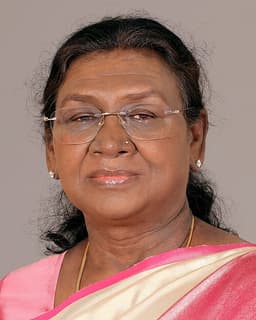
Droupadi Murmu
Politician · Modern
45.8Total

Moro Aldo
Politician · Modern
50.1Total
Basic Information
Born
1958
1916
Died
—
1978
Era
Modern
Modern
Nationality
India
Italy
Occupation
Politician
Politician
Civilization
Indian
Western
Score Comparison
Military (10%)
21.4
48.6
Political (20%)
36.5
48.0
Influence (20%)
56.4
54.1
Legacy (20%)
42.5
47.5
Leadership (15%)
62.2
55.3
Strategy (15%)
41.1
43.0
TOTAL
45.8
50.1
Droupadi Murmu — Complete Timeline
2000 AD
Served as a minister in the Odisha governmentPolitical Action
Murmu served as a minister in the Odisha state government, holding portfolios including Fisheries and Animal Resources. She was one of the few tribal women in the state cabinet.
State MinisterOdishaTribal Politics
Impact: regionalconstructive
Elected to the Odisha Legislative AssemblyPolitical Action
Murmu was elected to the Odisha Legislative Assembly from the Rairangpur constituency. She served two terms, focusing on development issues in her tribal-dominated constituency.
MLAOdisha AssemblyTribal Constituency
constructive
2015 AD
Served as Governor of JharkhandPolitical Action
Murmu was appointed Governor of Jharkhand, the first woman to hold the office in the state. She served until her election as President, focusing on tribal welfare and education.
GovernorJharkhandTribal Welfare
Impact: regionalconstructive
2022 AD
Elected President of IndiaPolitical Action◆ Major
Murmu was elected as the 15th President of India, becoming the first tribal person and the second woman to hold the office. Her election was hailed as a milestone for tribal representation and gender equality.
PresidencyTribal RepresentationGender Equality
Impact: nationalconstructive
Moro Aldo — Complete Timeline
1963 AD
Formation of the Center-Left GovernmentPolitical Action◆ Major
Moro became prime minister in 1963, leading the first center-left coalition government in Italy, which included the Socialist Party. His government implemented social reforms, including the nationalization of the electricity industry and improvements in education and housing, marking a shift in Italian politics.
CoalitionSocial ReformItaly
Impact: nationalconstructive
1976 AD
Historic Compromise with the Communist PartyPolitical Action◆ Major
As prime minister, Aldo Moro pursued the 'Historic Compromise', a political strategy to bring the Italian Communist Party (PCI) into the governing majority. This aimed to stabilize Italy's fragile democracy and address economic challenges, but it faced strong opposition from the US and conservative factions, and ultimately failed to fully integrate the PCI.
CoalitionCommunismItalian Politics
Impact: nationalconstructive
1978 AD
Kidnapping by the Red BrigadesPolitical Action
On March 16, 1978, former Prime Minister Aldo Moro was kidnapped in Rome by the left-wing terrorist group Red Brigades. His five bodyguards were killed in the attack. The kidnapping plunged Italy into a national crisis, with the government refusing to negotiate with the terrorists.
KidnappingTerrorismPolitical Violence
Impact: nationaltragic
Assassination of Aldo MoroPolitical Action
After 55 days of captivity, Aldo Moro was murdered by the Red Brigades on May 9, 1978. His body was found in the trunk of a car in central Rome. The assassination shocked Italy and the world, leading to a crackdown on terrorism and a lasting impact on Italian politics.
AssassinationTerrorismPolitical Violence
Impact: nationaltragic
Expert Analysis
Origins
Droupadi Murmu was born on June 20, 1958, in a Santhal tribal family in Odisha, India. Her father, Biranchi Narayan Tudu, was a farmer. She studied at the local government school and later earned a Bachelor of Arts degree from Ramadevi Women's College in Bhubaneswar. Her early life was marked by poverty and hardship, including the deaths of her mother and brother during her childhood.
Aldo Moro was born on September 23, 1916, in Maglie, Apulia, Italy, into a middle-class family. His father was a school inspector. Moro excelled academically, earning a law degree from the University of Bari and later a doctorate in law. He became a professor of criminal law at the University of Bari and later at the University of Rome. His intellectual background shaped his political approach.
Rise to Power
Murmu entered politics in 1997 when she was elected as a councilor in the Rairangpur Nagar Panchayat. She joined the Bharatiya Janata Party (BJP) and was elected to the Odisha Legislative Assembly in 2000 and again in 2004. As a minister in the Odisha government, she held portfolios including Fisheries and Animal Resources, Transport, and Commerce. Her rise was steady but not meteoric; she gained recognition for her work in tribal welfare. In 2015, she was appointed Governor of Jharkhand, the first woman to hold that office. Her tenure as governor was largely ceremonial but highlighted her integrity. In 2022, she was elected President of India, defeating opposition candidate Yashwant Sinha with 64.03% of the electoral college votes.
Aldo Moro rose through the ranks of the Christian Democracy party. He was elected to the Constituent Assembly in 1946 and became a deputy in 1948. His intellectual prowess and moderate stance made him a key figure in the party. He served as Minister of Justice and Minister of Education before becoming Prime Minister in 1963. His first government was a center-left coalition with the Socialist Party, a major shift in Italian politics. Moro's political skill allowed him to navigate factional conflicts within his party and with the opposition.
Leadership & Governance
Murmu's leadership is characterized by her symbolic role as President of India. The presidency is largely ceremonial, with executive power held by the Prime Minister. However, she used her position to advocate for tribal rights and women's empowerment. She also emphasized education and environmental conservation. Her governance style is inclusive and consultative, reflecting her background as a tribal leader. She has limited direct impact on policy but serves as a moral authority.
Aldo Moro's leadership was more hands-on. As Prime Minister, he pursued the 'Historic Compromise' with the Italian Communist Party (PCI), aiming to integrate them into the governing majority to ensure political stability. This strategy was controversial but demonstrated his pragmatic approach. He also implemented social reforms, including the nationalization of the electricity industry and the establishment of the regions system. His governance was marked by coalition-building and negotiation, earning him a reputation as a master of political compromise.
Triumph & Tragedy
Murmu's greatest triumph is her election as the first tribal President of India, a milestone for indigenous representation. She also served as Governor of Jharkhand, where she focused on tribal welfare. Her failures are less evident due to her largely ceremonial role, but critics point to her lack of influence on national policy. She has faced personal tragedies, including the deaths of her husband and two sons.
Aldo Moro's greatest success was the formation of the center-left government and the Historic Compromise, which temporarily stabilized Italian politics. However, his greatest tragedy was his kidnapping and assassination by the Red Brigades in 1978. His murder shocked Italy and ended the possibility of PCI inclusion in government for years. Moro's failure to anticipate the security threat or to negotiate effectively with the terrorists is often criticized.
Character & Destiny
Murmu is described as humble, resilient, and principled. Her personal tragedies have shaped her empathy and determination. She often speaks about the importance of education and self-reliance. Her character aligns with her destiny as a symbolic figure of progress for marginalized communities.
Aldo Moro was known for his intellectualism, patience, and strategic thinking. He was a pragmatist who believed in dialogue and compromise. His character, however, also made him appear indecisive at times. His destiny was sealed by the violent political climate of 1970s Italy, where his openness to the Communists made him a target. Historian Sergio Romano noted that Moro's willingness to negotiate with the Red Brigades during his captivity reflected his lifelong belief in dialogue, but it ultimately failed.
Legacy
Murmu's legacy is still forming, but she is already a symbol of tribal empowerment and women's leadership in India. Her presidency has inspired many from marginalized communities. In terms of policy, her impact is limited, but her symbolic importance is significant. She scored 42.5 in legacy.
Aldo Moro's legacy is complex. He is remembered as a martyr for democracy and a victim of terrorism. His Historic Compromise influenced Italian politics for decades, though it ultimately failed. His death led to a crackdown on terrorism and a shift toward more security-oriented policies. Moro's legacy score is 47.5, slightly higher than Murmu's.
Conclusion
Aldo Moro had a greater impact than Droupadi Murmu. His political actions directly shaped Italian governance during a turbulent period, and his tragic death had profound consequences. Murmu's role, while symbolically significant, lacks the direct policy influence that Moro wielded. Moro's total score of 50.1 surpasses Murmu's 45.8, reflecting his greater historical weight. However, Murmu's legacy as a trailblazer for tribal representation may grow over time.
Rankings
🥇
Moro AldoLeader
Mil: 48.6Pol: 48.0Inf: 54.1
50.1
🥈
Droupadi Murmu
Mil: 21.4Pol: 36.5Inf: 56.4
45.8
+4.3 behind
How This Comparison Works
Algorithm
Each figure is scored on 6 dimensions (0—100 scale) based on structured historical data: Military (10%), Political (20%), Influence (20%), Legacy (20%), Leadership (15%), Strategy (15%). The weighted total produces the final ranking.
Data Sources
Scores are computed from structured sub-indicators in the database. Scale factors adjust for era (Ancient ×0.85, Modern ×1.0) and civilization size (Eastern ×1.05, Other ×0.80) to account for differences in population and military scale.
Maximum 3 Figures
Comparisons are limited to 2—3 figures to ensure readability and statistical meaningfulness.
Error Margins
±5 points per dimension — Sub-scores are derived from historical records with inherent uncertainty. Two figures within 5 points on a dimension should be considered roughly equivalent in that area.
Total Score Accuracy
±3 points overall — The weighted combination of 6 dimensions produces a total score with approximately ±3 points of uncertainty. Differences of less than 3 points are not statistically significant— the figures are effectively tied.
Known Limitations
- Historical records are incomplete and uneven across civilizations
- Figures from oral-tradition societies may be underrepresented
- Occupation labels can misclassify multi-role figures
- Scores measure capability and impact, not moral character
- Quantitative scoring is a comparison tool, not absolute truth
Capability Radar
Military (10%) — Battles & Warfare
Battles
25
31
Win Rate
27
31
Expansion
28
36
Political (20%) — Governance & Reform
Reform
30
40
Diplomacy
30
35
Economy
20
30
Influence (20%) — Cultural & Global Reach
Cultural
40
25
Global
30
30
Legacy (20%) — Historical Impact
Historical
35
45
Longevity
20
30
Leadership (15%) — Power & Stability
Tenure
25
30
Stability
35
20
Strategy (15%) — Tactics & Innovation
Strategy
34
40
Tactics
38
43
Reform
39
42
Similar Comparisons
Comments & Discussion
No comments yet. Be the first to share your thoughts!