Loading...
Droupadi Murmu vs Roh Moo-hyun
Roh Moo-hyun leads by 6.2 pts · 2 figures compared
…
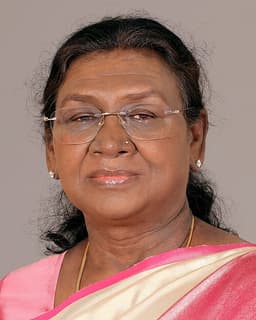
Droupadi Murmu
Politician · Modern
45.8Total

Roh Moo-hyun
Politician · Modern
52.0Total
Basic Information
Born
1958
1946
Died
—
—
Era
Modern
Modern
Nationality
India
Korea
Occupation
Politician
Politician
Civilization
Indian
Eastern
Score Comparison
Military (10%)
21.4
15.7
Political (20%)
36.5
65.0
Influence (20%)
56.4
55.0
Legacy (20%)
42.5
50.0
Leadership (15%)
62.2
72.0
Strategy (15%)
41.1
36.8
TOTAL
45.8
52.0
Droupadi Murmu — Complete Timeline
2000 AD
Served as a minister in the Odisha governmentPolitical Action
Murmu served as a minister in the Odisha state government, holding portfolios including Fisheries and Animal Resources. She was one of the few tribal women in the state cabinet.
State MinisterOdishaTribal Politics
Impact: regionalconstructive
Elected to the Odisha Legislative AssemblyPolitical Action
Murmu was elected to the Odisha Legislative Assembly from the Rairangpur constituency. She served two terms, focusing on development issues in her tribal-dominated constituency.
MLAOdisha AssemblyTribal Constituency
constructive
2015 AD
Served as Governor of JharkhandPolitical Action
Murmu was appointed Governor of Jharkhand, the first woman to hold the office in the state. She served until her election as President, focusing on tribal welfare and education.
GovernorJharkhandTribal Welfare
Impact: regionalconstructive
2022 AD
Elected President of IndiaPolitical Action◆ Major
Murmu was elected as the 15th President of India, becoming the first tribal person and the second woman to hold the office. Her election was hailed as a milestone for tribal representation and gender equality.
PresidencyTribal RepresentationGender Equality
Impact: nationalconstructive
Roh Moo-hyun — Complete Timeline
2003 AD
Elected President of South KoreaPolitical Action◆ Major
Roh Moo-hyun won the presidential election as the Millennium Democratic Party candidate, succeeding Kim Dae-jung. His victory represented a continuation of progressive politics in South Korea.
ElectionProgressive Politics
Impact: nationalconstructive
Sunshine Policy continuationPolitical Action◆ Major
Roh continued Kim Dae-jung's Sunshine Policy of engagement with North Korea, including economic cooperation projects like the Kaesong Industrial Complex. This approach aimed to reduce tensions on the Korean Peninsula.
North KoreaSunshine Policy
Impact: regionalconstructive
2004 AD
Impeachment and reinstatementPolitical Action◆ Major
Roh was impeached by the National Assembly for alleged election law violations and incompetence. The Constitutional Court overturned the impeachment two months later, and Roh was reinstated as president.
ImpeachmentPolitical Crisis
Impact: nationaltragic
2009 AD
SuicideOther◆ Major
Roh Moo-hyun died by suicide after being investigated for corruption involving his family. His death shocked South Korea and sparked debates about political persecution and the culture of investigations.
SuicideCorruption Investigation
Impact: nationaltragic
Expert Analysis
Origins
Droupadi Murmu was born on June 20, 1958, in Uparbeda village, Odisha, India, into a Santhal tribal family. Her father was a farmer, and she grew up in a rural, underserved community. She studied at the Regional College of Education in Bhubaneswar and later worked as a teacher. Her early life was marked by personal tragedy, losing her husband and two sons, which shaped her resilience.
Roh Moo-hyun was born on September 1, 1946, in Gimhae, South Korea, to a poor farming family. He studied law at night school and passed the bar exam in 1975, becoming a judge and later a human rights lawyer. His background as a self-made man and activist influenced his progressive politics.
Rise to Power
Murmu entered politics in 1997 when she was elected to the Odisha Legislative Assembly from Rairangpur. She served two terms, holding portfolios like Fisheries and Animal Resources in the state government. In 2015, she became the first woman Governor of Jharkhand, serving until her election as President in 2022. Her rise was facilitated by her tribal identity and reputation for probity.
Roh Moo-hyun rose through the ranks as a human rights lawyer defending student activists. He entered politics in 1988 as a National Assembly member. In 2002, he won the presidential election as the Millennium Democratic Party candidate, succeeding Kim Dae-jung. His campaign focused on anti-corruption and continued engagement with North Korea.
Leadership & Governance
Murmu's leadership as President is largely ceremonial, but she used her position to advocate for tribal rights and education. She scored 62.2 in leadership, reflecting her symbolic but impactful role. As Governor, she focused on tribal welfare and transparency, but her executive powers were limited.
Roh Moo-hyun scored 72.0 in leadership, implementing progressive reforms. He continued the Sunshine Policy, fostering economic cooperation with North Korea, including the Kaesong Industrial Complex. Domestically, he pursued decentralization and real estate reforms but faced opposition from conservative forces. His governance was marked by a confrontational style that led to his impeachment in 2004, though he was reinstated by the Constitutional Court.
Triumph & Tragedy
Murmu's greatest triumph was her election as the first tribal President of India, a milestone for social inclusion. She also served as a role model for women and tribal communities. Her tragedy includes personal losses and limited political impact due to the ceremonial nature of her office. Her political score of 36.5 reflects her constrained influence.
Roh's greatest success was advancing inter-Korean relations, with the Kaesong Industrial Complex symbolizing cooperation. His tragedy was his suicide in 2009 amid corruption investigations involving his family. Despite his achievements, his legacy is tainted by scandal. His political score of 65.0 shows his significant but flawed tenure.
Character & Destiny
Murmu is described as humble, resilient, and dedicated to social causes. Her character as a quiet, principled leader helped her navigate politics without major scandals. Her destiny was shaped by her tribal identity and the symbolic power of her presidency.
Roh was idealistic, confrontational, and determined to reform Korean politics. His character led to both bold policies and political isolation. His destiny was tragically cut short by personal and legal pressures, highlighting the dangers of polarization.
Legacy
Murmu's legacy is as a trailblazer for tribal representation in India. She scored 42.5 in legacy, reflecting her symbolic importance. Her presidency may inspire future tribal leaders but has not yet produced systemic change.
Roh's legacy is mixed: he is remembered for his Sunshine Policy and progressive reforms, but also for the corruption allegations that ended his life. His score of 50.0 shows a balanced impact. The Kaesong Industrial Complex remains a symbol of potential reconciliation, though it has been intermittently closed.
Conclusion
Roh Moo-hyun, with a total score of 52.0 against Murmu's 45.8, had greater impact due to his executive power and policy initiatives that shaped inter-Korean relations. While Murmu's presidency is historically significant for representation, Roh's actions had direct consequences on national and international affairs. His higher political (65.0 vs 36.5) and leadership (72.0 vs 62.2) scores reflect his more substantial influence, despite his tragic end. In the data-driven assessment, Roh Moo-hyun emerges as the more impactful leader.
Rankings
🥇
Roh Moo-hyunLeader
Mil: 15.7Pol: 65.0Inf: 55.0
52.0
🥈
Droupadi Murmu
Mil: 21.4Pol: 36.5Inf: 56.4
45.8
+6.2 behind
How This Comparison Works
Algorithm
Each figure is scored on 6 dimensions (0—100 scale) based on structured historical data: Military (10%), Political (20%), Influence (20%), Legacy (20%), Leadership (15%), Strategy (15%). The weighted total produces the final ranking.
Data Sources
Scores are computed from structured sub-indicators in the database. Scale factors adjust for era (Ancient ×0.85, Modern ×1.0) and civilization size (Eastern ×1.05, Other ×0.80) to account for differences in population and military scale.
Maximum 3 Figures
Comparisons are limited to 2—3 figures to ensure readability and statistical meaningfulness.
Error Margins
±5 points per dimension — Sub-scores are derived from historical records with inherent uncertainty. Two figures within 5 points on a dimension should be considered roughly equivalent in that area.
Total Score Accuracy
±3 points overall — The weighted combination of 6 dimensions produces a total score with approximately ±3 points of uncertainty. Differences of less than 3 points are not statistically significant— the figures are effectively tied.
Known Limitations
- Historical records are incomplete and uneven across civilizations
- Figures from oral-tradition societies may be underrepresented
- Occupation labels can misclassify multi-role figures
- Scores measure capability and impact, not moral character
- Quantitative scoring is a comparison tool, not absolute truth
Capability Radar
Military (10%) — Battles & Warfare
Battles
25
15
Win Rate
27
15
Expansion
28
20
Political (20%) — Governance & Reform
Reform
30
70
Diplomacy
30
75
Economy
20
60
Influence (20%) — Cultural & Global Reach
Cultural
40
50
Global
30
55
Legacy (20%) — Historical Impact
Historical
35
55
Longevity
20
40
Leadership (15%) — Power & Stability
Tenure
25
65
Stability
35
55
Strategy (15%) — Tactics & Innovation
Strategy
34
24
Tactics
38
23
Reform
39
28
Similar Comparisons
Comments & Discussion
No comments yet. Be the first to share your thoughts!