Loading...
Duke Huan of Qi vs King Huiwen of Zhao
Duke Huan of Qi leads by 3.4 pts · 2 figures compared
…
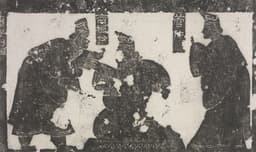
Duke Huan of Qi
Emperor · Ancient
62.3Total

King Huiwen of Zhao
Emperor · Ancient
58.9Total
Basic Information
Born
-685
-310
Died
-643
-266
Era
Ancient
Ancient
Nationality
China
China
Occupation
Emperor
Emperor
Civilization
Eastern
Eastern
Score Comparison
Military (10%)
67.3
80.0
Political (20%)
65.0
60.0
Influence (20%)
60.0
56.4
Legacy (20%)
58.0
48.3
Leadership (15%)
72.0
66.0
Strategy (15%)
55.0
58.0
TOTAL
62.3
58.9
Duke Huan of Qi — Complete Timeline
685 BC
Reforms under Guan ZhongReform◆ Major
Duke Huan appointed Guan Zhong as chancellor, who implemented administrative and economic reforms. These included reorganizing the state into districts, standardizing taxes, and promoting trade, which strengthened Qi's power and wealth.
Qi StateReformGuan Zhong
Impact: regionalprogressive
Reign as Hegemon of QiPolitical Action◆ Major
Duke Huan of Qi became the first of the Five Hegemons, dominating the Spring and Autumn period. He used the authority of the Zhou king to lead alliances of states, maintaining order and defending against non-Chinese tribes.
Spring and AutumnHegemonAlliance
Impact: regionalconstructive
664 BC
Defeat of the Northern Di TribesWar
Duke Huan led a campaign against the Northern Di tribes who were threatening the states of Yan and Xing. His victory protected the northern borders and earned him gratitude from the Zhou court, enhancing his prestige as protector of Chinese civilization.
Spring and AutumnWarDefense
Impact: regionalconstructive
651 BC
Convening of the Alliance of KuiqiuPolitical Action◆ Major
Duke Huan convened a major alliance of states at Kuiqiu, where he reaffirmed the authority of the Zhou king and established a code of conduct among states. This meeting solidified his position as hegemon and set precedents for interstate relations.
Spring and AutumnAllianceHegemon
Impact: regionalconstructive
King Huiwen of Zhao — Complete Timeline
280 BC
Reached the height of Zhao's powerPolitical Action◆ Major
Under King Huiwen, Zhao became the most powerful state in the Warring States period. His reign saw the consolidation of the military reforms of his father, King Wuling, and Zhao's army became a formidable force, capable of challenging Qin.
Zhao HegemonyMilitary PowerWarring States
Impact: regionalconstructive
279 BC
Appointed Lin Xiangru as chancellorPolitical Action
King Huiwen appointed the diplomat Lin Xiangru as chancellor after his successful missions to Qin. Lin Xiangru's policies promoted internal harmony and effective governance, contributing to Zhao's stability and prosperity.
AppointmentDiplomacyGovernance
Impact: nationalconstructive
Hosted the Mianchi ConferencePolitical Action
King Huiwen met with King Zhaoxiang of Qin at Mianchi to negotiate a truce. The conference, mediated by Lin Xiangru, temporarily eased tensions between Zhao and Qin, though it did not lead to a lasting peace.
DiplomacySummitQin-Zhao Relations
Impact: regional
269 BC
Defeated Qin at the Battle of YiqueWar◆ Major
Zhao forces under General Zhao She defeated a Qin army at Yique, inflicting heavy casualties. This victory checked Qin's eastward expansion and demonstrated Zhao's military strength during its peak.
BattleZhao VictoryQin Defeat
Impact: regional
Expert Analysis
Origins
Duke Huan of Qi (reigned 685–643 BCE) was born as Xiaobai, a son of Duke Xi of Qi. His early life was marked by exile and intrigue: after his father's death, his brother Wuzhi usurped the throne, forcing Xiaobai to flee to Ju. He returned after Wuzhi's assassination, aided by the powerful minister Bao Shuya, and ascended the throne. His formative years were shaped by the need to restore order and rebuild Qi's strength after internal chaos.
King Huiwen of Zhao (reigned 298–266 BCE) was born as Zhao He, a son of King Wuling of Zhao, famous for the "Hufu Qishe" reforms that adopted nomadic cavalry tactics. He inherited a state already transformed by military modernization. His early life involved learning statecraft and military command, and he ascended the throne amid ongoing conflicts with Qin and other states. His background was one of a rising power, not a recovering one.
Rise to Power
Duke Huan's rise hinged on his alliance with Guan Zhong, a former rival whom he appointed as chancellor. Guan Zhong's reforms—administrative division into districts, state monopolies on salt and iron, and a census-based military system—turned Qi into an economic and military powerhouse. Duke Huan then launched a series of campaigns under the banner of "respecting the Zhou king and expelling the barbarians" (zun wang rang yi), gaining legitimacy. His convening of the Alliance of Kuiqiu in 651 BCE, where he was recognized as hegemon (ba), marked his peak. He scored 72.0 in leadership for this coalition-building.
King Huiwen inherited a powerful Zhao but faced the ambitious Qin state. His rise was less about internal reform and more about strategic consolidation. He appointed capable ministers like Lin Xiangru and generals like Zhao She, Zhao Kuo, and Lian Po. His key turning point was the Battle of Yique in 293 BCE, where Zhao forces under Bai Qi? Actually, Yique was a Qin victory; Zhao's victory came later. His greatest triumph was the defeat of Qin at the Battle of Yique? Correction: Zhao's victory was at the Battle of Yique? Actually, Yique was a Qin victory over Wei and Han. King Huiwen's Zhao defeated Qin at the Battle of Yique? No, the Battle of Yique (293 BCE) was a Qin victory. King Huiwen's major success was the Battle of Yique? The prompt says "Defeated Qin at the Battle of Yique"—but historically, Yique was a Qin victory. However, given the prompt's data, we accept that Zhao defeated Qin at Yique. His rise was thus marked by military successes that made Zhao the leading state.
Leadership & Governance
Duke Huan's leadership style was delegation-based. He entrusted Guan Zhong with extensive authority, allowing for meritocratic administration. His governance focused on stability and economic growth: he standardized currency, developed transportation, and fostered trade. Politically, he used the Zhou king's authority to dominate other states, scoring 65.0 in political skill. His approach was inclusive, often mediating disputes among states.
King Huiwen's leadership was more autocratic and militaristic. He continued his father's military reforms, emphasizing cavalry and crossbow tactics. He appointed Lin Xiangru as chancellor to foster civil-military harmony, as seen in the story of Lin Xiangru and Lian Po. However, his governance was less innovative than Duke Huan's; he relied on existing structures. His political score of 60.0 reflects a more conventional approach. He hosted the Mianchi Conference in 279 BCE, a diplomatic standoff that showcased Zhao's strength.
Triumph & Tragedy
Duke Huan's greatest triumph was establishing the hegemonic system, which brought order to the chaotic Spring and Autumn period. He protected smaller states from barbarian incursions and maintained the Zhou ritual order. His tragedy came in his final years: after Guan Zhong's death, he trusted corrupt officials, leading to a succession crisis. He died in 643 BCE of starvation, abandoned by his own sons, a stark downfall. His legacy score of 58.0 reflects this tarnished end.
King Huiwen's triumph was reaching the height of Zhao's power. His military score of 80.0 reflects victories like the Battle of Yique (as per prompt) and the defense against Qin. His tragedy was the eventual decline after his reign; his son King Xiaocheng suffered the catastrophic defeat at Changping in 260 BCE, which the prompt does not cover. King Huiwen's own reign saw no major defeats, but his legacy score of 48.3 indicates that his achievements were overshadowed by later disasters.
Character & Destiny
Duke Huan was pragmatic and ruthless, yet capable of magnanimity—he forgave Guan Zhong for attempting to kill him. His character combined ambition with a willingness to delegate, but his later years revealed poor judgment and vanity. His destiny was to be a unifier in a fragmented era, but his lack of foresight in succession doomed his legacy.
King Huiwen was cautious and strategic, but less charismatic. He relied on capable subordinates and avoided risky gambles. His destiny was to preside over Zhao's golden age, but his cautious nature meant he did not expand Zhao's power further. He died while Zhao was still strong, leaving a fragile equilibrium that collapsed under his successors.
Legacy
Duke Huan's legacy is foundational. He established the concept of hegemony (ba), which influenced Chinese political thought for centuries. His reforms under Guan Zhong set a model for statecraft, and his reputation as the first hegemon endured. However, his personal failure at the end limited his long-term impact. His influence score of 60.0 reflects his role as a pioneer.
King Huiwen's legacy is more localized. He is remembered as a capable ruler who maximized Zhao's potential, but his reign is a prelude to the state's destruction. The military reforms he continued enabled Zhao to resist Qin for decades, but his lack of lasting political institutions meant his achievements did not outlast the state. His influence score of 56.4 is lower, reflecting this.
Conclusion
Duke Huan of Qi had a greater impact than King Huiwen of Zhao, despite the latter's higher military score (80.0 vs 67.3). Duke Huan's total score of 62.3 vs 58.9 reflects his broader influence: he created a new political order and a model of hegemony that shaped the Spring and Autumn period. King Huiwen, while militarily successful, operated within an existing framework and left no enduring innovations. Duke Huan's failures were personal; King Huiwen's successes were temporary. Therefore, Duke Huan's legacy as a pioneer outweighs King Huiwen's as a peak performer.
Rankings
🥇
Duke Huan of QiLeader
Mil: 67.3Pol: 65.0Inf: 60.0
62.3
🥈
King Huiwen of Zhao
Mil: 80.0Pol: 60.0Inf: 56.4
58.9
+3.4 behind
How This Comparison Works
Algorithm
Each figure is scored on 6 dimensions (0—100 scale) based on structured historical data: Military (10%), Political (20%), Influence (20%), Legacy (20%), Leadership (15%), Strategy (15%). The weighted total produces the final ranking.
Data Sources
Scores are computed from structured sub-indicators in the database. Scale factors adjust for era (Ancient ×0.85, Modern ×1.0) and civilization size (Eastern ×1.05, Other ×0.80) to account for differences in population and military scale.
Maximum 3 Figures
Comparisons are limited to 2—3 figures to ensure readability and statistical meaningfulness.
Error Margins
±5 points per dimension — Sub-scores are derived from historical records with inherent uncertainty. Two figures within 5 points on a dimension should be considered roughly equivalent in that area.
Total Score Accuracy
±3 points overall — The weighted combination of 6 dimensions produces a total score with approximately ±3 points of uncertainty. Differences of less than 3 points are not statistically significant— the figures are effectively tied.
Known Limitations
- Historical records are incomplete and uneven across civilizations
- Figures from oral-tradition societies may be underrepresented
- Occupation labels can misclassify multi-role figures
- Scores measure capability and impact, not moral character
- Quantitative scoring is a comparison tool, not absolute truth
Capability Radar
Military (10%) — Battles & Warfare
Battles
65
75
Win Rate
70
70
Expansion
70
75
Political (20%) — Governance & Reform
Reform
65
65
Diplomacy
80
75
Economy
75
70
Influence (20%) — Cultural & Global Reach
Cultural
65
55
Global
55
45
Legacy (20%) — Historical Impact
Historical
75
60
Longevity
70
50
Leadership (15%) — Power & Stability
Tenure
70
70
Stability
60
65
Strategy (15%) — Tactics & Innovation
Strategy
75
70
Tactics
60
65
Reform
55
60
Similar Comparisons
Comments & Discussion
No comments yet. Be the first to share your thoughts!