Loading...
Duke Huan of Qi vs Senusret II
Duke Huan of Qi leads by 15.1 pts · 2 figures compared
…
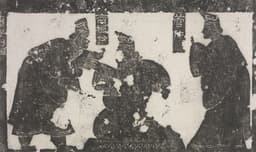
Duke Huan of Qi
Emperor · Ancient
62.3Total

Senusret II
Emperor · Ancient
47.2Total
Basic Information
Born
-685
-1860
Died
-643
-1840
Era
Ancient
Ancient
Nationality
China
Middle Kingdom Egypt
Occupation
Emperor
Emperor
Civilization
Eastern
Middle Eastern
Score Comparison
Military (10%)
67.3
25.9
Political (20%)
65.0
45.0
Influence (20%)
60.0
50.2
Legacy (20%)
58.0
45.8
Leadership (15%)
72.0
68.0
Strategy (15%)
55.0
36.8
TOTAL
62.3
47.2
Duke Huan of Qi — Complete Timeline
685 BC
Reforms under Guan ZhongReform◆ Major
Duke Huan appointed Guan Zhong as chancellor, who implemented administrative and economic reforms. These included reorganizing the state into districts, standardizing taxes, and promoting trade, which strengthened Qi's power and wealth.
Qi StateReformGuan Zhong
Impact: regionalprogressive
Reign as Hegemon of QiPolitical Action◆ Major
Duke Huan of Qi became the first of the Five Hegemons, dominating the Spring and Autumn period. He used the authority of the Zhou king to lead alliances of states, maintaining order and defending against non-Chinese tribes.
Spring and AutumnHegemonAlliance
Impact: regionalconstructive
664 BC
Defeat of the Northern Di TribesWar
Duke Huan led a campaign against the Northern Di tribes who were threatening the states of Yan and Xing. His victory protected the northern borders and earned him gratitude from the Zhou court, enhancing his prestige as protector of Chinese civilization.
Spring and AutumnWarDefense
Impact: regionalconstructive
651 BC
Convening of the Alliance of KuiqiuPolitical Action◆ Major
Duke Huan convened a major alliance of states at Kuiqiu, where he reaffirmed the authority of the Zhou king and established a code of conduct among states. This meeting solidified his position as hegemon and set precedents for interstate relations.
Spring and AutumnAllianceHegemon
Impact: regionalconstructive
Senusret II — Complete Timeline
1855 BC
Construction of the Pyramid at LahunCultural◆ Major
Senusret II built his pyramid at Lahun, near the entrance to the Faiyum. The pyramid was constructed of mudbrick with a limestone casing and featured a complex internal layout. The associated town of Kahun housed workers and officials, providing valuable archaeological insights into Middle Kingdom life.
PyramidArchitectureLahun
Impact: nationalconstructive
Development of the Town of KahunCultural
Senusret II founded the planned settlement of Kahun (Hetep-Senusret) to house workers building his pyramid. The town was laid out on a grid system with separate quarters for officials, artisans, and laborers, and its well-preserved remains have provided extensive information about daily life, administration, and social structure in the Middle Kingdom.
SettlementUrban PlanningArchaeology
constructive
1850 BC
Faiyum Irrigation ProjectsReform◆ Major
Senusret II initiated large-scale irrigation works in the Faiyum region, including the construction of canals and dikes to regulate the flow of water from the Nile into the Faiyum Depression. This transformed the area into fertile agricultural land, boosting food production and economic prosperity.
IrrigationAgricultureFaiyum
Impact: regionalconstructive
Expert Analysis
Origins
Duke Huan of Qi (reigned 685–643 BCE) was born as Xiaobai, a son of Duke Xi of Qi. After his father's death, Qi fell into turmoil, and Xiaobai competed with his brother for the throne. He emerged victorious in 685 BCE with the help of his loyal retainer Guan Zhong, who had actually attempted to assassinate him earlier. Duke Huan's early life was marked by political instability, but his decision to appoint Guan Zhong as chancellor proved transformative.
Senusret II (reigned c. 1897–1878 BCE) was the fourth pharaoh of the Twelfth Dynasty of Egypt. He was the son of Amenemhat II and inherited a stable kingdom. His reign focused on internal development rather than military expansion. He is best known for his irrigation projects in the Faiyum region and his pyramid at Lahun.
Rise to Power
Duke Huan's rise began with his victory over his brother in a civil war. He then appointed Guan Zhong as chancellor, a bold move given Guan Zhong's past allegiance. Together, they implemented sweeping reforms: reorganizing the state into administrative districts, standardizing taxes, and strengthening the military. Duke Huan used the declining Zhou dynasty's authority to legitimize his hegemony. In 681 BCE, he convened the first major interstate alliance at Beixing, forcing other states to recognize his leadership. By 667 BCE, he was officially recognized as hegemon by the Zhou king.
Senusret II inherited the throne peacefully. His rise was not marked by conflict but by careful planning. He focused on the Faiyum region, a fertile depression that required water management. He initiated the construction of a canal connecting the Nile to Lake Moeris, effectively regulating flooding and expanding arable land. This project, along with the founding of the town of Kahun to house workers, demonstrated his administrative capabilities.
Leadership & Governance
Duke Huan's leadership was characterized by strategic delegation and alliance-building. He relied heavily on Guan Zhong, who scored a political acumen of 72, while Duke Huan scored 65.0 in political skill. Duke Huan's governance style was pragmatic: he used the Zhou king as a figurehead to unite states against common threats, such as the Northern Di tribes. He established a code of conduct among states at the Alliance of Kuiqiu in 651 BCE, forbidding damming rivers and hoarding grain. This showed his diplomatic finesse, scoring 55.0 in strategy, but his military score of 67.3 reflected his ability to lead campaigns.
Senusret II's governance was more inward-focused. His leadership score of 68.0 indicates effective administration, but his military score of 25.9 shows a lack of martial ambition. He prioritized infrastructure: the Faiyum irrigation works increased agricultural output, and the pyramid at Lahun, though modest (mudbrick with limestone casing), showcased his organizational skills. He also founded Kahun, a planned city with grid layout, which housed workers and officials. His political score of 45.0 suggests limited international influence.
Triumph & Tragedy
Duke Huan's greatest triumph was becoming the first hegemon, uniting multiple states under his leadership. He successfully defended the northern states Yan and Xing from the Di tribes, earning gratitude. However, his later years saw decline: Guan Zhong's death in 645 BCE left him without wise counsel. Duke Huan became susceptible to flatterers and died in 643 BCE after a palace coup, with his body left to rot for 67 days. This was a tragic end for a once-dominant ruler.
Senusret II's triumph was the Faiyum irrigation project, which significantly boosted Egypt's agricultural capacity. His pyramid, though less grand, was innovative with its complex internal structure. However, his reign was short (about 19 years), and his legacy was overshadowed by his successor Senusret III, who achieved greater military renown. Senusret II's modest influence score of 50.2 reflects his limited impact beyond Egypt.
Character & Destiny
Duke Huan was decisive and charismatic but prone to hubris. His willingness to forgive Guan Zhong showed magnanimity, but his later susceptibility to sycophants revealed a flaw. His destiny was shaped by his reliance on a single advisor; after Guan Zhong's death, he lost direction. Historical assessments, such as Sima Qian's Records of the Grand Historian, portray him as a capable but ultimately flawed leader.
Senusret II was methodical and peace-oriented. He focused on long-term projects rather than conquest. His character was that of a builder, not a warrior. His destiny was to be remembered primarily for the Faiyum works, which remained vital for centuries. However, his lack of military ambition limited his power.
Legacy
Duke Huan's legacy is immense: he established the concept of hegemony that dominated Chinese politics for centuries. The Alliance of Kuiqiu set precedents for interstate relations. His reforms under Guan Zhong influenced later Chinese statecraft. He scored 60.0 in influence and 58.0 in legacy, reflecting his lasting impact on Chinese political thought.
Senusret II's legacy is tied to the Faiyum region, which became a breadbasket for Egypt. His pyramid and the town of Kahun provide archaeological insights into Middle Kingdom society. However, his legacy score of 45.8 indicates a more limited impact compared to his Chinese counterpart.
Conclusion
Duke Huan of Qi had a greater impact than Senusret II. With a total score of 62.3 against 47.2, the 15.1-point gap reflects his broader influence. Duke Huan's political innovations shaped China's Spring and Autumn period, while Senusret II's achievements, though significant, were confined to Egypt and less transformative. The clear position is that Duke Huan's role as the first hegemon and his diplomatic reforms give him a stronger historical standing.
Rankings
🥇
Duke Huan of QiLeader
Mil: 67.3Pol: 65.0Inf: 60.0
62.3
🥈
Senusret II
Mil: 25.9Pol: 45.0Inf: 50.2
47.2
+15.1 behind
How This Comparison Works
Algorithm
Each figure is scored on 6 dimensions (0—100 scale) based on structured historical data: Military (10%), Political (20%), Influence (20%), Legacy (20%), Leadership (15%), Strategy (15%). The weighted total produces the final ranking.
Data Sources
Scores are computed from structured sub-indicators in the database. Scale factors adjust for era (Ancient ×0.85, Modern ×1.0) and civilization size (Eastern ×1.05, Other ×0.80) to account for differences in population and military scale.
Maximum 3 Figures
Comparisons are limited to 2—3 figures to ensure readability and statistical meaningfulness.
Error Margins
±5 points per dimension — Sub-scores are derived from historical records with inherent uncertainty. Two figures within 5 points on a dimension should be considered roughly equivalent in that area.
Total Score Accuracy
±3 points overall — The weighted combination of 6 dimensions produces a total score with approximately ±3 points of uncertainty. Differences of less than 3 points are not statistically significant— the figures are effectively tied.
Known Limitations
- Historical records are incomplete and uneven across civilizations
- Figures from oral-tradition societies may be underrepresented
- Occupation labels can misclassify multi-role figures
- Scores measure capability and impact, not moral character
- Quantitative scoring is a comparison tool, not absolute truth
Capability Radar
Military (10%) — Battles & Warfare
Battles
65
10
Win Rate
70
10
Expansion
70
10
Political (20%) — Governance & Reform
Reform
65
70
Diplomacy
80
50
Economy
75
75
Influence (20%) — Cultural & Global Reach
Cultural
65
40
Global
55
20
Legacy (20%) — Historical Impact
Historical
75
50
Longevity
70
45
Leadership (15%) — Power & Stability
Tenure
70
60
Stability
60
65
Strategy (15%) — Tactics & Innovation
Strategy
75
10
Tactics
60
10
Reform
55
10
Similar Comparisons
Comments & Discussion
No comments yet. Be the first to share your thoughts!