Loading...
Duke Mu of Qin vs Thutmose III
Thutmose III leads by 11.6 pts · 2 figures compared
…
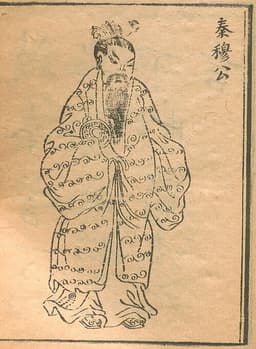
Duke Mu of Qin
Emperor · Ancient
52.9Total

Thutmose III
Emperor · Ancient
64.5Total
Basic Information
Born
-683
-1481
Died
-621
-1425
Era
Ancient
Ancient
Nationality
China
Egypt
Occupation
Emperor
Emperor
Civilization
Eastern
Middle Eastern
Score Comparison
Military (10%)
52.5
86.0
Political (20%)
48.0
58.1
Influence (20%)
49.4
68.0
Legacy (20%)
44.2
40.0
Leadership (15%)
74.0
81.0
Strategy (15%)
60.0
80.1
TOTAL
52.9
64.5
Duke Mu of Qin — Complete Timeline
650 BC
Expanded Qin into Western TerritoriesWar◆ Major
Duke Mu of Qin led campaigns against the Rong and Di barbarian tribes to the west, conquering twelve minor states and opening up 1,000 li of territory. This expansion strengthened Qin and secured its western flank.
ExpansionBarbariansQin
Impact: regionalconstructive
645 BC
Allied with Jin StatePolitical Action◆ Major
Duke Mu formed an alliance with the state of Jin, marrying his daughter to Duke Hui of Jin. However, when Jin reneged on promises, Duke Mu attacked and defeated Jin at the Battle of Han, capturing Duke Hui.
AllianceJinBattle of Han
Impact: regional
636 BC
Aided Chong'er to Become Duke Wen of JinPolitical Action◆ Major
Duke Mu supported the exiled prince Chong'er, sending troops to help him return to Jin and become Duke Wen. This act created a powerful ally but also a future rival who would challenge Qin's dominance.
SupportJinDuke Wen
Impact: regionalconstructive
627 BC
Failed to Expand EastwardWar◆ Major
Duke Mu's attempt to expand eastward was thwarted by Jin at the Battle of Yao. Qin forces were ambushed and destroyed in a narrow pass, forcing Duke Mu to abandon eastern ambitions and focus on the west.
DefeatJinBattle of Yao
Impact: regionaldestructive
Thutmose III — Complete Timeline
1457 BC
Battle of MegiddoWar
Thutmose III led his army through the Aruna Pass to surprise a Canaanite coalition at Megiddo. The Egyptian victory secured control over Syria-Palestine and marked the first recorded battle in history with a detailed tactical account.
Military CampaignCanaanSiege
Impact: regional
1456 BC
Campaigns in Syria and MitanniWar◆ Major
Thutmose III conducted a series of annual campaigns into Syria, capturing cities such as Kadesh and Carchemish. He crossed the Euphrates River into Mitanni territory, extending Egyptian influence to its greatest geographical extent.
Imperial ExpansionMitanniEuphrates
Impact: regional
1450 BC
Construction of the Festival Hall at KarnakCultural◆ Major
Thutmose III built the Akh-menu, or Festival Hall, at the Karnak temple complex in Thebes. The hall featured reliefs depicting his military campaigns and served as a center for the Heb-sed festival, reinforcing his divine kingship.
ArchitectureKarnakReligious Center
Impact: nationalconstructive
1445 BC
Obelisk Erection at KarnakCultural
Thutmose III erected two large obelisks at the Karnak temple, one of which now stands in Istanbul. The obelisks commemorated his military victories and were inscribed with texts praising his achievements as a warrior pharaoh.
MonumentObeliskCommemoration
Impact: nationalconstructive
1440 BC
Suppression of the Rebellion in NubiaWar
Thutmose III led a campaign into Nubia to crush a rebellion against Egyptian rule. The victory secured the southern border and ensured continued access to gold mines and trade routes in the region.
NubiaRebellionGold Trade
Impact: regional
Expert Analysis
Origins
Duke Mu of Qin (born 682 BCE) was a ruler of the Qin state during the Spring and Autumn period of ancient China. He inherited a semi-barbarian frontier state in the Wei River valley, surrounded by Rong and Di tribes. His family, the House of Ying, had been granted the territory for their service to the Zhou dynasty. Duke Mu received a traditional Chinese education but also absorbed martial culture from his frontier environment.
Thutmose III (born 1481 BCE) was the sixth Pharaoh of the 18th Dynasty of Egypt. He was the son of Thutmose II and a lesser wife, Iset. As a child, he ruled jointly with his stepmother Hatshepsut, who effectively controlled the throne. Thutmose III spent his early years learning military and administrative skills in the shadow of the powerful queen regent.
Rise to Power
Duke Mu ascended to the Qin throne in 659 BCE at age 23. His early reign focused on consolidating power and securing Qin's borders. He recognized that the Zhou royal house was weakening and that opportunities for expansion lay to the west, where barbarian tribes were fragmented. Duke Mu employed capable advisors like Baili Xi and Jian Shu, who helped him reform the state and plan campaigns.
Thutmose III rose to power after Hatshepsut's death in 1458 BCE. For 22 years, he had been co-ruler in name only. Upon assuming sole rule, he immediately launched a campaign to reassert Egyptian authority in Syria-Palestine, which had slipped away during Hatshepsut's peaceful reign. His first campaign culminated in the Battle of Megiddo, a decisive victory that established his military reputation.
Leadership & Governance
Duke Mu of Qin governed through a combination of Confucian-style virtue and Legalist pragmatism. He promoted agriculture, built irrigation projects, and integrated conquered barbarian tribes into the Qin state. His military strategy scored 60.0, reflecting cautious expansion. He relied on alliances, such as his marriage to a Jin princess, but was not afraid to break them when necessary. Duke Mu's political score of 48.0 indicates limited institutional innovation; he did not create the bureaucratic systems that later Qin rulers would develop.
Thutmose III, with a leadership score of 81.0, was a hands-on commander who personally led his army into battle. He reorganized the Egyptian military into a professional standing army with chariot units and logistics support. His administration created a network of garrisons and vassal states to secure conquered territories. He also erected monuments and temples to legitimize his rule, such as the Festival Hall at Karnak. His political score of 58.1 reflects his ability to manage the priesthood and nobility while maintaining absolute authority.
Triumph & Tragedy
Duke Mu's greatest triumph was expanding Qin into the Western Territories. He conquered twelve barbarian states and opened up 1,000 li (about 500 km) of land, earning the title of Hegemon among the western states. However, his attempt to expand eastward ended in tragedy at the Battle of Yao in 627 BCE. The Qin army was ambushed by Jin forces in a narrow pass and completely destroyed. This defeat forced Duke Mu to abandon eastern ambitions and focus westward.
Thutmose III's triumph was the Battle of Megiddo, where he achieved a military score of 86.0, the highest among ancient Egyptian pharaohs. He conducted 17 campaigns into Syria, crossing the Euphrates into Mitanni. He also crushed a rebellion in Nubia, securing Egypt's southern border. His tragedy was the loss of his son Amenhotep II's respect? Actually, his legacy was overshadowed by Hatshepsut's monuments, and his own temple constructions were later defaced by Akhenaten's religious reforms. But his greatest failure was perhaps not establishing a lasting peace; the Egyptian empire began to decline after his death.
Character & Destiny
Duke Mu was cautious and strategic, with a total score of 52.9. He learned from his defeat at Yao and adapted his strategy. His character was marked by patience and a willingness to listen to advisors, which allowed Qin to survive and grow. However, his limited vision prevented Qin from becoming a major power in the central plains.
Thutmose III was ambitious and relentless, with a total score of 64.5. He was known as the 'Napoleon of Egypt' for his military genius. His character drove him to personally lead campaigns and expand Egypt to its greatest extent. His destiny was to be remembered as a great conqueror, but his empire was fragile and did not survive long after him.
Legacy
Duke Mu's legacy is mixed. He laid the foundation for Qin's later unification of China under Qin Shi Huang. His expansion westward integrated barbarian lands into Chinese civilization. However, his military score of 52.5 and political score of 48.0 reflect that he was not among the top-tier Chinese hegemons. Qin's rise to power would come later under Duke Xiao and Shang Yang's reforms.
Thutmose III's legacy is more visible. He created the largest empire Egypt ever had, stretching from the Euphrates to Nubia. His military campaigns set a standard for later pharaohs. The Festival Hall at Karnak and his obelisks stand as testaments to his rule. His influence score of 68.0 is higher than Duke Mu's 49.4, indicating a broader impact on history.
Conclusion
Thutmose III had greater impact than Duke Mu of Qin. With a total score of 64.5 to Duke Mu's 52.9, Thutmose III excelled in military (86.0 vs 52.5), leadership (81.0 vs 74.0), and strategy (80.1 vs 60.0). While Duke Mu was important for Qin's development, Thutmose III's conquests reshaped the ancient Near East. Duke Mu's expansion was limited to the western frontier, while Thutmose's campaigns created an empire that influenced multiple civilizations. The score gap of 11.6 points reflects this disparity. Thutmose III is more deserving of the title 'great' in terms of historical impact.
Rankings
🥇
Thutmose IIILeader
Mil: 86.0Pol: 58.1Inf: 68.0
64.5
🥈
Duke Mu of Qin
Mil: 52.5Pol: 48.0Inf: 49.4
52.9
+11.6 behind
How This Comparison Works
Algorithm
Each figure is scored on 6 dimensions (0—100 scale) based on structured historical data: Military (10%), Political (20%), Influence (20%), Legacy (20%), Leadership (15%), Strategy (15%). The weighted total produces the final ranking.
Data Sources
Scores are computed from structured sub-indicators in the database. Scale factors adjust for era (Ancient ×0.85, Modern ×1.0) and civilization size (Eastern ×1.05, Other ×0.80) to account for differences in population and military scale.
Maximum 3 Figures
Comparisons are limited to 2—3 figures to ensure readability and statistical meaningfulness.
Error Margins
±5 points per dimension — Sub-scores are derived from historical records with inherent uncertainty. Two figures within 5 points on a dimension should be considered roughly equivalent in that area.
Total Score Accuracy
±3 points overall — The weighted combination of 6 dimensions produces a total score with approximately ±3 points of uncertainty. Differences of less than 3 points are not statistically significant— the figures are effectively tied.
Known Limitations
- Historical records are incomplete and uneven across civilizations
- Figures from oral-tradition societies may be underrepresented
- Occupation labels can misclassify multi-role figures
- Scores measure capability and impact, not moral character
- Quantitative scoring is a comparison tool, not absolute truth
Capability Radar
Military (10%) — Battles & Warfare
Battles
45
95
Win Rate
50
98
Expansion
60
95
Political (20%) — Governance & Reform
Reform
40
80
Diplomacy
50
85
Economy
45
82
Influence (20%) — Cultural & Global Reach
Cultural
30
75
Global
25
70
Legacy (20%) — Historical Impact
Historical
45
85
Longevity
40
80
Leadership (15%) — Power & Stability
Tenure
55
88
Stability
50
85
Strategy (15%) — Tactics & Innovation
Strategy
55
95
Tactics
40
92
Reform
35
85
Similar Comparisons
Comments & Discussion
No comments yet. Be the first to share your thoughts!