Loading...
Duke Mu of Qin vs Napoleon Bonaparte
Napoleon Bonaparte leads by 18.0 pts · 2 figures compared
…
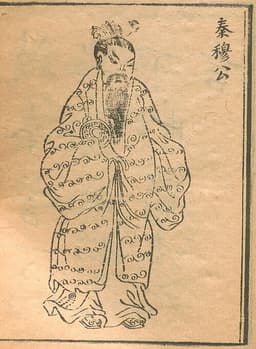
Duke Mu of Qin
Emperor · Ancient
52.9Total

Napoleon Bonaparte
General · Modern
70.9Total
Basic Information
Born
-683
1769
Died
-621
1821
Era
Ancient
Modern
Nationality
China
France
Occupation
Emperor
General
Civilization
Eastern
Western
Score Comparison
Military (10%)
52.5
94.0
Political (20%)
48.0
72.0
Influence (20%)
49.4
40.0
Legacy (20%)
44.2
80.0
Leadership (15%)
74.0
78.0
Strategy (15%)
60.0
90.0
TOTAL
52.9
70.9
Duke Mu of Qin — Complete Timeline
650 BC
Expanded Qin into Western TerritoriesWar◆ Major
Duke Mu of Qin led campaigns against the Rong and Di barbarian tribes to the west, conquering twelve minor states and opening up 1,000 li of territory. This expansion strengthened Qin and secured its western flank.
ExpansionBarbariansQin
Impact: regionalconstructive
645 BC
Allied with Jin StatePolitical Action◆ Major
Duke Mu formed an alliance with the state of Jin, marrying his daughter to Duke Hui of Jin. However, when Jin reneged on promises, Duke Mu attacked and defeated Jin at the Battle of Han, capturing Duke Hui.
AllianceJinBattle of Han
Impact: regional
636 BC
Aided Chong'er to Become Duke Wen of JinPolitical Action◆ Major
Duke Mu supported the exiled prince Chong'er, sending troops to help him return to Jin and become Duke Wen. This act created a powerful ally but also a future rival who would challenge Qin's dominance.
SupportJinDuke Wen
Impact: regionalconstructive
627 BC
Failed to Expand EastwardWar◆ Major
Duke Mu's attempt to expand eastward was thwarted by Jin at the Battle of Yao. Qin forces were ambushed and destroyed in a narrow pass, forcing Duke Mu to abandon eastern ambitions and focus on the west.
DefeatJinBattle of Yao
Impact: regionaldestructive
Napoleon Bonaparte — Complete Timeline
1799 AD
Coup of 18 BrumaireOther◆ Major
Napoleon Bonaparte, with support from his brother Lucien and key political figures, overthrew the Directory in a bloodless coup. He established the Consulate with himself as First Consul, effectively becoming the ruler of France. This event ended the French Revolution's most unstable period.
French RevolutionCoupRise to Power
Impact: regional
1804 AD
Promulgation of the Napoleonic CodeOther◆ Major
Napoleon enacted the Civil Code of the French, known as the Napoleonic Code, a comprehensive set of laws that replaced the fragmented feudal legal systems. The code established legal equality, protected property rights, and secularized law. It became the basis for legal systems in many European and world countries.
Legal ReformNapoleonic CodeCivil Law
Impact: globalconstructive
1805 AD
Battle of AusterlitzWar◆ Major
Napoleon's Grande Arm
Napoleonic WarsBattleDecisive Victory
Impact: global
1812 AD
Invasion of RussiaWar◆ Major
Napoleon led the Grande Arm
Napoleonic WarsInvasionDisaster
Impact: globaldestructive
1815 AD
Battle of WaterlooWar◆ Major
Napoleon's French army was defeated by the combined forces of the Duke of Wellington's Anglo-Allied army and Gebhard Leberecht von Bl
Napoleonic WarsBattleFinal Defeat
Impact: globaldestructive
Expert Analysis
duke-mu-of-qin-vs-napoleon-bonaparte
# The Eagle and the Duke: Two Paths to Power
On a June morning in 1815, Napoleon Bonaparte watched his Imperial Guard march into the mists of Waterloo, their drums beating the rhythm of an empire’s final gamble. Two thousand years earlier and half a world away, Duke Mu of Qin stood on the banks of the Yellow River, watching his own soldiers vanish into the gorges of Yao, where a Jin ambush would shatter his dream of eastern conquest. Both men reached for greatness; one seized an entire continent, the other turned westward to build a foundation that would outlast him. The question is not merely who was greater, but why their fates diverged so dramatically.
Origins
Napoleon was born in 1769 on Corsica, an island of fierce independence recently annexed by France. His family was minor nobility, poor enough to feel the sting of social inferiority, proud enough to nurture ambition. The French Revolution erupted when he was twenty, shattering the old order and creating a vacuum where talent could vault over birth. He was a child of chaos, shaped by the gunpowder smoke of the Terror and the hunger of a nation at war with itself.
Duke Mu of Qin, born in 683 BCE, inherited a very different world. China’s Spring and Autumn period was a chessboard of feudal states, bound by ritual and constant warfare. Qin was a frontier state, considered semi-barbarian by the central kingdoms. Its people were hardy, its rulers pragmatic, and its position on the western edge of the Chinese world gave it both a shield and a sword. Duke Mu grew up among warriors who fought the Rong and Di tribes, men who measured honor in land and loyalty in blood.
The Corsican learned war in the crucible of revolution; the Qin duke learned it in the slow grind of border campaigns. One era demanded speed and audacity; the other required patience and strategy.
Rise to Power
Napoleon’s ascent was meteoric. At twenty-four, he cleared the streets of Paris with a “whiff of grapeshot,” saving the revolutionary government. At twenty-six, he commanded the Army of Italy and carved a kingdom from Austrian flesh. By thirty, he was First Consul; by thirty-five, Emperor of the French. Each step was a gamble, a masterpiece of timing and terror. He understood that in the chaos of post-revolutionary Europe, hesitation meant death.
Duke Mu’s rise was slower, more deliberate. He became ruler of Qin around 659 BCE, inheriting a state that was strong but isolated. His early years were spent consolidating power, building alliances, and testing his neighbors. In 650 BCE, he led campaigns against the Rong and Di barbarians to the west, conquering twelve minor states. These were not the glorious victories of Austerlitz, but the grinding expansion of a frontier lord. He did not conquer in a flash; he absorbed, piece by piece, like a river eating its banks.
The difference was opportunity. Napoleon had a continent in revolution; Duke Mu had a world of ritual and restraint. One could burn the map; the other had to draw it carefully.
Leadership & Governance
Napoleon ruled with a combination of genius and egotism. His military scores—94 in military, 93 in strategy—reflect a commander who could read a battlefield like a composer reads a score. At Austerlitz in 1805, he lured the Austro-Russian armies into a trap, crushing them in a single day. His Napoleonic Code reformed French law, establishing principles of equality and merit that echo into our own time. But his political score of 75 reveals the flaw: he could conquer but not consolidate, could win battles but not peace. He made enemies of every throne in Europe and gave them no reason to forgive.
Duke Mu’s governance was more subtle. His political score of 72 is modest, but his leadership score of 86 tells a different story. He understood that power in ancient China was built on relationships. In 645 BCE, he allied with Jin, marrying his daughter to Duke Hui. When Jin betrayed him, he did not rage—he waited. In 636 BCE, he supported the exiled prince Chong’er, sending troops to help him become Duke Wen of Jin. This was not charity; it was investment. Chong’er became a lifelong ally, and Qin gained a powerful friend on its eastern border.
Duke Mu’s military score of 52.7 reflects his limitations. He was no Napoleon on the battlefield. But he understood something the Corsican never learned: that victory is not always about destruction, but about positioning. He expanded Qin westward because the east was blocked by Jin. He did not waste his army on impossible dreams.
Triumph & Tragedy
Napoleon’s triumph was absolute: he ruled from Madrid to Moscow, placed his brothers on thrones, and rewrote the laws of Europe. His tragedy was equally absolute: the retreat from Russia in 1812, the loss of 400,000 men to snow and starvation; the exile to Elba; the desperate gamble of Waterloo; the final exile to St. Helena, where he died in 1821, alone and bitter. His fall was as dramatic as his rise, a Shakespearean arc of pride and punishment.
Duke Mu’s triumph was quieter. He transformed Qin from a frontier state into a regional power, laying the groundwork for the unification of China two centuries later. His tragedy came in 627 BCE at the Battle of Yao, where his attempt to expand eastward was crushed by Jin forces in a devastating ambush. The defeat was total—his army destroyed, his dreams of eastern conquest ended. But unlike Napoleon, he did not double down. He retreated, licked his wounds, and turned back to the west. He lived to rule for another six years, dying in 621 BCE with his state stronger than when he found it.
The difference is resilience. Napoleon could not accept limits; Duke Mu understood them.
Character & Destiny
Napoleon was driven by an insatiable hunger. “Impossible is a word to be found only in the dictionary of fools,” he said. He believed that will could conquer circumstance, that genius could bend fate. And for a time, he was right. But that same hunger made him blind. He could not stop, could not compromise, could not see that even eagles must land.
Duke Mu was driven by duty. He ruled in a world where the mandate of heaven required balance, where a ruler’s first obligation was to his people and his ancestors. He did not seek personal glory; he sought the survival and growth of Qin. When he failed, he adapted. When he succeeded, he consolidated. His destiny was not to conquer the world, but to build the foundation for those who would.
Napoleon’s personality shaped his decisions toward grandeur and ruin; Duke Mu’s shaped his toward patience and endurance.
Legacy
Napoleon’s legacy is written in stone and law. The Napoleonic Code governs much of Europe. His military tactics are studied at every war college. His name is synonymous with ambition, genius, and tragic pride. His legacy score of 78 reflects a man who changed the world, but whose changes were as often destructive as constructive.
Duke Mu’s legacy is quieter but deeper. His expansion westward brought Chinese civilization to the barbarian lands, integrating them into the Middle Kingdom. His alliances and political maneuvers created the conditions for Qin’s eventual unification of China under Qin Shi Huang. His legacy score of 63.4 is lower, but it measures a different kind of impact—not the flash of empire, but the slow work of civilization-building.
Napoleon is remembered as a storm; Duke Mu as a river. One flooded the landscape and receded; the other carved a channel that still flows.
Conclusion
Standing at the end of their stories, we see two men who reached for the same thing—power, legacy, the transformation of their world—but who grasped it in different ways. Napoleon took the path of fire, burning bright and fast, leaving behind a world forever changed but also scarred. Duke Mu took the path of water, flowing around obstacles, carving stone through persistence, leaving a foundation that others would build upon.
Neither path was superior. Both had their costs. But as we look at our own world of rapid change and constant crisis, perhaps there is a lesson in Duke Mu’s patience, in his willingness to turn westward when the east was closed. And perhaps there is a warning in Napoleon’s hunger, in the way that genius without limits becomes tragedy.
The eagle and the duke—one conquered his age, the other conquered time. Which is the greater achievement, we must each decide for ourselves.
Rankings
🥇
Napoleon BonaparteLeader
Mil: 94.0Pol: 72.0Inf: 40.0
70.9
🥈
Duke Mu of Qin
Mil: 52.5Pol: 48.0Inf: 49.4
52.9
+18.0 behind
How This Comparison Works
Algorithm
Each figure is scored on 6 dimensions (0—100 scale) based on structured historical data: Military (10%), Political (20%), Influence (20%), Legacy (20%), Leadership (15%), Strategy (15%). The weighted total produces the final ranking.
Data Sources
Scores are computed from structured sub-indicators in the database. Scale factors adjust for era (Ancient ×0.85, Modern ×1.0) and civilization size (Eastern ×1.05, Other ×0.80) to account for differences in population and military scale.
Maximum 3 Figures
Comparisons are limited to 2—3 figures to ensure readability and statistical meaningfulness.
Error Margins
±5 points per dimension — Sub-scores are derived from historical records with inherent uncertainty. Two figures within 5 points on a dimension should be considered roughly equivalent in that area.
Total Score Accuracy
±3 points overall — The weighted combination of 6 dimensions produces a total score with approximately ±3 points of uncertainty. Differences of less than 3 points are not statistically significant— the figures are effectively tied.
Known Limitations
- Historical records are incomplete and uneven across civilizations
- Figures from oral-tradition societies may be underrepresented
- Occupation labels can misclassify multi-role figures
- Scores measure capability and impact, not moral character
- Quantitative scoring is a comparison tool, not absolute truth
Capability Radar
Military (10%) — Battles & Warfare
Battles
45
95
Win Rate
50
90
Expansion
60
95
Political (20%) — Governance & Reform
Reform
40
95
Diplomacy
50
80
Economy
45
85
Influence (20%) — Cultural & Global Reach
Cultural
30
85
Global
25
90
Legacy (20%) — Historical Impact
Historical
45
95
Longevity
40
90
Leadership (15%) — Power & Stability
Tenure
55
85
Stability
50
70
Strategy (15%) — Tactics & Innovation
Strategy
55
95
Tactics
40
98
Reform
35
92
Similar Comparisons
Comments & Discussion
Legion Loyalist6/17/2026
The fatal flaw: Napoleon lost Waterloo because Grouchy didn't march to the guns. Duke Mu lost at Yao because he ignored his advisor's warning about the terrain. Both brilliant, both deaf to the one voice that mattered in the crisis. But Napoleon had genius subordinates like Davout; Duke Mu's best generals were family. That's the difference between a system that breeds talent and one that hoards it.
数字史官6/17/2026
数据永远诚实:拿破仑称帝后打了四年就完了,秦穆公称霸西戎后秦国立国五百年。拿破仑的失败是瞬间崩塌,杜穆的挫折是战略迂回。你们吹捧短跑冠军,却无视马拉松选手的耐力。论单位时间的成就,拿破仑璀璨;论对文明的贡献,杜穆不可量化但更加持久。
Classics Pedant6/17/2026
The comparison is amusing but misses the context of legitimacy. Napoleon seized power in a revolutionary vacuum; Duke Mu inherited a bloodline stretching back to the Western Zhou. Napoleon needed to conquer Europe to prove his throne; Duke Mu already had one. The real surprise is that the Corsican upstart achieved more in fifteen years than the Duke did in forty. That's the power of opportunity meeting desperation.
历史重评人6/17/2026
你们都在谈军事,但杜穆真正的遗产是政治改革。他用“五羖大夫”百里奚和蹇叔,开了秦国用异国贤才的先河。拿破仑用人?约瑟芬的裙带关系,贝尔蒂埃的忠诚,仅此而已。杜穆的团队建设塑造了一个帝国架构,拿破仑的团队只是个人野心的延伸。谁更成功,看你定义的是个人还是制度。
Battlefield Romantic6/17/2026
Waterloo was fifty thousand men in a square mile of mud. Yao Pass was a gorge of boiling arrows and rolling stones. Napoleon's fall was dramatic, almost operatic — a last charge, a final thunder. Duke Mu's defeat was patient, grinding, a lesson he carried for forty years and turned into a dynasty. I'll take the romantic tragedy over the moral fable any day. Vive l'Empereur.