Loading...
Duke of Wellington vs Koprulu Fazil Mustafa
Duke of Wellington leads by 16.3 pts · 2 figures compared
…

Duke of Wellington
General · Modern
75.0Total
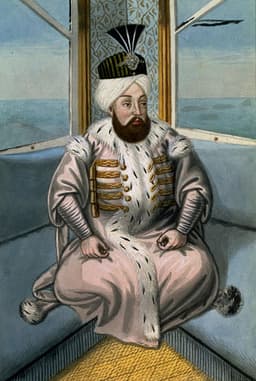
Koprulu Fazil Mustafa
General · Modern
58.7Total
Basic Information
Born
1769
1637
Died
1852
1691
Era
Modern
Modern
Nationality
United Kingdom
Ottoman Empire
Occupation
General
General
Civilization
Western
Middle Eastern
Score Comparison
Military (10%)
78.0
67.5
Political (20%)
70.0
55.0
Influence (20%)
71.0
54.9
Legacy (20%)
80.0
47.5
Leadership (15%)
78.0
80.0
Strategy (15%)
72.0
61.2
TOTAL
75.0
58.7
Duke of Wellington — Complete Timeline
1803 AD
Battle of AssayeWar◆ Major
Wellington, then Sir Arthur Wellesley, led a British-Indian force to victory against the Maratha Confederacy at Assaye in India. Despite being outnumbered, his tactical skill secured British dominance in central India.
Maratha WarIndiaBattle
Impact: regional
1808 AD
Battle of VimeiroWar◆ Major
Wellington commanded British forces to defeat the French army at Vimeiro in Portugal. The victory halted the French invasion of Portugal and marked the beginning of the Peninsular War.
Peninsular WarPortugalBattle
Impact: regional
1815 AD
Battle of WaterlooWar
Wellington, commanding an Anglo-Allied army, defeated Napoleon Bonaparte at Waterloo in present-day Belgium. The battle ended the Napoleonic Wars and led to Napoleon's final exile to Saint Helena.
Napoleonic WarsBattleWaterloo
Impact: global
1828 AD
Prime Minister of the United KingdomPolitical Action◆ Major
Wellington served as Prime Minister of the UK from 1828 to 1830. His government passed the Catholic Relief Act 1829, granting Catholic emancipation, but his opposition to parliamentary reform led to his resignation.
PoliticsCatholic EmancipationReform
Impact: nationalconstructive
Koprulu Fazil Mustafa — Complete Timeline
1689 AD
Appointment as Grand VizierPolitical Action◆ Major
Koprulu Fazil Mustafa Pasha was appointed Grand Vizier by Sultan Suleiman II during a period of military crisis. He implemented reforms to restore the Ottoman army and administration, including financial reorganization and efforts to curb corruption.
Koprulu EraReformOttoman Politics
Impact: nationalconstructive
1690 AD
Reconquest of BelgradeWar◆ Major
Koprulu Fazil Mustafa Pasha led a successful campaign to recapture Belgrade from the Habsburgs. The victory temporarily restored Ottoman control over the key fortress city and boosted morale, though it did not reverse the overall decline in the war.
Ottoman-Habsburg WarReconquestBelgrade
Impact: regionalconstructive
1691 AD
Battle of SlankamenWar◆ Major
Koprulu Fazil Mustafa Pasha led the Ottoman army against the Habsburgs at the Battle of Slankamen. He was killed in action during the battle, which ended in a decisive Ottoman defeat. His death was a major blow to the Koprulu reform efforts and the Ottoman war effort.
Ottoman-Habsburg WarBattleDeath in Battle
Impact: regionaltragic
Expert Analysis
Origins
Arthur Wellesley, the future Duke of Wellington, was born in 1769 into an Anglo-Irish aristocratic family. He attended Eton and the French Royal Academy of Equitation in Angers, gaining a military education. His early career in the British Army was shaped by service in India, where he honed his administrative and combat skills. In contrast, Koprulu Fazil Mustafa Pasha was born around 1637 into the prominent Koprulu family, which had produced several grand viziers. He received a traditional Ottoman education and rose through the ranks of the imperial bureaucracy and military, benefiting from family connections and the reformist legacy of his predecessors.
Rise to Power
Wellington's rise began in India, where he commanded forces in the Second Anglo-Maratha War. His victory at Assaye in 1803, though costly, demonstrated his tactical acumen and earned him recognition. Returning to Europe, he commanded the British expedition to Portugal in 1808, winning at Vimeiro. His appointment as commander of British forces in the Peninsular War from 1809 allowed him to systematically push French forces out of Spain and Portugal, culminating in the invasion of France in 1814. Koprulu Fazil Mustafa became grand vizier in 1689 during a period of Ottoman decline after the failed Siege of Vienna. He was appointed by Sultan Suleiman II to restore military discipline and morale. His rise was due to his reputation as an able administrator and the family name, which carried weight in Ottoman politics.
Leadership & Governance
Wellington's leadership style was methodical and defensive. He emphasized supply lines, intelligence, and terrain. In the Peninsula, he used a scorched-earth policy and fortified positions to wear down French forces. As a politician, he served as Prime Minister from 1828 to 1830, passing Catholic Emancipation despite opposition. His governance was conservative, focused on maintaining order. Koprulu Fazil Mustafa led by personal example, known for his bravery and readiness to share hardships with his troops. He implemented reforms to restore the Ottoman army, including improving pay and equipment, and reimposing discipline. He also sought to reduce corruption and centralize authority. His leadership scored 80.0 compared to Wellington's 78.0, reflecting his hands-on approach.
Triumph & Tragedy
Wellington's greatest triumph was the Battle of Waterloo in 1815, where his Anglo-Allied army, with Prussian support, defeated Napoleon. This victory ended the Napoleonic Wars and secured his place in history. His tragedy was the political failure of his second ministry (1841-1846), where he was unable to prevent the repeal of the Corn Laws, leading to his resignation. Additionally, his opposition to parliamentary reform made him unpopular. Koprulu Fazil Mustafa's triumph was the recapture of Belgrade in 1690 from the Habsburgs, temporarily restoring Ottoman control in the Balkans. His tragedy came at the Battle of Slankamen in 1691, where he was killed in action, leading to a decisive Ottoman defeat. His death marked the end of effective Koprulu leadership and a turning point in the war.
Character & Destiny
Wellington was known for his coolness under pressure, meticulous planning, and bluntness. He was nicknamed the "Iron Duke" for his inflexible character. His caution and defensive mindset served him well but also led to criticism for not pursuing more aggressive strategies. Koprulu Fazil Mustafa was characterized by his energy, piety, and sense of duty. He was a reformer who sought to revive Ottoman fortunes through discipline and tradition. His death on the battlefield reflected his commitment to leading from the front but also deprived the empire of his leadership at a critical moment. Both men's characters were shaped by their respective military cultures: Wellington the professional British officer, Mustafa the Ottoman warrior-statesman.
Legacy
Wellington's legacy is immense: he is remembered as the victor of Waterloo, one of Britain's greatest generals, and a symbol of national pride. His reforms in India and the Peninsula influenced British military doctrine. As a politician, his support for Catholic Emancipation had lasting impact. He scores 80.0 in legacy. Koprulu Fazil Mustafa is less known globally but remains a respected figure in Turkish history for his reforms and sacrifice. His death at Slankamen is seen as a symbol of Ottoman resilience. However, his legacy is limited by the eventual decline of the empire; he scores 47.5. The gap of 32.5 points in legacy reflects the different scales of their influence.
Conclusion
While both were competent military leaders, the Duke of Wellington had a far greater impact on world history. His victory at Waterloo reshaped Europe, ending the Napoleonic era and ushering in a century of British dominance. His political career also had lasting consequences. In contrast, Koprulu Fazil Mustafa's achievements were regional and temporary; his death marked a setback rather than a turning point. Wellington's total score of 75.0 versus Mustafa's 58.7 reflects this disparity. The data supports the conclusion that Wellington's influence was broader and more enduring, making him the more significant figure.
Rankings
🥇
Duke of WellingtonLeader
Mil: 78.0Pol: 70.0Inf: 71.0
75.0
🥈
Koprulu Fazil Mustafa
Mil: 67.5Pol: 55.0Inf: 54.9
58.7
+16.3 behind
How This Comparison Works
Algorithm
Each figure is scored on 6 dimensions (0—100 scale) based on structured historical data: Military (10%), Political (20%), Influence (20%), Legacy (20%), Leadership (15%), Strategy (15%). The weighted total produces the final ranking.
Data Sources
Scores are computed from structured sub-indicators in the database. Scale factors adjust for era (Ancient ×0.85, Modern ×1.0) and civilization size (Eastern ×1.05, Other ×0.80) to account for differences in population and military scale.
Maximum 3 Figures
Comparisons are limited to 2—3 figures to ensure readability and statistical meaningfulness.
Error Margins
±5 points per dimension — Sub-scores are derived from historical records with inherent uncertainty. Two figures within 5 points on a dimension should be considered roughly equivalent in that area.
Total Score Accuracy
±3 points overall — The weighted combination of 6 dimensions produces a total score with approximately ±3 points of uncertainty. Differences of less than 3 points are not statistically significant— the figures are effectively tied.
Known Limitations
- Historical records are incomplete and uneven across civilizations
- Figures from oral-tradition societies may be underrepresented
- Occupation labels can misclassify multi-role figures
- Scores measure capability and impact, not moral character
- Quantitative scoring is a comparison tool, not absolute truth
Capability Radar
Military (10%) — Battles & Warfare
Battles
85
65
Win Rate
90
55
Expansion
75
60
Political (20%) — Governance & Reform
Reform
65
70
Diplomacy
80
55
Economy
60
60
Influence (20%) — Cultural & Global Reach
Cultural
75
30
Global
80
30
Legacy (20%) — Historical Impact
Historical
85
40
Longevity
80
35
Leadership (15%) — Power & Stability
Tenure
75
50
Stability
70
45
Strategy (15%) — Tactics & Innovation
Strategy
88
70
Tactics
92
60
Reform
70
75
Similar Comparisons
Comments & Discussion
No comments yet. Be the first to share your thoughts!