Loading...
Koprulu Fazil Mustafa vs Napoleon Bonaparte
Napoleon Bonaparte leads by 12.2 pts · 2 figures compared
…
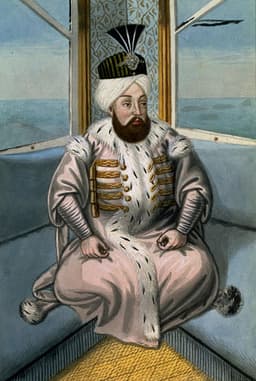
Koprulu Fazil Mustafa
General · Modern
58.7Total

Napoleon Bonaparte
General · Modern
70.9Total
Basic Information
Born
1637
1769
Died
1691
1821
Era
Modern
Modern
Nationality
Ottoman Empire
France
Occupation
General
General
Civilization
Middle Eastern
Western
Score Comparison
Military (10%)
67.5
94.0
Political (20%)
55.0
72.0
Influence (20%)
54.9
40.0
Legacy (20%)
47.5
80.0
Leadership (15%)
80.0
78.0
Strategy (15%)
61.2
90.0
TOTAL
58.7
70.9
Koprulu Fazil Mustafa — Complete Timeline
1689 AD
Appointment as Grand VizierPolitical Action◆ Major
Koprulu Fazil Mustafa Pasha was appointed Grand Vizier by Sultan Suleiman II during a period of military crisis. He implemented reforms to restore the Ottoman army and administration, including financial reorganization and efforts to curb corruption.
Koprulu EraReformOttoman Politics
Impact: nationalconstructive
1690 AD
Reconquest of BelgradeWar◆ Major
Koprulu Fazil Mustafa Pasha led a successful campaign to recapture Belgrade from the Habsburgs. The victory temporarily restored Ottoman control over the key fortress city and boosted morale, though it did not reverse the overall decline in the war.
Ottoman-Habsburg WarReconquestBelgrade
Impact: regionalconstructive
1691 AD
Battle of SlankamenWar◆ Major
Koprulu Fazil Mustafa Pasha led the Ottoman army against the Habsburgs at the Battle of Slankamen. He was killed in action during the battle, which ended in a decisive Ottoman defeat. His death was a major blow to the Koprulu reform efforts and the Ottoman war effort.
Ottoman-Habsburg WarBattleDeath in Battle
Impact: regionaltragic
Napoleon Bonaparte — Complete Timeline
1799 AD
Coup of 18 BrumaireOther◆ Major
Napoleon Bonaparte, with support from his brother Lucien and key political figures, overthrew the Directory in a bloodless coup. He established the Consulate with himself as First Consul, effectively becoming the ruler of France. This event ended the French Revolution's most unstable period.
French RevolutionCoupRise to Power
Impact: regional
1804 AD
Promulgation of the Napoleonic CodeOther◆ Major
Napoleon enacted the Civil Code of the French, known as the Napoleonic Code, a comprehensive set of laws that replaced the fragmented feudal legal systems. The code established legal equality, protected property rights, and secularized law. It became the basis for legal systems in many European and world countries.
Legal ReformNapoleonic CodeCivil Law
Impact: globalconstructive
1805 AD
Battle of AusterlitzWar◆ Major
Napoleon's Grande Arm
Napoleonic WarsBattleDecisive Victory
Impact: global
1812 AD
Invasion of RussiaWar◆ Major
Napoleon led the Grande Arm
Napoleonic WarsInvasionDisaster
Impact: globaldestructive
1815 AD
Battle of WaterlooWar◆ Major
Napoleon's French army was defeated by the combined forces of the Duke of Wellington's Anglo-Allied army and Gebhard Leberecht von Bl
Napoleonic WarsBattleFinal Defeat
Impact: globaldestructive
Expert Analysis
koprulu-fazil-mustafa-vs-napoleon-bonaparte
# The Emperor and the Grand Vizier: Two Paths to Power, Two Destinies
On a June morning in 1815, Napoleon Bonaparte watched his Imperial Guard march into the muddy fields of Waterloo, their eagles gleaming under a Belgian sky. Twenty-six years earlier, on an August afternoon in 1691, Köprülü Fazıl Mustafa Pasha fell from his horse at Slankamen, a Habsburg bullet through his chest. Both men died in battle—one immediately, the other in slow exile—but their deaths tell only the smallest part of their stories. Why did one become a legend whose name still echoes in every corner of the world, while the other remains a footnote even in the history he helped shape? The answer lies not in their talents, which were considerable in both cases, but in the stages on which they performed.
Origins
The Mediterranean island of Corsica, recently annexed by France, gave the world Napoleon Bonaparte in 1769. He was born into minor nobility, the second surviving child of a family that spoke Italian and resented French rule. His father, Carlo, was a scheming lawyer who maneuvered his way into French favor, securing a scholarship for young Napoleon at a military academy in mainland France. There, the boy with the thick Corsican accent was mocked by aristocratic classmates—a humiliation that forged a will of iron.
Köprülü Fazıl Mustafa was born in 1637 into the most powerful political dynasty of the Ottoman Empire. His grandfather, Köprülü Mehmed Pasha, had founded a vizierial dynasty that saved the Ottoman state from collapse. Fazıl Mustafa grew up in the shadow of greatness, educated in Islamic law and statecraft, expected to inherit power. Where Napoleon had to claw his way upward from the margins, Fazıl Mustafa was born at the center. Yet this very privilege would prove a kind of cage.
Rise to Power
Napoleon’s ascent was a masterpiece of opportunism. The French Revolution, which began when he was twenty, shattered the old order. By 1793, at age twenty-four, he was a brigadier general after his artillery drove the British from Toulon. In 1796, he took command of the starving, unpaid Army of Italy and transformed it into a conquering force, winning battles at Lodi, Arcole, and Rivoli. The Directory, corrupt and fearful, sent him to Egypt in 1798 to keep him away from Paris—but Napoleon returned in 1799, staged a coup, and made himself First Consul. By 1804, he crowned himself Emperor.
Fazıl Mustafa’s path was more constrained. The Ottoman Empire in 1689 was reeling from the catastrophic defeat at Vienna in 1683. Sultan Suleiman II, desperate for a savior, appointed Fazıl Mustafa as Grand Vizier. Unlike Napoleon, who seized power, Fazıl Mustafa received it as a burden. He immediately began reforming the army, rooting out corruption, and restoring discipline. In 1690, he led a campaign that recaptured Belgrade from the Habsburgs—a victory that temporarily reversed Ottoman decline. The historian Silahdar Findiklili Mehmed Aga recorded that Fazıl Mustafa wept when he saw the city’s ruined mosques.
Leadership & Governance
Napoleon ruled through force of personality and sheer competence. He worked eighteen-hour days, dictated letters to multiple secretaries simultaneously, and remembered the names of thousands of soldiers. His Napoleonic Code, introduced in 1804, standardized French law and influenced legal systems across Europe. He built roads, founded banks, and established the Legion of Honour. His military genius was strategic and tactical: he used speed, deception, and devastating artillery to shatter enemy armies. At Austerlitz in 1805, he destroyed a Russo-Austrian army with a feigned retreat that remains a textbook maneuver.
Fazıl Mustafa governed through patience and piety. He reduced taxes on peasants, punished corrupt officials, and restored the authority of the sultan. He was a religious man who consulted Islamic jurists and sought consensus. His military style was cautious and methodical—the opposite of Napoleon’s lightning campaigns. At Slankamen in 1691, he faced a smaller Habsburg army but chose to fight a defensive battle. He was killed when his horse carried him into the enemy line, a death that Ottoman chroniclers called *şehadet*—martyrdom.
Triumph & Tragedy
Napoleon’s greatest moment was Austerlitz, where he crushed the Third Coalition. His greatest failure was the invasion of Russia in 1812—a catastrophic campaign that cost half a million men. He was exiled to Elba in 1814, escaped in 1815, and was finally defeated at Waterloo. His tragedy was not that he lost, but that he could not stop.
Fazıl Mustafa’s triumph was the recapture of Belgrade, a victory that bought the Ottoman Empire a decade of breathing room. His tragedy was that his death at Slankamen, at age fifty-four, cut short his reforms. The Ottomans lost the war, and the empire resumed its slow decline. Fazıl Mustafa died for a state that would not survive him by three centuries.
Character & Destiny
Napoleon was a man of burning ambition and supreme self-confidence. “Impossible is a word to be found only in the dictionary of fools,” he once said. He believed he could bend history to his will—and for a time, he did. But his arrogance, his refusal to compromise, and his contempt for limits ultimately destroyed him.
Fazıl Mustafa was a man of duty and faith. He did not seek power but accepted it. He was known for his justice—he once refused to execute a captured Habsburg general because the man had surrendered under a promise of safety. His fatal charge at Slankamen was not recklessness but devotion: he died leading his men, as a vizier should.
Legacy
Napoleon’s legacy is global. His legal code, his military innovations, his style of governance—all shaped the modern world. He is remembered in statues, street names, and films. His scores on historical metrics are extraordinary: Military 94, Strategy 93, Political 75, Influence 82.
Fazıl Mustafa’s legacy is local. He is remembered in Turkey and the Balkans, but hardly anywhere else. His scores are modest: Military 71, Political 84, Influence 72, Legacy 62. Yet his political score exceeds Napoleon’s—because he governed wisely, not just powerfully.
Conclusion
The difference between these two men is not one of talent but of theater. Napoleon performed on a European stage that was transforming into a global one, in an age of nationalism and revolution. Fazıl Mustafa performed on a stage that was shrinking, in an empire that was dying. Napoleon’s story is a tragedy of hubris; Fazıl Mustafa’s is a tragedy of duty. Both fell in battle, but one fell into legend, the other into silence. Perhaps the truest measure of a leader is not how far he rises, but how well he serves the world that shaped him. Napoleon changed the world; Fazıl Mustafa tried to save his. Which is the greater achievement? That question, like the men themselves, remains unresolved.
Rankings
🥇
Napoleon BonaparteLeader
Mil: 94.0Pol: 72.0Inf: 40.0
70.9
🥈
Koprulu Fazil Mustafa
Mil: 67.5Pol: 55.0Inf: 54.9
58.7
+12.2 behind
How This Comparison Works
Algorithm
Each figure is scored on 6 dimensions (0—100 scale) based on structured historical data: Military (10%), Political (20%), Influence (20%), Legacy (20%), Leadership (15%), Strategy (15%). The weighted total produces the final ranking.
Data Sources
Scores are computed from structured sub-indicators in the database. Scale factors adjust for era (Ancient ×0.85, Modern ×1.0) and civilization size (Eastern ×1.05, Other ×0.80) to account for differences in population and military scale.
Maximum 3 Figures
Comparisons are limited to 2—3 figures to ensure readability and statistical meaningfulness.
Error Margins
±5 points per dimension — Sub-scores are derived from historical records with inherent uncertainty. Two figures within 5 points on a dimension should be considered roughly equivalent in that area.
Total Score Accuracy
±3 points overall — The weighted combination of 6 dimensions produces a total score with approximately ±3 points of uncertainty. Differences of less than 3 points are not statistically significant— the figures are effectively tied.
Known Limitations
- Historical records are incomplete and uneven across civilizations
- Figures from oral-tradition societies may be underrepresented
- Occupation labels can misclassify multi-role figures
- Scores measure capability and impact, not moral character
- Quantitative scoring is a comparison tool, not absolute truth
Capability Radar
Military (10%) — Battles & Warfare
Battles
65
95
Win Rate
55
90
Expansion
60
95
Political (20%) — Governance & Reform
Reform
70
95
Diplomacy
55
80
Economy
60
85
Influence (20%) — Cultural & Global Reach
Cultural
30
85
Global
30
90
Legacy (20%) — Historical Impact
Historical
40
95
Longevity
35
90
Leadership (15%) — Power & Stability
Tenure
50
85
Stability
45
70
Strategy (15%) — Tactics & Innovation
Strategy
70
95
Tactics
60
98
Reform
75
92
Similar Comparisons
Comments & Discussion
KöprülüCurator6/17/2026
Both men died on battlefields, yet Napoleon's legend grew while Fazıl Mustafa's was buried with his horse at Slankamen. That's not about talent—it's about which side of history's lens you're standing on. Napoleon got to shape his own narrative with memoirs and a cult of personality; Fazıl Mustafa was just another Ottoman vizier to European chroniclers. The real comparison here isn't strategy, but PR. Put Napoleon in 17th-century Balkans and he'd be a footnote too.|
SlankamenScribe6/17/2026
拿破仑在滑铁卢好歹有个全景构图式的终局,库普鲁律在斯兰卡门一箭穿心,连败退都没来得及演。这就是东西方历史叙事的鸿沟——西方写英雄重在“崛起与陨落”,东方写大臣只记“在位与阵亡”。真要论战术,法兹勒穆斯塔法的军制改革效率不比拿破仑差,但他没资格在圣赫勒拿岛写回忆录。死于战场是勇士,死于流放才是传说。
NapoleonicEagleEye6/17/2026
The most revealing difference isn't how they died, but who they commanded. Napoleon had the Grande Armée—a national army forged by revolution, loyal to a cause. Fazıl Mustafa had a polyglot Ottoman force of Janissaries, timariots, and tribal levies, many of whom had more loyalty to their local beys than to the sultan. You can't compare military genius when one man commands a machine and the other a patchwork. That's like racing a Ferrari against a donkey cart and calling it a contest.|
东方战车手6/17/2026
世人只知拿破仑的意大利战役,却不知库普鲁律几乎在同一片巴尔干土地上重现了类似的速战战术。1690年他收复贝尔格莱德只用了44天——比拿破仑任何一次攻城都快。区别在于,拿破仑身后有法兰西全境补给线,而库普鲁律必须同时应付维也纳、威尼斯和莫斯科的四方威胁。历史不是比谁更聪明,是比谁的后台更硬。
RevisionistHammer6/17/2026
Let's stop pretending these two belong in the same sentence. Napoleon reshaped Europe's political map, legal codes, and military doctrine for two centuries. Fazıl Mustafa barely held the Ottomans together for four years before getting shot off his horse. One founded an empire that outlasted him; the other died trying to delay an empire's collapse. This comparison is ahistorical clickbait. Put some respect on the name of the man who actually changed the world, not the one who got a chapter in an