Loading...
Duwa vs Muawiyah I
Muawiyah I leads by 21.5 pts · 2 figures compared
…

Duwa
Emperor · Medieval
54.8Total
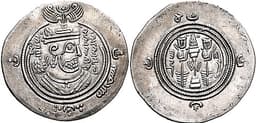
Muawiyah I
Emperor · Medieval
76.3Total
Basic Information
Born
1265
602
Died
1307
680
Era
Medieval
Medieval
Nationality
Chagatai Khanate
Umayyad Caliphate
Occupation
Emperor
Emperor
Civilization
Eastern
Middle Eastern
Score Comparison
Military (10%)
47.5
76.0
Political (20%)
54.7
75.0
Influence (20%)
53.3
75.0
Legacy (20%)
45.8
80.0
Leadership (15%)
74.0
78.0
Strategy (15%)
60.0
70.0
TOTAL
54.8
76.3
Duwa — Complete Timeline
1282 AD
Became Khan of the Chagatai KhanatePolitical Action◆ Major
Duwa became Khan of the Chagatai Khanate in 1282, after the death of his predecessor Baraq. He ruled for 25 years, leading the khanate through a period of conflict with the Yuan dynasty and the Ilkhanate.
Chagatai KhanateKhanBaraq
Impact: regional
1285 AD
Allied with Kaidu Against the Yuan DynastyPolitical Action◆ Major
Duwa formed a military alliance with Kaidu, the de facto ruler of the Mongol heartland, against the Yuan dynasty of Kublai Khan. Together, they launched campaigns into Yuan-controlled territories, including the Tarim Basin and Mongolia, challenging Yuan authority.
KaiduYuan DynastyAlliance
Impact: regionaldestructive
1298 AD
Defeated by the Yuan at the Battle of Khara-KhotoWar
Duwa's forces were defeated by the Yuan army at the Battle of Khara-Khoto in 1298. The loss weakened his position and forced him to retreat, leading to a temporary cessation of hostilities with the Yuan.
BattleYuan DynastyDefeat
Impact: regionaldestructive
1304 AD
Signed Peace Treaty with the Yuan DynastyPolitical Action◆ Major
Duwa negotiated a peace treaty with the Yuan dynasty in 1304, ending decades of conflict. The treaty recognized Yuan suzerainty over the Chagatai Khanate, but allowed Duwa to maintain internal autonomy, stabilizing the region.
Peace TreatyYuan DynastyAutonomy
Impact: regionalconstructive
Muawiyah I — Complete Timeline
640 AD
Governorship of SyriaPolitical Action◆ Major
Muawiyah I was appointed governor of Syria by Caliph Umar. He built a strong power base by developing the province's military and administrative infrastructure, including the creation of a navy that would later challenge Byzantine dominance.
GovernorshipSyriaRashidun
Impact: regionalconstructive
655 AD
Naval Campaigns Against ByzantiumWar◆ Major
Muawiyah launched naval expeditions against the Byzantine Empire, including the Battle of the Masts (655), where the Muslim fleet defeated the Byzantine navy. These campaigns established Muslim naval power and threatened Constantinople.
Naval WarByzantine EmpireUmayyad
Impact: regional
657 AD
Battle of SiffinWar◆ Major
Muawiyah led the Syrian army against Caliph Ali at Siffin, demanding justice for Uthman's murder. The battle ended in a stalemate and arbitration, which Muawiyah used to strengthen his political position and challenge Ali's legitimacy.
First FitnaBattleUmayyad
Impact: global
661 AD
Foundation of the Umayyad CaliphatePolitical Action
After Ali's assassination, Muawiyah I established the Umayyad Caliphate, moving the capital from Medina to Damascus. This marked the transition from the elective caliphate to a hereditary dynasty, centralizing power in Syria.
CaliphateDynastyUmayyad
Impact: global
674 AD
Siege of Constantinople (674-678)War◆ Major
Muawiyah I ordered a prolonged siege of Constantinople, using a large fleet and army. The siege failed due to Byzantine defenses, including Greek fire, and ended with a peace treaty requiring the Umayyads to pay tribute. It was a rare setback.
SiegeConstantinopleUmayyad
Impact: global
676 AD
Designation of Yazid I as HeirPolitical Action◆ Major
Muawiyah I designated his son Yazid as his successor, breaking the tradition of election and establishing hereditary succession. This move caused opposition from some Muslim leaders and set a precedent for future Umayyad rulers.
SuccessionHereditaryUmayyad
Impact: global
Expert Analysis
Origins
Duwa was born around 1260 into the Chagatai Khanate, the son of Baraq, a prominent khan. Little is known of his early life, but he likely received a traditional Mongol upbringing focusing on horseback riding, archery, and tribal politics. He became khan in 1282 after Baraq's death, inheriting a fragmented realm caught between the Yuan dynasty and the Mongol heartland.
Muawiyah I was born in Mecca around 602 CE into the Umayyad clan of the Quraysh tribe. His father, Abu Sufyan, was a leading merchant and opponent of Muhammad until the conquest of Mecca. Muawiyah converted to Islam in 630 and served as a scribe for the Prophet. He gained administrative experience under Caliph Umar, who appointed him governor of Syria in 639.
Rise to Power
Duwa's rise came through his alliance with Kaidu, the de facto ruler of the Mongol heartland. In 1282, he became khan of the Chagatai Khanate and immediately joined Kaidu's war against the Yuan dynasty of Kublai Khan. Their forces launched multiple attacks on Yuan territories, disrupting trade and communication. Duwa's position solidified as he coordinated with Kaidu, but his power remained secondary to Kaidu's authority.
Muawiyah I rose to prominence as governor of Syria, where he built a loyal army and administrative network. He refused to recognize Caliph Ali after the assassination of Uthman in 656, demanding justice. In 657, he confronted Ali at the Battle of Siffin, which ended in a stalemate and arbitration. After Ali's assassination in 661, Muawiyah claimed the caliphate, establishing the Umayyad dynasty with its capital in Damascus.
Leadership & Governance
Duwa's leadership was constrained by his alliance with Kaidu. He focused on military campaigns against the Yuan, but his political autonomy was limited. He did not implement major administrative reforms; instead, he maintained traditional Mongol tribal structures. His decision to negotiate a peace treaty with the Yuan in 1304 showed pragmatic diplomacy, recognizing Yuan suzerainty to secure his khanate's survival.
Muawiyah I transformed the caliphate from a elective system to a hereditary monarchy. He centralized power in Damascus, creating a professional army and bureaucracy. He appointed loyal governors, developed a postal service, and improved tax collection. His naval campaigns against Byzantium, including the Battle of the Masts (655), demonstrated his strategic use of sea power. He also established the diwan al-khatam (chancery) to manage correspondence.
Triumph & Tragedy
Duwa's greatest triumph was the peace treaty of 1304, which ended decades of war with the Yuan and secured the Chagatai Khanate's existence. His alliance with Kaidu kept the Yuan off balance. However, his defeat at the Battle of Khara-Khoto in 1298 was a major setback, weakening his military reputation. His legacy is mixed: he preserved his khanate but did not expand it significantly.
Muawiyah I's greatest triumph was founding the Umayyad Caliphate, which lasted nearly a century and expanded Islamic rule from Spain to India. His siege of Constantinople (674-678) showcased his ambition, though it ultimately failed. His greatest tragedy was the internal strife caused by his conflict with Ali, which deepened the Sunni-Shia split. His decision to appoint his son Yazid as successor broke the tradition of consultation, leading to future rebellions.
Character & Destiny
Duwa was a pragmatic and cautious leader, willing to submit to Yuan suzerainty for peace. He lacked the aggressive expansionism of earlier Mongol khans, focusing on survival rather than conquest. His alliance with Kaidu defined his reign, limiting his independent action.
Muawiyah I was a shrewd politician and patient strategist. He bided his time during the conflict with Ali, using diplomacy and propaganda to undermine his rival. His ability to build coalitions and delegate authority made him an effective ruler. His destiny was to transform the caliphate, but his methods sowed seeds of division.
Legacy
Duwa's legacy is modest. He is remembered as a secondary figure in Mongol history, overshadowed by Kaidu and Kublai. The peace treaty of 1304 temporarily stabilized Central Asia, but the Chagatai Khanate continued to fragment after his death. His influence score of 53.3 reflects his limited long-term impact.
Muawiyah I's legacy is profound. He established the Umayyad Caliphate, which became one of the largest empires in history. His administrative innovations, such as the diwan and centralized treasury, influenced later Islamic states. He is credited with building the first Muslim navy and securing Syria as a power base. His legacy score of 80.0 underscores his enduring impact on Islamic history.
Conclusion
Muawiyah I had a greater impact than Duwa. His total score of 76.3 versus Duwa's 54.8 reflects his broader influence across military, political, and institutional domains. While Duwa played a role in Mongol internecine conflicts, Muawiyah founded a dynasty that shaped the course of Islamic civilization for centuries. His strategic use of naval power, administrative reforms, and establishment of hereditary succession left a lasting imprint. Duwa's achievements were significant within the Mongol context, but they were eclipsed by Muawiyah's transformative leadership.
Rankings
🥇
Muawiyah ILeader
Mil: 76.0Pol: 75.0Inf: 75.0
76.3
🥈
Duwa
Mil: 47.5Pol: 54.7Inf: 53.3
54.8
+21.5 behind
How This Comparison Works
Algorithm
Each figure is scored on 6 dimensions (0—100 scale) based on structured historical data: Military (10%), Political (20%), Influence (20%), Legacy (20%), Leadership (15%), Strategy (15%). The weighted total produces the final ranking.
Data Sources
Scores are computed from structured sub-indicators in the database. Scale factors adjust for era (Ancient ×0.85, Modern ×1.0) and civilization size (Eastern ×1.05, Other ×0.80) to account for differences in population and military scale.
Maximum 3 Figures
Comparisons are limited to 2—3 figures to ensure readability and statistical meaningfulness.
Error Margins
±5 points per dimension — Sub-scores are derived from historical records with inherent uncertainty. Two figures within 5 points on a dimension should be considered roughly equivalent in that area.
Total Score Accuracy
±3 points overall — The weighted combination of 6 dimensions produces a total score with approximately ±3 points of uncertainty. Differences of less than 3 points are not statistically significant— the figures are effectively tied.
Known Limitations
- Historical records are incomplete and uneven across civilizations
- Figures from oral-tradition societies may be underrepresented
- Occupation labels can misclassify multi-role figures
- Scores measure capability and impact, not moral character
- Quantitative scoring is a comparison tool, not absolute truth
Capability Radar
Military (10%) — Battles & Warfare
Battles
55
75
Win Rate
50
80
Expansion
50
85
Political (20%) — Governance & Reform
Reform
35
90
Diplomacy
65
95
Economy
40
85
Influence (20%) — Cultural & Global Reach
Cultural
30
75
Global
30
75
Legacy (20%) — Historical Impact
Historical
40
85
Longevity
35
80
Leadership (15%) — Power & Stability
Tenure
60
85
Stability
45
80
Strategy (15%) — Tactics & Innovation
Strategy
55
85
Tactics
45
70
Reform
30
80
Similar Comparisons
Comments & Discussion
No comments yet. Be the first to share your thoughts!