Loading...
Muawiyah I vs Muhammad Shah I Bahmani
Muawiyah I leads by 22.0 pts · 2 figures compared
…
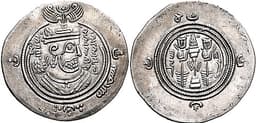
Muawiyah I
Emperor · Medieval
76.3Total
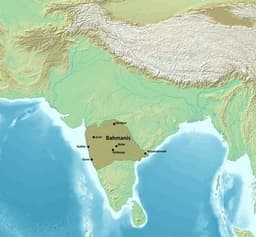
Muhammad Shah I Bahmani
Emperor · Medieval
54.3Total
Basic Information
Born
602
1358
Died
680
1375
Era
Medieval
Medieval
Nationality
Umayyad Caliphate
India
Occupation
Emperor
Emperor
Civilization
Middle Eastern
Indian
Score Comparison
Military (10%)
76.0
25.0
Political (20%)
75.0
62.7
Influence (20%)
75.0
60.0
Legacy (20%)
80.0
49.2
Leadership (15%)
78.0
66.0
Strategy (15%)
70.0
51.7
TOTAL
76.3
54.3
Muawiyah I — Complete Timeline
640 AD
Governorship of SyriaPolitical Action◆ Major
Muawiyah I was appointed governor of Syria by Caliph Umar. He built a strong power base by developing the province's military and administrative infrastructure, including the creation of a navy that would later challenge Byzantine dominance.
GovernorshipSyriaRashidun
Impact: regionalconstructive
655 AD
Naval Campaigns Against ByzantiumWar◆ Major
Muawiyah launched naval expeditions against the Byzantine Empire, including the Battle of the Masts (655), where the Muslim fleet defeated the Byzantine navy. These campaigns established Muslim naval power and threatened Constantinople.
Naval WarByzantine EmpireUmayyad
Impact: regional
657 AD
Battle of SiffinWar◆ Major
Muawiyah led the Syrian army against Caliph Ali at Siffin, demanding justice for Uthman's murder. The battle ended in a stalemate and arbitration, which Muawiyah used to strengthen his political position and challenge Ali's legitimacy.
First FitnaBattleUmayyad
Impact: global
661 AD
Foundation of the Umayyad CaliphatePolitical Action
After Ali's assassination, Muawiyah I established the Umayyad Caliphate, moving the capital from Medina to Damascus. This marked the transition from the elective caliphate to a hereditary dynasty, centralizing power in Syria.
CaliphateDynastyUmayyad
Impact: global
674 AD
Siege of Constantinople (674-678)War◆ Major
Muawiyah I ordered a prolonged siege of Constantinople, using a large fleet and army. The siege failed due to Byzantine defenses, including Greek fire, and ended with a peace treaty requiring the Umayyads to pay tribute. It was a rare setback.
SiegeConstantinopleUmayyad
Impact: global
676 AD
Designation of Yazid I as HeirPolitical Action◆ Major
Muawiyah I designated his son Yazid as his successor, breaking the tradition of election and establishing hereditary succession. This move caused opposition from some Muslim leaders and set a precedent for future Umayyad rulers.
SuccessionHereditaryUmayyad
Impact: global
Muhammad Shah I Bahmani — Complete Timeline
1360 AD
Reorganization of Bahmani administrationReform◆ Major
Muhammad Shah I Bahmani restructured the Bahmani administration by dividing the sultanate into four provinces (tarafs), each governed by a tarafdar. This system improved tax collection and military organization.
Administrative ReformProvincial System
Impact: regionalconstructive
1365 AD
War with Vijayanagara over Raichur DoabWar◆ Major
Muhammad Shah I Bahmani fought a war against the Vijayanagara Empire for control of the Raichur Doab. The conflict ended with a treaty that temporarily ceded the region to Vijayanagara.
WarVijayanagaraTerritorial Dispute
Impact: regional
1367 AD
Construction of the Jami Masjid at GulbargaCultural
Muhammad Shah I Bahmani commissioned the construction of the Jami Masjid in Gulbarga, a large congregational mosque. The mosque became a center for Islamic worship and learning in the Bahmani capital.
ArchitectureReligion
constructive
1370 AD
Suppression of the rebellion of Bahram KhanPolitical Action
Muhammad Shah I Bahmani crushed a rebellion led by the noble Bahram Khan, who had challenged his authority. The revolt was put down with force, and Bahram Khan was executed.
RebellionInternal Conflict
Impact: nationaldestructive
Expert Analysis
Origins
Muawiyah I (602–680 CE) was born into the Quraysh tribe of Mecca, into the wealthy Umayyad clan. His father, Abu Sufyan, was a prominent Meccan leader who initially opposed Muhammad but later converted. Muawiyah was among the early Muslims and served as a scribe for the Quran. He was appointed governor of Syria by Caliph Umar in 639 CE, a position that allowed him to build a formidable power base. His early experiences in administration and military command shaped his pragmatic and strategic mindset.
Muhammad Shah I Bahmani (r. 1358–1375 CE) was the second sultan of the Bahmani Sultanate in the Deccan, India. He was the son of Ala-ud-Din Bahman Shah, the founder of the dynasty. Little is known of his early life, but he ascended the throne after his father's death. He inherited a nascent sultanate that faced internal rebellions and external threats from the Vijayanagara Empire. His background as a ruler in a multi-religious and fractured political landscape influenced his administrative reforms.
Rise to Power
Muawiyah's rise was gradual and calculated. As governor of Syria, he developed a loyal army and efficient bureaucracy, using revenues from trade and agriculture to fund his campaigns. He consolidated power by fostering alliances with Christian Arab tribes and using diplomacy to secure the Byzantine frontier. The assassination of Caliph Uthman in 656 CE plunged the Islamic world into civil war. Muawiyah, as Uthman's kinsman, refused to recognize Caliph Ali, demanding justice for Uthman's murder. This led to the Battle of Siffin in 657 CE, which ended in arbitration and a stalemate. After Ali's assassination in 661 CE, Muawiyah was recognized as caliph, founding the Umayyad Caliphate with Damascus as his capital.
Muhammad Shah I came to power peacefully upon his father's death in 1358 CE. However, his early reign was marked by a rebellion from the noble Bahram Khan, who challenged his authority. Muhammad Shah suppressed the revolt with force, executing Bahram Khan and confiscating his lands. This consolidation of power allowed him to focus on administrative reorganization and external wars. His rise was less about military conquest and more about establishing control over a fractious nobility.
Leadership & Governance
Muawiyah I was a master of political pragmatism. He decentralized governance by delegating authority to provincial governors while maintaining control through a network of spies and loyalists. He reformed the postal system (barid) and improved tax collection. His leadership was characterized by patience and strategic patience; he used diplomacy to neutralize enemies, such as his truce with the Byzantine Empire and his alliance with the Christian tribe of Taghlib. He also established a hereditary succession by appointing his son Yazid as heir, a controversial move that broke the earlier elective principle.
Muhammad Shah I Bahmani focused on administrative consolidation. He divided the sultanate into four provinces (tarafs) under tarafdars, who were responsible for revenue collection and military command. This system aimed to prevent the concentration of power in any single noble. He also patronized Islamic architecture, commissioning the Jami Masjid at Gulbarga, which became a center of Islamic learning. His governance was more inward-looking compared to Muawiyah's expansive vision, focusing on stability rather than territorial expansion.
Triumph & Tragedy
Muawiyah's greatest triumph was founding the Umayyad Caliphate, which expanded Islamic rule from Spain to Central Asia. His naval campaigns against Byzantium, including the Battle of the Masts (655 CE), secured Muslim dominance in the Mediterranean. However, his siege of Constantinople (674–678 CE) failed due to Byzantine use of Greek fire, a significant setback. His decision to appoint his son Yazid led to the tragedy of Karbala (680 CE) and the Second Fitna, tarnishing his legacy.
Muhammad Shah I's triumph was the suppression of the Bahram Khan rebellion and the reorganization of the Bahmani administration, which provided stability for decades. He also fought a war with Vijayanagara over the Raichur Doab, ending in a treaty that temporarily secured the region. However, his reign saw no major territorial expansion, and the administrative system he created later led to factionalism among tarafdars. His failure to centralize power ultimately weakened the sultanate.
Character & Destiny
Muawiyah was patient, cunning, and pragmatic. He preferred diplomacy over warfare, as seen in his arbitration at Siffin. His character shaped the Umayyad Caliphate into a centralized, hereditary monarchy, but his reliance on tribal alliances sowed seeds of future discord. Historians like al-Tabari note his political acumen but criticize his deviation from the Rashidun model.
Muhammad Shah I was a capable administrator but not a visionary leader. His focus on internal stability came at the cost of external ambitions. He lacked the military prowess of his contemporaries, scoring only 25.0 in military compared to Muawiyah's 76.0. His character led to a stable but stagnant reign.
Legacy
Muawiyah I's legacy is immense: he founded the Umayyad dynasty, which ruled for nearly a century and expanded the Islamic empire to its greatest territorial extent. He established the capital in Damascus, shifting the center of Islam from Arabia to Syria. His administrative reforms influenced later caliphates. However, his introduction of hereditary succession sparked long-term conflicts within the Muslim community. His overall legacy score is 80.0.
Muhammad Shah I's legacy is more limited. His administrative divisions influenced later Deccan sultanates, but the Bahmani Sultanate declined after his death due to internal strife. The Jami Masjid at Gulbarga remains a historical monument, but his impact on broader Islamic history is minimal. His legacy score is 49.2.
Conclusion
Muawiyah I had a significantly greater impact than Muhammad Shah I Bahmani, as reflected in his higher total score (76.3 vs 54.3). Muawiyah founded a dynasty that shaped Islamic history for centuries, while Muhammad Shah's reforms were confined to a regional sultanate. Muawiyah's military campaigns, political innovations, and legacy of expanding the Islamic world outweigh Muhammad Shah's administrative achievements. Even considering the different contexts, Muawiyah's influence on the course of history is far more profound. Therefore, Muawiyah I is the more consequential figure.
Rankings
🥇
Muawiyah ILeader
Mil: 76.0Pol: 75.0Inf: 75.0
76.3
🥈
Muhammad Shah I Bahmani
Mil: 25.0Pol: 62.7Inf: 60.0
54.3
+22.0 behind
How This Comparison Works
Algorithm
Each figure is scored on 6 dimensions (0—100 scale) based on structured historical data: Military (10%), Political (20%), Influence (20%), Legacy (20%), Leadership (15%), Strategy (15%). The weighted total produces the final ranking.
Data Sources
Scores are computed from structured sub-indicators in the database. Scale factors adjust for era (Ancient ×0.85, Modern ×1.0) and civilization size (Eastern ×1.05, Other ×0.80) to account for differences in population and military scale.
Maximum 3 Figures
Comparisons are limited to 2—3 figures to ensure readability and statistical meaningfulness.
Error Margins
±5 points per dimension — Sub-scores are derived from historical records with inherent uncertainty. Two figures within 5 points on a dimension should be considered roughly equivalent in that area.
Total Score Accuracy
±3 points overall — The weighted combination of 6 dimensions produces a total score with approximately ±3 points of uncertainty. Differences of less than 3 points are not statistically significant— the figures are effectively tied.
Known Limitations
- Historical records are incomplete and uneven across civilizations
- Figures from oral-tradition societies may be underrepresented
- Occupation labels can misclassify multi-role figures
- Scores measure capability and impact, not moral character
- Quantitative scoring is a comparison tool, not absolute truth
Capability Radar
Military (10%) — Battles & Warfare
Battles
75
45
Win Rate
80
50
Expansion
85
40
Political (20%) — Governance & Reform
Reform
90
65
Diplomacy
95
55
Economy
85
50
Influence (20%) — Cultural & Global Reach
Cultural
75
40
Global
75
30
Legacy (20%) — Historical Impact
Historical
85
45
Longevity
80
40
Leadership (15%) — Power & Stability
Tenure
85
60
Stability
80
55
Strategy (15%) — Tactics & Innovation
Strategy
85
45
Tactics
70
40
Reform
80
55
Similar Comparisons
Comments & Discussion
No comments yet. Be the first to share your thoughts!