Loading...
Dwight D. Eisenhower vs Toussaint Louverture
Toussaint Louverture leads by 1.7 pts · 2 figures compared
…

Dwight D. Eisenhower
General · Modern
76.8Total
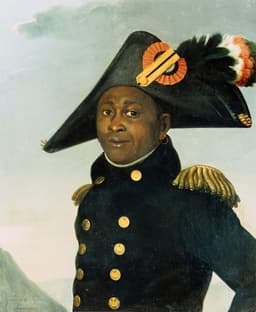
Toussaint Louverture
General · Modern
78.5Total
Basic Information
Born
1890
1743
Died
1969
1803
Era
Modern
Modern
Nationality
United States
Haiti
Occupation
General
General
Civilization
Western
Western
Score Comparison
Military (10%)
74.0
85.0
Political (20%)
75.0
70.3
Influence (20%)
88.0
84.0
Legacy (20%)
68.0
82.0
Leadership (15%)
82.0
72.0
Strategy (15%)
68.0
72.0
TOTAL
76.8
78.5
Dwight D. Eisenhower — Complete Timeline
1942 AD
Operation TorchWar◆ Major
Eisenhower, as Supreme Commander of Allied forces, led the invasion of North Africa. The operation successfully secured French Morocco and Algeria, establishing a foothold for the Allied campaign against Axis forces in the Mediterranean.
World War IINorth AfricaInvasion
Impact: regionalconstructive
1944 AD
D-Day (Normandy Landings)War
Eisenhower, as Supreme Commander of the Allied Expeditionary Force, oversaw the largest amphibious invasion in history on the beaches of Normandy, France. The operation established a Western front against Nazi Germany, leading to the liberation of Western Europe.
World War IID-DayInvasion
Impact: globalconstructive
Battle of the BulgeWar◆ Major
Eisenhower commanded Allied forces during the German counteroffensive in the Ardennes. Despite initial setbacks, he coordinated a successful defense and counterattack, repelling the German offensive and hastening the end of the war in Europe.
World War IIBattleDefense
Impact: regional
1952 AD
Election as President of the United StatesPolitical Action◆ Major
Eisenhower was elected the 34th President of the United States, defeating Democrat Adlai Stevenson. His victory ended 20 years of Democratic control of the White House and reflected his popularity as a war hero.
US PoliticsElectionPresidency
Impact: nationalconstructive
1953 AD
Korean War ArmisticePolitical Action◆ Major
Eisenhower, fulfilling a campaign promise, negotiated an armistice ending the Korean War. The agreement established the Korean Demilitarized Zone and ended active hostilities, though no formal peace treaty was signed.
Korean WarArmisticePeace
Impact: regionalconstructive
1956 AD
Interstate Highway System AuthorizationReform◆ Major
Eisenhower signed the Federal-Aid Highway Act, authorizing the construction of the Interstate Highway System. The project created a network of highways across the US, transforming transportation, commerce, and suburban development.
InfrastructureTransportationDomestic Policy
Impact: nationalconstructive
Toussaint Louverture — Complete Timeline
1791 AD
Haitian Revolution LeadershipWar
Louverture joined the slave revolt in Saint-Domingue, quickly rising to leadership. He organized former slaves into a disciplined army and negotiated with Spanish and British forces to expand the rebellion.
Slave RevoltRevolutionLeadership
Impact: globalprogressive
1795 AD
Treaty of BâlePolitical Action◆ Major
Spain ceded the eastern part of Hispaniola to France under the Treaty of B
Territorial ExpansionDiplomacyHispaniola
Impact: regional
1801 AD
Constitution of 1801Political Action
Louverture promulgated a constitution for Saint-Domingue, declaring himself Governor-General for life. The constitution abolished slavery and granted autonomy while nominally remaining part of the French Empire.
ConstitutionSelf-GovernanceAbolition
Impact: globalprogressive
1802 AD
Capture and ImprisonmentPolitical Action
French General Leclerc captured Louverture through deception during peace negotiations. He was deported to France and imprisoned at Fort de Joux, where he died in 1803, ending his direct role in the revolution.
BetrayalImprisonmentFrench Repression
Impact: globaltragic
Expert Analysis
Origins
Dwight D. Eisenhower was born on October 14, 1890, in Denison, Texas, to a family of modest means. His parents were pacifist Mennonites, and he grew up in Abilene, Kansas. Eisenhower attended the United States Military Academy at West Point, graduating in 1915. His early career was marked by staff assignments rather than combat, shaping his strategic and organizational skills.
Toussaint Louverture was born around 1743 on a plantation in Saint-Domingue (now Haiti) to enslaved parents. He was fortunate to receive some education from his godfather, learning to read and write. Louverture worked as a coachman and later as a steward, gaining knowledge of medicinal plants. His experience as a slave gave him firsthand understanding of oppression and revolution.
Rise to Power
Eisenhower's rise came through World War II. He served under General Douglas MacArthur in the Philippines and later impressed General George Marshall. In 1942, he was appointed Supreme Commander of the Allied Expeditionary Force for Operation Torch, the invasion of North Africa. His success led to his role as Supreme Commander for the D-Day invasion in 1944, where he coordinated 156,000 troops on June 6, 1944, a turning point in WWII.
Louverture rose during the Haitian Revolution, which began in 1791. He initially helped his former master escape before joining the rebel forces. By 1793, he became a leader, aligning with the Spanish against the French. In 1794, he switched to the French when they abolished slavery. He defeated British and Spanish forces, consolidated control, and by 1799 dominated Saint-Domingue. His political acumen led to the 1801 constitution, making him governor-general for life.
Leadership & Governance
Eisenhower's leadership style was consensus-building and delegation. As Supreme Commander, he managed diverse allies, including British General Bernard Montgomery and French General Charles de Gaulle. His governance as president emphasized fiscal conservatism and infrastructure. He initiated the Interstate Highway System in 1956, a 41,000-mile network. He also handled Cold War tensions, avoiding direct conflict while promoting nuclear deterrence.
Louverture ruled Saint-Domingue with a mix of military discipline and authoritarianism. He maintained a plantation economy to revive exports, forcing former slaves to work under strict contracts. His 1801 constitution abolished slavery permanently but centralized power. He sought to restore trade with the US and France, balancing autonomy with diplomacy. His leadership was pragmatic but autocratic, alienating some supporters.
Triumph & Tragedy
Eisenhower's greatest triumph was D-Day, scoring 74.0 in military metrics. He also ended the Korean War in 1953 through armistice negotiations. However, his failure to prevent the Soviet suppression of the 1956 Hungarian Revolution and the U-2 incident in 1960 damaged his legacy. His presidency saw the beginning of the Vietnam War involvement, a decision later criticized.
Louverture's triumph was leading the only successful slave revolt, scoring 85.0 in military. He defeated French, Spanish, and British armies. His tragedy was his capture in 1802 after trusting French General Leclerc. He died in a French prison in 1803, never seeing Haiti's independence. His constitution, while progressive, concentrated power and led to later instability.
Character & Destiny
Eisenhower was calm, methodical, and diplomatic. He downplayed his ego, focusing on teamwork. His character suited the coalition warfare of WWII. His destiny was shaped by his ability to navigate bureaucracy and politics, leading to the presidency. He scored 82.0 in leadership, reflecting his steady hand.
Louverture was charismatic, cunning, and determined. He used propaganda and strategy to outmaneuver enemies. His character drove him to seek freedom for all slaves, but his ambition for total control led to his downfall. He scored 72.0 in strategy, showing his tactical brilliance but political overreach.
Legacy
Eisenhower's legacy includes the Interstate Highway System, NASA's creation, and his warning about the military-industrial complex. He is remembered as a general who won WWII and a president who kept peace. His influence score of 88.0 reflects his shaping of modern America.
Louverture's legacy is foundational to Haiti and global anti-colonialism. He inspired future revolutions and abolition movements. His actions led to Haiti's independence in 1804, but the country's subsequent poverty and instability are partly due to his authoritarian model. He scores 82.0 in legacy, a complex figure of liberation and dictatorship.
Conclusion
While Eisenhower achieved higher political office and shaped a superpower, Louverture's impact was more transformative. Eisenhower scored 76.8 total versus Louverture's 78.5, but the nature of their achievements differs. Louverture's success as a former slave defeating European powers is a greater historical rarity. He directly ended slavery in Haiti, a moral revolution. Eisenhower's accomplishments, though vast, operated within existing systems. Louverture's influence on freedom movements worldwide gives him a more profound legacy. Therefore, Toussaint Louverture had a greater impact per capita and in terms of historical significance.
Rankings
🥇
Toussaint LouvertureLeader
Mil: 85.0Pol: 70.3Inf: 84.0
78.5
🥈
Dwight D. Eisenhower
Mil: 74.0Pol: 75.0Inf: 88.0
76.8
+1.7 behind
How This Comparison Works
Algorithm
Each figure is scored on 6 dimensions (0—100 scale) based on structured historical data: Military (10%), Political (20%), Influence (20%), Legacy (20%), Leadership (15%), Strategy (15%). The weighted total produces the final ranking.
Data Sources
Scores are computed from structured sub-indicators in the database. Scale factors adjust for era (Ancient ×0.85, Modern ×1.0) and civilization size (Eastern ×1.05, Other ×0.80) to account for differences in population and military scale.
Maximum 3 Figures
Comparisons are limited to 2—3 figures to ensure readability and statistical meaningfulness.
Error Margins
±5 points per dimension — Sub-scores are derived from historical records with inherent uncertainty. Two figures within 5 points on a dimension should be considered roughly equivalent in that area.
Total Score Accuracy
±3 points overall — The weighted combination of 6 dimensions produces a total score with approximately ±3 points of uncertainty. Differences of less than 3 points are not statistically significant— the figures are effectively tied.
Known Limitations
- Historical records are incomplete and uneven across civilizations
- Figures from oral-tradition societies may be underrepresented
- Occupation labels can misclassify multi-role figures
- Scores measure capability and impact, not moral character
- Quantitative scoring is a comparison tool, not absolute truth
Capability Radar
Military (10%) — Battles & Warfare
Battles
85
85
Win Rate
90
80
Expansion
60
70
Political (20%) — Governance & Reform
Reform
85
85
Diplomacy
90
80
Economy
80
60
Influence (20%) — Cultural & Global Reach
Cultural
70
85
Global
85
85
Legacy (20%) — Historical Impact
Historical
85
95
Longevity
75
90
Leadership (15%) — Power & Stability
Tenure
80
65
Stability
85
55
Strategy (15%) — Tactics & Innovation
Strategy
95
85
Tactics
75
90
Reform
70
75
Similar Comparisons
Comments & Discussion
No comments yet. Be the first to share your thoughts!