Loading...
Tippu Tip vs Toussaint Louverture
Toussaint Louverture leads by 19.5 pts · 2 figures compared
…

Tippu Tip
General · Modern
59.0Total
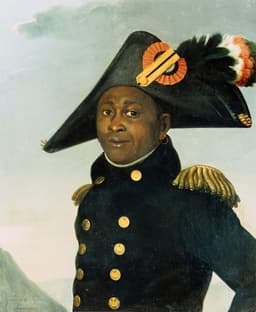
Toussaint Louverture
General · Modern
78.5Total
Basic Information
Born
1837
1743
Died
1905
1803
Era
Modern
Modern
Nationality
Zanzibar
Haiti
Occupation
General
General
Civilization
Other
Western
Score Comparison
Military (10%)
60.0
85.0
Political (20%)
68.0
70.3
Influence (20%)
57.2
84.0
Legacy (20%)
47.5
82.0
Leadership (15%)
71.0
72.0
Strategy (15%)
60.0
72.0
TOTAL
59.0
78.5
Tippu Tip — Complete Timeline
1870 AD
Established trading empire in eastern CongoPolitical Action◆ Major
Tippu Tip expanded his trading network into the eastern Congo Basin, establishing a vast commercial empire based on ivory and slaves. He built alliances with local chiefs and created a private army to protect his interests.
TradeEmpireCongo
Impact: regional
1876 AD
Alliance with Henry Morton StanleyPolitical Action◆ Major
Tippu Tip allied with explorer Henry Morton Stanley, providing guides and protection for Stanley's expeditions in the Congo. This cooperation facilitated European exploration of the region while advancing Tippu Tip's commercial interests.
ExplorationAllianceCongo
Impact: regional
1887 AD
Appointed governor of Stanley Falls DistrictPolitical Action◆ Major
Tippu Tip was appointed governor of the Stanley Falls District by King Leopold II of Belgium, acting as an intermediary between the Congo Free State and local populations. He administered the region for several years, balancing European and African interests.
GovernorshipColonialismCongo Free State
Impact: regional
1890 AD
Conflict with the Congo Free StateWar◆ Major
Tippu Tip's relationship with the Congo Free State deteriorated as Belgian officials sought to monopolize trade. He resisted their encroachment, leading to armed clashes. Eventually, he withdrew to Zanzibar, losing control of his Congo empire.
ConflictCongo Free StateRetreat
Impact: regionaltragic
1891 AD
Retired to ZanzibarPolitical Action
Tippu Tip retired to Zanzibar, leaving his Congo operations behind. He spent his final years managing his remaining estates and writing his autobiography, which became a valuable historical source on East African trade and politics.
RetirementAutobiographyZanzibar
Impact: regional
Toussaint Louverture — Complete Timeline
1791 AD
Haitian Revolution LeadershipWar
Louverture joined the slave revolt in Saint-Domingue, quickly rising to leadership. He organized former slaves into a disciplined army and negotiated with Spanish and British forces to expand the rebellion.
Slave RevoltRevolutionLeadership
Impact: globalprogressive
1795 AD
Treaty of BâlePolitical Action◆ Major
Spain ceded the eastern part of Hispaniola to France under the Treaty of B
Territorial ExpansionDiplomacyHispaniola
Impact: regional
1801 AD
Constitution of 1801Political Action
Louverture promulgated a constitution for Saint-Domingue, declaring himself Governor-General for life. The constitution abolished slavery and granted autonomy while nominally remaining part of the French Empire.
ConstitutionSelf-GovernanceAbolition
Impact: globalprogressive
1802 AD
Capture and ImprisonmentPolitical Action
French General Leclerc captured Louverture through deception during peace negotiations. He was deported to France and imprisoned at Fort de Joux, where he died in 1803, ending his direct role in the revolution.
BetrayalImprisonmentFrench Repression
Impact: globaltragic
Expert Analysis
Origins
**Tippu Tip** (born 1837) was born into a wealthy Swahili-Zanzibari trading family. His father, Mohammed bin Juma, was a prominent trader, and his mother, Binti Habib, came from a respected lineage. Raised in Zanzibar, he learned the intricacies of the Indian Ocean trade network from an early age. By his twenties, he was leading caravans into the African interior, establishing connections with local chiefs.
**Toussaint Louverture** (born 1743) was born into slavery on the Bréda plantation in Saint-Domingue (modern Haiti). His father, an African prince captured in war, and his mother, a slave, raised him among the plantation's slave population. He learned to read and write from a Jesuit priest, a rare privilege. His early life was marked by the brutal realities of slavery, but he gained skills as a coachman and herbalist.
Rise to Power
Tippu Tip's rise began in the 1860s when he ventured into the Congo Basin, establishing trade routes for ivory and slaves. By 1870, he controlled a network of trading posts from Lake Tanganyika to the Congo River. A key turning point was his alliance with explorer Henry Morton Stanley in 1876. Tippu Tip provided guides and protection for Stanley's expeditions, gaining access to European firearms and legitimacy. In 1887, he was appointed governor of the Stanley Falls District by King Leopold II of Belgium, formalizing his control.
Toussaint Louverture's rise started with the Haitian Revolution in 1791. Initially a medic, he quickly organized former slaves into a disciplined army. By 1793, he switched allegiance from the Spanish to the French Republic when they abolished slavery. He defeated British and Spanish forces, becoming de facto ruler of Saint-Domingue by 1798. In 1801, he promulgated a constitution abolishing slavery and naming himself Governor-General for life, consolidating his power.
Leadership & Governance
Tippu Tip governed his empire through personal alliances and trade monopolies. He maintained control by marrying into local ruling families and distributing wealth from ivory and slaves. His leadership style was pragmatic: he cooperated with European powers when beneficial but resisted when threatened. For example, he allowed Stanley's expeditions but later clashed with the Congo Free State over trade restrictions. His governance was extractive, focusing on resource exploitation rather than institutional development.
Toussaint Louverture centralized power in Saint-Domingue. He created a disciplined army, restored the plantation system (with paid labor), and established trade agreements with the US and Britain. His constitution of 1801 banned slavery and declared Catholicism the state religion, but also concentrated authority in his hands. He forced former slaves back to work on plantations to revive the economy, a controversial policy. His leadership combined military prowess with political acumen, but his autocratic tendencies alienated some supporters.
Triumph & Tragedy
Tippu Tip's greatest success was building a vast trading empire that linked the interior to the coast. He amassed immense wealth and influence, controlling the ivory trade for decades. His tragedy came with European colonization: the Congo Free State's expansion eroded his power, and he was forced to retire to Zanzibar in 1891, dying in 1905. His empire collapsed, and his legacy is tainted by his role in the slave trade.
Toussaint Louverture's triumph was leading the only successful slave revolt in history, defeating French, Spanish, and British armies. He established a free black state and abolished slavery. His tragedy was his capture in 1802 through deception by French General Leclerc. He was deported to France and died in prison in 1803. His arrest led to the resumption of slavery in some areas, though the revolution ultimately succeeded under Jean-Jacques Dessalines.
Character & Destiny
Tippu Tip was pragmatic, ambitious, and adaptable. He navigated complex cultural and political landscapes, switching alliances as needed. His character was shaped by commerce: he saw power in economic terms. Historians note his skill in diplomacy but criticize his participation in the slave trade. His destiny was tied to the decline of the Indian Ocean slave trade and the rise of European imperialism.
Toussaint Louverture was disciplined, strategic, and idealistic. He believed in freedom but also in order, often suppressing dissent. His character reflected his Enlightenment education: he valued law and organization. His destiny was shaped by his refusal to compromise on abolition, leading to his downfall. Historians praise his military genius but note his authoritarian streak.
Legacy
Tippu Tip is remembered as a powerful trader and governor, but his legacy is mixed. He is a symbol of Swahili commercial expansion but also of the slave trade. His autobiography provides valuable historical insight. His impact on the Congo was ephemeral; his empire vanished after his retirement. He scores 47.5 in legacy, reflecting limited enduring influence.
Toussaint Louverture is a global icon of liberation. He inspired anti-colonial movements worldwide and is celebrated as the father of Haiti. His constitution influenced later abolitionist thought. His legacy is immense: he proved that enslaved people could win freedom. He scores 82.0 in legacy, indicating profound and lasting impact.
Conclusion
While Tippu Tip was a significant regional power broker, Toussaint Louverture's impact was revolutionary and global. Louverture's military score of 85.0 dwarfs Tippu Tip's 60.0, and his political score of 70.3 edges Tippu's 68.0. More importantly, Louverture's influence (84.0 vs 57.2) and legacy (82.0 vs 47.5) are far higher. Tippu Tip's empire was a commercial enterprise that collapsed under European pressure, whereas Louverture's revolution created a nation that endures. The score gap of 19.5 points reflects this. Toussaint Louverture had greater impact because he changed the course of history, inspiring millions and challenging the institution of slavery itself.
Rankings
🥇
Toussaint LouvertureLeader
Mil: 85.0Pol: 70.3Inf: 84.0
78.5
🥈
Tippu Tip
Mil: 60.0Pol: 68.0Inf: 57.2
59.0
+19.5 behind
How This Comparison Works
Algorithm
Each figure is scored on 6 dimensions (0—100 scale) based on structured historical data: Military (10%), Political (20%), Influence (20%), Legacy (20%), Leadership (15%), Strategy (15%). The weighted total produces the final ranking.
Data Sources
Scores are computed from structured sub-indicators in the database. Scale factors adjust for era (Ancient ×0.85, Modern ×1.0) and civilization size (Eastern ×1.05, Other ×0.80) to account for differences in population and military scale.
Maximum 3 Figures
Comparisons are limited to 2—3 figures to ensure readability and statistical meaningfulness.
Error Margins
±5 points per dimension — Sub-scores are derived from historical records with inherent uncertainty. Two figures within 5 points on a dimension should be considered roughly equivalent in that area.
Total Score Accuracy
±3 points overall — The weighted combination of 6 dimensions produces a total score with approximately ±3 points of uncertainty. Differences of less than 3 points are not statistically significant— the figures are effectively tied.
Known Limitations
- Historical records are incomplete and uneven across civilizations
- Figures from oral-tradition societies may be underrepresented
- Occupation labels can misclassify multi-role figures
- Scores measure capability and impact, not moral character
- Quantitative scoring is a comparison tool, not absolute truth
Capability Radar
Military (10%) — Battles & Warfare
Battles
45
85
Win Rate
55
80
Expansion
60
70
Political (20%) — Governance & Reform
Reform
20
85
Diplomacy
55
80
Economy
60
60
Influence (20%) — Cultural & Global Reach
Cultural
40
85
Global
35
85
Legacy (20%) — Historical Impact
Historical
45
95
Longevity
30
90
Leadership (15%) — Power & Stability
Tenure
50
65
Stability
40
55
Strategy (15%) — Tactics & Innovation
Strategy
55
85
Tactics
50
90
Reform
20
75
Similar Comparisons
Comments & Discussion
No comments yet. Be the first to share your thoughts!