Loading...
Eamon de Valera vs Masayoshi Ohira
Eamon de Valera leads by 8.8 pts · 2 figures compared
…

Eamon de Valera
Politician · Modern
58.6Total
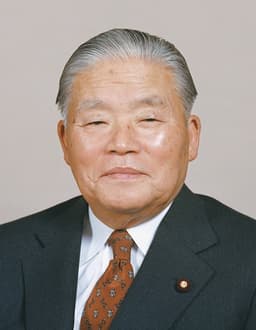
Masayoshi Ohira
Politician · Modern
49.8Total
Basic Information
Born
1882
1910
Died
1975
1980
Era
Modern
Modern
Nationality
Ireland
Japan
Occupation
Politician
Politician
Civilization
Western
Eastern
Score Comparison
Military (10%)
41.6
14.6
Political (20%)
65.0
59.3
Influence (20%)
58.3
56.4
Legacy (20%)
52.0
45.0
Leadership (15%)
78.0
72.0
Strategy (15%)
54.3
33.1
TOTAL
58.6
49.8
Eamon de Valera — Complete Timeline
1916 AD
Easter Rising LeadershipWar◆ Major
De Valera commanded the 3rd Battalion of Irish Volunteers during the Easter Rising in Dublin. His battalion held Boland's Mill. He was captured and sentenced to death, but his sentence was commuted to life imprisonment due to his American citizenship.
Easter RisingIrish IndependenceRebellion
Impact: national
1919 AD
President of the Irish RepublicPolitical Action◆ Major
De Valera was elected President of Dail Eireann (the Irish Republic) in April 1919. He traveled to the United States to raise funds and support for Irish independence, spending 18 months there from 1919 to 1920.
PresidencyIrish RepublicDiplomacy
Impact: nationalconstructive
1921 AD
Opposition to the Anglo-Irish TreatyPolitical Action◆ Major
De Valera rejected the Anglo-Irish Treaty of December 1921, which created the Irish Free State as a dominion within the British Empire. He argued it did not grant full independence and led the anti-Treaty side in the subsequent Irish Civil War.
TreatyCivil WarPartition
Impact: nationaldestructive
1926 AD
Fianna Fail FoundingPolitical Action◆ Major
De Valera founded the Fianna Fail political party in May 1926, breaking away from Sinn Fein. The party advocated for Irish reunification and economic self-sufficiency. It became the dominant party in Irish politics for decades.
Political PartyFianna FailRepublicanism
Impact: nationalconstructive
1937 AD
Taoiseach and Constitution of IrelandReform
As Taoiseach (Prime Minister), de Valera oversaw the drafting and adoption of the Constitution of Ireland (Bunreacht na hEireann) in 1937. The constitution established Ireland as a sovereign state with a president, abolished the oath of allegiance to the British Crown, and claimed jurisdiction over Northern Ireland.
ConstitutionSovereigntyRepublic
Impact: nationalconstructive
1939 AD
Irish Neutrality in World War IIPolitical Action◆ Major
De Valera maintained Irish neutrality throughout World War II, despite pressure from Britain and the United States. He argued that neutrality was a sovereign right and that Ireland could not ally with Britain due to the partition of Northern Ireland.
NeutralityWorld War IISovereignty
Impact: regional
1959 AD
President of IrelandPolitical Action
De Valera was elected President of Ireland in June 1959, serving two terms until 1973. The presidency was largely ceremonial, but his tenure symbolized his enduring influence on Irish politics and the state's republican identity.
PresidencyCeremonialLegacy
Impact: national
Masayoshi Ohira — Complete Timeline
1978 AD
Appointed Prime Minister of JapanPolitical Action◆ Major
Masayoshi Ohira became Prime Minister of Japan on December 7, 1978, succeeding Takeo Fukuda. His election followed a close LDP presidential race. Ohira's government focused on economic management and foreign policy, including strengthening ties with the United States.
Prime MinisterLDPJapan
Impact: national
1979 AD
Hosted the 5th G7 Summit in TokyoPolitical Action◆ Major
Ohira hosted the 5th G7 Summit in Tokyo from June 28-29, 1979. The summit addressed the global oil crisis, inflation, and energy policy. Ohira played a key role in coordinating Western responses to the second oil shock following the Iranian Revolution.
G7 SummitDiplomacyOil Crisis
Impact: global
1980 AD
Died in OfficeOther◆ Major
Ohira died of a heart attack on June 12, 1980, while in office as Prime Minister. His death occurred during a general election campaign, triggering a sympathy vote that led to a landslide victory for the LDP. He was the first Japanese prime minister to die in office since 1945.
Death in OfficeLDPJapan
Impact: nationaltragic
Expert Analysis
Origins
Eamon de Valera was born on October 14, 1882, in New York City to a Spanish father and an Irish mother. After his father's death, he was sent to Ireland at age two, raised by his grandmother in County Limerick. He studied at the Royal University of Ireland and became a teacher of mathematics. His involvement in the Gaelic League and Irish Volunteers set the stage for his political career.
Masayoshi Ohira was born on March 12, 1910, in Kagawa Prefecture, Japan, into a farming family. He studied at Hitotsubashi University and worked at the Ministry of Finance before entering politics. Ohira's early career was shaped by Japan's post-war reconstruction, and he served as a secretary to future prime minister Hayato Ikeda.
Rise to Power
De Valera rose to prominence through the Easter Rising of 1916, where he commanded the 3rd Battalion at Boland's Mill. He was captured and sentenced to death, but his sentence was commuted, partly due to his American birth. He became a key figure in the Irish independence movement, serving as President of Dáil Éireann in 1919. His opposition to the Anglo-Irish Treaty of 1921 led to the Irish Civil War, and he later founded the Fianna Fáil party in 1926. He became Taoiseach in 1937.
Ohira's rise was more gradual. He was elected to the Diet in 1952 and held various ministerial posts, including Foreign Minister and Minister of International Trade and Industry. He became Prime Minister on December 7, 1978, after a close Liberal Democratic Party (LDP) presidential race. His political skill earned him a score of 59.3 in political ability.
Leadership & Governance
De Valera's leadership was defined by his role in drafting the 1937 Constitution of Ireland (Bunreacht na hÉireann), which established Ireland as a sovereign state with a president, a prime minister, and a strong Catholic ethos. He maintained Irish neutrality during World War II, arguing it was a sovereign right, despite Allied pressure. His governance was centralizing and nationalist, with protectionist economic policies that limited growth. His leadership score of 78.0 reflects his firm control over Fianna Fáil and the country.
Ohira's governance focused on economic diplomacy and energy security. He hosted the 5th G7 Summit in Tokyo in 1979, addressing the oil crisis and inflation. He pursued a policy of "comprehensive security" that included economic and energy cooperation. His tenure was short—only 18 months—but he managed to improve Japan's international standing. His strategy score of 33.1 indicates a less aggressive approach to domestic reforms.
Triumph & Tragedy
De Valera's greatest triumph was the adoption of the 1937 Constitution, which remains the foundation of Irish law. His neutrality in WWII preserved Irish sovereignty but strained relations with the Allies. His greatest failure was his opposition to the Treaty, which led to civil war and partition. His economic policies kept Ireland poor and isolated for decades. He scored 52.0 in legacy, reflecting a mixed impact.
Ohira's triumph was hosting the G7 summit and his role in stabilizing Japan's energy policy. His tragedy was his sudden death on June 12, 1980, from a heart attack during an election campaign, which cut short his agenda. He scored 45.0 in legacy, largely due to his brief tenure.
Character & Destiny
De Valera was austere, calculating, and domineering. His rigid nationalism and distrust of Britain shaped Ireland's identity but also its isolation. His leadership score of 78.0 underscores his iron will. Ohira was consensus-oriented and diplomatic, but his health failed him. His death in office prevented him from realizing his full potential.
Legacy
De Valera's legacy is profound: the Constitution, neutrality, and Fianna Fáil's dominance for decades. His influence on Irish politics is lasting, with a score of 58.3. Ohira's legacy is more muted: he is remembered as a capable manager who died too soon. His influence score of 56.4 is close to de Valera's, but his shorter impact reduces his overall score.
Conclusion
Eamon de Valera had a greater impact (total score 58.6 vs. 49.8) because he shaped a nation's founding documents and identity over decades. Ohira, despite his skills, lacked the time to leave a comparable mark. De Valera's constitutional and political contributions are fundamental to modern Ireland, while Ohira's achievements are limited to a brief premiership.
Rankings
🥇
Eamon de ValeraLeader
Mil: 41.6Pol: 65.0Inf: 58.3
58.6
🥈
Masayoshi Ohira
Mil: 14.6Pol: 59.3Inf: 56.4
49.8
+8.8 behind
How This Comparison Works
Algorithm
Each figure is scored on 6 dimensions (0—100 scale) based on structured historical data: Military (10%), Political (20%), Influence (20%), Legacy (20%), Leadership (15%), Strategy (15%). The weighted total produces the final ranking.
Data Sources
Scores are computed from structured sub-indicators in the database. Scale factors adjust for era (Ancient ×0.85, Modern ×1.0) and civilization size (Eastern ×1.05, Other ×0.80) to account for differences in population and military scale.
Maximum 3 Figures
Comparisons are limited to 2—3 figures to ensure readability and statistical meaningfulness.
Error Margins
±5 points per dimension — Sub-scores are derived from historical records with inherent uncertainty. Two figures within 5 points on a dimension should be considered roughly equivalent in that area.
Total Score Accuracy
±3 points overall — The weighted combination of 6 dimensions produces a total score with approximately ±3 points of uncertainty. Differences of less than 3 points are not statistically significant— the figures are effectively tied.
Known Limitations
- Historical records are incomplete and uneven across civilizations
- Figures from oral-tradition societies may be underrepresented
- Occupation labels can misclassify multi-role figures
- Scores measure capability and impact, not moral character
- Quantitative scoring is a comparison tool, not absolute truth
Capability Radar
Military (10%) — Battles & Warfare
Battles
15
13
Win Rate
10
19
Expansion
5
18
Political (20%) — Governance & Reform
Reform
75
65
Diplomacy
70
70
Economy
60
75
Influence (20%) — Cultural & Global Reach
Cultural
65
30
Global
55
40
Legacy (20%) — Historical Impact
Historical
70
40
Longevity
60
30
Leadership (15%) — Power & Stability
Tenure
85
60
Stability
55
60
Strategy (15%) — Tactics & Innovation
Strategy
15
24
Tactics
10
27
Reform
20
28
Similar Comparisons
Comments & Discussion
No comments yet. Be the first to share your thoughts!