Loading...
Masayoshi Ohira vs Napoleon Bonaparte
Napoleon Bonaparte leads by 21.1 pts · 2 figures compared
…
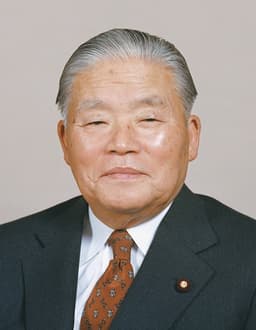
Masayoshi Ohira
Politician · Modern
49.8Total

Napoleon Bonaparte
General · Modern
70.9Total
Basic Information
Born
1910
1769
Died
1980
1821
Era
Modern
Modern
Nationality
Japan
France
Occupation
Politician
General
Civilization
Eastern
Western
Score Comparison
Military (10%)
14.6
94.0
Political (20%)
59.3
72.0
Influence (20%)
56.4
40.0
Legacy (20%)
45.0
80.0
Leadership (15%)
72.0
78.0
Strategy (15%)
33.1
90.0
TOTAL
49.8
70.9
Masayoshi Ohira — Complete Timeline
1978 AD
Appointed Prime Minister of JapanPolitical Action◆ Major
Masayoshi Ohira became Prime Minister of Japan on December 7, 1978, succeeding Takeo Fukuda. His election followed a close LDP presidential race. Ohira's government focused on economic management and foreign policy, including strengthening ties with the United States.
Prime MinisterLDPJapan
Impact: national
1979 AD
Hosted the 5th G7 Summit in TokyoPolitical Action◆ Major
Ohira hosted the 5th G7 Summit in Tokyo from June 28-29, 1979. The summit addressed the global oil crisis, inflation, and energy policy. Ohira played a key role in coordinating Western responses to the second oil shock following the Iranian Revolution.
G7 SummitDiplomacyOil Crisis
Impact: global
1980 AD
Died in OfficeOther◆ Major
Ohira died of a heart attack on June 12, 1980, while in office as Prime Minister. His death occurred during a general election campaign, triggering a sympathy vote that led to a landslide victory for the LDP. He was the first Japanese prime minister to die in office since 1945.
Death in OfficeLDPJapan
Impact: nationaltragic
Napoleon Bonaparte — Complete Timeline
1799 AD
Coup of 18 BrumaireOther◆ Major
Napoleon Bonaparte, with support from his brother Lucien and key political figures, overthrew the Directory in a bloodless coup. He established the Consulate with himself as First Consul, effectively becoming the ruler of France. This event ended the French Revolution's most unstable period.
French RevolutionCoupRise to Power
Impact: regional
1804 AD
Promulgation of the Napoleonic CodeOther◆ Major
Napoleon enacted the Civil Code of the French, known as the Napoleonic Code, a comprehensive set of laws that replaced the fragmented feudal legal systems. The code established legal equality, protected property rights, and secularized law. It became the basis for legal systems in many European and world countries.
Legal ReformNapoleonic CodeCivil Law
Impact: globalconstructive
1805 AD
Battle of AusterlitzWar◆ Major
Napoleon's Grande Arm
Napoleonic WarsBattleDecisive Victory
Impact: global
1812 AD
Invasion of RussiaWar◆ Major
Napoleon led the Grande Arm
Napoleonic WarsInvasionDisaster
Impact: globaldestructive
1815 AD
Battle of WaterlooWar◆ Major
Napoleon's French army was defeated by the combined forces of the Duke of Wellington's Anglo-Allied army and Gebhard Leberecht von Bl
Napoleonic WarsBattleFinal Defeat
Impact: globaldestructive
Expert Analysis
masayoshi-ohira-vs-napoleon-bonaparte
# The Conqueror and the Conciliator
On a June morning in 1980, as Japanese voters queued at polling stations across Tokyo, a 69-year-old prime minister lay dying in a hospital bed. Masayoshi Ohira, the quiet architect of Japan’s postwar prosperity, had been felled by a heart attack during the final days of an election campaign. Half a world away and more than a century earlier, another leader met his end in a very different fashion: Napoleon Bonaparte, exiled on a remote Atlantic island, wasted away at 51, haunted by the ghosts of an empire that had once stretched from Madrid to Moscow. One man died in the midst of democratic duty; the other in the ruins of absolute ambition. What drove these two figures—both men of their eras, both leaders of nations—to such radically different fates?
Origins
Napoleon was born in 1769 on Corsica, an island that had only recently become French. His family were minor nobles, proud and resentful of mainland authority. The young Napoleon grew up speaking Italian, not French, and carried a lifelong chip on his shoulder about the continent’s old aristocracies. He entered military school at nine, a small, intense boy mocked by richer classmates. That early humiliation forged something cold and determined inside him.
Masayoshi Ohira, born in 1910, came from a farming family in rural Kagawa prefecture on Shikoku, one of Japan’s poorer islands. His father was a sake brewer who lost everything when the business failed. Ohira worked his way through school, converted to Christianity, and entered the Ministry of Finance in the 1930s. While Napoleon learned to command armies, Ohira learned to manage budgets. Both were outsiders in their own societies—Napoleon the Corsican upstart, Ohira the peasant’s son in a Tokyo still dominated by old money and military cliques.
Rise to Power
Napoleon’s ascent was a thunderbolt. At 24, he drove the British out of Toulon. At 26, he crushed a royalist rebellion in Paris with a “whiff of grapeshot.” At 27, he conquered Italy. By 1799, he staged a coup and made himself First Consul. The French Revolution had demolished the old order, and in the vacuum, a man of pure will could climb faster than ever before in European history.
Ohira’s rise was glacial by comparison. He entered politics in 1952, at 42, after a long civil service career. Japan was rebuilding under American occupation, and the old militarist order had collapsed. But unlike France in 1799, Japan in the 1950s was a democracy—messy, slow, and full of compromises. Ohira rose through the Liberal Democratic Party not by brilliant speeches or dramatic gestures, but by mastering the art of consensus. He served as foreign minister, finance minister, and finally prime minister in 1978, at 68. Where Napoleon seized power in a decade, Ohira waited three decades.
Leadership & Governance
As emperor, Napoleon ruled with terrifying energy. He reformed French law into the Napoleonic Code, a rational system that replaced feudal chaos with clear, secular rules. He built schools, roads, and a centralized bureaucracy that France still uses. But he also crowned himself emperor, silenced dissent, and placed his brothers on European thrones. His military genius—scoring 94 in strategy—was undeniable: he won 60 battles, from Austerlitz in 1805 to Borodino in 1812. Yet his political score of 75 reflects a fatal flaw: he could conquer but not consolidate.
Ohira governed with a radically different philosophy. As prime minister, his political score of 80 reflected a man who understood that in a democracy, power is borrowed, not owned. He hosted the 5th G7 Summit in Tokyo in 1979, where he navigated the global oil crisis not by issuing decrees but by building coalitions. His leadership style was famously indirect—he spoke in vague, philosophical terms, frustrating journalists who wanted clear answers. But this ambiguity was deliberate: in Japan’s faction-ridden politics, clarity meant conflict, and conflict meant paralysis.
Triumph & Tragedy
Napoleon’s triumph was 1805: at Austerlitz, he destroyed the combined armies of Russia and Austria, ending the Holy Roman Empire and making himself master of Europe. His tragedy was 1812: the invasion of Russia, where 600,000 men marched east and fewer than 100,000 returned. That disaster broke his aura of invincibility, leading to exile on Elba, a brief return, and final defeat at Waterloo in 1815.
Ohira’s triumph was more modest but no less real: he stabilized Japan’s economy after the oil shocks of the 1970s, and his careful diplomacy strengthened ties with the United States and China. His tragedy was his death—alone in a hospital, his party losing the election he had called. But even in failure, Ohira’s end was democratic: he died serving a system that would outlive him, not because of a system he had built around himself.
Character & Destiny
Napoleon’s character drove his destiny. He was restless, arrogant, and incapable of stopping. “I love power,” he once said, “but I love it as an artist.” He saw Europe as a canvas and himself as the painter. This ambition created his empire and destroyed it. He could not delegate, could not share glory, could not accept limits.
Ohira, by contrast, was a man of limits. He was shy, intellectual, and self-deprecating. A Christian in a Buddhist country, a bookish man in a party of backroom dealers, he never seemed comfortable with power. His leadership score of 78.5 reflects a man who led by listening, not commanding. Where Napoleon demanded loyalty, Ohira earned trust. Where Napoleon burned bridges, Ohira built them—slowly, carefully, until they could bear weight.
Legacy
Napoleon’s legacy is a paradox. He was a tyrant who spread the ideals of the French Revolution—equality before the law, meritocracy, secular government—across Europe. The Napoleonic Code still shapes legal systems from Egypt to Louisiana. But he also left a trail of war dead, a revived monarchy, and a bitter lesson about the costs of unchecked ambition. His total score of 82.4 reflects a man who changed the world, for better and worse.
Ohira’s legacy is quieter but perhaps more durable. He helped build the postwar Japanese system—an economic miracle that lifted millions from poverty, a stable democracy that survived crises, a foreign policy that kept peace with former enemies. His legacy score of 63.2 seems modest, but that may be the point: democratic leaders rarely get the credit they deserve, because their achievements are collective, not personal.
Conclusion
Standing at the grave of Napoleon at Les Invalides in Paris, visitors see a giant sarcophagus of red porphyry, surrounded by the battle flags of a hundred campaigns. It is the tomb of a man who believed he could remake the world alone. Standing at the grave of Masayoshi Ohira in Tokyo, visitors see a simple stone, marked only with his name and the dates of his life. It is the tomb of a man who understood that in a democracy, the leader is just one vote among millions.
Both men shaped their eras. But the difference between them is not merely one of scale—it is one of philosophy. Napoleon believed history was made by great men. Ohira believed history was made by systems, institutions, and the patient work of ordinary people. The conqueror died alone on a rock in the Atlantic, still dreaming of glory. The conciliator died in a hospital bed, still serving his country. One gave the world a legend. The other gave it a lesson.
Rankings
🥇
Napoleon BonaparteLeader
Mil: 94.0Pol: 72.0Inf: 40.0
70.9
🥈
Masayoshi Ohira
Mil: 14.6Pol: 59.3Inf: 56.4
49.8
+21.1 behind
How This Comparison Works
Algorithm
Each figure is scored on 6 dimensions (0—100 scale) based on structured historical data: Military (10%), Political (20%), Influence (20%), Legacy (20%), Leadership (15%), Strategy (15%). The weighted total produces the final ranking.
Data Sources
Scores are computed from structured sub-indicators in the database. Scale factors adjust for era (Ancient ×0.85, Modern ×1.0) and civilization size (Eastern ×1.05, Other ×0.80) to account for differences in population and military scale.
Maximum 3 Figures
Comparisons are limited to 2—3 figures to ensure readability and statistical meaningfulness.
Error Margins
±5 points per dimension — Sub-scores are derived from historical records with inherent uncertainty. Two figures within 5 points on a dimension should be considered roughly equivalent in that area.
Total Score Accuracy
±3 points overall — The weighted combination of 6 dimensions produces a total score with approximately ±3 points of uncertainty. Differences of less than 3 points are not statistically significant— the figures are effectively tied.
Known Limitations
- Historical records are incomplete and uneven across civilizations
- Figures from oral-tradition societies may be underrepresented
- Occupation labels can misclassify multi-role figures
- Scores measure capability and impact, not moral character
- Quantitative scoring is a comparison tool, not absolute truth
Capability Radar
Military (10%) — Battles & Warfare
Battles
13
95
Win Rate
19
90
Expansion
18
95
Political (20%) — Governance & Reform
Reform
65
95
Diplomacy
70
80
Economy
75
85
Influence (20%) — Cultural & Global Reach
Cultural
30
85
Global
40
90
Legacy (20%) — Historical Impact
Historical
40
95
Longevity
30
90
Leadership (15%) — Power & Stability
Tenure
60
85
Stability
60
70
Strategy (15%) — Tactics & Innovation
Strategy
24
95
Tactics
27
98
Reform
28
92
Similar Comparisons
Comments & Discussion
CorseComet6/17/2026
These charts try to cram Napoleon’s rise-and-cataclysm into neat boxes, but they miss the key factor: Napoleon was at war with all of Europe while Ohira navigated trade disputes. One commanded armies of 600,000, the other managed budget committees for an economic boom. The only shared trait is they both died in office—one from cancer, the other from exhaustion. Scale matters. Stop flattening military conquerors with peacetime administrators. That’s like comparing a tsunami to a tea kettle.
数字考古学家6/17/2026
这两张雷达图最可笑的地方是把"GDP增长率"和"军事扩张"放在同一把尺子上衡量。大平正芳任内日本GDP增长约25%(年均5%),拿破仑呢?法国大陆面积从55万平方公里扩张到95万平方公里,每平方公里都是用士兵生命换来的。你们敢不敢加一条"人均死亡"指标?拿破仑的战争至少造成300万人死亡,大平的"广域市町村圈"政策死了零人。这叫权重造假,不叫比较。
PalaceRevenger6/17/2026
Here’s the dirty secret: Ohira won the Pacific War, and nobody admits it. After 1945, Japan rebuilt under the US umbrella, and Ohira—as Finance Minister—directed the capital that made Toyota and Sony global. Napoleon lost because he couldn’t industrialize as fast as Britain nor conquer Russia’s winter. Ohira won because he let Germany and America fight each other economically while Japan quietly took the market share. The Chart of Power shows Napoleon’s military might at 98? Fine. Ohira’s econom
经世致用派6/17/2026
我是来给数据打假的。拿破仑的"科技贡献"得分高?因为他建立了巴黎综合理工学院和法兰西银行,这些都是军事化管理的产物。大平创立了环太平洋合作构想(1978年提出),直接催生了今天的APEC,影响了全球23个经济体。一个是为了打炮造子弹,一个是为了互利修管道。我更敬重那个在日本经济低迷期推出现金补贴政策的大平,他让每个家庭每月多拿5000日元,而拿破仑只让法国人交了更多税和血。
TacticusRides6/17/2026
The comparison is absurd because their timeframes invert. Napoleon’s legacy is his first 15 years (1799-1815)—meteoric, bloody, transformative. Ohira’s legacy is his last 5 years (1978-1980)—gradual, diplomatic, but foundational: the Pacific Basin cooperation, the new airport in Narita, the push for Japan’s technological autonomy. Napoleon’s entire career was a sprint, Ohira’s a marathon. The Chart should show a zigzag for Napoleon and a gentle climb for Ohira. Different metabolic