Loading...
Edgar Lungu vs Julius Caesar
Julius Caesar leads by 37.9 pts · 2 figures compared
…
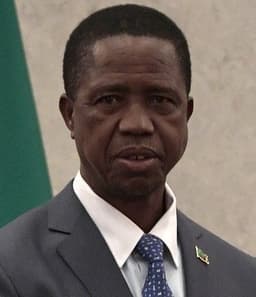
Edgar Lungu
Politician · Modern
44.9Total

Julius Caesar
General · Ancient
82.8Total
Basic Information
Born
1956
-100
Died
—
-44
Era
Modern
Ancient
Nationality
Zambia
Roman Republic
Occupation
Politician
General
Civilization
Other
Western
Score Comparison
Military (10%)
38.0
88.0
Political (20%)
39.4
78.0
Influence (20%)
47.9
85.0
Legacy (20%)
38.3
82.0
Leadership (15%)
62.2
80.0
Strategy (15%)
42.9
85.0
TOTAL
44.9
82.8
Edgar Lungu — Complete Timeline
2015 AD
Elected President of ZambiaPolitical Action◆ Major
Edgar Lungu won the presidential by-election following the death of President Michael Sata. He defeated Hakainde Hichilema in a close race, becoming the 6th President of Zambia.
ElectionPresidency
Impact: national
2016 AD
Re-elected President of ZambiaPolitical Action◆ Major
Lungu won a full five-year term in the general election, again defeating Hakainde Hichilema. The election was marked by opposition allegations of irregularities and a disputed constitutional court ruling.
ElectionPresidency
Impact: national
2017 AD
Arrested Hakainde HichilemaPolitical Action◆ Major
Lungu's government arrested opposition leader Hakainde Hichilema on charges of treason after his convoy failed to give way to the presidential motorcade. Hichilema was held for several months before the charges were dropped.
Political RepressionOpposition
Impact: nationaldestructive
2021 AD
Lost Presidential Election to HichilemaPolitical Action
Lungu was defeated by Hakainde Hichilema in the general election, receiving 38.3% of the vote against Hichilema's 59%. He conceded defeat, marking the first peaceful transfer of power to an opposition candidate in Zambia since 1991.
ElectionDefeatDemocracy
Impact: national
Julius Caesar — Complete Timeline
58 BC
Gallic WarsWar◆ Major
Caesar, as proconsul of Gaul, launched a series of campaigns that conquered all of Gaul (modern France, Belgium, and parts of Switzerland). He fought numerous battles, including against the Helvetii, the Belgae, and the Gallic chieftain Vercingetorix. The wars brought immense wealth and a loyal army to Caesar.
Gallic WarsConquestRoman Expansion
Impact: regional
49 BC
Crossing the RubiconPolitical Action◆ Major
Caesar led Legio XIII across the Rubicon River into Italy, defying the Roman Senate's order to disband his army. This act triggered a civil war against Pompey and the Optimates, ultimately leading to Caesar's dictatorship and the end of the Roman Republic.
Roman Civil WarEnd of RepublicPower Struggle
Impact: global
48 BC
Battle of PharsalusWar◆ Major
Caesar's outnumbered army defeated the larger forces of Pompey the Great at Pharsalus in Greece. Caesar's tactical use of a reserve line to counter Pompey's cavalry charge proved decisive. Pompey fled to Egypt, where he was assassinated, leaving Caesar as the undisputed master of the Roman world.
Roman Civil WarBattleDecisive Victory
Impact: regional
44 BC
Appointment as Dictator for LifePolitical Action◆ Major
The Roman Senate appointed Caesar dictator perpetuo (dictator for life), granting him unprecedented personal power. This move concentrated military, legislative, and judicial authority in one person, effectively ending the Roman Republic's traditional system of checks and balances and alarming many senators.
DictatorshipEnd of RepublicPower Consolidation
Impact: regionaldestructive
Assassination on the Ides of MarchPolitical Action◆ Major
A group of Roman senators, led by Marcus Junius Brutus and Gaius Cassius Longinus, stabbed Caesar to death at a meeting of the Senate in the Theatre of Pompey. The assassination was intended to restore the Republic, but instead triggered another civil war that led to the rise of the Roman Empire.
AssassinationRoman PoliticsEnd of Republic
Impact: globaldestructive
Expert Analysis
edgar-lungu-vs-julius-caesar
# The Rubicon and the Ballot Box: Two Paths to Power, Two Destinies
On a cold January morning in 49 BCE, Julius Caesar stood at the banks of a small river in northern Italy. The Rubicon was little more than a stream, but crossing it with an army meant civil war—an irrevocable act that would shatter the Roman Republic and remake the world. Two thousand years later and half a globe away, Edgar Lungu stood before a podium in Lusaka, Zambia, in January 2015, about to take the oath of office after a narrow by-election victory. One man crossed a river with legions; the other crossed the threshold of State House with a ballot. Both sought power. Both would leave their mark. But the gulf between them is not merely one of time or place—it is a chasm of ambition, circumstance, and the very nature of historical greatness.
Origins
Caesar was born into the chaos of the late Roman Republic, a world of senatorial intrigue, civil wars, and the dying gasps of aristocratic rule. His family, the Julii, claimed descent from the goddess Venus, but they were politically marginal. Caesar’s father died when he was sixteen, leaving him to navigate a brutal system where survival required cunning, ruthlessness, and a willingness to gamble everything. He learned early that in Rome, reputation was currency—and debt, both financial and political, was a tool.
Edgar Lungu was born in 1956 in Ndola, a copper-mining town in Northern Rhodesia, when the British Empire still ruled Africa. His father was a prison warder, his mother a farmer. There was no divine lineage, no ancient name. Lungu grew up under colonial rule, then witnessed the birth of independent Zambia in 1964. His world was one of post-colonial hope, then disillusionment—a landscape where power flowed not through aristocratic networks but through party loyalty, ethnic alliances, and the slow machinery of bureaucracy. Where Caesar inherited debt and ambition, Lungu inherited poverty and patience.
Rise to Power
Caesar’s path was a masterclass in strategic risk. He fled Rome to avoid proscription, then returned as a military tribune. He borrowed fortunes to fund lavish games, winning the people’s love. He formed the First Triumvirate with Pompey and Crassus, an alliance of convenience that made him consul in 59 BCE. Then he took the governorship of Gaul and spent eight years conquering a territory that would become modern France, Belgium, and parts of Germany. His Commentaries on the Gallic Wars were propaganda as much as history—he was writing his own legend in real time.
Lungu’s rise was quieter, slower. He joined the civil service, rose through the ranks of the ruling Movement for Multi-Party Democracy, and served as Minister of Defence and Home Affairs. When President Michael Sata died in 2014, Lungu was appointed party president and won the subsequent by-election with 48.3% of the vote. His opponent, Hakainde Hichilema, contested the result. Lungu’s rise was not a conquest but a succession—a man in the right place at the right time, holding the right loyalties.
Leadership & Governance
Caesar governed as he conquered: decisively, ruthlessly, and with an eye toward eternity. As dictator, he reformed the calendar, granted citizenship to Gauls, initiated public works, and centralized power in a way that made the old Republic obsolete. His military genius was unparalleled—he defeated Pompey at Pharsalus, crushed the remnants of the senatorial forces in Africa and Spain, and pacified Egypt after Cleopatra’s brother tried to block him. Yet his rule was never secure. He pardoned his enemies, but they did not forgive him. He held power alone, and that made him a target.
Lungu governed in the shadow of Zambia’s constitution, its ethnic divisions, and its struggling economy. His military score of 30.2 reflects a man who never led an army, but his political score of 54.1 shows a leader navigating a fragile democracy. He won re-election in 2016 with 50.4% of the vote, but the opposition cried foul. In 2017, his government arrested Hichilema on treason charges—a move that critics called authoritarian, supporters called necessary. Lungu’s governance was not about conquest or reform; it was about survival. He managed copper prices, debt, and the constant pressure of an opposition that had grown stronger.
Triumph & Tragedy
Caesar’s greatest moment was his triumph over Gaul—the conquest of a million souls, the capture of 800 cities, the wealth that made him the richest man in Rome. His tragedy was the Ides of March, 44 BCE, when sixty senators stabbed him to death in the Senate chamber. He fell at the feet of Pompey’s statue, the man he had defeated, now the symbol of the Republic he had destroyed. His last words, according to tradition, were “Et tu, Brute?”—a question that echoes through history.
Lungu’s triumph was simply holding power. In a continent where coups and term-limit violations were common, he won two elections and left office after losing a third. In 2021, Hichilema defeated him with 59% of the vote—a landslide. Lungu conceded. That moment, quiet and legal, was his greatest act. No civil war. No Rubicon. No statues toppled. Just a phone call and a transfer of power. For a modern African leader, that is no small thing.
Character & Destiny
Caesar was driven by an insatiable need for glory. He once said, “I would rather be first in a little Iberian village than second in Rome.” His personality—bold, calculating, charismatic—made him unstoppable and doomed him. He believed he was destiny’s instrument, and he was right. But destiny in the ancient world was a double-edged sword: it lifted him to godlike heights, then delivered him to assassins.
Lungu’s character is harder to read. He was described as calm, deliberate, and deeply religious. He did not seek to be a Caesar; he sought to be a president. His destiny was not to change the world but to manage it. His scores—Leadership 73.1, Strategy 56.4—suggest a competent but unremarkable figure. He was not a visionary. He was a survivor. And in a way, survival is its own form of greatness.
Legacy
Caesar’s legacy is the Roman Empire. His name became a title: Kaiser, Tsar. He transformed Western civilization, for better and worse. He is remembered as a tyrant, a genius, a martyr, a monster. His story is taught in every school, debated in every history department, and remains a cautionary tale about the seduction of absolute power.
Lungu’s legacy is more modest. He will be remembered as a transitional figure in Zambia’s democracy—a man who won, lost, and left. His influence score of 62.9 reflects a leader who mattered regionally but not globally. His legacy score of 50.0 suggests history will judge him as average. But that may be precisely the point: not every leader needs to cross a Rubicon. Some just need to cross a ballot box, and then step aside.
Conclusion
Caesar and Lungu never met, never could have met. One conquered Gaul; the other governed a copper mine. One was stabbed by senators; the other lost an election. Yet both faced the same question: what do you do when you have power? Caesar answered by reaching for more, and it destroyed him. Lungu answered by holding on as long as he could, then letting go. The difference between them is not simply time or geography—it is the difference between a world where power was taken and a world where power is given. Caesar’s tragedy was that he could not imagine stepping aside. Lungu’s quiet triumph was that he could. In that contrast lies the entire arc of human history.
Rankings
🥇
Julius CaesarLeader
Mil: 88.0Pol: 78.0Inf: 85.0
82.8
🥈
Edgar Lungu
Mil: 38.0Pol: 39.4Inf: 47.9
44.9
+37.9 behind
How This Comparison Works
Algorithm
Each figure is scored on 6 dimensions (0—100 scale) based on structured historical data: Military (10%), Political (20%), Influence (20%), Legacy (20%), Leadership (15%), Strategy (15%). The weighted total produces the final ranking.
Data Sources
Scores are computed from structured sub-indicators in the database. Scale factors adjust for era (Ancient ×0.85, Modern ×1.0) and civilization size (Eastern ×1.05, Other ×0.80) to account for differences in population and military scale.
Maximum 3 Figures
Comparisons are limited to 2—3 figures to ensure readability and statistical meaningfulness.
Error Margins
±5 points per dimension — Sub-scores are derived from historical records with inherent uncertainty. Two figures within 5 points on a dimension should be considered roughly equivalent in that area.
Total Score Accuracy
±3 points overall — The weighted combination of 6 dimensions produces a total score with approximately ±3 points of uncertainty. Differences of less than 3 points are not statistically significant— the figures are effectively tied.
Known Limitations
- Historical records are incomplete and uneven across civilizations
- Figures from oral-tradition societies may be underrepresented
- Occupation labels can misclassify multi-role figures
- Scores measure capability and impact, not moral character
- Quantitative scoring is a comparison tool, not absolute truth
Capability Radar
Military (10%) — Battles & Warfare
Battles
20
95
Win Rate
25
92
Expansion
27
97
Political (20%) — Governance & Reform
Reform
30
90
Diplomacy
35
85
Economy
25
82
Influence (20%) — Cultural & Global Reach
Cultural
15
88
Global
10
94
Legacy (20%) — Historical Impact
Historical
20
95
Longevity
10
96
Leadership (15%) — Power & Stability
Tenure
40
75
Stability
20
60
Strategy (15%) — Tactics & Innovation
Strategy
32
94
Tactics
34
96
Reform
35
88
Similar Comparisons
Comments & Discussion
CROSSING THE RUBICON GUY6/17/2026
Caesar crossing that tiny river wasn't just a power grab—it was the most calculated risk in military history. He knew his legions were loyal because he'd bled with them in Gaul. Lungu? He won a by-election with 48% turnout. That's not crossing the Rubicon, that's stepping over a garden hose. Caesar gambled everything because he had something worth losing—a legend. Lungu inherited a system where incumbents never lose, and still barely scraped by. Not even close.
历史搬运工6/17/2026
把艾德加·伦古和凯撒放在一起比较,就像把县城运动会和奥运会并列。凯撒在高卢杀了上百万人,用八年时间征服了整个地区,还写了本《高卢战记》给自己立传。伦古呢?2016年连任后把军队派去镇压反对派,结果被最高法院判违宪。一个建立了不朽的传奇,一个连程序正义都玩不明白。这种对比是对历史的侮辱。
VENUS DESCENDANT TRUTHER6/17/2026
Look, I get that Caesar claimed descent from Venus—every Roman politician needed divine PR. But that comparison still insults Lungu. Caesar's family was an ancient patrician clan sitting on centuries of accumulated wealth and connections. Lungu came from a railway worker father in Ndola, rose through the ranks of a one-party state's legal system, then lawyered his way into a presidential nomination when the frontrunner died. That's a genuinely impressive climb. Egypt's grain vs. Zambia's copper—
罗马不是一天建成的6/17/2026
说伦古和凯撒一样,那是完全搞反了历史的分量。凯撒跨过卢比孔河的时候,罗马元老院已经内战了二十年,他是跳到一场正在燃的烈火里。伦古2015年上台时,赞比亚有58%的人生活在贫困线以下,铜价暴跌,基础设施烂得一塌糊涂。他做的是拼拼凑凑的老本行,凯撒做的是改革一个摇摇欲坠的文明。一个是修补屋顶漏水,一个是推倒重建整个建筑群。格局差了三千年不止。
DATA DONT LIE6/17/2026
Let's get quantitative. Caesar's Gallic Wars cost an estimated 1 million Gaulish lives and enslaved another million. The Ides of March was 60 senators with daggers. That's high-stakes, high-budget politics. Lungu's presidency? Zambia's GDP growth dropped from 4.7% in 2014 to 2.2% in 2016 during his first year. Inflation hit 20%. That's not tragedy—that's mismanagement. Caesar died on the Senate floor. Lungu left office, then ran again. The Roman had the guts to destroy everything