Loading...
Eduardo Cunha vs Ranil Wickremesinghe
Ranil Wickremesinghe leads by 5.3 pts · 2 figures compared
…
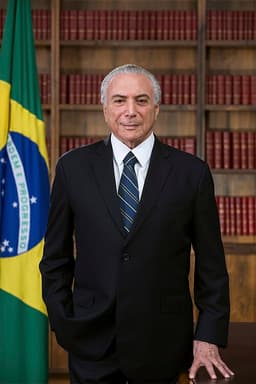
Eduardo Cunha
Politician · Modern
45.4Total
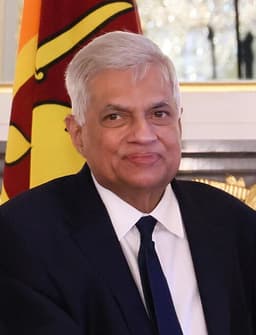
Ranil Wickremesinghe
Politician · Modern
50.7Total
Basic Information
Born
1958
1949
Died
—
—
Era
Modern
Modern
Nationality
Brazil
Sri Lanka
Occupation
Politician
Politician
Civilization
Western
Indian
Score Comparison
Military (10%)
50.0
25.9
Political (20%)
37.9
45.0
Influence (20%)
49.4
54.9
Legacy (20%)
40.8
45.8
Leadership (15%)
48.4
68.0
Strategy (15%)
49.3
60.0
TOTAL
45.4
50.7
Eduardo Cunha — Complete Timeline
2015 AD
Elected President of the Chamber of DeputiesPolitical Action◆ Major
Eduardo Cunha was elected President of the Chamber of Deputies of Brazil. He wielded significant power over the legislative agenda and used his position to advance his own political interests.
Legislative LeadershipChamber of Deputies
Impact: national
Initiated impeachment proceedings against Dilma RousseffPolitical Action
Eduardo Cunha accepted a petition to begin impeachment proceedings against President Dilma Rousseff, citing alleged fiscal irregularities. The impeachment process led to Rousseff's removal from office in 2016.
ImpeachmentPolitical Crisis
Impact: national
2016 AD
Arrested on corruption chargesPolitical Action◆ Major
Eduardo Cunha was arrested on charges of corruption, money laundering, and tax evasion related to the Operation Car Wash investigation. He was sentenced to 15 years in prison, later reduced on appeal.
CorruptionOperation Car Wash
Impact: nationaldestructive
Ranil Wickremesinghe — Complete Timeline
1987 AD
Signed the Indo-Sri Lanka Peace AccordPolitical Action◆ Major
As a key negotiator, Wickremesinghe helped finalize the Indo-Sri Lanka Peace Accord, which aimed to end the Sri Lankan Civil War by devolving power to provinces and deploying Indian peacekeeping forces. The accord ultimately failed to bring lasting peace.
Peace accordIndiaCivil war
Impact: regional
1993 AD
Appointed Prime Minister for the first timePolitical Action◆ Major
Ranil Wickremesinghe was appointed Prime Minister of Sri Lanka by President D.B. Wijetunga, following the assassination of President Ranasinghe Premadasa. He led the United National Party government, beginning a long political career marked by multiple terms.
Prime MinisterUNPSri Lanka
Impact: national
2005 AD
Lost the 2005 presidential electionPolitical Action◆ Major
Wickremesinghe, as the UNP candidate, lost the presidential election to Mahinda Rajapaksa. The defeat was partly attributed to a boycott by the Tamil Tiger rebels, which suppressed voter turnout in the north and east. This loss kept him out of power for several years.
Election lossRajapaksaUNP
Impact: national
2022 AD
Became Prime Minister for a sixth timePolitical Action◆ Major
After the resignation of Mahinda Rajapaksa amid economic crisis, Wickremesinghe was appointed Prime Minister. He later became acting president and then president after Gotabaya Rajapaksa fled the country. His leadership focused on stabilizing the economy and securing an IMF bailout.
Prime MinisterEconomic crisisIMF
Impact: national
Expert Analysis
Origins
Eduardo Cunha was born in 1958 in Rio de Janeiro, Brazil, into a middle-class family. He studied economics and began his career in the private sector before entering politics. His early life was marked by a strong connection to evangelical churches, which later became a key political base.
Ranil Wickremesinghe was born in 1949 in Colombo, Sri Lanka, into a politically active family. His uncle was a former prime minister, and his father was a prominent lawyer. He studied law at the University of Colombo and later became a lawyer before entering politics. His early exposure to politics shaped his centrist, reformist outlook.
Rise to Power
Cunha rose to prominence as a federal deputy in 2003, representing Rio de Janeiro. He aligned with the Brazilian Democratic Movement (PMDB) and became known for his conservative stance and evangelical support. In 2015, he was elected President of the Chamber of Deputies, a position that gave him control over the legislative agenda. His pivotal moment came in 2016 when he accepted a petition to impeach President Dilma Rousseff, citing fiscal irregularities. This move, driven by political rivalry and personal vendetta after Rousseff's party refused to support him in a corruption investigation, triggered a constitutional crisis.
Wickremesinghe first became Prime Minister in 1993, appointed after the assassination of President Premadasa. He quickly emerged as a key figure in the United National Party (UNP) and a negotiator in the Sri Lankan Civil War. In 2002, he signed the Indo-Sri Lanka Peace Accord with the LTTE, which aimed at federal devolution but ultimately failed due to opposition. He lost the 2005 presidential election to Mahinda Rajapaksa, partly due to a Tamil boycott, but returned as PM multiple times, including a sixth term in 2022 amid economic collapse.
Leadership & Governance
Cunha's leadership style was transactional and confrontational. He used his position as Chamber President to push through impeachment while blocking investigations into his own corruption. His governance approach focused on consolidating power within the PMDB and advancing a conservative agenda, including anti-corruption rhetoric that he himself violated. He scored 48.4 in leadership, reflecting his ability to rally support but also his ethical failures.
Wickremesinghe's leadership was more institutional and diplomatic. He favored negotiation and consensus-building, as seen in the peace process and his handling of the 2022 economic crisis. His score of 68.0 in leadership reflects his resilience and adaptability. However, his governance was often criticized as indecisive, especially during the civil war, where his peace efforts were undermined by hardliners. He implemented economic reforms, including liberalization, but struggled with corruption and inefficiency.
Triumph & Tragedy
Cunha's greatest triumph was orchestrating the impeachment of Dilma Rousseff, which succeeded in 2016. This demonstrated his political maneuvering and ability to mobilize opposition. However, his tragedy was his own downfall: in 2017, he was arrested for corruption, money laundering, and tax evasion, sentenced to 15 years in prison. His legacy is tarnished by his criminal conviction, and he scored only 40.8 in legacy.
Wickremesinghe's triumphs include serving as Prime Minister six times, a record in Sri Lanka, and his role in the 2002 peace accord, which temporarily halted the civil war. He also stabilized the economy in 2022 by securing an IMF bailout. His tragedy is his failure to end the civil war permanently; the peace process collapsed, and the war resumed until 2009. He also lost key elections, and his long career is marked by a lack of transformative change.
Character & Destiny
Cunha was ambitious and ruthless, willing to risk political stability for personal gain. His decision to impeach Rousseff backfired when he faced justice himself. His character—driven by revenge and self-interest—led to his political and personal ruin. Historical assessments view him as a symbol of Brazil's corrupt political class.
Wickremesinghe was pragmatic and persistent, but often seen as aloof and out of touch. His willingness to compromise, while effective in negotiations, made him appear weak. His character shaped a destiny of repeated comebacks but also of missed opportunities. Historians credit his tenacity but criticize his inability to secure lasting peace.
Legacy
Cunha's legacy is overwhelmingly negative: he is remembered as the man who triggered an impeachment that deepened political polarization in Brazil. His corruption conviction reinforces the narrative of systemic rot. His impact on Brazilian politics is limited to a single, destabilizing event.
Wickremesinghe's legacy is mixed. He is remembered as a key figure in Sri Lanka's peace process and for his role in economic recovery. However, his failure to achieve lasting peace and his association with the Rajapaksa family's political dynasty detract from his reputation. He scored 45.8 in legacy, slightly higher than Cunha.
Conclusion
Ranil Wickremesinghe had greater impact than Eduardo Cunha. With a total score of 50.7 compared to Cunha's 45.4, Wickremesinghe's influence spanned decades and multiple crises. While Cunha's single act of impeachment caused immediate upheaval, it did not lead to systemic change or a positive legacy. Wickremesinghe, despite his flaws, shaped Sri Lanka's political landscape through repeated leadership and crisis management. His higher leadership and strategy scores (68.0 and 60.0 vs. 48.4 and 49.3) underscore his greater ability to navigate complex political environments. Cunha's legacy is one of corruption and division, while Wickremesinghe's, though imperfect, includes efforts toward peace and stability.
Rankings
🥇
Ranil WickremesingheLeader
Mil: 25.9Pol: 45.0Inf: 54.9
50.7
🥈
Eduardo Cunha
Mil: 50.0Pol: 37.9Inf: 49.4
45.4
+5.3 behind
How This Comparison Works
Algorithm
Each figure is scored on 6 dimensions (0—100 scale) based on structured historical data: Military (10%), Political (20%), Influence (20%), Legacy (20%), Leadership (15%), Strategy (15%). The weighted total produces the final ranking.
Data Sources
Scores are computed from structured sub-indicators in the database. Scale factors adjust for era (Ancient ×0.85, Modern ×1.0) and civilization size (Eastern ×1.05, Other ×0.80) to account for differences in population and military scale.
Maximum 3 Figures
Comparisons are limited to 2—3 figures to ensure readability and statistical meaningfulness.
Error Margins
±5 points per dimension — Sub-scores are derived from historical records with inherent uncertainty. Two figures within 5 points on a dimension should be considered roughly equivalent in that area.
Total Score Accuracy
±3 points overall — The weighted combination of 6 dimensions produces a total score with approximately ±3 points of uncertainty. Differences of less than 3 points are not statistically significant— the figures are effectively tied.
Known Limitations
- Historical records are incomplete and uneven across civilizations
- Figures from oral-tradition societies may be underrepresented
- Occupation labels can misclassify multi-role figures
- Scores measure capability and impact, not moral character
- Quantitative scoring is a comparison tool, not absolute truth
Capability Radar
Military (10%) — Battles & Warfare
Battles
27
46
Win Rate
31
48
Expansion
36
50
Political (20%) — Governance & Reform
Reform
20
55
Diplomacy
40
60
Economy
25
50
Influence (20%) — Cultural & Global Reach
Cultural
15
30
Global
20
40
Legacy (20%) — Historical Impact
Historical
35
40
Longevity
10
35
Leadership (15%) — Power & Stability
Tenure
30
65
Stability
10
40
Strategy (15%) — Tactics & Innovation
Strategy
35
53
Tactics
38
54
Reform
41
58
Similar Comparisons
Comments & Discussion
No comments yet. Be the first to share your thoughts!