Loading...
Ramsay MacDonald vs Ranil Wickremesinghe
Ramsay MacDonald leads by 3.6 pts · 2 figures compared
…

Ramsay MacDonald
Politician · Modern
54.3Total
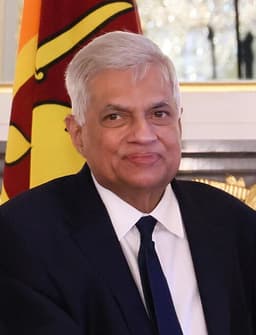
Ranil Wickremesinghe
Politician · Modern
50.7Total
Basic Information
Born
1866
1949
Died
1937
—
Era
Modern
Modern
Nationality
United Kingdom
Sri Lanka
Occupation
Politician
Politician
Civilization
Western
Indian
Score Comparison
Military (10%)
49.9
25.9
Political (20%)
68.0
45.0
Influence (20%)
58.0
54.9
Legacy (20%)
50.0
45.8
Leadership (15%)
53.2
68.0
Strategy (15%)
41.7
60.0
TOTAL
54.3
50.7
Ramsay MacDonald — Complete Timeline
1924 AD
Formation of the First Labour GovernmentPolitical Action
MacDonald became the first Labour Prime Minister of the United Kingdom in January 1924, leading a minority government. This marked the first time the Labour Party held power, though the government lasted only nine months before falling over the Campbell Case.
Labour PartyFirst Labour GovernmentMinority Government
Impact: nationalconstructive
Recognition of the Soviet UnionPolitical Action◆ Major
MacDonald's government formally recognized the Soviet Union and signed the Anglo-Soviet Trade Agreement. This diplomatic move aimed to normalize relations and expand trade, but was controversial and contributed to the fall of the government after the Zinoviev letter affair.
Soviet UnionDiplomacyTrade
Impact: global
1931 AD
Formation of the National GovernmentPolitical Action
Facing a financial crisis and a split in the Labour cabinet, MacDonald formed a National Government with Conservatives and Liberals in August 1931. This action was seen as a betrayal by many in the Labour Party, leading to his expulsion from the party.
National GovernmentGreat DepressionLabour Split
Impact: nationaldestructive
1931 General ElectionPolitical Action◆ Major
MacDonald led the National Government to a landslide victory in the 1931 general election, winning 554 seats. The Labour Party was reduced to 52 seats, its worst result. This gave the National Government a massive majority to implement austerity measures.
ElectionNational GovernmentLandslide
Impact: national
1935 AD
Resignation as Prime MinisterPolitical Action◆ Major
MacDonald resigned as Prime Minister in June 1935 due to declining health and was succeeded by Stanley Baldwin. He remained in the cabinet as Lord President of the Council until 1937, but his political influence had waned.
ResignationNational GovernmentSuccession
Impact: national
Ranil Wickremesinghe — Complete Timeline
1987 AD
Signed the Indo-Sri Lanka Peace AccordPolitical Action◆ Major
As a key negotiator, Wickremesinghe helped finalize the Indo-Sri Lanka Peace Accord, which aimed to end the Sri Lankan Civil War by devolving power to provinces and deploying Indian peacekeeping forces. The accord ultimately failed to bring lasting peace.
Peace accordIndiaCivil war
Impact: regional
1993 AD
Appointed Prime Minister for the first timePolitical Action◆ Major
Ranil Wickremesinghe was appointed Prime Minister of Sri Lanka by President D.B. Wijetunga, following the assassination of President Ranasinghe Premadasa. He led the United National Party government, beginning a long political career marked by multiple terms.
Prime MinisterUNPSri Lanka
Impact: national
2005 AD
Lost the 2005 presidential electionPolitical Action◆ Major
Wickremesinghe, as the UNP candidate, lost the presidential election to Mahinda Rajapaksa. The defeat was partly attributed to a boycott by the Tamil Tiger rebels, which suppressed voter turnout in the north and east. This loss kept him out of power for several years.
Election lossRajapaksaUNP
Impact: national
2022 AD
Became Prime Minister for a sixth timePolitical Action◆ Major
After the resignation of Mahinda Rajapaksa amid economic crisis, Wickremesinghe was appointed Prime Minister. He later became acting president and then president after Gotabaya Rajapaksa fled the country. His leadership focused on stabilizing the economy and securing an IMF bailout.
Prime MinisterEconomic crisisIMF
Impact: national
Expert Analysis
Origins
Ramsay MacDonald (1866-1937) was born in Lossiemouth, Scotland, to a working-class family. He left school at 15 but educated himself through reading and debating. He worked as a clerk and later became a journalist, joining the Independent Labour Party in 1894. His rise was fueled by his oratory and organizational skills.
Ranil Wickremesinghe (born 1949) was born in Colombo, Sri Lanka, into a politically prominent family. His uncle was Prime Minister Junius Richard Jayewardene. He studied law at the University of Colombo and entered politics early, winning a seat in parliament at age 28 in 1977. His background was elite and establishment.
Rise to Power
MacDonald became Secretary of the Labour Party in 1900 and entered Parliament in 1906. He opposed World War I, which damaged his popularity but later rebounded. In 1922, Labour became the second-largest party, and in January 1924, MacDonald became the first Labour Prime Minister, leading a minority government. His key turning point was the 1929 election, where Labour won the most seats, allowing him to form a second government.
Wickremesinghe became Prime Minister for the first time in May 1993 after the assassination of President Premadasa. He was a key negotiator in the Indo-Sri Lanka Peace Accord (1987), which aimed to devolve power to Tamil provinces. He lost the 2005 presidential election to Mahinda Rajapaksa due to a Tamil boycott. He returned as Prime Minister in 2022 amid an economic crisis, later becoming acting president.
Leadership & Governance
MacDonald's leadership was marked by coalition politics. In 1931, facing a financial crisis, he formed a National Government with Conservatives and Liberals, a move seen as a betrayal by Labour. He implemented austerity measures to protect the gold standard, which worsened unemployment. His political score is 68.0, reflecting his ability to navigate crises but also his divisive legacy.
Wickremesinghe's leadership score is 45.0, lower due to his frequent electoral defeats and perceived weakness. However, his strategy score is 60.0, higher than MacDonald's 41.7. He managed to stay in power through coalitions and backroom deals. His governance during the 2022 crisis involved securing IMF bailouts and implementing reforms, but his unpopularity remained high.
Triumph & Tragedy
MacDonald's greatest triumph was becoming the first Labour PM, symbolizing working-class political empowerment. He also secured diplomatic recognition of the Soviet Union in 1924. However, his greatest failure was the 1931 split, which decimated the Labour Party and left him isolated. He died in 1937, largely reviled by his former party.
Wickremesinghe's triumph includes signing the 1987 peace accord and serving as PM six times, a record in Sri Lanka. He also stabilized the economy in 2022. His tragedy is his inability to win a popular mandate; he never won a presidential election and was often seen as out of touch. His legacy is mixed, with many blaming him for the civil war's continuation.
Character & Destiny
MacDonald was idealistic but pragmatic, leading him to compromise. His decision to form the National Government was driven by a sense of duty but destroyed his reputation. Historians note his charisma but also his vanity. His military score is low (49.9) as he was not a war leader.
Wickremesinghe is a skilled negotiator and survivor, but his indecisiveness and lack of grassroots support have hindered him. His leadership score (68.0) is higher than his political score, suggesting he is better in crisis management than electoral politics. He is often criticized for being elitist.
Legacy
MacDonald's legacy is complex. He paved the way for Labour as a governing party, but his 1931 actions set back the party for years. His influence score is 58.0, reflecting his role in shaping British politics. Today, he is remembered as a tragic figure.
Wickremesinghe's legacy is still evolving. He is credited with economic reforms and peace efforts, but his failure to win elections and his association with the Rajapaksa family tarnish his record. His influence score is 54.9, slightly below MacDonald.
Conclusion
Ramsay MacDonald had a greater impact on his country and global politics than Ranil Wickremesinghe. MacDonald's total score of 54.3 versus Wickremesinghe's 50.7 reflects this. MacDonald's role in founding Labour governance and his crisis management during the Depression, despite his failures, shaped the UK's political landscape for decades. Wickremesinghe, while a survivor in Sri Lankan politics, never achieved the same transformative impact. Therefore, MacDonald is the more significant figure.
Rankings
🥇
Ramsay MacDonaldLeader
Mil: 49.9Pol: 68.0Inf: 58.0
54.3
🥈
Ranil Wickremesinghe
Mil: 25.9Pol: 45.0Inf: 54.9
50.7
+3.6 behind
How This Comparison Works
Algorithm
Each figure is scored on 6 dimensions (0—100 scale) based on structured historical data: Military (10%), Political (20%), Influence (20%), Legacy (20%), Leadership (15%), Strategy (15%). The weighted total produces the final ranking.
Data Sources
Scores are computed from structured sub-indicators in the database. Scale factors adjust for era (Ancient ×0.85, Modern ×1.0) and civilization size (Eastern ×1.05, Other ×0.80) to account for differences in population and military scale.
Maximum 3 Figures
Comparisons are limited to 2—3 figures to ensure readability and statistical meaningfulness.
Error Margins
±5 points per dimension — Sub-scores are derived from historical records with inherent uncertainty. Two figures within 5 points on a dimension should be considered roughly equivalent in that area.
Total Score Accuracy
±3 points overall — The weighted combination of 6 dimensions produces a total score with approximately ±3 points of uncertainty. Differences of less than 3 points are not statistically significant— the figures are effectively tied.
Known Limitations
- Historical records are incomplete and uneven across civilizations
- Figures from oral-tradition societies may be underrepresented
- Occupation labels can misclassify multi-role figures
- Scores measure capability and impact, not moral character
- Quantitative scoring is a comparison tool, not absolute truth
Capability Radar
Military (10%) — Battles & Warfare
Battles
29
46
Win Rate
30
48
Expansion
37
50
Political (20%) — Governance & Reform
Reform
55
55
Diplomacy
50
60
Economy
45
50
Influence (20%) — Cultural & Global Reach
Cultural
40
30
Global
50
40
Legacy (20%) — Historical Impact
Historical
55
40
Longevity
45
35
Leadership (15%) — Power & Stability
Tenure
60
65
Stability
40
40
Strategy (15%) — Tactics & Innovation
Strategy
38
53
Tactics
38
54
Reform
44
58
Similar Comparisons
Comments & Discussion
No comments yet. Be the first to share your thoughts!