Loading...
Edvard Benes vs Tomas Garrigue Masaryk
Tomas Garrigue Masaryk leads by 0.7 pts · 2 figures compared
…

Edvard Benes
Politician · Modern
56.6Total
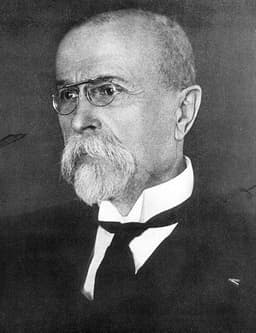
Tomas Garrigue Masaryk
Politician · Modern
57.3Total
Basic Information
Born
1884
1850
Died
1948
1937
Era
Modern
Modern
Nationality
Czechoslovakia
Czech Republic
Occupation
Politician
Politician
Civilization
Western
Western
Score Comparison
Military (10%)
50.0
48.2
Political (20%)
68.0
62.7
Influence (20%)
55.7
56.7
Legacy (20%)
48.3
52.0
Leadership (15%)
74.0
78.0
Strategy (15%)
42.5
42.3
TOTAL
56.6
57.3
Edvard Benes — Complete Timeline
1938 AD
Munich AgreementPolitical Action
As president, Bene
Munich CrisisWorld War II
Impact: regionaltragic
Resignation and ExilePolitical Action◆ Major
After the Munich Agreement, Bene
ExileWorld War II
Impact: regionaltragic
1945 AD
Return and Second PresidencyPolitical Action◆ Major
Beneš returned to Czechoslovakia after World War II and resumed the presidency. He oversaw the restoration of the state and the expulsion of the German minority.
Post-WarCzechoslovakia
Impact: nationalconstructive
1948 AD
1948 Communist CoupPolitical Action
Beneš was forced to accept the resignation of non-communist ministers and allowed the Communist Party to take power. This coup ended Czechoslovak democracy and led to Beneš's resignation and death.
Cold WarCommunist Takeover
Impact: nationaltragic
Tomas Garrigue Masaryk — Complete Timeline
1918 AD
Establishment of CzechoslovakiaPolitical Action
Masaryk, as leader of the Czechoslovak National Council, declared the independence of Czechoslovakia from Austria-Hungary. He became the first president, founding a democratic state in Central Europe.
IndependenceCzechoslovakia
Impact: regionalconstructive
First President of CzechoslovakiaPolitical Action◆ Major
Masaryk was elected the first president of Czechoslovakia by the National Assembly. He served until 1935, guiding the country through its early years of statehood and democratic consolidation.
PresidencyCzechoslovakia
Impact: nationalconstructive
1935 AD
Resignation from PresidencyPolitical Action
Masaryk resigned the presidency due to ill health, handing power to Edvard Bene
ResignationCzechoslovakia
Impact: national
Expert Analysis
Origins
Tomas Garrigue Masaryk was born on March 7, 1850, in Hodonín, Moravia, to a Slovak father and a German-speaking mother. His father was a coachman, and his mother a maid. Masaryk's early education was in Brno and Vienna, where he earned a doctorate in philosophy. He became a professor at Charles University in Prague, advocating for Czech national revival and democratic ideals. His marriage to Charlotte Garrigue, an American, influenced his progressive views.
Edvard Beneš was born on May 28, 1884, in Kožlany, Bohemia, to a peasant family. He studied at Charles University and later in Paris, earning a doctorate in law. Beneš was a professor of sociology and became a key figure in the Czechoslovak independence movement. His early career was marked by his work as a journalist and diplomat.
Rise to Power
Masaryk rose to prominence during World War I. In 1914, he went into exile to campaign for Czechoslovak independence. He founded the Czechoslovak National Council in Paris and gained support from Allied powers. On October 28, 1918, he declared the establishment of Czechoslovakia and became its first president. His diplomatic skills secured recognition for the new state.
Beneš was Masaryk's protégé. He served as foreign minister from 1918 to 1935, shaping Czechoslovakia's foreign policy. He was a key figure at the Paris Peace Conference and helped create the Little Entente alliance. In 1935, he succeeded Masaryk as president. His rise was tied to his loyalty to Masaryk and his expertise in diplomacy.
Leadership & Governance
Masaryk's leadership was characterized by democratic ideals and moral authority. He focused on building a stable, multiethnic state. He oversaw the adoption of the 1920 Constitution, which established democratic institutions. Masaryk believed in gradual reform and sought to integrate minorities. His political score of 62.7 reflects his effectiveness in founding the state.
Beneš led during crises. As president, he faced the rise of Nazi Germany. His strategy score of 42.5 indicates his difficulty in navigating threats. He accepted the Munich Agreement in 1938, believing it would buy time. After the war, he returned but faced the 1948 Communist coup, where he allowed communist takeover to avoid conflict. His leadership score of 74.0 shows his perseverance, but his decisions led to the end of democracy.
Triumph & Tragedy
Masaryk's greatest triumph was founding Czechoslovakia and establishing democracy. He guided the country through its early years, achieving stability. His legacy score of 52.0 reflects his lasting impact. His tragedy was his resignation in 1935 due to ill health, leaving Beneš to face the Nazi threat.
Beneš's triumph was leading the government-in-exile during World War II, preserving Czechoslovak statehood. He oversaw the expulsion of Germans after the war, which was controversial but seen as necessary. His tragedy was the Munich Agreement, which led to the loss of territories and the collapse of alliances. His acceptance of the 1948 coup ended his career and democracy. His legacy score of 48.3 reflects the mixed judgment of his actions.
Character & Destiny
Masaryk was a philosopher-president, rational and principled. He believed in education and democratic values. His character shaped a stable founding. He was respected internationally, earning influence score of 56.7. His destiny was to be remembered as the father of the nation.
Beneš was a pragmatic diplomat, but his decisions during crises were criticized. He was loyal but lacked the moral authority of Masaryk. His character led to compromise, which ultimately failed. His military score of 50.0 and strategy of 42.5 highlight his weakness in security matters. His destiny was to oversee the decline of what Masaryk built.
Legacy
Masaryk's legacy is enduring. He is remembered as the founder of Czechoslovakia and a symbol of democracy. His ideas influenced Czech and Slovak nationalism. The state he created lasted until 1993, but his democratic principles remain a benchmark.
Beneš's legacy is complex. He is credited with maintaining Czechoslovak continuity during war but blamed for the Munich betrayal and the communist takeover. The Beneš decrees, which expelled Germans, remain controversial. His total score of 56.6 is slightly lower than Masaryk's 57.3.
Conclusion
Tomas Masaryk had greater impact on Czechoslovakia. He founded the state and established democratic traditions. Beneš, while a loyal successor, made critical errors that led to the state's demise. Masaryk's scores in legacy (52.0 vs 48.3) and influence (56.7 vs 55.7) support this. Masaryk's vision endured, while Beneš's compromises failed. The data shows Masaryk as the more effective leader.
Rankings
🥇
Tomas Garrigue MasarykLeader
Mil: 48.2Pol: 62.7Inf: 56.7
57.3
🥈
Edvard Benes
Mil: 50.0Pol: 68.0Inf: 55.7
56.6
+0.7 behind
How This Comparison Works
Algorithm
Each figure is scored on 6 dimensions (0—100 scale) based on structured historical data: Military (10%), Political (20%), Influence (20%), Legacy (20%), Leadership (15%), Strategy (15%). The weighted total produces the final ranking.
Data Sources
Scores are computed from structured sub-indicators in the database. Scale factors adjust for era (Ancient ×0.85, Modern ×1.0) and civilization size (Eastern ×1.05, Other ×0.80) to account for differences in population and military scale.
Maximum 3 Figures
Comparisons are limited to 2—3 figures to ensure readability and statistical meaningfulness.
Error Margins
±5 points per dimension — Sub-scores are derived from historical records with inherent uncertainty. Two figures within 5 points on a dimension should be considered roughly equivalent in that area.
Total Score Accuracy
±3 points overall — The weighted combination of 6 dimensions produces a total score with approximately ±3 points of uncertainty. Differences of less than 3 points are not statistically significant— the figures are effectively tied.
Known Limitations
- Historical records are incomplete and uneven across civilizations
- Figures from oral-tradition societies may be underrepresented
- Occupation labels can misclassify multi-role figures
- Scores measure capability and impact, not moral character
- Quantitative scoring is a comparison tool, not absolute truth
Capability Radar
Military (10%) — Battles & Warfare
Battles
31
29
Win Rate
29
34
Expansion
32
36
Political (20%) — Governance & Reform
Reform
55
80
Diplomacy
40
85
Economy
45
70
Influence (20%) — Cultural & Global Reach
Cultural
30
65
Global
45
60
Legacy (20%) — Historical Impact
Historical
50
70
Longevity
40
65
Leadership (15%) — Power & Stability
Tenure
60
85
Stability
30
75
Strategy (15%) — Tactics & Innovation
Strategy
37
35
Tactics
41
42
Reform
45
45
Similar Comparisons
Comments & Discussion
No comments yet. Be the first to share your thoughts!