Loading...
Joko Widodo vs Tomas Garrigue Masaryk
Tomas Garrigue Masaryk leads by 7.8 pts · 2 figures compared
…
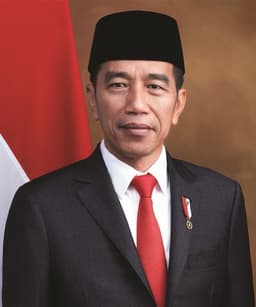
Joko Widodo
Politician · Modern
49.5Total
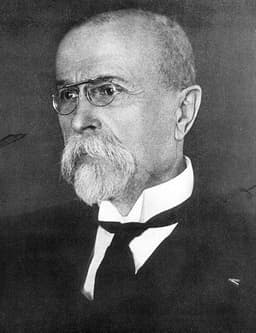
Tomas Garrigue Masaryk
Politician · Modern
57.3Total
Basic Information
Born
1961
1850
Died
—
1937
Era
Modern
Modern
Nationality
Indonesia
Czech Republic
Occupation
Politician
Politician
Civilization
Eastern
Western
Score Comparison
Military (10%)
12.6
48.2
Political (20%)
53.8
62.7
Influence (20%)
59.0
56.7
Legacy (20%)
44.2
52.0
Leadership (15%)
72.0
78.0
Strategy (15%)
35.5
42.3
TOTAL
49.5
57.3
Joko Widodo — Complete Timeline
2012 AD
Elected Governor of JakartaPolitical Action◆ Major
Joko Widodo, known as Jokowi, was elected Governor of Jakarta, the capital of Indonesia. His campaign focused on clean governance and direct engagement with citizens, and his tenure was marked by improvements in public services and infrastructure.
ElectionIndonesiaJakarta
constructive
2014 AD
Elected President of IndonesiaPolitical Action
Jokowi won the Indonesian presidential election, defeating Prabowo Subianto. His victory was historic as he was the first president from outside the political and military elite, coming from a humble background as a furniture salesman.
ElectionIndonesiaDemocracy
Impact: nationalconstructive
2015 AD
Launched Infrastructure Development ProgramReform◆ Major
Jokowi's government launched an ambitious infrastructure development program, including toll roads, ports, airports, and railways across the Indonesian archipelago. The program aimed to boost connectivity and economic growth, but faced challenges in funding and land acquisition.
InfrastructureIndonesiaDevelopment
Impact: nationalconstructive
2019 AD
Re-elected PresidentPolitical Action◆ Major
Jokowi was re-elected for a second term, again defeating Prabowo Subianto. The election was marked by allegations of irregularities and post-election protests, but Jokowi's victory was confirmed by the Constitutional Court.
ElectionIndonesiaRe-election
Impact: national
2022 AD
Relocated Capital to NusantaraPolitical Action◆ Major
Jokowi announced the relocation of Indonesia's capital from Jakarta to Nusantara in East Kalimantan. The move aimed to address Jakarta's overcrowding and environmental issues, but faced criticism over costs, environmental impact, and lack of transparency.
Capital RelocationIndonesiaPolicy
Impact: nationalconstructive
Tomas Garrigue Masaryk — Complete Timeline
1918 AD
Establishment of CzechoslovakiaPolitical Action
Masaryk, as leader of the Czechoslovak National Council, declared the independence of Czechoslovakia from Austria-Hungary. He became the first president, founding a democratic state in Central Europe.
IndependenceCzechoslovakia
Impact: regionalconstructive
First President of CzechoslovakiaPolitical Action◆ Major
Masaryk was elected the first president of Czechoslovakia by the National Assembly. He served until 1935, guiding the country through its early years of statehood and democratic consolidation.
PresidencyCzechoslovakia
Impact: nationalconstructive
1935 AD
Resignation from PresidencyPolitical Action
Masaryk resigned the presidency due to ill health, handing power to Edvard Bene
ResignationCzechoslovakia
Impact: national
Expert Analysis
Origins
Joko Widodo was born on 21 June 1961 in Surakarta, Central Java, into a humble family of a furniture maker. He studied forestry at Gadjah Mada University and later worked as a furniture exporter. His background as a businessman and mayor shaped his pragmatic, hands-on approach. In contrast, Tomas Garrigue Masaryk was born on 7 March 1850 in Hodonin, Moravia, then part of the Austrian Empire, to a Slovak father and Czech mother. He studied philosophy at the University of Vienna and became a professor, intellectual, and advocate for Czech and Slovak national rights. Masaryk's academic and moralist background influenced his philosophical leadership.
Rise to Power
Jokowi's rise began as mayor of Surakarta (2005-2012), where he earned a reputation for clean governance and direct citizen engagement. He was elected Governor of Jakarta in 2012, defeating the incumbent. In 2014, he won the Indonesian presidency against Prabowo Subianto with 53.2% of the vote, becoming the first president from outside the political and military elite. Masaryk's path was through intellectual and diplomatic channels. During World War I, he traveled to Western capitals to lobby for Czechoslovak independence. He organized Czechoslovak legions in Russia, France, and Italy. On 28 October 1918, he declared independence in Washington, D.C., and was elected president by the National Assembly on 14 November 1918.
Leadership & Governance
Jokowi's leadership style is populist and managerial, focusing on infrastructure development, social welfare, and bureaucratic reform. His flagship program included building toll roads, airports, and ports across the archipelago. He also launched a universal healthcare system (BPJS Kesehatan) and land certification programs. Critics note his tendency to avoid direct confrontation and his reliance on coalition politics. Masaryk, by contrast, was a philosopher-president who emphasized democracy, human rights, and national unity. He served as president from 1918 to 1935, overseeing the creation of a stable multi-ethnic state. He promoted education, secularism, and land reform. However, his governance was often criticized for being too idealistic and failing to address Slovak autonomy demands.
Triumph & Tragedy
Jokowi's greatest triumph is his ambitious infrastructure program, which reduced logistics costs and connected remote regions. He successfully moved the capital to Nusantara, a project aimed at reducing Jakarta's burden. However, his environmental record is poor, with deforestation and pollution worsening. He also faced criticism for human rights abuses and democratic backsliding, including the arrest of political opponents. Masaryk's triumph was founding Czechoslovakia and guiding it through its first 17 years as a stable democracy. He was respected globally as a moral leader. His tragedy was that his successor, Edvard Beneš, could not prevent Nazi aggression in 1938, leading to the Munich Agreement and the eventual dissolution of Czechoslovakia. Masaryk's death in 1937 spared him from seeing his nation dismembered.
Character & Destiny
Jokowi is known for his calm, humble demeanor and direct engagement with citizens, often making unannounced visits (blusukan). His decision-making is pragmatic but sometimes indecisive, shaped by coalition pressures. His destiny was to lead Indonesia's transformation from a resource-based economy to a modern infrastructure state, but his legacy is mixed on democracy. Masaryk was a principled intellectual, often called the 'President Liberator.' He was a strong moral leader, but his idealism sometimes blinded him to ethnic tensions. His destiny was to create a nation that would become a beacon of democracy in Central Europe, only to be crushed by totalitarianism.
Legacy
Jokowi's legacy is seen in Indonesia's physical transformation: thousands of kilometers of new roads, the Jakarta-Bandung high-speed rail, and new airports. His political legacy is less clear; he strengthened democratic institutions but also consolidated power. His approval ratings remained high (above 60%) throughout his tenure. Masaryk's legacy is the enduring idea of a democratic Czechoslovakia, which was revived in 1990 after the Velvet Revolution. He is remembered as a founding father and symbol of Czech and Slovak self-determination. His political score of 62.7 reflects his institutional building, while Jokowi's 53.8 shows effective but less transformative governance. On leadership, Masaryk scores 78.0 versus Jokowi's 72.0, indicating stronger moral and strategic guidance.
Conclusion
Tomas Masaryk had a greater historical impact. While Jokowi built infrastructure and managed a large nation, Masaryk created a nation from scratch and established a democratic framework that inspired future generations. Jokowi's total score of 49.5 is lower than Masaryk's 57.3, reflecting the latter's deeper institutional and ideological influence. Masaryk's legacy as a philosopher-president and nation-builder endures in the Czech Republic's democratic culture, whereas Jokowi's legacy is more material and less transformative of political structures. Thus, Masaryk's impact on history is more profound.
Rankings
🥇
Tomas Garrigue MasarykLeader
Mil: 48.2Pol: 62.7Inf: 56.7
57.3
🥈
Joko Widodo
Mil: 12.6Pol: 53.8Inf: 59.0
49.5
+7.8 behind
How This Comparison Works
Algorithm
Each figure is scored on 6 dimensions (0—100 scale) based on structured historical data: Military (10%), Political (20%), Influence (20%), Legacy (20%), Leadership (15%), Strategy (15%). The weighted total produces the final ranking.
Data Sources
Scores are computed from structured sub-indicators in the database. Scale factors adjust for era (Ancient ×0.85, Modern ×1.0) and civilization size (Eastern ×1.05, Other ×0.80) to account for differences in population and military scale.
Maximum 3 Figures
Comparisons are limited to 2—3 figures to ensure readability and statistical meaningfulness.
Error Margins
±5 points per dimension — Sub-scores are derived from historical records with inherent uncertainty. Two figures within 5 points on a dimension should be considered roughly equivalent in that area.
Total Score Accuracy
±3 points overall — The weighted combination of 6 dimensions produces a total score with approximately ±3 points of uncertainty. Differences of less than 3 points are not statistically significant— the figures are effectively tied.
Known Limitations
- Historical records are incomplete and uneven across civilizations
- Figures from oral-tradition societies may be underrepresented
- Occupation labels can misclassify multi-role figures
- Scores measure capability and impact, not moral character
- Quantitative scoring is a comparison tool, not absolute truth
Capability Radar
Military (10%) — Battles & Warfare
Battles
16
29
Win Rate
18
34
Expansion
19
36
Political (20%) — Governance & Reform
Reform
60
80
Diplomacy
55
85
Economy
60
70
Influence (20%) — Cultural & Global Reach
Cultural
40
65
Global
45
60
Legacy (20%) — Historical Impact
Historical
35
70
Longevity
30
65
Leadership (15%) — Power & Stability
Tenure
65
85
Stability
55
75
Strategy (15%) — Tactics & Innovation
Strategy
26
35
Tactics
25
42
Reform
27
45
Similar Comparisons
Comments & Discussion
No comments yet. Be the first to share your thoughts!