Loading...
Edward Gierek vs Frank-Walter Steinmeier
Frank-Walter Steinmeier leads by 9.8 pts · 2 figures compared
…

Edward Gierek
Politician · Modern
48.5Total
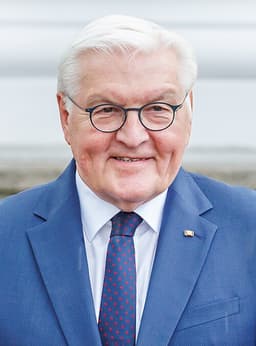
Frank-Walter Steinmeier
Politician · Modern
58.3Total
Basic Information
Born
1913
1956
Died
2001
—
Era
Modern
Modern
Nationality
Poland
Germany
Occupation
Politician
Politician
Civilization
Western
Western
Score Comparison
Military (10%)
11.4
50.0
Political (20%)
68.0
72.0
Influence (20%)
54.1
57.2
Legacy (20%)
42.5
47.5
Leadership (15%)
64.0
80.0
Strategy (15%)
33.7
43.5
TOTAL
48.5
58.3
Edward Gierek — Complete Timeline
1970 AD
Gierek becomes First Secretary of the Polish United Workers' PartyPolitical Action◆ Major
Following the December 1970 protests and the ouster of W
Polish Communist PartyLeadership Change1970s
Impact: national
1971 AD
Gierek's economic expansion programReform◆ Major
Gierek launched a massive economic expansion program financed by Western loans, aiming to modernize Polish industry and increase consumer goods. This led to a temporary rise in living standards but created unsustainable foreign debt.
Economic PolicyWestern LoansIndustrialization
Impact: nationalconstructive
1975 AD
Gierek signs the Helsinki AccordsPolitical Action◆ Major
Gierek, as Polish leader, signed the Helsinki Final Act of the Conference on Security and Co-operation in Europe. The accords committed Poland to human rights principles, which later fueled the rise of the Solidarity movement.
International TreatyHuman RightsCold War
Impact: global
1976 AD
Polish food price protests of 1976Political Action◆ Major
Gierek's government announced sharp increases in food prices, triggering widespread worker protests in Radom and Ursus. The government quickly rescinded the price hikes, revealing the regime's vulnerability to popular opposition.
ProtestsEconomic CrisisWorker Unrest
Impact: nationaldestructive
1980 AD
Gierek ousted during the Solidarity crisisPolitical Action◆ Major
Amidst the rise of the Solidarity trade union and a severe economic crisis, Gierek was removed from his position as First Secretary in September 1980. He was replaced by Stanis
SolidarityPolitical Fall1980s
Impact: nationaltragic
Frank-Walter Steinmeier — Complete Timeline
2005 AD
Became Foreign Minister of GermanyPolitical Action◆ Major
Frank-Walter Steinmeier was appointed Federal Minister for Foreign Affairs under Chancellor Angela Merkel. He served in this role until 2009, overseeing German foreign policy during a period of European integration and global challenges.
German PoliticsForeign PolicyMerkel Cabinet
Impact: national
2007 AD
Became Vice Chancellor of GermanyPolitical Action◆ Major
Steinmeier was appointed Vice Chancellor of Germany, serving concurrently as Foreign Minister. This position made him the second-highest-ranking official in the German government.
German PoliticsGovernmentVice Chancellor
Impact: national
2017 AD
Elected President of GermanyPolitical Action◆ Major
Steinmeier was elected as the 12th President of Germany by the Federal Convention. As a largely ceremonial head of state, he has focused on promoting social cohesion and democratic values.
German PresidencyHead of StateElection
Impact: nationalconstructive
2022 AD
Re-elected as President of GermanyPolitical Action◆ Major
Steinmeier was re-elected for a second five-year term as President of Germany. His re-election reflected broad cross-party support for his role as a unifying figure during times of political and social change.
German PresidencyRe-electionPolitical Stability
Impact: nationalconstructive
Expert Analysis
Origins
Edward Gierek was born on January 6, 1913, in Porąbka, Poland, into a mining family. His father died in a mining accident when Gierek was two, and he was raised by his mother. He emigrated to France at age 13 and worked in coal mines, later moving to Belgium, where he became active in the Belgian Communist Party. He returned to Poland after World War II and rose through the ranks of the Polish United Workers' Party (PZPR).
Frank-Walter Steinmeier was born on January 5, 1956, in Detmold, West Germany. His father was a carpenter and his mother a housewife. He studied law and political science at the University of Giessen, earning a doctorate in law. He entered politics through the Social Democratic Party (SPD), working as a civil servant and advisor to state and federal politicians.
Rise to Power
Gierek's rise came after the 1970 protests in Poland, which forced Władysław Gomułka to resign. Gierek was appointed First Secretary of the PZPR on December 20, 1970, with a mandate to stabilize the country. He quickly won popularity by canceling the price increases that had sparked the protests and implementing reforms.
Steinmeier rose through the SPD ranks, serving as chief of staff to Gerhard Schröder when Schröder was Minister-President of Lower Saxony. He became a key advisor in Schröder's chancellorship and was appointed Foreign Minister in 2005 under Angela Merkel. He served as Vice Chancellor from 2007 to 2009 and was elected President of Germany on February 12, 2017.
Leadership & Governance
Gierek's leadership was characterized by an ambitious economic program financed by Western loans. He invested heavily in heavy industry, infrastructure, and consumer goods, raising living standards initially. However, his policies led to massive foreign debt and economic imbalances. When the 1973 oil crisis hit, Poland's economy faltered, and Gierek's government resorted to price hikes in 1976, sparking worker protests. His governance was top-down and authoritarian, but he promoted a more open cultural policy compared to his predecessor.
Steinmeier's leadership, especially as President, is largely ceremonial but influential. He emphasizes dialogue, social cohesion, and democratic values. As Foreign Minister, he pursued a pragmatic foreign policy, balancing relations with Russia and the West. His governance style is consensus-oriented and reflective, scoring 80.0 in leadership compared to Gierek's 64.0. Steinmeier's political score of 72.0 edges Gierek's 68.0.
Triumph & Tragedy
Gierek's greatest success was the initial economic boom: industrial output rose by 50% between 1971 and 1975. He also signed the Helsinki Accords in 1975, which committed Poland to human rights and later empowered dissidents. His greatest failure was the economic collapse: by 1980, Poland's foreign debt reached $20 billion, and the country faced severe shortages. The rise of Solidarity led to his ouster on September 6, 1980.
Steinmeier's triumph includes his role in managing the 2008 financial crisis as Foreign Minister and his re-election as President in 2022 with broad support. He has been a unifying figure in times of political polarization. His tragedy is the failure of his vision for a cooperative European security order, as evidenced by Russia's 2022 invasion of Ukraine, which undermined his policy of dialogue with Russia.
Character & Destiny
Gierek was a pragmatic technocrat who believed in economic modernization but lacked strategic foresight. His score of 33.7 in strategy reflects his inability to manage long-term debt. His character—optimistic and risk-taking—led to initial success but eventual downfall. He died in 2001, largely discredited in post-communist Poland.
Steinmeier is a cautious, intellectual figure who values stability and process. His strategic score of 43.5 is higher than Gierek's, and his leadership score of 80.0 indicates his ability to navigate complex political landscapes. His destiny has been shaped by his role as a mediator in German politics, but his legacy is still unfolding.
Legacy
Gierek's legacy is mixed: he is credited with modernizing Poland's industry but blamed for its debt crisis. His policies inadvertently fostered the conditions for Solidarity, which ended communist rule. His score of 42.5 in legacy reflects this ambivalence.
Steinmeier's legacy is still forming. As President, he has strengthened the moral authority of the office. His influence score of 57.2 is slightly higher than Gierek's 54.1. His long-term impact may be as a guardian of democratic norms.
Conclusion
Frank-Walter Steinmeier has a higher total score (58.3 vs 48.5) and greater leadership (80.0 vs 64.0). While Gierek had more direct power, his policies led to economic disaster. Steinmeier's influence as a democratic figure in a stable Germany outweighs Gierek's impact. Therefore, Steinmeier had a greater positive impact.
Rankings
🥇
Frank-Walter SteinmeierLeader
Mil: 50.0Pol: 72.0Inf: 57.2
58.3
🥈
Edward Gierek
Mil: 11.4Pol: 68.0Inf: 54.1
48.5
+9.8 behind
How This Comparison Works
Algorithm
Each figure is scored on 6 dimensions (0—100 scale) based on structured historical data: Military (10%), Political (20%), Influence (20%), Legacy (20%), Leadership (15%), Strategy (15%). The weighted total produces the final ranking.
Data Sources
Scores are computed from structured sub-indicators in the database. Scale factors adjust for era (Ancient ×0.85, Modern ×1.0) and civilization size (Eastern ×1.05, Other ×0.80) to account for differences in population and military scale.
Maximum 3 Figures
Comparisons are limited to 2—3 figures to ensure readability and statistical meaningfulness.
Error Margins
±5 points per dimension — Sub-scores are derived from historical records with inherent uncertainty. Two figures within 5 points on a dimension should be considered roughly equivalent in that area.
Total Score Accuracy
±3 points overall — The weighted combination of 6 dimensions produces a total score with approximately ±3 points of uncertainty. Differences of less than 3 points are not statistically significant— the figures are effectively tied.
Known Limitations
- Historical records are incomplete and uneven across civilizations
- Figures from oral-tradition societies may be underrepresented
- Occupation labels can misclassify multi-role figures
- Scores measure capability and impact, not moral character
- Quantitative scoring is a comparison tool, not absolute truth
Capability Radar
Military (10%) — Battles & Warfare
Battles
21
31
Win Rate
24
31
Expansion
28
33
Political (20%) — Governance & Reform
Reform
55
45
Diplomacy
50
75
Economy
60
50
Influence (20%) — Cultural & Global Reach
Cultural
30
30
Global
35
45
Legacy (20%) — Historical Impact
Historical
40
40
Longevity
25
35
Leadership (15%) — Power & Stability
Tenure
40
65
Stability
35
70
Strategy (15%) — Tactics & Innovation
Strategy
31
40
Tactics
32
43
Reform
40
43
Similar Comparisons
Comments & Discussion
No comments yet. Be the first to share your thoughts!