Loading...
Edward Gierek vs Javier Perez de Cuellar
Javier Perez de Cuellar leads by 5.5 pts · 2 figures compared
…

Edward Gierek
Politician · Modern
48.5Total
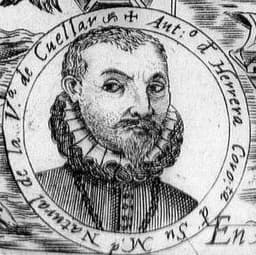
Javier Perez de Cuellar
Politician · Modern
54.0Total
Basic Information
Born
1913
1920
Died
2001
—
Era
Modern
Modern
Nationality
Poland
Peru
Occupation
Politician
Politician
Civilization
Western
Western
Score Comparison
Military (10%)
11.4
48.5
Political (20%)
68.0
45.0
Influence (20%)
54.1
59.0
Legacy (20%)
42.5
49.2
Leadership (15%)
64.0
72.0
Strategy (15%)
33.7
45.5
TOTAL
48.5
54.0
Edward Gierek — Complete Timeline
1970 AD
Gierek becomes First Secretary of the Polish United Workers' PartyPolitical Action◆ Major
Following the December 1970 protests and the ouster of W
Polish Communist PartyLeadership Change1970s
Impact: national
1971 AD
Gierek's economic expansion programReform◆ Major
Gierek launched a massive economic expansion program financed by Western loans, aiming to modernize Polish industry and increase consumer goods. This led to a temporary rise in living standards but created unsustainable foreign debt.
Economic PolicyWestern LoansIndustrialization
Impact: nationalconstructive
1975 AD
Gierek signs the Helsinki AccordsPolitical Action◆ Major
Gierek, as Polish leader, signed the Helsinki Final Act of the Conference on Security and Co-operation in Europe. The accords committed Poland to human rights principles, which later fueled the rise of the Solidarity movement.
International TreatyHuman RightsCold War
Impact: global
1976 AD
Polish food price protests of 1976Political Action◆ Major
Gierek's government announced sharp increases in food prices, triggering widespread worker protests in Radom and Ursus. The government quickly rescinded the price hikes, revealing the regime's vulnerability to popular opposition.
ProtestsEconomic CrisisWorker Unrest
Impact: nationaldestructive
1980 AD
Gierek ousted during the Solidarity crisisPolitical Action◆ Major
Amidst the rise of the Solidarity trade union and a severe economic crisis, Gierek was removed from his position as First Secretary in September 1980. He was replaced by Stanis
SolidarityPolitical Fall1980s
Impact: nationaltragic
Javier Perez de Cuellar — Complete Timeline
1982 AD
Elected UN Secretary-GeneralPolitical Action◆ Major
Perez de Cuellar was elected as the fifth Secretary-General of the United Nations, succeeding Kurt Waldheim. He served two terms from 1982 to 1991, becoming the first Latin American to hold the office.
UNDiplomacyInternational Relations
Impact: globalconstructive
1988 AD
Negotiated ceasefire in Iran-Iraq WarPolitical Action◆ Major
Perez de Cuellar mediated the ceasefire that ended the Iran-Iraq War. His diplomatic efforts led to UN Security Council Resolution 598, which both sides accepted, halting eight years of conflict.
PeacekeepingIran-Iraq WarDiplomacy
Impact: globalconstructive
1990 AD
Oversaw UN involvement in El Salvador peace processPolitical Action◆ Major
Perez de Cuellar initiated UN-mediated negotiations to end the Salvadoran Civil War. His efforts led to the Chapultepec Peace Accords in 1992, ending a 12-year conflict that killed over 75,000 people.
PeacekeepingEl SalvadorCivil War
Impact: regionalconstructive
Failed to prevent Gulf WarPolitical Action◆ Major
Perez de Cuellar attempted to negotiate Iraq's withdrawal from Kuwait after the invasion in August 1990. His diplomatic efforts failed, leading to the Gulf War in January 1991 under UN authorization.
Gulf WarDiplomacyIraq
Impact: globaltragic
Expert Analysis
Origins
Edward Gierek was born on January 6, 1913, in Porąbka, Poland, into a mining family. He emigrated to France as a teenager, joined the French Communist Party, and later worked in Belgian mines. His working-class background shaped his pragmatic approach to socialism. Gierek returned to Poland after World War II and rose through the ranks of the Polish United Workers' Party (PZPR).
Javier Perez de Cuellar was born on January 19, 1920, in Lima, Peru, into a middle-class family. He studied law at the Pontifical Catholic University of Peru and entered the Peruvian diplomatic service in 1944. His early career included postings in Paris, London, and Rio de Janeiro, giving him a broad international perspective.
Rise to Power
Gierek's rise accelerated after the 1970 Polish protests, which ousted Władysław Gomułka. Appointed First Secretary of the PZPR on December 20, 1970, Gierek promised economic reforms and better living standards. He consolidated power by replacing party elites with his own allies, including technocrats and economists.
Perez de Cuellar's ascent was more gradual. He served as Peru's ambassador to Switzerland, the Soviet Union, and Venezuela, and as a member of the UN Security Council. In 1981, he was elected UN Secretary-General, succeeding Kurt Waldheim, after a deadlocked selection process. His diplomatic skills and neutrality appealed to both Western and Eastern blocs.
Leadership & Governance
Gierek's leadership style was paternalistic and technocratic. He launched a massive economic expansion program in 1971, borrowing $24 billion from Western banks to modernize industry and increase consumer goods. This led to initial growth: industrial production rose 10% annually until 1975. However, the 1973 oil crisis and inefficient state planning caused debt to spiral. By 1976, Gierek's government faced food price protests in Radom and Ursus; he rescinded the increases but lost credibility. He signed the Helsinki Accords in 1975, committing Poland to human rights, but domestic repression continued.
Perez de Cuellar led through quiet diplomacy and consensus-building. As UN Secretary-General, he prioritized peacekeeping and mediation. He scored 72.0 in Leadership, reflecting his ability to navigate Cold War tensions. He negotiated the 1988 ceasefire in the Iran-Iraq War, securing UN Security Council Resolution 598. He also initiated UN involvement in the Salvadoran Civil War, leading to the 1992 Chapultepec Peace Accords. However, he failed to prevent the Gulf War in 1991, as Iraq rejected his diplomatic overtures.
Triumph & Tragedy
Gierek's greatest triumph was the initial economic boom: real wages rose 40% from 1971 to 1975, and consumer goods became more available. However, his tragedy was the debt crisis: by 1980, Poland owed $24 billion, and industrial output stagnated. The 1980 shipyard strikes in Gdańsk led to the formation of Solidarity, and Gierek was ousted in September 1980, his legacy tarnished by economic collapse.
Perez de Cuellar's triumph was his role in ending the Iran-Iraq War, a conflict that had killed hundreds of thousands. His diplomacy scored 45.5 in Strategy, reflecting careful maneuvering. His tragedy was his inability to stop the Gulf War: despite UN resolutions, Saddam Hussein refused to withdraw from Kuwait, leading to a US-led invasion. Perez de Cuellar left office in 1991 with a mixed record of success and failure.
Character & Destiny
Gierek was an optimist who believed in modernization through foreign investment. He was pragmatic but overly reliant on Western loans, ignoring structural reforms. His character—confident but detached—led him to ignore warning signs of economic distress. Historians give him a Political score of 68.0, noting his skill in manipulating party structures, but his Legacy score is only 42.5, as his policies ultimately undermined the communist system.
Perez de Cuellar was a reserved, patient diplomat who valued neutrality. He avoided confrontation, preferring behind-the-scenes negotiations. His character suited the role of UN Secretary-General during the Cold War, but critics argue he lacked the assertiveness needed to prevent major conflicts. His Leadership score of 72.0 reflects his effectiveness in low-key mediation, but his Military score of 48.5 indicates limited impact on hard power.
Legacy
Gierek's legacy is mixed: he is remembered for raising living standards temporarily but plunging Poland into debt. His economic policies contributed to the rise of Solidarity and the eventual fall of communism. In modern Poland, he is often viewed as a well-meaning but flawed reformer.
Perez de Cuellar's legacy is more positive: he strengthened the UN's role in peacekeeping and conflict resolution. His mediation in El Salvador and the Iran-Iraq War set precedents for UN diplomacy. He is remembered as a skilled diplomat who upheld international law, though his failure in the Gulf War highlighted the UN's limitations.
Conclusion
While Gierek had a greater immediate impact on Poland, his policies ultimately failed, leading to economic crisis and political upheaval. Perez de Cuellar, despite his limitations, achieved lasting diplomatic successes and enhanced the UN's credibility. On balance, Perez de Cuellar had greater global impact: his work helped end a major war and set frameworks for future peace processes. Gierek's score of 48.5 reflects his domestic focus and flawed execution, while Perez de Cuellar's 54.0 underscores his broader, more sustainable contributions to international stability.
Rankings
🥇
Javier Perez de CuellarLeader
Mil: 48.5Pol: 45.0Inf: 59.0
54.0
🥈
Edward Gierek
Mil: 11.4Pol: 68.0Inf: 54.1
48.5
+5.5 behind
How This Comparison Works
Algorithm
Each figure is scored on 6 dimensions (0—100 scale) based on structured historical data: Military (10%), Political (20%), Influence (20%), Legacy (20%), Leadership (15%), Strategy (15%). The weighted total produces the final ranking.
Data Sources
Scores are computed from structured sub-indicators in the database. Scale factors adjust for era (Ancient ×0.85, Modern ×1.0) and civilization size (Eastern ×1.05, Other ×0.80) to account for differences in population and military scale.
Maximum 3 Figures
Comparisons are limited to 2—3 figures to ensure readability and statistical meaningfulness.
Error Margins
±5 points per dimension — Sub-scores are derived from historical records with inherent uncertainty. Two figures within 5 points on a dimension should be considered roughly equivalent in that area.
Total Score Accuracy
±3 points overall — The weighted combination of 6 dimensions produces a total score with approximately ±3 points of uncertainty. Differences of less than 3 points are not statistically significant— the figures are effectively tied.
Known Limitations
- Historical records are incomplete and uneven across civilizations
- Figures from oral-tradition societies may be underrepresented
- Occupation labels can misclassify multi-role figures
- Scores measure capability and impact, not moral character
- Quantitative scoring is a comparison tool, not absolute truth
Capability Radar
Military (10%) — Battles & Warfare
Battles
21
31
Win Rate
24
33
Expansion
28
35
Political (20%) — Governance & Reform
Reform
55
55
Diplomacy
50
85
Economy
60
40
Influence (20%) — Cultural & Global Reach
Cultural
30
30
Global
35
65
Legacy (20%) — Historical Impact
Historical
40
55
Longevity
25
40
Leadership (15%) — Power & Stability
Tenure
40
60
Stability
35
65
Strategy (15%) — Tactics & Innovation
Strategy
31
40
Tactics
32
43
Reform
40
46
Similar Comparisons
Comments & Discussion
No comments yet. Be the first to share your thoughts!