Loading...
Javier Perez de Cuellar vs Massimo D Alema
Massimo D Alema leads by 1.4 pts · 2 figures compared
…
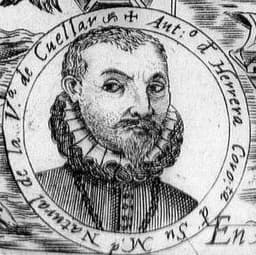
Javier Perez de Cuellar
Politician · Modern
54.0Total

Massimo D Alema
Politician · Modern
55.4Total
Basic Information
Born
1920
1949
Died
—
—
Era
Modern
Modern
Nationality
Peru
Italy
Occupation
Politician
Politician
Civilization
Western
Western
Score Comparison
Military (10%)
48.5
50.0
Political (20%)
45.0
68.0
Influence (20%)
59.0
56.4
Legacy (20%)
49.2
46.7
Leadership (15%)
72.0
68.0
Strategy (15%)
45.5
42.2
TOTAL
54.0
55.4
Javier Perez de Cuellar — Complete Timeline
1982 AD
Elected UN Secretary-GeneralPolitical Action◆ Major
Perez de Cuellar was elected as the fifth Secretary-General of the United Nations, succeeding Kurt Waldheim. He served two terms from 1982 to 1991, becoming the first Latin American to hold the office.
UNDiplomacyInternational Relations
Impact: globalconstructive
1988 AD
Negotiated ceasefire in Iran-Iraq WarPolitical Action◆ Major
Perez de Cuellar mediated the ceasefire that ended the Iran-Iraq War. His diplomatic efforts led to UN Security Council Resolution 598, which both sides accepted, halting eight years of conflict.
PeacekeepingIran-Iraq WarDiplomacy
Impact: globalconstructive
1990 AD
Oversaw UN involvement in El Salvador peace processPolitical Action◆ Major
Perez de Cuellar initiated UN-mediated negotiations to end the Salvadoran Civil War. His efforts led to the Chapultepec Peace Accords in 1992, ending a 12-year conflict that killed over 75,000 people.
PeacekeepingEl SalvadorCivil War
Impact: regionalconstructive
Failed to prevent Gulf WarPolitical Action◆ Major
Perez de Cuellar attempted to negotiate Iraq's withdrawal from Kuwait after the invasion in August 1990. His diplomatic efforts failed, leading to the Gulf War in January 1991 under UN authorization.
Gulf WarDiplomacyIraq
Impact: globaltragic
Massimo D Alema — Complete Timeline
1998 AD
First post-communist Prime MinisterPolitical Action◆ Major
D'Alema became the first former communist to serve as Prime Minister of Italy in October 1998, leading a center-left coalition. His appointment marked a historic shift in Italian politics, integrating the post-communist left into government.
Italian PoliticsPost-CommunismGovernment Formation
Impact: nationalconstructive
D'Alema government (1998-2000)Political Action◆ Major
D'Alema's government lasted from October 1998 to April 2000. It focused on economic reforms, including privatization and fiscal consolidation, and participated in the NATO bombing of Yugoslavia in 1999, which was controversial within his coalition.
Italian PoliticsEconomic ReformNATO Intervention
Impact: national
2000 AD
Resignation as Prime MinisterPolitical Action◆ Major
D'Alema resigned as Prime Minister in April 2000 after his center-left coalition suffered heavy losses in regional elections. His resignation reflected the fragility of the coalition and the public's dissatisfaction with his government's performance.
Italian PoliticsGovernment ResignationElectoral Defeat
Impact: nationaltragic
2006 AD
Minister of Foreign AffairsPolitical Action
D'Alema served as Minister of Foreign Affairs from 2006 to 2008 under Prime Minister Romano Prodi. He focused on multilateral diplomacy, including Italy's role in the European Union and relations with the Middle East.
Italian Foreign PolicyDiplomacyEuropean Union
Impact: regional
Expert Analysis
Origins
Javier Perez de Cuellar was born on January 19, 1920, in Lima, Peru, into a middle-class family. He studied law at Pontifical Catholic University of Peru and later joined the Ministry of Foreign Affairs in 1940. His early diplomatic postings included France, the United Kingdom, and Brazil, shaping his multilateral perspective.
Massimo D'Alema was born on April 20, 1949, in Rome, Italy, to a leftist family; his father was a communist partisan. He studied philosophy at the University of Pisa but did not graduate, instead joining the Italian Communist Party (PCI) at a young age. He rose through the party ranks, becoming a member of its central committee by the 1980s.
Rise to Power
Perez de Cuellar's rise was gradual and bureaucratic. He became Peru's ambassador to the Soviet Union in 1969 and later to the United Nations in 1971. In 1979, he chaired the UN Security Council, and in 1982, he was elected UN Secretary-General, succeeding Kurt Waldheim. His election came amid a deadlock between the United States and the Soviet Union, with his non-aligned background making him a compromise candidate.
D'Alema's rise came through political transformation. After the PCI dissolved in 1991, he co-founded the Democratic Party of the Left (PDS). He became leader of the PDS in 1994 and led the center-left coalition to victory in 1996, though he did not immediately become Prime Minister. In October 1998, he succeeded Romano Prodi as Prime Minister, becoming the first former communist to hold that office in Italy.
Leadership & Governance
Perez de Cuellar's leadership at the UN was characterized by quiet diplomacy and consensus-building. He scored 72.0 in leadership, reflecting his ability to navigate Cold War tensions. His governance style was non-confrontational; he focused on mediation rather than coercion. For example, he personally shuttled between Baghdad and Tehran to secure the 1988 ceasefire in the Iran-Iraq War. However, his approach failed to prevent the Gulf War in 1991, as Iraq refused to withdraw from Kuwait.
D'Alema, with a leadership score of 68.0, governed Italy during a period of economic reform. His government pursued privatization of state-owned enterprises and fiscal consolidation to meet EU convergence criteria for the euro. He also participated in NATO's bombing of Yugoslavia in 1999, a controversial decision for a former communist. His governance was more partisan, reflecting his party background, but he struggled with coalition management, leading to his resignation in 2000 after regional election losses.
Triumph & Tragedy
Perez de Cuellar's greatest success was mediating the end of the Iran-Iraq War, a conflict that had killed hundreds of thousands. UN Security Council Resolution 598, which he championed, remains a landmark in UN peacekeeping. His oversight of the El Salvador peace process also led to the Chapultepec Accords in 1992, ending a 12-year civil war. His major failure was the Gulf War; despite extensive diplomacy, he could not prevent the US-led coalition from expelling Iraq from Kuwait, effectively sidelining the UN.
D'Alema's triumph was becoming Italy's first post-communist prime minister, symbolizing the PCI's transformation into a mainstream party. His government also advanced European integration, including Italy's entry into the eurozone. His tragedy was his short tenure; he resigned after just 18 months due to coalition infighting. His political strategy score of 42.2 reflects his inability to maintain power, and he later served as Foreign Minister but never regained the premiership.
Character & Destiny
Perez de Cuellar was known for his patience, discretion, and diplomatic tact. He rarely sought the spotlight, preferring behind-the-scenes negotiation. His character suited the Cold War era, where the UN Secretary-General had limited power but could act as a mediator. His destiny was to be a transitional figure, bridging the end of the Cold War and the rise of US unipolarity. He died in 2020 at age 100, having witnessed the UN's evolution.
D'Alema was more ideologically driven and ambitious. He was a skilled political operator but often seen as aloof and intellectual. His character led him to push for bold reforms, but his lack of charisma hampered his electoral appeal. His destiny was to be a symbol of the Italian left's transformation, but his failure to secure a lasting legacy was due to his inability to connect with voters and manage coalition politics.
Legacy
Perez de Cuellar's legacy is tied to the UN's role in conflict resolution. He scored 49.2 in legacy, reflecting his modest but tangible achievements. The Iran-Iraq ceasefire and El Salvador peace process are direct results of his diplomacy. He also strengthened the UN's peacekeeping operations. However, his failure in the Gulf War highlighted the UN's limitations. He is remembered as a competent but uncharismatic Secretary-General.
D'Alema's legacy is more ambiguous. He scored 46.7 in legacy, lower than his political score of 68.0. He is remembered as a transitional figure who helped normalize the Italian left, but his government's economic reforms were largely continued by successors. His participation in the Kosovo War set a precedent for humanitarian intervention. Yet, his short tenure and lack of major enduring reforms limit his impact. He remains a footnote in Italian political history.
Conclusion
Javier Perez de Cuellar had a greater impact on global affairs than Massimo D'Alema. While D'Alema scored slightly higher overall (55.4 vs 54.0), Perez de Cuellar's influence was broader and more enduring. He directly contributed to ending a major war and a civil war, affecting millions of lives. D'Alema's domestic reforms were important but did not fundamentally alter Italy's trajectory. Perez de Cuellar's legacy as a UN mediator is more significant than D'Alema's as a short-lived prime minister. In terms of historical weight, Perez de Cuellar edges out D'Alema.
Rankings
🥇
Massimo D AlemaLeader
Mil: 50.0Pol: 68.0Inf: 56.4
55.4
🥈
Javier Perez de Cuellar
Mil: 48.5Pol: 45.0Inf: 59.0
54.0
+1.4 behind
How This Comparison Works
Algorithm
Each figure is scored on 6 dimensions (0—100 scale) based on structured historical data: Military (10%), Political (20%), Influence (20%), Legacy (20%), Leadership (15%), Strategy (15%). The weighted total produces the final ranking.
Data Sources
Scores are computed from structured sub-indicators in the database. Scale factors adjust for era (Ancient ×0.85, Modern ×1.0) and civilization size (Eastern ×1.05, Other ×0.80) to account for differences in population and military scale.
Maximum 3 Figures
Comparisons are limited to 2—3 figures to ensure readability and statistical meaningfulness.
Error Margins
±5 points per dimension — Sub-scores are derived from historical records with inherent uncertainty. Two figures within 5 points on a dimension should be considered roughly equivalent in that area.
Total Score Accuracy
±3 points overall — The weighted combination of 6 dimensions produces a total score with approximately ±3 points of uncertainty. Differences of less than 3 points are not statistically significant— the figures are effectively tied.
Known Limitations
- Historical records are incomplete and uneven across civilizations
- Figures from oral-tradition societies may be underrepresented
- Occupation labels can misclassify multi-role figures
- Scores measure capability and impact, not moral character
- Quantitative scoring is a comparison tool, not absolute truth
Capability Radar
Military (10%) — Battles & Warfare
Battles
31
28
Win Rate
33
33
Expansion
35
33
Political (20%) — Governance & Reform
Reform
55
55
Diplomacy
85
60
Economy
40
50
Influence (20%) — Cultural & Global Reach
Cultural
30
30
Global
65
40
Legacy (20%) — Historical Impact
Historical
55
40
Longevity
40
30
Leadership (15%) — Power & Stability
Tenure
60
60
Stability
65
45
Strategy (15%) — Tactics & Innovation
Strategy
40
40
Tactics
43
39
Reform
46
43
Similar Comparisons
Comments & Discussion
No comments yet. Be the first to share your thoughts!