Loading...
Edward Hyde vs Lin Zexu
Edward Hyde leads by 0.9 pts · 2 figures compared
…

Edward Hyde
Politician · Modern
55.7Total
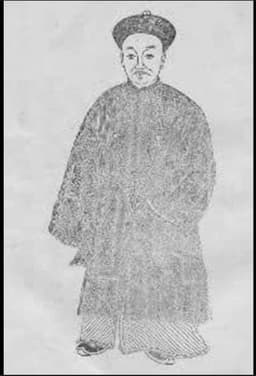
Lin Zexu
Politician · Modern
54.8Total
Basic Information
Born
1609
1785
Died
1674
1850
Era
Modern
Modern
Nationality
England
China
Occupation
Politician
Politician
Civilization
Western
Eastern
Score Comparison
Military (10%)
50.0
34.9
Political (20%)
72.0
54.7
Influence (20%)
61.0
62.0
Legacy (20%)
50.0
56.0
Leadership (15%)
53.2
62.2
Strategy (15%)
41.3
42.3
TOTAL
55.7
54.8
Edward Hyde — Complete Timeline
1660 AD
Appointed Lord Chancellor and created Earl of ClarendonPolitical Action◆ Major
Following the Restoration of Charles II, Edward Hyde was appointed Lord Chancellor and created Earl of Clarendon. He became the king's chief minister, overseeing the re-establishment of the monarchy and the Church of England.
RestorationLord ChancellorCharles II
Impact: nationalconstructive
1667 AD
Impeached and exiled to FrancePolitical Action◆ Major
Parliament impeached Edward Hyde for high treason, blaming him for the disastrous Second Anglo-Dutch War and the sale of Dunkirk. He fled to France, where he lived in exile until his death, never returning to England.
ImpeachmentExileAnglo-Dutch War
Impact: nationaltragic
Lin Zexu — Complete Timeline
1839 AD
Triggered the First Opium WarWar
Lin Zexu's destruction of opium and his letter to Queen Victoria demanding an end to the trade led Britain to declare war in 1839. The First Opium War resulted in China's defeat, the Treaty of Nanjing, and the cession of Hong Kong, marking the start of the 'Century of Humiliation'.
Opium WarBritish EmpireTreaty of Nanjing
Impact: globaltragic
Destroyed Opium at HumenPolitical Action◆ Major
As Imperial Commissioner in Guangzhou, Lin Zexu confiscated and destroyed over 20,000 chests of British opium at Humen (Bogue) in June 1839. This direct action against the illegal drug trade was intended to halt the opium crisis but provoked British military retaliation.
Opium WarAnti-Drug CampaignHumen
Impact: global
1841 AD
Exiled to XinjiangPolitical Action
Following China's defeat in the Opium War, Lin Zexu was scapegoated by the Qing court and exiled to Xinjiang in 1841. During his exile, he studied local conditions and advocated for frontier defense, but his removal from power weakened the anti-opium faction.
ExileQing CourtXinjiang
Impact: nationaltragic
Compiled the Gazetteer of the Four ContinentsCultural
During his exile, Lin Zexu compiled the 'Gazetteer of the Four Continents' (Sizhou Zhi), a collection of translated Western texts on geography, politics, and military technology. This work introduced Chinese scholars to global affairs and influenced later reform movements.
TranslationGeographyReform
Impact: nationalconstructive
Expert Analysis
Origins
Edward Hyde (1609–1674) was born into a minor gentry family in Dinton, Wiltshire. His father, Henry Hyde, was a lawyer, and Edward initially pursued a legal career, entering Middle Temple in 1625. He was educated at Oxford but did not take a degree. His early career as a lawyer brought him into contact with influential figures, and he became a Member of Parliament in 1640. Hyde's moderate royalist stance during the English Civil War shaped his later career.
Lin Zexu (1785–1850) was born into a scholarly family in Fuzhou, Fujian. His father, Lin Binri, was a poor teacher, but Lin Zexu excelled in the Confucian civil service examinations, passing the highest level (jinshi) in 1811. He entered the imperial bureaucracy and served in various provincial posts, gaining a reputation for integrity and efficiency. His early career focused on flood control, water conservancy, and judicial matters.
Rise to Power
Hyde's rise came during the English Civil War. Initially a critic of Charles I's arbitrary rule, he became a key advisor to the future Charles II during his exile. After the Restoration in 1660, Hyde was appointed Lord Chancellor and created Earl of Clarendon. He was the de facto chief minister, overseeing the transition from the Commonwealth to monarchy. His influence peaked in the early 1660s, but his opposition to religious toleration and his perceived arrogance alienated many.
Lin Zexu's rise was more gradual. His administrative successes in various provinces led to his appointment as Governor-General of Huguang in 1837. In 1838, he submitted a memorial to the Daoguang Emperor arguing for decisive action against the opium trade. Impressed, the emperor appointed him Imperial Commissioner to Guangzhou in 1839. Lin was granted extraordinary powers to suppress the opium trade, making him the central figure in the conflict with Britain.
Leadership & Governance
Hyde's governance was characterized by a conservative, royalist approach. He helped restore the Church of England's supremacy and opposed the Declaration of Indulgence, which sought to grant religious freedom to Catholics and dissenters. His leadership was legalistic, relying on common law and precedent. However, his governance alienated Parliament, which resented his influence and his role in the sale of Dunkirk (1662) and the disastrous Second Anglo-Dutch War (1665–1667). His political score of 72.0 reflects his effectiveness in consolidating royal power but also his inability to adapt to parliamentary assertiveness.
Lin Zexu's leadership was direct and moralistic. He enforced a strict ban on opium, arresting Chinese dealers and confiscating foreign opium. His famous letter to Queen Victoria appealed to British morality, but it also demonstrated a misunderstanding of British commercial interests. His military score of 34.9 reflects his lack of preparation for war. His strategy score of 42.3 indicates his failure to anticipate British naval power. Nevertheless, his leadership score of 62.2 shows his resolve and administrative vigor.
Triumph & Tragedy
Hyde's greatest triumph was his role in the Restoration, which ended the Interregnum and restored the monarchy. His 'History of the Rebellion and Civil Wars in England' (published posthumously in 1702–1704) became a classic historical work, scoring 61.0 in influence. However, his tragedy was his impeachment and exile in 1667. Blamed for the Second Anglo-Dutch War and the sale of Dunkirk, he was forced to flee to France, where he died in 1674. His legacy score of 50.0 reflects that his political achievements were overshadowed by his fall.
Lin Zexu's triumph was his moral stand against the opium trade. Destroying over 20,000 chests of opium at Humen in 1839 made him a national hero in China. His compilation of the 'Gazetteer of the Four Continents' during his exile contributed to Chinese knowledge of the West. However, his tragedy was that his actions triggered the First Opium War (1839–1842), which China lost decisively. He was scapegoated and exiled to Xinjiang in 1841. His influence score of 62.0 reflects his enduring status as a symbol of resistance, but his political score of 54.7 shows his failure to achieve his goals.
Character & Destiny
Hyde was principled but inflexible. His loyalty to the monarchy was unwavering, but his disdain for compromise and his perceived arrogance made him enemies. His legalistic mindset served him well during the Restoration but failed him in the changing political landscape of the 1660s. His character led to his downfall; he could not navigate the parliamentary opposition that eventually destroyed him.
Lin Zexu was incorruptible and determined. His Confucian moralism drove him to confront the opium trade directly. However, his lack of understanding of Western military technology and international diplomacy proved fatal. His character made him a martyr but also a scapegoat. His destiny was to be a symbol rather than a successful reformer.
Legacy
Hyde's legacy is mixed. His 'History of the Rebellion' remains a key source for historians. His role in the Restoration established the constitutional framework that evolved into the modern British monarchy. However, his immediate political legacy was nullified by his impeachment. His total score of 55.7 places him slightly above Lin Zexu.
Lin Zexu's legacy is more powerful in the long term. He is revered in China as a national hero and a symbol of anti-imperialism. His destruction of opium is commemorated annually. The Opium War he triggered opened China to foreign influence, leading to the unequal treaties. His total score of 54.8 is close, but his influence on Chinese national identity is enduring.
Conclusion
While Hyde scored slightly higher overall (55.7 vs. 54.8), Lin Zexu's impact on history is more profound. Hyde was a skilled politician who helped restore the monarchy but ultimately failed to maintain his position. Lin Zexu, despite his tactical failures, ignited a national consciousness that continues to shape China. His moral clarity and sacrifice outweigh Hyde's administrative successes. Lin Zexu had greater impact: his actions led to the Opium War, which fundamentally altered East-West relations and China's trajectory. Hyde's legacy is confined to English constitutional history; Lin Zexu's resonates globally.
Rankings
🥇
Edward HydeLeader
Mil: 50.0Pol: 72.0Inf: 61.0
55.7
🥈
Lin Zexu
Mil: 34.9Pol: 54.7Inf: 62.0
54.8
+0.9 behind
How This Comparison Works
Algorithm
Each figure is scored on 6 dimensions (0—100 scale) based on structured historical data: Military (10%), Political (20%), Influence (20%), Legacy (20%), Leadership (15%), Strategy (15%). The weighted total produces the final ranking.
Data Sources
Scores are computed from structured sub-indicators in the database. Scale factors adjust for era (Ancient ×0.85, Modern ×1.0) and civilization size (Eastern ×1.05, Other ×0.80) to account for differences in population and military scale.
Maximum 3 Figures
Comparisons are limited to 2—3 figures to ensure readability and statistical meaningfulness.
Error Margins
±5 points per dimension — Sub-scores are derived from historical records with inherent uncertainty. Two figures within 5 points on a dimension should be considered roughly equivalent in that area.
Total Score Accuracy
±3 points overall — The weighted combination of 6 dimensions produces a total score with approximately ±3 points of uncertainty. Differences of less than 3 points are not statistically significant— the figures are effectively tied.
Known Limitations
- Historical records are incomplete and uneven across civilizations
- Figures from oral-tradition societies may be underrepresented
- Occupation labels can misclassify multi-role figures
- Scores measure capability and impact, not moral character
- Quantitative scoring is a comparison tool, not absolute truth
Capability Radar
Military (10%) — Battles & Warfare
Battles
28
10
Win Rate
29
5
Expansion
37
5
Political (20%) — Governance & Reform
Reform
65
60
Diplomacy
70
30
Economy
55
35
Influence (20%) — Cultural & Global Reach
Cultural
50
60
Global
45
50
Legacy (20%) — Historical Impact
Historical
55
65
Longevity
50
55
Leadership (15%) — Power & Stability
Tenure
60
40
Stability
40
20
Strategy (15%) — Tactics & Innovation
Strategy
36
20
Tactics
40
15
Reform
43
30
Similar Comparisons
Comments & Discussion
No comments yet. Be the first to share your thoughts!