Loading...
Heshen vs Lin Zexu
Lin Zexu leads by 11.5 pts · 2 figures compared
…

Heshen
Politician · Modern
43.3Total
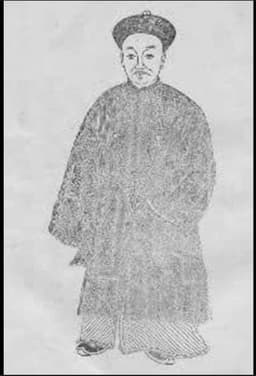
Lin Zexu
Politician · Modern
54.8Total
Basic Information
Born
1750
1785
Died
1799
1850
Era
Modern
Modern
Nationality
China
China
Occupation
Politician
Politician
Civilization
Eastern
Eastern
Score Comparison
Military (10%)
12.7
34.9
Political (20%)
26.4
54.7
Influence (20%)
48.6
62.0
Legacy (20%)
45.0
56.0
Leadership (15%)
74.0
62.2
Strategy (15%)
36.2
42.3
TOTAL
43.3
54.8
Heshen — Complete Timeline
1776 AD
Rose to power as Qianlong's favorite ministerPolitical Action◆ Major
Heshen gained the favor of the Qianlong Emperor through flattery and administrative skill, rapidly ascending to high office. He became Grand Secretary and controlled key government appointments and finances.
FavoritismRise to PowerQing Court
Impact: national
1790 AD
Amassed vast personal fortune through corruptionPolitical Action◆ Major
Heshen systematically embezzled state funds, accepted bribes, and extorted officials, accumulating a fortune estimated at over 1 billion taels of silver. His corruption drained the Qing treasury and weakened the state.
CorruptionEmbezzlementQing Decline
Impact: nationaldestructive
1799 AD
Arrested and forced to commit suicide after Qianlong's deathPolitical Action
Upon the death of the Qianlong Emperor, the Jiaqing Emperor ordered Heshen's arrest on charges of corruption and abuse of power. Heshen was forced to commit suicide, and his vast wealth was confiscated by the state.
ArrestExecutionAnti-Corruption
Impact: nationaltragic
Lin Zexu — Complete Timeline
1839 AD
Triggered the First Opium WarWar
Lin Zexu's destruction of opium and his letter to Queen Victoria demanding an end to the trade led Britain to declare war in 1839. The First Opium War resulted in China's defeat, the Treaty of Nanjing, and the cession of Hong Kong, marking the start of the 'Century of Humiliation'.
Opium WarBritish EmpireTreaty of Nanjing
Impact: globaltragic
Destroyed Opium at HumenPolitical Action◆ Major
As Imperial Commissioner in Guangzhou, Lin Zexu confiscated and destroyed over 20,000 chests of British opium at Humen (Bogue) in June 1839. This direct action against the illegal drug trade was intended to halt the opium crisis but provoked British military retaliation.
Opium WarAnti-Drug CampaignHumen
Impact: global
1841 AD
Exiled to XinjiangPolitical Action
Following China's defeat in the Opium War, Lin Zexu was scapegoated by the Qing court and exiled to Xinjiang in 1841. During his exile, he studied local conditions and advocated for frontier defense, but his removal from power weakened the anti-opium faction.
ExileQing CourtXinjiang
Impact: nationaltragic
Compiled the Gazetteer of the Four ContinentsCultural
During his exile, Lin Zexu compiled the 'Gazetteer of the Four Continents' (Sizhou Zhi), a collection of translated Western texts on geography, politics, and military technology. This work introduced Chinese scholars to global affairs and influenced later reform movements.
TranslationGeographyReform
Impact: nationalconstructive
Expert Analysis
Origins
Heshen (1750–1799) was born into a minor Manchu military family. Orphaned young, he rose through the imperial guard due to his intelligence and charm. Lin Zexu (1785–1850) came from a scholarly Fujian family, excelling in Confucian classics and passing the imperial exams to become a bureaucrat.
Rise to Power
Heshen gained Qianlong's favor by 1775, quickly becoming Grand Secretary and the emperor's most trusted minister. He controlled key appointments and finances, amassing power through flattery and administrative skill. Lin Zexu rose through merit, serving as governor and then Imperial Commissioner in 1838 to stop the opium trade. His decisive action in confiscating 20,000 chests of opium at Humen in 1839 made him a symbol of resistance.
Leadership & Governance
Heshen governed through patronage and corruption, enriching himself while weakening the Qing state. He extorted officials, sold offices, and embezzled funds, with his fortune estimated at 1.1 billion taels of silver. Lin Zexu led with Confucian moral integrity, enforcing anti-opium laws and modernizing defenses. He studied Western technology, translating texts to understand foreign threats, but his rigid opposition to compromise contributed to war.
Triumph & Tragedy
Heshen's triumph was his unprecedented accumulation of power and wealth under Qianlong. His tragedy came after the emperor's death: Jiaqing ordered his arrest, and he was forced to commit suicide in 1799. His fortune was confiscated, and he became a symbol of dynastic decay. Lin Zexu's triumph was his moral stand against opium, destroying over 1,000 tons. His tragedy: scapegoated for the Opium War, he was exiled to Xinjiang in 1841. There, he studied irrigation and geography, compiling the 'Gazetteer of the Four Continents'.
Character & Destiny
Heshen was cunning and adaptable, using flattery to secure power. His greed and lack of scruples led to his downfall when his patron died. Historians note that his political score of 26.4 reflects his inability to build lasting institutions. Lin Zexu was principled and scholarly, but his inflexibility made him a victim of court politics. His political score of 54.7 and legacy score of 56.0 show higher long-term respect. Lin Zexu's character—upright but rigid—shaped his tragic exile.
Legacy
Heshen's legacy is negative: his corruption is blamed for weakening the Qing, contributing to its 19th-century decline. His name is synonymous with venality in Chinese culture. Lin Zexu is revered as a national hero and the 'first patriot' of modern China. His anti-opium campaign and efforts to understand the West influenced later reformers. His total score of 54.8 versus Heshen's 43.3 reflects greater impact, but Lin Zexu's direct influence on policy was limited by his exile.
Conclusion
Lin Zexu had greater long-term impact, scoring 54.8 overall to Heshen's 43.3. While Heshen's corruption exposed systemic weaknesses, Lin Zexu's moral stand and forward-thinking ideas inspired modern Chinese nationalism. His legacy as a martyr for sovereignty outweighs Heshen's cautionary tale. The 11.5-point gap underscores Lin's superior political and strategic scores (54.7 vs 26.4).
Rankings
🥇
Lin ZexuLeader
Mil: 34.9Pol: 54.7Inf: 62.0
54.8
🥈
Heshen
Mil: 12.7Pol: 26.4Inf: 48.6
43.3
+11.5 behind
How This Comparison Works
Algorithm
Each figure is scored on 6 dimensions (0—100 scale) based on structured historical data: Military (10%), Political (20%), Influence (20%), Legacy (20%), Leadership (15%), Strategy (15%). The weighted total produces the final ranking.
Data Sources
Scores are computed from structured sub-indicators in the database. Scale factors adjust for era (Ancient ×0.85, Modern ×1.0) and civilization size (Eastern ×1.05, Other ×0.80) to account for differences in population and military scale.
Maximum 3 Figures
Comparisons are limited to 2—3 figures to ensure readability and statistical meaningfulness.
Error Margins
±5 points per dimension — Sub-scores are derived from historical records with inherent uncertainty. Two figures within 5 points on a dimension should be considered roughly equivalent in that area.
Total Score Accuracy
±3 points overall — The weighted combination of 6 dimensions produces a total score with approximately ±3 points of uncertainty. Differences of less than 3 points are not statistically significant— the figures are effectively tied.
Known Limitations
- Historical records are incomplete and uneven across civilizations
- Figures from oral-tradition societies may be underrepresented
- Occupation labels can misclassify multi-role figures
- Scores measure capability and impact, not moral character
- Quantitative scoring is a comparison tool, not absolute truth
Capability Radar
Military (10%) — Battles & Warfare
Battles
12
10
Win Rate
20
5
Expansion
20
5
Political (20%) — Governance & Reform
Reform
5
60
Diplomacy
20
30
Economy
10
35
Influence (20%) — Cultural & Global Reach
Cultural
10
60
Global
20
50
Legacy (20%) — Historical Impact
Historical
40
65
Longevity
30
55
Leadership (15%) — Power & Stability
Tenure
70
40
Stability
15
20
Strategy (15%) — Tactics & Innovation
Strategy
20
20
Tactics
25
15
Reform
31
30
Similar Comparisons
Comments & Discussion
No comments yet. Be the first to share your thoughts!