Loading...
Edward I Longshanks vs Tokhta
Edward I Longshanks leads by 0.9 pts · 2 figures compared
…
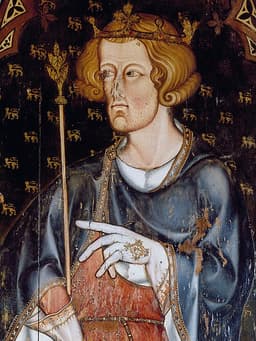
Edward I Longshanks
Emperor · Medieval
60.0Total
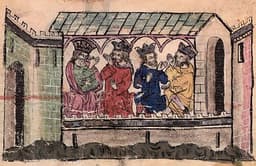
Tokhta
Emperor · Medieval
59.1Total
Basic Information
Born
1239
1270
Died
1307
1312
Era
Medieval
Medieval
Nationality
England
Golden Horde
Occupation
Emperor
Emperor
Civilization
Western
Eastern
Score Comparison
Military (10%)
74.7
65.0
Political (20%)
68.0
68.0
Influence (20%)
61.0
56.4
Legacy (20%)
52.0
49.2
Leadership (15%)
53.2
66.0
Strategy (15%)
61.2
60.7
TOTAL
60.0
59.1
Edward I Longshanks — Complete Timeline
1282 AD
Conquest of WalesWar◆ Major
Edward I launched a full-scale conquest of Wales, defeating Llywelyn ap Gruffudd at the Battle of Orewin Bridge. He built castles and imposed English rule, incorporating Wales into the English crown.
ConquestWalesCastles
Impact: regionaldestructive
1284 AD
Statute of RhuddlanPolitical Action◆ Major
Edward I issued the Statute of Rhuddlan, which annexed Wales to the English crown and introduced English common law. This formalized the conquest and established English administration in Wales.
LawAnnexationWales
Impact: regionalconstructive
1295 AD
Model ParliamentPolitical Action◆ Major
Edward I summoned the Model Parliament, which included representatives from the commons, clergy, and nobility. This assembly set a precedent for parliamentary representation and taxation consent.
ParliamentRepresentationTaxation
Impact: nationalconstructive
1296 AD
Scottish Wars of IndependenceWar◆ Major
Edward I invaded Scotland after the death of Margaret, Maid of Norway, claiming overlordship. He defeated the Scots at Dunbar, captured the Stone of Scone, and attempted to impose English rule, sparking a long war.
InvasionScotlandStone of Scone
Impact: regionaldestructive
1298 AD
Battle of FalkirkWar◆ Major
Edward I defeated William Wallace's Scottish army at the Battle of Falkirk. Using longbowmen and cavalry, he broke the Scottish schiltron formations, crushing the rebellion temporarily.
BattleScotlandWilliam Wallace
Impact: regional
Tokhta — Complete Timeline
1299 AD
Restoration of Centralized RulePolitical Action◆ Major
Tokhta reasserted the authority of the central khan over the Golden Horde, suppressing rebellious emirs and consolidating power. He reorganized the administration and restored the capital at Sarai, ending a period of fragmentation.
Golden HordeCentralizationReformSarai
Impact: nationalconstructive
1300 AD
Defeat of the Nogai HordeWar◆ Major
Tokhta led a military campaign against the Nogai Horde, a breakaway faction that had challenged his authority. The campaign culminated in the defeat and death of Nogai, the leader of the Horde, restoring Tokhta's control over the western territories of the Golden Horde.
Golden HordeNogai HordeCivil WarRestoration
Impact: regional
1308 AD
Conflict with the Genoese in CrimeaWar
Tokhta ordered the expulsion of Genoese merchants from the Crimean port of Caffa, leading to a military conflict. The Genoese were defeated, and their trading privileges were revoked, strengthening the Golden Horde's control over the Black Sea trade.
Golden HordeGenoaCrimeaTrade
Impact: regional
Expert Analysis
Origins
Edward I Longshanks was born on June 17, 1239, at the Palace of Westminster, the firstborn son of King Henry III of England and Eleanor of Provence. He was educated in statecraft and chivalry, participating in tournaments and learning the arts of war from an early age. His father's weak rule and the baronial conflicts, including the Second Barons' War led by Simon de Montfort, shaped Edward's determination to assert royal authority.
Tokhta (also spelled Toqta) was born around 1270, the son of Mengu-Timur, a khan of the Golden Horde. His early life was marked by the internal strife of the Mongol Empire's western successor states. He grew up in a court where legitimacy was contested, and his claim to the throne was challenged by rivals, including the powerful Nogai, who had become a kingmaker within the Horde.
Rise to Power
Edward I's rise began during the Second Barons' War (1264–1267). He fought alongside his father, but after the royal defeat at Lewes in 1264, Edward was taken hostage. He escaped and rallied royalist forces, defeating Simon de Montfort at the Battle of Evesham in 1265. This victory cemented his reputation as a military commander. He then went on crusade to the Holy Land (1270–1274), which enhanced his prestige. Upon returning, he was crowned king in 1274, immediately embarking on reforms to strengthen the crown.
Tokhta's path to power was more circuitous. He became khan in 1291 after the death of his uncle Tole-Buqa, but he initially shared authority with the powerful emir Nogai, who had engineered Tole-Buqa's downfall. Tokhta's early reign was overshadowed by Nogai's influence. He spent years consolidating his position, marrying Nogai's daughter to secure an alliance, but eventually broke free. In 1299, he decisively defeated Nogai's forces at the Battle of Kaganlik, killing Nogai and absorbing his territories. This victory made Tokhta the sole ruler of the Golden Horde.
Leadership & Governance
Edward I was a hands-on ruler who personally led military campaigns. He is known for his legal and administrative reforms: the Statute of Gloucester (1278) and the Statute of Westminster II (1285) clarified property rights and justice. He also summoned the Model Parliament in 1295, which included elected representatives from counties and boroughs, setting a precedent for future parliaments. His governance was centralized, with a focus on raising taxes for wars. However, his heavy-handedness in Scotland, demanding homage and installing English officials, sparked prolonged conflict.
Tokhta ruled the Golden Horde, a Mongol state that blended steppe traditions with Islamic and Russian influences. He reasserted central authority by crushing rebellious emirs and reorganizing the administration. He expelled Genoese merchants from Caffa in 1307, asserting control over trade routes. Unlike Edward, Tokhta did not rely on representative institutions but on a network of loyal governors and military commanders. His governance was pragmatic, aiming to maintain unity and collect tribute from Russian principalities.
Triumph & Tragedy
Edward I's greatest triumph was the conquest of Wales (1277–1283). He built a ring of castles (e.g., Caernarfon, Conwy) and imposed English law via the Statute of Rhuddlan (1284). His military score of 74.7 reflects his success in field battles like Falkirk (1298) against William Wallace. However, his Scottish policy ended in failure. He died in 1307 while marching north against Robert the Bruce, leaving Scotland unconquered. His heavy taxation and demands for military service also caused domestic unrest, including near-rebellion in 1297.
Tokhta's triumph was the defeat of the Nogai Horde, which restored unity to the Golden Horde. He reigned as an undisputed ruler from 1299 until his death in 1312. His political score of 68.0 matches Edward's, indicating effective statecraft. However, his conflict with the Genoese damaged trade and led to economic strain. He also faced a rebellion by his nephew, which he suppressed. His legacy is mixed: he strengthened the Horde but did not solve its inherent factionalism.
Character & Destiny
Edward was tall (hence "Longshanks"), energetic, and ruthless. He had a fierce temper and was known for his piety, but also for his cruelty, as seen in the execution of William Wallace (1305) and the massacre at Berwick (1296). His leadership score of 53.2 suggests a commanding but divisive figure. His destiny was shaped by his ambition to dominate Britain, which ultimately overreached.
Tokhta was described as capable and cunning, able to navigate the treacherous politics of the Mongol court. His leadership score of 66.0 is higher than Edward's, indicating better management of his elites. He was pragmatic, willing to compromise when necessary. His destiny was to restore order, but he lacked the vision for lasting institutions.
Legacy
Edward I's legacy is profound. He effectively ended Welsh independence and created the framework for English control that lasted until the 20th century. His Model Parliament influenced the development of representative government in England. His military innovations, such as the use of longbowmen, changed warfare. However, his Scottish wars sowed hatred that fueled centuries of conflict. His legacy score of 52.0 reflects the mixed long-term impact.
Tokhta's legacy is more limited. He is remembered as a restorer of the Golden Horde's power, but his achievements were undone by successors. His expulsion of the Genoese had short-term effects but did not alter trade dynamics permanently. His legacy score of 49.2 is slightly lower than Edward's. The Horde declined after his death, fragmenting into khanates.
Conclusion
Edward I Longshanks had a greater impact than Tokhta. With a total score of 60.0 against Tokhta's 59.1, the difference is small but significant. Edward's conquest of Wales permanently changed the political map, and his parliamentary model influenced governance for centuries. Tokhta restored stability but failed to leave a lasting institutional legacy. While Tokhta was a more effective leader (66.0 vs 53.2), Edward's military and political achievements had broader historical consequences. The Hammer of the Scots shaped the destiny of two nations, while Tokhta's reign was a brief interlude in the decline of the Golden Horde.
Rankings
🥇
Edward I LongshanksLeader
Mil: 74.7Pol: 68.0Inf: 61.0
60.0
🥈
Tokhta
Mil: 65.0Pol: 68.0Inf: 56.4
59.1
+0.9 behind
How This Comparison Works
Algorithm
Each figure is scored on 6 dimensions (0—100 scale) based on structured historical data: Military (10%), Political (20%), Influence (20%), Legacy (20%), Leadership (15%), Strategy (15%). The weighted total produces the final ranking.
Data Sources
Scores are computed from structured sub-indicators in the database. Scale factors adjust for era (Ancient ×0.85, Modern ×1.0) and civilization size (Eastern ×1.05, Other ×0.80) to account for differences in population and military scale.
Maximum 3 Figures
Comparisons are limited to 2—3 figures to ensure readability and statistical meaningfulness.
Error Margins
±5 points per dimension — Sub-scores are derived from historical records with inherent uncertainty. Two figures within 5 points on a dimension should be considered roughly equivalent in that area.
Total Score Accuracy
±3 points overall — The weighted combination of 6 dimensions produces a total score with approximately ±3 points of uncertainty. Differences of less than 3 points are not statistically significant— the figures are effectively tied.
Known Limitations
- Historical records are incomplete and uneven across civilizations
- Figures from oral-tradition societies may be underrepresented
- Occupation labels can misclassify multi-role figures
- Scores measure capability and impact, not moral character
- Quantitative scoring is a comparison tool, not absolute truth
Capability Radar
Military (10%) — Battles & Warfare
Battles
75
65
Win Rate
70
70
Expansion
75
60
Political (20%) — Governance & Reform
Reform
65
65
Diplomacy
60
60
Economy
55
55
Influence (20%) — Cultural & Global Reach
Cultural
55
40
Global
50
40
Legacy (20%) — Historical Impact
Historical
70
50
Longevity
60
45
Leadership (15%) — Power & Stability
Tenure
70
70
Stability
50
65
Strategy (15%) — Tactics & Innovation
Strategy
80
65
Tactics
65
60
Reform
60
55
Similar Comparisons
Comments & Discussion
No comments yet. Be the first to share your thoughts!