Loading...
Edward I Longshanks vs Harald Bluetooth
Edward I Longshanks leads by 0.7 pts · 2 figures compared
…
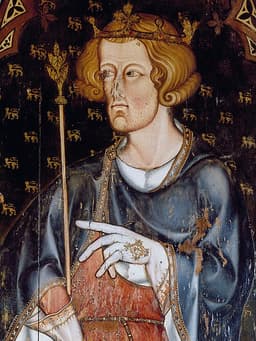
Edward I Longshanks
Emperor · Medieval
60.0Total
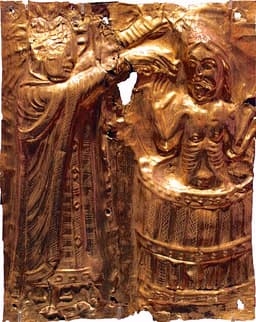
Harald Bluetooth
Emperor · Medieval
59.3Total
Basic Information
Born
1239
911
Died
1307
985
Era
Medieval
Medieval
Nationality
England
Denmark
Occupation
Emperor
Emperor
Civilization
Western
Western
Score Comparison
Military (10%)
74.7
40.0
Political (20%)
68.0
72.0
Influence (20%)
61.0
62.0
Legacy (20%)
52.0
56.0
Leadership (15%)
53.2
70.0
Strategy (15%)
61.2
45.0
TOTAL
60.0
59.3
Edward I Longshanks — Complete Timeline
1282 AD
Conquest of WalesWar◆ Major
Edward I launched a full-scale conquest of Wales, defeating Llywelyn ap Gruffudd at the Battle of Orewin Bridge. He built castles and imposed English rule, incorporating Wales into the English crown.
ConquestWalesCastles
Impact: regionaldestructive
1284 AD
Statute of RhuddlanPolitical Action◆ Major
Edward I issued the Statute of Rhuddlan, which annexed Wales to the English crown and introduced English common law. This formalized the conquest and established English administration in Wales.
LawAnnexationWales
Impact: regionalconstructive
1295 AD
Model ParliamentPolitical Action◆ Major
Edward I summoned the Model Parliament, which included representatives from the commons, clergy, and nobility. This assembly set a precedent for parliamentary representation and taxation consent.
ParliamentRepresentationTaxation
Impact: nationalconstructive
1296 AD
Scottish Wars of IndependenceWar◆ Major
Edward I invaded Scotland after the death of Margaret, Maid of Norway, claiming overlordship. He defeated the Scots at Dunbar, captured the Stone of Scone, and attempted to impose English rule, sparking a long war.
InvasionScotlandStone of Scone
Impact: regionaldestructive
1298 AD
Battle of FalkirkWar◆ Major
Edward I defeated William Wallace's Scottish army at the Battle of Falkirk. Using longbowmen and cavalry, he broke the Scottish schiltron formations, crushing the rebellion temporarily.
BattleScotlandWilliam Wallace
Impact: regional
Harald Bluetooth — Complete Timeline
958 AD
Unified DenmarkPolitical Action◆ Major
Harald Bluetooth unified the Danish tribes into a single kingdom, consolidating power over Jutland, Zealand, and surrounding islands. This unification laid the foundation for the medieval Danish state and established the Gorm dynasty's rule.
UnificationDenmarkMedieval Kingdom
Impact: regionalconstructive
965 AD
Introduced Christianity to DenmarkCultural◆ Major
Harald Bluetooth converted to Christianity and mandated the conversion of Denmark. He erected the larger Jelling rune stone, which proclaims that he 'made the Danes Christian'. This event marked Denmark's entry into Christian Europe and aligned it with Latin Christendom.
ChristianizationReligionJelling Stones
Impact: regionalconstructive
Built the Jelling monumentsCultural◆ Major
Harald Bluetooth commissioned the Jelling rune stones and burial mounds in memory of his parents. The larger stone, often called 'Denmark's birth certificate', features a depiction of Christ and a runic inscription celebrating his unification of Denmark and Norway.
Jelling StonesMonumentsCultural Heritage
Impact: regionalconstructive
970 AD
Conquered NorwayWar◆ Major
Harald Bluetooth conquered Norway after defeating Earl Hakon Sigurdsson, bringing Norway under Danish rule. This expansion created a short-lived North Sea empire and demonstrated Danish military power in Scandinavia.
ConquestNorwayDanish Empire
Impact: regional
985 AD
Rebelled against by his son Sweyn ForkbeardPolitical Action◆ Major
Harald Bluetooth faced a rebellion led by his son Sweyn Forkbeard, who opposed his father's rule and Christianization policies. The rebellion forced Harald into exile, where he died shortly after, ending his reign and leading to Sweyn's ascension.
RebellionDynastic ConflictExile
Impact: regionaldestructive
Expert Analysis
Origins
Edward I Longshanks was born on June 17, 1239, at the Palace of Westminster, the first son of King Henry III of England and Eleanor of Provence. His upbringing was steeped in the chivalric culture of the Plantagenet court, but his father's weak rule and conflicts with barons—culminating in the Second Barons' War (1264–1267)—shaped Edward's resolve to restore royal authority. He participated in the Ninth Crusade (1271–1272), gaining military experience in the Holy Land.
Harald Bluetooth, born around 935, was the son of King Gorm the Old of Denmark and Thyra Dannebod. Gorm was a pagan king who had unified Jutland, but his realm was fragmented. Harald grew up in the Viking Age, with its traditions of raiding and Norse paganism. He inherited the throne around 958 and faced the task of consolidating his father's gains and securing the kingdom against external threats, including the Holy Roman Empire to the south.
Rise to Power
Edward I ascended the throne in 1272 upon his father's death, but he was already a seasoned leader after suppressing the rebel Simon de Montfort at the Battle of Evesham (1265) and crusading. His first major campaign was the conquest of Wales (1277–1283). He defeated Llywelyn ap Gruffudd, Prince of Wales, at the Battle of Orewin Bridge in 1282, and subsequently built a ring of castles (Caernarfon, Conwy, Harlech) to enforce English rule. The Statute of Rhuddlan (1284) annexed Wales and introduced English common law.
Harald Bluetooth rose to power after his father's death. He is traditionally credited with completing the unification of Denmark, which his father had begun. His major achievement was the introduction of Christianity, likely influenced by the missionary efforts of Otto I, Holy Roman Emperor, and the need to align with Christian powers. The Jelling rune stone, erected around 965, proclaims that Harald "won all of Denmark and Norway and made the Danes Christian." This act marked a pivot from Viking paganism to European Christendom.
Leadership & Governance
Edward I was a formidable military leader and an administrative reformer. His governance was characterized by centralization, legal codification, and parliamentary innovation. He issued the Statute of Westminster (1275) and other legal reforms, and in 1295 he summoned the Model Parliament, which included knights, burgesses, clergy, and nobles—a precursor to the modern English Parliament. He also expelled the Jews from England in 1290, seizing their property. His leadership style was autocratic and relentless; he personally led campaigns in Scotland and Wales, earning the nickname "Hammer of the Scots."
Harald Bluetooth's governance was more focused on consolidation and cultural transformation. He converted to Christianity around 960 and built churches and monasteries. He also fortified the Danevirke, a defensive wall across the Jutland peninsula, against the Germans. His rule was less militaristic than Edward's; his political score of 72.0 reflects his diplomatic skill in unifying tribes and adopting Christianity to integrate Denmark into European civilization. However, his military score of 40.0 indicates limited martial ambition compared to Edward's 74.7.
Triumph & Tragedy
Edward I's greatest triumph was the conquest of Wales, which he completed with a systematic campaign of castle-building and legal annexation. His Model Parliament also set a lasting precedent. However, his Scottish campaigns ended in failure: despite victories at Dunbar (1296) and Falkirk (1298), he could not permanently subdue Scotland. The Scots, led by William Wallace and later Robert the Bruce, resisted fiercely. Edward died in 1307 while marching north to confront Bruce, leaving Scotland unconquered. His expulsion of the Jews was a tragic moral failure.
Harald Bluetooth's triumph was the unification of Denmark and the introduction of Christianity, which brought Denmark into the European mainstream. The Jelling monuments remain iconic symbols of Danish identity. However, his later years were marred by rebellion from his son Sweyn Forkbeard, who opposed his father's rule and Christianization. Harald was forced into exile in 986 and died shortly after. His conquest of Norway was short-lived; after his death, Norway regained independence.
Character & Destiny
Edward I was a man of iron will, known for his tall stature and fierce temper. He was pragmatic and ruthless, willing to use any means—military, legal, or financial—to achieve his goals. His character shaped his destiny: his relentless drive for domination led to successes in Wales but overreach in Scotland, where he underestimated the Scots' resilience. Historians assess him as a strong but divisive king; his leadership score of 53.2 reflects his effectiveness but also his flaws.
Harald Bluetooth was a pragmatic ruler who saw the benefits of Christianity and centralization. He was less aggressive than his Viking ancestors, focusing on consolidation rather than expansion. His character was diplomatic and adaptive, but his conversion alienated traditionalist factions, leading to his downfall. He is remembered as a unifier and a king who chose peace over war, reflected in his leadership score of 70.0.
Legacy
Edward I's legacy is immense: he permanently annexed Wales to England, established the English Parliament as a representative body, and left a legal framework that influenced later centuries. His castle-building program in Wales is a UNESCO World Heritage site. However, his Scottish wars sowed centuries of conflict. His total score of 60.0 ranks him as a significant but not transcendent monarch.
Harald Bluetooth's legacy is equally profound: he created a unified Danish kingdom and introduced Christianity, which shaped Scandinavia's future. The Jelling rune stone is often called "Denmark's birth certificate." His name was used for Bluetooth technology, symbolizing unification. His total score of 59.3 is slightly lower than Edward's, but his influence on cultural and religious transformation is comparable.
Conclusion
Edward I and Harald Bluetooth were both transformative rulers, but Edward had a greater impact on the political map of Britain and the development of parliamentary governance. His military conquests and legal reforms left a more enduring institutional legacy. Harald Bluetooth, while crucial for Denmark's unification and Christianization, operated on a smaller stage and his achievements were partially reversed by his son's rebellion. Edward's total score of 60.0 versus Harald's 59.3 reflects this slight edge, but Edward's influence on English and Scottish history is more far-reaching. Thus, Edward I emerges as the more consequential figure, though Harald's cultural legacy remains iconic.
Rankings
🥇
Edward I LongshanksLeader
Mil: 74.7Pol: 68.0Inf: 61.0
60.0
🥈
Harald Bluetooth
Mil: 40.0Pol: 72.0Inf: 62.0
59.3
+0.7 behind
How This Comparison Works
Algorithm
Each figure is scored on 6 dimensions (0—100 scale) based on structured historical data: Military (10%), Political (20%), Influence (20%), Legacy (20%), Leadership (15%), Strategy (15%). The weighted total produces the final ranking.
Data Sources
Scores are computed from structured sub-indicators in the database. Scale factors adjust for era (Ancient ×0.85, Modern ×1.0) and civilization size (Eastern ×1.05, Other ×0.80) to account for differences in population and military scale.
Maximum 3 Figures
Comparisons are limited to 2—3 figures to ensure readability and statistical meaningfulness.
Error Margins
±5 points per dimension — Sub-scores are derived from historical records with inherent uncertainty. Two figures within 5 points on a dimension should be considered roughly equivalent in that area.
Total Score Accuracy
±3 points overall — The weighted combination of 6 dimensions produces a total score with approximately ±3 points of uncertainty. Differences of less than 3 points are not statistically significant— the figures are effectively tied.
Known Limitations
- Historical records are incomplete and uneven across civilizations
- Figures from oral-tradition societies may be underrepresented
- Occupation labels can misclassify multi-role figures
- Scores measure capability and impact, not moral character
- Quantitative scoring is a comparison tool, not absolute truth
Capability Radar
Military (10%) — Battles & Warfare
Battles
75
30
Win Rate
70
35
Expansion
75
45
Political (20%) — Governance & Reform
Reform
65
70
Diplomacy
60
65
Economy
55
50
Influence (20%) — Cultural & Global Reach
Cultural
55
60
Global
50
50
Legacy (20%) — Historical Impact
Historical
70
65
Longevity
60
55
Leadership (15%) — Power & Stability
Tenure
70
60
Stability
50
55
Strategy (15%) — Tactics & Innovation
Strategy
80
40
Tactics
65
25
Reform
60
20
Similar Comparisons
Comments & Discussion
No comments yet. Be the first to share your thoughts!