Loading...
Edward Seaga vs Julius Caesar
Julius Caesar leads by 28.7 pts · 2 figures compared
…
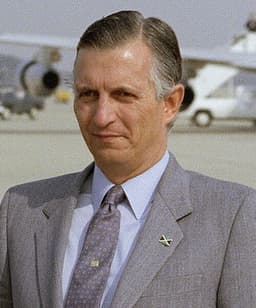
Edward Seaga
Politician · Modern
54.1Total

Julius Caesar
General · Ancient
82.8Total
Basic Information
Born
1930
-100
Died
—
-44
Era
Modern
Ancient
Nationality
Jamaica
Roman Republic
Occupation
Politician
General
Civilization
Western
Western
Score Comparison
Military (10%)
38.5
88.0
Political (20%)
53.8
78.0
Influence (20%)
55.7
85.0
Legacy (20%)
45.8
82.0
Leadership (15%)
72.0
80.0
Strategy (15%)
60.0
85.0
TOTAL
54.1
82.8
Edward Seaga — Complete Timeline
1980 AD
Elected Prime Minister of JamaicaPolitical Action◆ Major
Seaga led the Jamaica Labour Party (JLP) to a landslide victory in the 1980 general election, defeating Michael Manley's PNP. His election marked a shift toward pro-US, free-market policies.
Election VictoryJLPFree Market
Impact: nationalconstructive
1981 AD
Implemented Structural Adjustment ProgramsReform◆ Major
Seaga's government implemented IMF-backed structural adjustment programs, cutting public spending, devaluing the currency, and privatizing state enterprises. These policies aimed to stabilize the economy but led to high unemployment and social hardship.
IMFStructural AdjustmentEconomic ReformAusterity
Impact: nationaldestructive
Strengthened Ties with the United StatesPolitical Action◆ Major
Seaga aligned Jamaica closely with the United States, supporting US foreign policy in the Caribbean and Central America. He was a key ally of President Ronald Reagan and received increased US aid.
Foreign PolicyUS AllianceCold WarReagan
Impact: regionalconstructive
1989 AD
Lost the 1989 General ElectionPolitical Action◆ Major
Seaga's JLP was defeated by Michael Manley's PNP in the 1989 general election. The loss was attributed to economic hardship and public dissatisfaction with austerity measures.
Election DefeatEconomic Hardship
Impact: nationaltragic
Julius Caesar — Complete Timeline
58 BC
Gallic WarsWar◆ Major
Caesar, as proconsul of Gaul, launched a series of campaigns that conquered all of Gaul (modern France, Belgium, and parts of Switzerland). He fought numerous battles, including against the Helvetii, the Belgae, and the Gallic chieftain Vercingetorix. The wars brought immense wealth and a loyal army to Caesar.
Gallic WarsConquestRoman Expansion
Impact: regional
49 BC
Crossing the RubiconPolitical Action◆ Major
Caesar led Legio XIII across the Rubicon River into Italy, defying the Roman Senate's order to disband his army. This act triggered a civil war against Pompey and the Optimates, ultimately leading to Caesar's dictatorship and the end of the Roman Republic.
Roman Civil WarEnd of RepublicPower Struggle
Impact: global
48 BC
Battle of PharsalusWar◆ Major
Caesar's outnumbered army defeated the larger forces of Pompey the Great at Pharsalus in Greece. Caesar's tactical use of a reserve line to counter Pompey's cavalry charge proved decisive. Pompey fled to Egypt, where he was assassinated, leaving Caesar as the undisputed master of the Roman world.
Roman Civil WarBattleDecisive Victory
Impact: regional
44 BC
Appointment as Dictator for LifePolitical Action◆ Major
The Roman Senate appointed Caesar dictator perpetuo (dictator for life), granting him unprecedented personal power. This move concentrated military, legislative, and judicial authority in one person, effectively ending the Roman Republic's traditional system of checks and balances and alarming many senators.
DictatorshipEnd of RepublicPower Consolidation
Impact: regionaldestructive
Assassination on the Ides of MarchPolitical Action◆ Major
A group of Roman senators, led by Marcus Junius Brutus and Gaius Cassius Longinus, stabbed Caesar to death at a meeting of the Senate in the Theatre of Pompey. The assassination was intended to restore the Republic, but instead triggered another civil war that led to the rise of the Roman Empire.
AssassinationRoman PoliticsEnd of Republic
Impact: globaldestructive
Expert Analysis
Origins
Edward Seaga was born on May 28, 1930, in Boston, Massachusetts, to a Lebanese-Jamaican family. He was raised in Jamaica and attended Harvard University, where he studied sociology and anthropology. His academic background gave him a deep understanding of Jamaican culture, particularly folk music and religious traditions. Seaga entered politics in the early 1960s, joining the Jamaica Labour Party (JLP) and winning a seat in the House of Representatives in 1962.
Julius Caesar was born on July 12, 100 BCE, in Rome, into the patrician Julian family. Despite his noble lineage, his family was not wealthy. He received a strong education in rhetoric and military tactics. His early life was marked by political instability, including the Social War and the rise of Sulla. Caesar fled Rome to avoid Sulla's proscriptions, beginning his military career in Asia Minor.
Rise to Power
Seaga rose to prominence in Jamaican politics as a protégé of JLP leader Sir Alexander Bustamante. He served as Minister of Finance and Planning from 1967 to 1972, where he advocated for free-market policies. In 1974, he became leader of the JLP. His defining moment came in the 1980 general election, when he defeated Michael Manley's People's National Party (PNP) in a landslide, winning 51 seats to the PNP's 9. Seaga's campaign focused on reversing Manley's socialist policies and aligning with the United States.
Caesar's rise was propelled by his military conquests. He served as governor of Hispania, then formed the First Triumvirate with Pompey and Crassus in 60 BCE. As proconsul of Gaul from 58 BCE, he launched the Gallic Wars, conquering the region by 50 BCE. His victories made him immensely popular and wealthy. The Senate, fearing his power, ordered him to disband his army. Caesar defied by crossing the Rubicon in 49 BCE, triggering a civil war. He defeated Pompey at Pharsalus in 48 BCE and became dictator, later appointed dictator for life in 44 BCE.
Leadership & Governance
Seaga's leadership style was technocratic and pro-business. He implemented IMF-backed structural adjustment programs, cutting public spending, devaluing the currency, and privatizing state enterprises. His economic policies aimed to reduce inflation and attract foreign investment, but led to unemployment and social hardship. Seaga strengthened ties with the United States, supporting US interventions in Grenada and Central America. His governance was marked by a focus on economic liberalization, but he struggled with maintaining public support.
Caesar's leadership combined military genius with political reform. As dictator, he enacted land reforms, granted citizenship to provincials, reformed the calendar (Julian calendar), and launched building projects. He centralized power, reducing the Senate's authority. His governance was efficient but autocratic, leading to fears that he would restore monarchy. Caesar's clemency towards former enemies was notable, but his accumulation of power alarmed traditionalists.
Triumph & Tragedy
Seaga's greatest success was winning the 1980 election and implementing economic reforms that initially stabilized Jamaica's economy. He also played a key role in the formation of the Caribbean Community (CARICOM). However, his structural adjustment programs caused widespread economic pain, and his party lost the 1989 election due to public dissatisfaction. Seaga's legacy is mixed: he modernized Jamaica's economy but at a high social cost.
Caesar's greatest triumph was the conquest of Gaul, which expanded Roman territory and brought him wealth and fame. His victory at Pharsalus secured his control over Rome. His reforms laid the groundwork for the Roman Empire. However, his assassination on the Ides of March 44 BCE was a direct result of his authoritarian rule. The civil wars that followed ended the Roman Republic. Caesar's tragedy was that his ambition led to his death and the end of the republican system he subverted.
Character & Destiny
Seaga was known for his intellectual rigor and aloofness. He was a disciplined strategist but lacked the charisma of his rival Manley. His economic policies reflected his belief in free markets, but he underestimated the social impact of austerity. His character shaped his destiny: his technocratic approach alienated many voters, leading to his electoral defeat.
Caesar was ambitious, charismatic, and ruthless. He was a master of propaganda and military strategy. His decision to cross the Rubicon was a gamble that paid off, but his refusal to relinquish power sealed his fate. Caesar's character—driven by personal glory and a vision of reform—led him to overreach, resulting in his assassination.
Legacy
Seaga's legacy includes the economic liberalization of Jamaica, close US ties, and contributions to Caribbean integration. He is remembered as a transformative but controversial figure. His policies influenced subsequent Jamaican governments. However, his impact is largely regional, and his scores reflect this: Political 72.0, Influence 74.2, Legacy 63.0.
Caesar's legacy is immense. He transformed Rome from a republic into an empire, setting a precedent for autocratic rule. His military campaigns are studied in war colleges. The Julian calendar was used for centuries. His name became synonymous with imperial power. Caesar's scores are high: Military 88.0, Political 78.0, Influence 85.0, Legacy 82.0, Leadership 80.0, Strategy 85.0. His total score of 82.8 far exceeds Seaga's 65.0.
Conclusion
While both men were leaders in their respective contexts, Julius Caesar had a far greater impact on world history. His military conquests, political reforms, and role in the end of the Roman Republic shaped Western civilization for millennia. Edward Seaga, though significant in Jamaican and Caribbean history, operated on a smaller stage and left a more limited legacy. The score gap of 17.8 points reflects this disparity. Caesar's total score of 82.8 versus Seaga's 65.0 underscores his superior influence and leadership. Therefore, Julius Caesar is the more impactful figure.
Rankings
🥇
Julius CaesarLeader
Mil: 88.0Pol: 78.0Inf: 85.0
82.8
🥈
Edward Seaga
Mil: 38.5Pol: 53.8Inf: 55.7
54.1
+28.7 behind
How This Comparison Works
Algorithm
Each figure is scored on 6 dimensions (0—100 scale) based on structured historical data: Military (10%), Political (20%), Influence (20%), Legacy (20%), Leadership (15%), Strategy (15%). The weighted total produces the final ranking.
Data Sources
Scores are computed from structured sub-indicators in the database. Scale factors adjust for era (Ancient ×0.85, Modern ×1.0) and civilization size (Eastern ×1.05, Other ×0.80) to account for differences in population and military scale.
Maximum 3 Figures
Comparisons are limited to 2—3 figures to ensure readability and statistical meaningfulness.
Error Margins
±5 points per dimension — Sub-scores are derived from historical records with inherent uncertainty. Two figures within 5 points on a dimension should be considered roughly equivalent in that area.
Total Score Accuracy
±3 points overall — The weighted combination of 6 dimensions produces a total score with approximately ±3 points of uncertainty. Differences of less than 3 points are not statistically significant— the figures are effectively tied.
Known Limitations
- Historical records are incomplete and uneven across civilizations
- Figures from oral-tradition societies may be underrepresented
- Occupation labels can misclassify multi-role figures
- Scores measure capability and impact, not moral character
- Quantitative scoring is a comparison tool, not absolute truth
Capability Radar
Military (10%) — Battles & Warfare
Battles
50
95
Win Rate
48
92
Expansion
53
97
Political (20%) — Governance & Reform
Reform
60
90
Diplomacy
55
85
Economy
60
82
Influence (20%) — Cultural & Global Reach
Cultural
40
88
Global
35
94
Legacy (20%) — Historical Impact
Historical
45
95
Longevity
30
96
Leadership (15%) — Power & Stability
Tenure
65
75
Stability
45
60
Strategy (15%) — Tactics & Innovation
Strategy
59
94
Tactics
61
96
Reform
60
88
Similar Comparisons
Comments & Discussion
No comments yet. Be the first to share your thoughts!