Loading...
Edward VI of England vs Tahmasp I
Tahmasp I leads by 18.0 pts · 2 figures compared
…
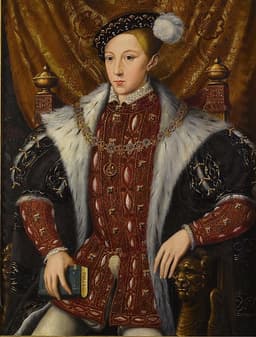
Edward VI of England
Emperor · Modern
43.8Total
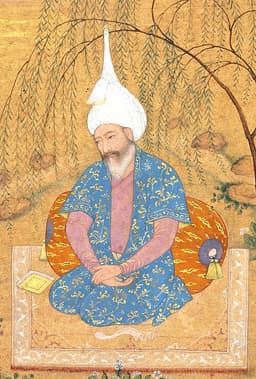
Tahmasp I
Emperor · Modern
61.8Total
Basic Information
Born
1537
1514
Died
1553
1576
Era
Modern
Modern
Nationality
England
Persia
Occupation
Emperor
Emperor
Civilization
Western
Middle Eastern
Score Comparison
Military (10%)
19.3
70.0
Political (20%)
42.2
70.0
Influence (20%)
51.8
62.0
Legacy (20%)
43.3
52.0
Leadership (15%)
38.1
72.0
Strategy (15%)
60.0
50.0
TOTAL
43.8
61.8
Edward VI of England — Complete Timeline
1547 AD
Coronation of Edward VIPolitical Action◆ Major
Edward VI was crowned king of England at age nine, succeeding his father Henry VIII. His reign was dominated by regents, first Edward Seymour, Duke of Somerset, and later John Dudley, Duke of Northumberland.
CoronationMinor KingTudor
Impact: national
1549 AD
Act of Uniformity 1549Reform◆ Major
Edward VI's government passed the Act of Uniformity, imposing the Book of Common Prayer in English. This reform advanced the Protestant Reformation in England, replacing Latin services with English ones and standardizing worship.
ReformationReligionLiturgy
Impact: nationalprogressive
1553 AD
Forty-Two ArticlesReform◆ Major
Edward VI's government issued the Forty-Two Articles, defining the doctrinal basis of the Church of England. These articles were more Protestant than earlier reforms, but were repealed after Edward's death under Mary I.
ReformationDoctrineChurch of England
Impact: nationalprogressive
Devise for the SuccessionPolitical Action
Edward VI, on his deathbed, drafted a will excluding his half-sisters Mary and Elizabeth from the succession, naming Lady Jane Grey as his heir. This attempt to maintain Protestant rule failed after his death, leading to Mary I's accession.
SuccessionProtestantCrisis
Impact: national
Tahmasp I — Complete Timeline
1526 AD
Suppressed the Qizilbash RevoltsWar◆ Major
Tahmasp I faced multiple revolts by the Qizilbash tribal forces who had supported the Safavid rise. He suppressed these rebellions, executing several Qizilbash leaders and reducing their political influence, thereby consolidating royal authority and centralizing power.
Internal ConflictQizilbashCentralization
Impact: nationaldestructive
1544 AD
Hosted Humayun in ExilePolitical Action◆ Major
Tahmasp I provided refuge to the Mughal emperor Humayun after his defeat by Sher Shah Suri. Humayun stayed at the Safavid court for over a year, and Tahmasp provided military support for Humayun's reconquest of India, strengthening Safavid-Mughal relations.
DiplomacyMughal-Safavid RelationsExile
Impact: regionalconstructive
1548 AD
Relocated Capital to QazvinPolitical Action
Tahmasp I moved the Safavid capital from Tabriz to Qazvin to distance the court from Ottoman threats and to better control the northern provinces. This relocation shifted the political center of the empire and influenced subsequent Safavid administrative policies.
Capital RelocationAdministration
Impact: national
1555 AD
Treaty of AmasyaWar◆ Major
Tahmasp I signed the Treaty of Amasya with the Ottoman Empire, ending decades of war. The treaty established a border dividing Georgia and Armenia between the two empires, with the Ottomans gaining Iraq and the Safavids retaining Azerbaijan and the Caucasus. This peace lasted for over 20 years.
Ottoman-Safavid WarsTreatyPeace
Impact: regional
Expert Analysis
Origins
Edward VI of England was born on October 12, 1537, the long-awaited male heir of Henry VIII and his third wife, Jane Seymour. His birth secured the Tudor dynasty, but his mother died twelve days later. Edward was a precocious child, educated by humanist scholars and raised as a fervent Protestant. His tutors included John Cheke and Richard Cox, who instilled in him a deep commitment to Reformed theology. From an early age, Edward was groomed for kingship, but his father's death when Edward was nine thrust him into the role prematurely.
Tahmasp I was born on February 22, 1514, the eldest son of Shah Ismail I, founder of the Safavid dynasty. He grew up in a volatile environment, as his father's early death in 1524 left the empire in the hands of Qizilbash tribal chieftains who vied for power. Tahmasp was raised in the Safavid tradition of Shia Islam and was trained in military arts. His formative years were marked by the chaos of factional struggles, which shaped his cautious and often ruthless approach to governance.
Rise to Power
Edward VI ascended the throne on January 28, 1547, at age nine, under the regency of his uncle Edward Seymour, Duke of Somerset. Seymour styled himself as Lord Protector and wielded effective power. Edward's reign was dominated by the struggle between Somerset and John Dudley, Earl of Warwick (later Duke of Northumberland). The young king, though a minor, actively participated in council meetings and expressed strong Protestant views. His rise was largely ceremonial, as real power lay with the regents.
Tahmasp I became shah at age ten in 1524, following his father's death. The early years of his reign were plagued by internal strife as Qizilbash factions fought for control. Tahmasp gradually asserted his authority, surviving a rebellion by his own governor of Khorasan in 1533. By the 1540s, he had consolidated power, executing or sidelining rival tribal leaders. His rise was a gradual process of eliminating threats and centralizing authority, culminating in his long reign of over 52 years.
Leadership & Governance
Edward VI's governance was marked by ambitious Protestant reforms. The Act of Uniformity 1549 imposed the Book of Common Prayer in English, replacing Latin liturgy. A second Act of Uniformity in 1552 mandated the more radical Second Prayer Book, which abolished vestments and altars. The Forty-Two Articles of 1553 defined the Church of England's doctrine, aligning it with Calvinist theology. However, Edward's policies also included social reforms like the Vagrancy Act of 1547, which imposed harsh penalties on the poor. His leadership was indirect, exercised through regents who often pursued their own agendas.
Tahmasp I ruled with a firm hand, suppressing Qizilbash revolts and curbing their influence. He moved the capital from Tabriz to Qazvin in 1555 to escape Ottoman threats and better control the northern provinces. His administration relied on Persian bureaucrats rather than tribal chiefs, reducing the Qizilbash's power. Tahmasp also promoted Shia orthodoxy, sponsoring religious scholars and enforcing Islamic law. He maintained a standing army of 40,000 and fortified cities against Ottoman incursions. His governance was pragmatic, focusing on stability and defense rather than expansion.
Triumph & Tragedy
Edward VI's greatest success was the advancement of the English Reformation, laying the foundation for Protestantism in England. His reign saw the publication of the Book of Common Prayer and the Forty-Two Articles, which shaped Anglican identity. However, his greatest failure was the Devise for the Succession in 1553, where he attempted to bypass his Catholic sister Mary by naming Lady Jane Grey as heir. This led to a succession crisis after his death, resulting in Mary's accession and the violent reversal of Protestant reforms. Edward's early death at age 15 cut short his reign and left his legacy vulnerable.
Tahmasp I's triumphs include the Treaty of Amasya in 1555, which ended 40 years of war with the Ottoman Empire, establishing a stable border that lasted for decades. He also provided refuge to the Mughal emperor Humayun in 1544, who regained his throne with Safavid military support. However, his failure to secure a capable successor led to a period of decline after his death. His son Ismail II proved cruel and unstable, and Tahmasp's long reign left the empire dependent on his personal authority, which collapsed without him.
Character & Destiny
Edward VI was intelligent and devout, but his youth made him dependent on regents. He displayed a rigid adherence to Protestantism, which influenced his political decisions, including the succession scheme. His death from tuberculosis at 15 was a tragedy that undid much of his work. Historians note that had he lived, England might have become more thoroughly Protestant.
Tahmasp I was cautious, suspicious, and ruthless. He survived numerous plots and rebellions by executing rivals, including his own governor. His lengthy reign brought stability but also stagnation. He was deeply religious, sponsoring Shia rituals, but his paranoia led to the execution of talented officials. His character, shaped by early insecurity, led to a defensive foreign policy and internal consolidation rather than expansion.
Legacy
Edward VI's legacy is the establishment of Protestantism in England. The Book of Common Prayer and the Forty-Two Articles remained influential, though reversed under Mary. His reign set the stage for the Elizabethan Religious Settlement. He scored 43.3 in Legacy, reflecting his short reign's impact on religious history.
Tahmasp I's legacy is the consolidation of the Safavid Empire. The Treaty of Amasya defined Ottoman-Safavid relations for generations. He also patronized Persian art and architecture, including the Chehel Sotoun palace. He scored 52.0 in Legacy, higher than Edward, due to his longer reign and enduring political achievements.
Conclusion
Tahmasp I had greater overall impact, scoring 61.8 total vs Edward's 43.8. While Edward's religious reforms were significant, his reign was too short and his policies too easily reversed. Tahmasp's 52-year rule stabilized the Safavid state and secured its borders, influencing the region for centuries. Edward's total score reflects his limited military (19.3) and political (42.2) achievements, whereas Tahmasp excelled in military (70.0) and leadership (72.0). The data supports Tahmasp as the more effective ruler.
Rankings
🥇
Tahmasp ILeader
Mil: 70.0Pol: 70.0Inf: 62.0
61.8
🥈
Edward VI of England
Mil: 19.3Pol: 42.2Inf: 51.8
43.8
+18.0 behind
How This Comparison Works
Algorithm
Each figure is scored on 6 dimensions (0—100 scale) based on structured historical data: Military (10%), Political (20%), Influence (20%), Legacy (20%), Leadership (15%), Strategy (15%). The weighted total produces the final ranking.
Data Sources
Scores are computed from structured sub-indicators in the database. Scale factors adjust for era (Ancient ×0.85, Modern ×1.0) and civilization size (Eastern ×1.05, Other ×0.80) to account for differences in population and military scale.
Maximum 3 Figures
Comparisons are limited to 2—3 figures to ensure readability and statistical meaningfulness.
Error Margins
±5 points per dimension — Sub-scores are derived from historical records with inherent uncertainty. Two figures within 5 points on a dimension should be considered roughly equivalent in that area.
Total Score Accuracy
±3 points overall — The weighted combination of 6 dimensions produces a total score with approximately ±3 points of uncertainty. Differences of less than 3 points are not statistically significant— the figures are effectively tied.
Known Limitations
- Historical records are incomplete and uneven across civilizations
- Figures from oral-tradition societies may be underrepresented
- Occupation labels can misclassify multi-role figures
- Scores measure capability and impact, not moral character
- Quantitative scoring is a comparison tool, not absolute truth
Capability Radar
Military (10%) — Battles & Warfare
Battles
36
65
Win Rate
37
70
Expansion
44
50
Political (20%) — Governance & Reform
Reform
55
70
Diplomacy
20
75
Economy
10
60
Influence (20%) — Cultural & Global Reach
Cultural
30
60
Global
20
50
Legacy (20%) — Historical Impact
Historical
40
65
Longevity
30
55
Leadership (15%) — Power & Stability
Tenure
15
85
Stability
10
65
Strategy (15%) — Tactics & Innovation
Strategy
47
65
Tactics
50
60
Reform
49
55
Similar Comparisons
Comments & Discussion
No comments yet. Be the first to share your thoughts!