Loading...
Edward VII vs Julius Caesar
Julius Caesar leads by 26.7 pts · 2 figures compared
…
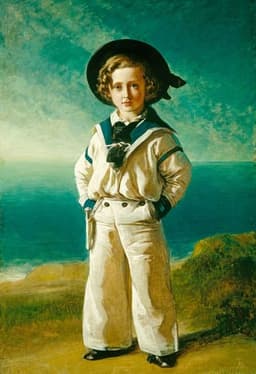
Edward VII
Emperor · Modern
56.1Total

Julius Caesar
General · Ancient
82.8Total
Basic Information
Born
1841
-100
Died
1910
-44
Era
Modern
Ancient
Nationality
United Kingdom
Roman Republic
Occupation
Emperor
General
Civilization
Western
Western
Score Comparison
Military (10%)
45.0
88.0
Political (20%)
60.0
78.0
Influence (20%)
62.0
85.0
Legacy (20%)
46.7
82.0
Leadership (15%)
79.8
80.0
Strategy (15%)
35.0
85.0
TOTAL
56.1
82.8
Edward VII — Complete Timeline
1901 AD
Accession to the ThronePolitical Action◆ Major
Edward VII became king upon the death of his mother Queen Victoria. He was the first monarch of the House of Saxe-Coburg and Gotha. His accession marked the beginning of the Edwardian era, a period of social and cultural change.
AccessionEdwardian EraSuccession
Impact: national
1903 AD
State Visit to FrancePolitical Action
Edward VII made a state visit to France, which improved Anglo-French relations. He was warmly received by the French public and government. This visit helped pave the way for the Entente Cordiale and strengthened diplomatic ties.
State VisitDiplomacyFrance
Impact: regionalconstructive
1904 AD
Entente CordialePolitical Action◆ Major
Edward VII played a key role in the Entente Cordiale, a series of agreements between Britain and France. This resolved colonial disputes and established a diplomatic alliance. It laid the groundwork for the Triple Entente and shaped pre-WWI alliances.
Entente CordialeDiplomacyAlliance
Impact: globalconstructive
1910 AD
Death from BronchitisOther◆ Major
Edward VII died of bronchitis at Buckingham Palace at age 68. He was buried in St George's Chapel. His death ended the Edwardian era and passed the throne to his son George V. His reign saw the rise of the Labour Party and social reforms.
DeathEdwardian EraSuccession
Impact: nationaltragic
Julius Caesar — Complete Timeline
58 BC
Gallic WarsWar◆ Major
Caesar, as proconsul of Gaul, launched a series of campaigns that conquered all of Gaul (modern France, Belgium, and parts of Switzerland). He fought numerous battles, including against the Helvetii, the Belgae, and the Gallic chieftain Vercingetorix. The wars brought immense wealth and a loyal army to Caesar.
Gallic WarsConquestRoman Expansion
Impact: regional
49 BC
Crossing the RubiconPolitical Action◆ Major
Caesar led Legio XIII across the Rubicon River into Italy, defying the Roman Senate's order to disband his army. This act triggered a civil war against Pompey and the Optimates, ultimately leading to Caesar's dictatorship and the end of the Roman Republic.
Roman Civil WarEnd of RepublicPower Struggle
Impact: global
48 BC
Battle of PharsalusWar◆ Major
Caesar's outnumbered army defeated the larger forces of Pompey the Great at Pharsalus in Greece. Caesar's tactical use of a reserve line to counter Pompey's cavalry charge proved decisive. Pompey fled to Egypt, where he was assassinated, leaving Caesar as the undisputed master of the Roman world.
Roman Civil WarBattleDecisive Victory
Impact: regional
44 BC
Appointment as Dictator for LifePolitical Action◆ Major
The Roman Senate appointed Caesar dictator perpetuo (dictator for life), granting him unprecedented personal power. This move concentrated military, legislative, and judicial authority in one person, effectively ending the Roman Republic's traditional system of checks and balances and alarming many senators.
DictatorshipEnd of RepublicPower Consolidation
Impact: regionaldestructive
Assassination on the Ides of MarchPolitical Action◆ Major
A group of Roman senators, led by Marcus Junius Brutus and Gaius Cassius Longinus, stabbed Caesar to death at a meeting of the Senate in the Theatre of Pompey. The assassination was intended to restore the Republic, but instead triggered another civil war that led to the rise of the Roman Empire.
AssassinationRoman PoliticsEnd of Republic
Impact: globaldestructive
Expert Analysis
edward-vii-vs-julius-caesar
# The Conqueror and the Conciliator
On a gray March morning in 44 BCE, Julius Caesar fell beneath twenty-three dagger blows in the Senate chamber of Rome, his blood pooling on the marble floor where Pompey’s statue stood. Fifty-five years later, across two millennia of history, another kind of ruler breathed his last in a gilded bed at Buckingham Palace: Edward VII, King of the United Kingdom, dead of bronchitis at sixty-eight, mourned by a nation that had waited half a century for his reign. One died by violence, the other by nature. One forged an empire through conquest, the other through handshakes and state dinners. What drove two Western leaders, both born to power, to such radically different ends?
Origins
Julius Caesar entered the world in 100 BCE, into a patrician family that had fallen on hard times. The Roman Republic was already unraveling—corrupt senators, landless veterans, slave revolts, and the ghost of civil war. Caesar’s uncle by marriage was Gaius Marius, a populist general who had butchered his rivals. His father died when Caesar was sixteen, leaving him to navigate a world where political survival meant military glory or death. He learned early that in Rome, the only law was power.
Edward VII was born in 1841, the second child and first son of Queen Victoria and Prince Albert. His mother would reign for sixty-three years, and Edward would spend most of his life waiting. Victoria, grieving Albert’s death, kept her son at arm’s length, distrusting his love of parties, mistresses, and horse racing. Edward grew up in a gilded cage, educated by tutors who despaired of his attention span. Where Caesar learned to command armies, Edward learned to charm dinner tables.
Rise to Power
Caesar’s path was a ladder of blood. At thirty-one, he was captured by pirates in the Aegean; he laughed at their ransom demand, promised to crucify them, and did exactly that after his release. He climbed through the cursus honorum—quaestor, aedile, praetor—borrowing fortunes to bribe voters and stage extravagant games. In 60 BCE, he formed the First Triumvirate with Pompey and Crassus, then secured command of Gaul. Over eight years, he conquered what is now France and Belgium, crossed the Rhine, invaded Britain, and slaughtered perhaps a million people. His Gallic Wars made him the richest man in Rome.
Edward’s rise was a slow dance of diplomacy. He became heir apparent at birth, but Victoria blocked him from state affairs for decades. He traveled, gambled, and conducted affairs with actresses and aristocrats. When he finally ascended the throne in 1901 at age fifty-nine, his mother’s funeral had barely ended. He had no army, no treasury of his own—only the soft power of a constitutional monarch. But he understood something his mother never did: that in a world of rising Germany, colonial rivalries, and revolutionary ideas, personal relationships between kings could prevent wars.
Leadership & Governance
Caesar ruled as a dictator in all but name. After crossing the Rubicon in 49 BCE, he defeated Pompey’s forces in Greece, Egypt, and Africa, then returned to Rome to reshape the state. He reformed the calendar (the Julian calendar we still use), granted citizenship to provincials, redistributed land to veterans, and packed the Senate with his supporters. His military genius was absolute—he wrote commentaries that are still studied in war colleges—but his political wisdom was brittle. He centralized power, pardoned his enemies, and expected gratitude. Instead, he got daggers.
Edward governed by influence, not decree. His signature achievement was the Entente Cordiale of 1904, a series of agreements with France that resolved centuries-old colonial disputes in North Africa and beyond. He visited Paris in 1903, charming a public that had mocked his mother, and personally smoothed tensions with Russia and the United States. His reign saw the rise of labor unions, women’s suffrage, and the Liberal welfare state—but Edward, wisely, stayed out of domestic politics. He was a figurehead who understood that a monarch’s power lay in being loved, not feared.
Triumph & Tragedy
Caesar’s greatest triumph was his conquest of Gaul, a campaign of such speed and brutality that it stunned the ancient world. His greatest tragedy was his assassination—not because he died, but because he failed to see it coming. He had been warned by soothsayers, by his wife, by a note pressed into his hand on the Ides of March. He ignored them all. His last words, according to Suetonius, were to Brutus: “You too, my child?”
Edward’s triumph was the Entente Cordiale, which laid the groundwork for the alliance that would win World War I—though Edward did not live to see it. His tragedy was that he never truly ruled. He was the first British monarch to visit Russia, the first to tour India as Emperor, but his power was always borrowed. When he died in 1910, the world he had helped stabilize unraveled within four years into the trenches of the Somme.
Character & Destiny
Caesar was driven by an insatiable need for glory. He gambled everything—his life, his fortune, his Republic—on the belief that he was destined to rule. He was charismatic, ruthless, and brilliant, but also arrogant and blind to the limits of his own power. His personality shaped his decisions: he pardoned his enemies because he believed they would admire his magnanimity. Instead, they saw weakness.
Edward was driven by a need for approval. Denied responsibility by his mother, he became a connoisseur of pleasure and a master of social grace. He was no intellectual, no warrior—but he had an intuitive grasp of human nature. He knew when to bow, when to smile, when to press a hand. His personality shaped his reign: he built bridges because he had spent a lifetime building friendships.
Legacy
Caesar’s legacy is the Roman Empire. His adopted heir, Octavian, became Augustus, and the Republic died with Caesar’s blood. For two thousand years, European rulers have invoked his name—from Charlemagne to Napoleon to Mussolini. He is remembered as the man who destroyed a republic and built an empire, the archetype of the military dictator.
Edward’s legacy is the Edwardian era—a golden afternoon of peace and prosperity before the storm. He is remembered as “Edward the Peacemaker,” a king who never fought a war but whose diplomacy shaped the alliances that defined the twentieth century. His house, Saxe-Coburg and Gotha, was renamed Windsor during World War I to distance itself from Germany. He is a footnote in most histories, but a crucial one.
Conclusion
Caesar and Edward VII stand at opposite poles of Western leadership—the conqueror and the conciliator, the dictator and the diplomat. One changed the world through force, the other through charm. One died betrayed by his friends, the other in his bed, surrounded by family. Their differences were not merely personal; they were the products of their eras. Caesar’s Rome was a world of iron and ambition, where the only path to immortality was conquest. Edward’s Britain was a world of industry and empire, where the only path to survival was alliance. Both succeeded in their own terms. Both failed in ways they could not foresee. And both remind us that power, in any age, is never safe.
Rankings
🥇
Julius CaesarLeader
Mil: 88.0Pol: 78.0Inf: 85.0
82.8
🥈
Edward VII
Mil: 45.0Pol: 60.0Inf: 62.0
56.1
+26.7 behind
How This Comparison Works
Algorithm
Each figure is scored on 6 dimensions (0—100 scale) based on structured historical data: Military (10%), Political (20%), Influence (20%), Legacy (20%), Leadership (15%), Strategy (15%). The weighted total produces the final ranking.
Data Sources
Scores are computed from structured sub-indicators in the database. Scale factors adjust for era (Ancient ×0.85, Modern ×1.0) and civilization size (Eastern ×1.05, Other ×0.80) to account for differences in population and military scale.
Maximum 3 Figures
Comparisons are limited to 2—3 figures to ensure readability and statistical meaningfulness.
Error Margins
±5 points per dimension — Sub-scores are derived from historical records with inherent uncertainty. Two figures within 5 points on a dimension should be considered roughly equivalent in that area.
Total Score Accuracy
±3 points overall — The weighted combination of 6 dimensions produces a total score with approximately ±3 points of uncertainty. Differences of less than 3 points are not statistically significant— the figures are effectively tied.
Known Limitations
- Historical records are incomplete and uneven across civilizations
- Figures from oral-tradition societies may be underrepresented
- Occupation labels can misclassify multi-role figures
- Scores measure capability and impact, not moral character
- Quantitative scoring is a comparison tool, not absolute truth
Capability Radar
Military (10%) — Battles & Warfare
Battles
0
95
Win Rate
0
92
Expansion
0
97
Political (20%) — Governance & Reform
Reform
55
90
Diplomacy
75
85
Economy
65
82
Influence (20%) — Cultural & Global Reach
Cultural
55
88
Global
55
94
Legacy (20%) — Historical Impact
Historical
50
95
Longevity
40
96
Leadership (15%) — Power & Stability
Tenure
60
75
Stability
70
60
Strategy (15%) — Tactics & Innovation
Strategy
0
94
Tactics
0
96
Reform
15
88
Similar Comparisons
Comments & Discussion
SpartanScribe6/17/2026
Comparing Edward VII to Caesar is like contrasting a peacock with a wolf. Caesar didn't just conquer—he rewrote the genetic code of Western governance by crossing the Rubicon and centralizing power under a dictator-for-life. Edward inherited a throne; Caesar seized destiny. One died in silk sheets, the other bled on marble. That difference isn't accidental—it's the entire lesson of their eras.
历史拆解师6/17/2026
拿爱德华七世比凯撒,等于用下午茶比角斗场。凯撒在高卢杀了百万对手,还跨过卢比孔河改变了罗马政治基因。爱德华呢?他忙着搞外交,抽雪茄泡温泉。一个用武力重塑文明,一个靠握手维持体面。时代不同,但底色差太远:凯撒是创造风暴的人,爱德华只是坐在风暴眼的闲人。
DataEye6/17/2026
Metrics don't lie: Caesar commanded 50,000 troops at Alesia and annexed Gaul; Edward VII managed estate dinners and a racing stable. One wrote *Commentarii* that shaped military literature; the other set fashion trends for tweed jackets. By any quantitative measure—territory gained, political leverage, cultural influence—Caesar dwarfs Edward. The only stat Edward wins is lifespan: 68 years vs. 56. That's like comparing a hurricane to a light breeze.
古典论客6/17/2026
凯撒的《高卢战记》至今是拉丁语教材,而爱德华七世连篇像样的回忆录都没留。凯撒改革历法、重组元老院、把罗马从共和国变成帝国,爱德华只推动了“爱德华时代”的社交礼仪。一个是文明引擎,一个是装饰零件。拿他们比,就像拿火药比火柴——本质不同,威力天壤。
RevisionistRage6/17/2026
Stop romanticizing a tyrant. Caesar butchered Gauls for debt relief, started a civil war for personal glory, and centralized power so thoroughly he broke a 500-year republic. Edward VII, for all his faults, didn't drown nations in blood for a name. Caesar's "greatness" is a victor's myth—he was a warlord with good PR. Edward was a constitutional monarch who actually respected boundaries. Give me the conciliator over the conqueror every time.