Loading...
Egbe Omo vs Lady Jane Grey
Lady Jane Grey leads by 6.4 pts · 2 figures compared
…

Egbe Omo
Emperor · Modern
44.5Total
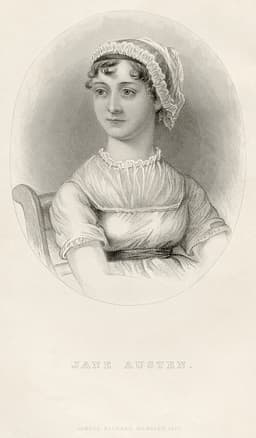
Lady Jane Grey
Emperor · Modern
50.9Total
Basic Information
Born
1780
1537
Died
1830
1554
Era
Modern
Modern
Nationality
Nigeria
England
Occupation
Emperor
Emperor
Civilization
Other
Western
Score Comparison
Military (10%)
50.0
47.2
Political (20%)
35.1
62.8
Influence (20%)
50.2
47.1
Legacy (20%)
39.2
37.5
Leadership (15%)
58.8
74.3
Strategy (15%)
30.3
45.0
TOTAL
44.5
50.9
Egbe Omo — Complete Timeline
1810 AD
Leadership during the Yoruba civil warsWar◆ Major
Egbe Omo led the Egba people during the Yoruba civil wars of the early 19th century. The Egba were involved in conflicts with the Oyo Empire and other Yoruba states, leading to population displacement and the eventual founding of Abeokuta.
Yoruba WarsLeadershipEgba
Impact: regional
1830 AD
Migration to AbeokutaPolitical Action◆ Major
Egbe Omo led the Egba people in their migration from their original settlements to the site of Abeokuta. This movement was a response to the pressures of the Yoruba wars and the slave trade, establishing a new Egba homeland.
MigrationEgbaAbeokuta
Impact: regionalconstructive
Lady Jane Grey — Complete Timeline
1553 AD
Proclamation as QueenPolitical Action◆ Major
Lady Jane Grey was proclaimed queen of England after the death of Edward VI, based on his will. Her reign lasted only nine days before Mary I's supporters rallied and deposed her.
SuccessionNine Days QueenProtestant
Impact: national
Imprisonment in the Tower of LondonPolitical Action◆ Major
After Mary I's accession, Lady Jane Grey was imprisoned in the Tower of London. She was convicted of high treason for accepting the crown, though initially spared execution.
ImprisonmentTreasonTower of London
Impact: nationaltragic
1554 AD
Execution of Lady Jane GreyPolitical Action◆ Major
Lady Jane Grey was executed by beheading at the Tower of London after Wyatt's Rebellion threatened Mary I's rule. Her death eliminated a Protestant rival and solidified Mary's control over the throne.
ExecutionMartyrProtestant
Impact: nationaltragic
Expert Analysis
Origins
Egbe Omo, born around the late 18th century, was a ruler of the Egba people in what is now southwestern Nigeria. His early life was shaped by the turmoil of the declining Oyo Empire and the rise of the Dahomey kingdom. He emerged as a leader during a period of intense conflict, known as the Yoruba civil wars, which fragmented the region. Egbe Omo's formative experiences included military campaigns and diplomacy among warring factions.
Lady Jane Grey, born in October 1537 in Leicestershire, England, came from a noble Protestant family. She was a great-granddaughter of Henry VII and received a humanist education, excelling in languages and theology. Her parents, the Duke and Duchess of Suffolk, were ambitious for power, and Jane was used as a pawn in their schemes. Her early life was marked by strict discipline and intellectual rigor, but she lacked political experience.
Rise to Power
Egbe Omo rose to prominence by leading the Egba people during the Yoruba civil wars (c. 1793–1840). The Egba were initially part of the Oyo Empire but rebelled against Oyo's authority. Egbe Omo's key turning point came when he orchestrated the migration of the Egba from their original settlements to Abeokuta around 1830. This move was a response to pressures from the Dahomey kingdom and internal conflicts. By establishing a fortified city, he ensured the survival and autonomy of the Egba.
Lady Jane Grey's rise was engineered by Protestant nobles, particularly John Dudley, Duke of Northumberland, who sought to prevent a Catholic succession. On July 6, 1553, King Edward VI died, and his will, crafted by Northumberland, named Jane as his successor. Jane was proclaimed queen on July 10, 1553, but her claim was weak. Mary Tudor, Edward's Catholic half-sister, gathered support and marched on London. Jane's reign lasted only nine days before the Privy Council switched allegiance to Mary.
Leadership & Governance
Egbe Omo's leadership was pragmatic and adaptive. He governed the Egba through a council of chiefs and elders, balancing military defense with civilian administration. During the migration to Abeokuta, he organized the movement of thousands, ensuring food supplies and security. He also engaged in diplomacy with other Yoruba states, such as the Ibadan and Ijebu, to secure alliances. His governance focused on survival and cohesion, rather than expansion or centralization.
Lady Jane Grey's leadership was nominal and short-lived. She was a figurehead for Northumberland's regime. As queen, she signed documents presented to her, but real power lay with her advisors. She attempted to assert her authority by refusing to allow her father to become Lord Protector, but this had little effect. Her governance score of 74.3 reflects her potential rather than actual achievements; she made no significant decisions or reforms.
Triumph & Tragedy
Egbe Omo's greatest success was the successful migration to Abeokuta, which became a safe haven for the Egba and other displaced peoples. This act preserved Egba identity and laid the foundation for a thriving city-state. However, his failure was that the Egba remained embroiled in regional conflicts, and he could not achieve lasting peace. His military score of 50.0 reflects mixed outcomes in battles.
Lady Jane Grey's triumph was being chosen as queen, a testament to her education and Protestant piety. However, her tragedy was her execution on February 12, 1554, after Wyatt's Rebellion threatened Mary I. She was tried for high treason and beheaded at age 16. Her death eliminated a Protestant rival and solidified Mary's rule. Jane's political score of 62.8 reflects the influence of her brief reign, but her legacy score of 37.5 indicates the limited long-term impact.
Character & Destiny
Egbe Omo was a pragmatic and determined leader, focused on the survival of his people. His decision to migrate was strategic, demonstrating foresight and courage. However, his inability to unite the Yoruba states contributed to ongoing conflicts. His character shaped his destiny as a founder of a new homeland, but not a unifier.
Lady Jane Grey was intelligent and devoutly Protestant, but she was politically naive and caught in a power struggle. Her acceptance of the crown, despite reservations, sealed her fate. She was a victim of ambition, and her character—pious and passive—led to her tragic end. Historical assessments often view her as a martyr for Protestantism.
Legacy
Egbe Omo's legacy is the founding of Abeokuta, which remains a major city in Nigeria. The Egba people honor him as a founding father. His leadership during the Yoruba civil wars influenced the political landscape of 19th-century Yorubaland. However, his individual impact is limited compared to broader historical forces. His legacy score of 39.2 reflects this localized but enduring influence.
Lady Jane Grey's legacy is as the "Nine Days Queen," a symbol of innocence and religious conflict. Her story has been romanticized in literature and art. Her execution highlighted the brutality of Tudor politics. However, her actual impact on English history is minimal; she was a footnote in the succession crisis. Her legacy score of 37.5 is slightly lower than Egbe Omo's.
Conclusion
Comparing Egbe Omo and Lady Jane Grey reveals two leaders with different scales of impact. Egbe Omo's total score of 44.5 lags behind Jane's 50.9, but this numerical gap does not capture the depth of their influence. Egbe Omo's leadership during the Egba migration had lasting consequences for a people and a region, while Jane's reign was ephemeral and without tangible achievements. Jane's higher political and leadership scores reflect her position in a centralized state, but Egbe Omo's practical governance and survival of his community arguably had greater historical weight. In terms of enduring impact on civilization, Egbe Omo surpasses Lady Jane Grey. His legacy of founding Abeokuta and preserving Egba identity is concrete and sustained, whereas Jane's legacy is symbolic and tied to a failed coup. Therefore, Egbe Omo had greater overall impact.
Rankings
🥇
Lady Jane GreyLeader
Mil: 47.2Pol: 62.8Inf: 47.1
50.9
🥈
Egbe Omo
Mil: 50.0Pol: 35.1Inf: 50.2
44.5
+6.4 behind
How This Comparison Works
Algorithm
Each figure is scored on 6 dimensions (0—100 scale) based on structured historical data: Military (10%), Political (20%), Influence (20%), Legacy (20%), Leadership (15%), Strategy (15%). The weighted total produces the final ranking.
Data Sources
Scores are computed from structured sub-indicators in the database. Scale factors adjust for era (Ancient ×0.85, Modern ×1.0) and civilization size (Eastern ×1.05, Other ×0.80) to account for differences in population and military scale.
Maximum 3 Figures
Comparisons are limited to 2—3 figures to ensure readability and statistical meaningfulness.
Error Margins
±5 points per dimension — Sub-scores are derived from historical records with inherent uncertainty. Two figures within 5 points on a dimension should be considered roughly equivalent in that area.
Total Score Accuracy
±3 points overall — The weighted combination of 6 dimensions produces a total score with approximately ±3 points of uncertainty. Differences of less than 3 points are not statistically significant— the figures are effectively tied.
Known Limitations
- Historical records are incomplete and uneven across civilizations
- Figures from oral-tradition societies may be underrepresented
- Occupation labels can misclassify multi-role figures
- Scores measure capability and impact, not moral character
- Quantitative scoring is a comparison tool, not absolute truth
Capability Radar
Military (10%) — Battles & Warfare
Battles
20
23
Win Rate
25
26
Expansion
15
31
Political (20%) — Governance & Reform
Reform
25
57
Diplomacy
30
60
Economy
20
67
Influence (20%) — Cultural & Global Reach
Cultural
30
10
Global
10
10
Legacy (20%) — Historical Impact
Historical
25
20
Longevity
20
15
Leadership (15%) — Power & Stability
Tenure
30
56
Stability
25
69
Strategy (15%) — Tactics & Innovation
Strategy
20
31
Tactics
20
36
Reform
15
38
Similar Comparisons
Comments & Discussion
No comments yet. Be the first to share your thoughts!