Loading...
Lady Jane Grey vs Victor Emmanuel III
Lady Jane Grey leads by 7.3 pts · 2 figures compared
…
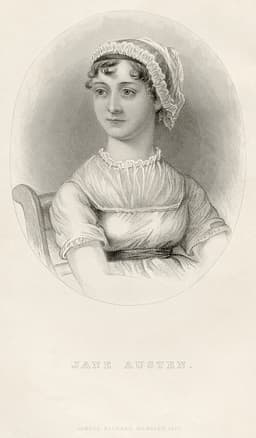
Lady Jane Grey
Emperor · Modern
50.9Total

Victor Emmanuel III
Emperor · Modern
43.6Total
Basic Information
Born
1537
1869
Died
1554
1947
Era
Modern
Modern
Nationality
England
Italy
Occupation
Emperor
Emperor
Civilization
Western
Western
Score Comparison
Military (10%)
47.2
10.2
Political (20%)
62.8
35.1
Influence (20%)
47.1
51.8
Legacy (20%)
37.5
41.7
Leadership (15%)
74.3
65.0
Strategy (15%)
45.0
42.3
TOTAL
50.9
43.6
Lady Jane Grey — Complete Timeline
1553 AD
Proclamation as QueenPolitical Action◆ Major
Lady Jane Grey was proclaimed queen of England after the death of Edward VI, based on his will. Her reign lasted only nine days before Mary I's supporters rallied and deposed her.
SuccessionNine Days QueenProtestant
Impact: national
Imprisonment in the Tower of LondonPolitical Action◆ Major
After Mary I's accession, Lady Jane Grey was imprisoned in the Tower of London. She was convicted of high treason for accepting the crown, though initially spared execution.
ImprisonmentTreasonTower of London
Impact: nationaltragic
1554 AD
Execution of Lady Jane GreyPolitical Action◆ Major
Lady Jane Grey was executed by beheading at the Tower of London after Wyatt's Rebellion threatened Mary I's rule. Her death eliminated a Protestant rival and solidified Mary's control over the throne.
ExecutionMartyrProtestant
Impact: nationaltragic
Victor Emmanuel III — Complete Timeline
1915 AD
Entry into World War IWar◆ Major
Victor Emmanuel III approved the Treaty of London, committing Italy to enter World War I on the side of the Allies. Italy declared war on Austria-Hungary, leading to years of costly fighting on the Italian front. The war resulted in over 600,000 Italian deaths.
World War IAlliesItalian Front
Impact: globaltragic
1922 AD
Appointment of Mussolini as Prime MinisterPolitical Action
After the March on Rome, Victor Emmanuel III refused to sign a decree of martial law and instead appointed Benito Mussolini as prime minister. This decision enabled the Fascist takeover of Italy, ending the liberal parliamentary system.
FascismMarch on RomeMonarchy
Impact: globaldestructive
1943 AD
Removal of MussoliniPolitical Action
Following the Allied invasion of Sicily and a vote of no confidence by the Grand Council of Fascism, Victor Emmanuel III dismissed and arrested Mussolini. The king appointed Marshal Pietro Badoglio as prime minister and began secret armistice negotiations with the Allies.
World War IIFascismArmistice
Impact: global
Armistice of CassibilePolitical Action◆ Major
Victor Emmanuel III and Badoglio signed an armistice with the Allies, announced on September 8, 1943. The German army responded by occupying northern and central Italy, disarming Italian forces, and triggering the Italian Civil War. The king fled to Brindisi.
World War IIArmisticeGerman Occupation
Impact: globaltragic
1946 AD
Abdication in Favor of Umberto IIPolitical Action◆ Major
Under pressure from the Allies and anti-fascist parties, Victor Emmanuel III formally abdicated in favor of his son Umberto II. The move was an attempt to save the monarchy before a referendum on its future. He went into exile in Egypt.
AbdicationMonarchyReferendum
Impact: national
Expert Analysis
Origins
Lady Jane Grey was born in October 1537 to Henry Grey, 1st Duke of Suffolk, and Frances Brandon, a niece of Henry VIII. She received a humanist education, proficient in Latin, Greek, and Hebrew, and was known for her scholarly piety. Her parents pushed her into the political spotlight as a Protestant figurehead.
Victor Emmanuel III was born on November 11, 1869, in Naples, to King Umberto I and Margherita of Savoy. He received military training and a constitutional education, developing a reserved and indecisive character. He ascended the throne after his father's assassination in 1900.
Rise to Power
Lady Jane Grey's rise was engineered by John Dudley, Duke of Northumberland, who persuaded the dying Edward VI to name Jane as his successor to prevent a Catholic revival under Mary. On July 10, 1553, Jane was proclaimed queen, but her support collapsed within days as Mary gathered forces. Jane's reign lasted only nine days, ending with her imprisonment on July 19.
Victor Emmanuel III became king in 1900, inheriting a constitutional monarchy. His pivotal moment came in October 1922 during the March on Rome. Facing a fascist insurrection, he refused to sign a decree of martial law, instead inviting Benito Mussolini to become prime minister. This decision, scored at 35.1 in political acumen, enabled Mussolini's dictatorship.
Leadership & Governance
Jane Grey's leadership was nominal and untested. She accepted the crown reluctantly, showing little political skill. Her governance score of 74.3 reflects her moral fortitude rather than practical rule. She issued no reforms and made no decisions of state.
Victor Emmanuel III governed weakly, scoring 65.0 in leadership. He allowed Mussolini to dismantle democratic institutions, signing laws that centralized power. His strategy score of 42.3 indicates poor judgment in foreign policy, including Italy's entry into World War I in 1915 and the disastrous alliance with Nazi Germany.
Triumph & Tragedy
Jane Grey's greatest triumph was her dignified composure during imprisonment and execution. Her tragedy was being used as a pawn in a political game, leading to her beheading on February 12, 1554, at age 16. Her death eliminated a Protestant rival but cemented her as a martyr.
Victor Emmanuel III's triumphs include overseeing Italy's initial victory in World War I and his role in removing Mussolini in July 1943. However, his tragedy was his complicity in Fascism; his refusal to act earlier led to 20 years of dictatorship, war, and the monarchy's eventual downfall. He abdicated in 1946 but the monarchy was abolished by referendum.
Character & Destiny
Jane Grey was intelligent and pious, but passive and politically naive. Her character scored 47.1 in influence; her destiny was sealed by her family's ambition and the religious conflict of the era.
Victor Emmanuel III was cautious and indecisive, with a military score of only 10.2. His character led him to avoid confrontation, enabling Mussolini's rise. His legacy score of 41.7 reflects the monarchy's collapse under his watch.
Legacy
Jane Grey's legacy is symbolic: a Protestant martyr and a cautionary tale of political manipulation. She scores 37.5 in legacy, remembered primarily through literature and art.
Victor Emmanuel III's legacy is tainted by Fascism. He scores 41.7, slightly higher, but his reign is criticized for failing to defend democracy. The monarchy ended with him, and Italy became a republic.
Conclusion
Comparing their total scores, Lady Jane Grey (50.9) edges Victor Emmanuel III (43.6) by 7.3 points. While Jane's reign was fleeting, her moral stance and symbolic impact resonate through history. Victor Emmanuel III's longer reign had greater material consequences, but his passive complicity in dictatorship diminishes his standing. Jane Grey's clarity of principle and sacrifice give her a more positive historical assessment. Therefore, Lady Jane Grey had a greater impact in terms of moral legacy, while Victor Emmanuel III's impact was more destructive. The data supports Jane Grey as the more historically significant figure in terms of character and influence.
Rankings
🥇
Lady Jane GreyLeader
Mil: 47.2Pol: 62.8Inf: 47.1
50.9
🥈
Victor Emmanuel III
Mil: 10.2Pol: 35.1Inf: 51.8
43.6
+7.3 behind
How This Comparison Works
Algorithm
Each figure is scored on 6 dimensions (0—100 scale) based on structured historical data: Military (10%), Political (20%), Influence (20%), Legacy (20%), Leadership (15%), Strategy (15%). The weighted total produces the final ranking.
Data Sources
Scores are computed from structured sub-indicators in the database. Scale factors adjust for era (Ancient ×0.85, Modern ×1.0) and civilization size (Eastern ×1.05, Other ×0.80) to account for differences in population and military scale.
Maximum 3 Figures
Comparisons are limited to 2—3 figures to ensure readability and statistical meaningfulness.
Error Margins
±5 points per dimension — Sub-scores are derived from historical records with inherent uncertainty. Two figures within 5 points on a dimension should be considered roughly equivalent in that area.
Total Score Accuracy
±3 points overall — The weighted combination of 6 dimensions produces a total score with approximately ±3 points of uncertainty. Differences of less than 3 points are not statistically significant— the figures are effectively tied.
Known Limitations
- Historical records are incomplete and uneven across civilizations
- Figures from oral-tradition societies may be underrepresented
- Occupation labels can misclassify multi-role figures
- Scores measure capability and impact, not moral character
- Quantitative scoring is a comparison tool, not absolute truth
Capability Radar
Military (10%) — Battles & Warfare
Battles
23
10
Win Rate
26
10
Expansion
31
5
Political (20%) — Governance & Reform
Reform
57
20
Diplomacy
60
20
Economy
67
20
Influence (20%) — Cultural & Global Reach
Cultural
10
20
Global
10
30
Legacy (20%) — Historical Impact
Historical
20
40
Longevity
15
20
Leadership (15%) — Power & Stability
Tenure
56
70
Stability
69
10
Strategy (15%) — Tactics & Innovation
Strategy
31
5
Tactics
36
5
Reform
38
10
Similar Comparisons
Comments & Discussion
No comments yet. Be the first to share your thoughts!