Loading...
Emiliano Zapata vs Jose Rizal
Emiliano Zapata leads by 9.6 pts · 2 figures compared
…
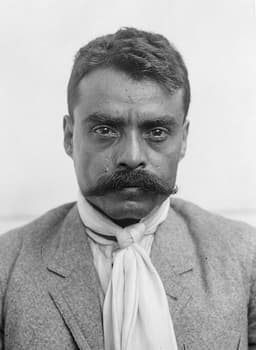
Emiliano Zapata
Revolutionary · Modern
56.3Total
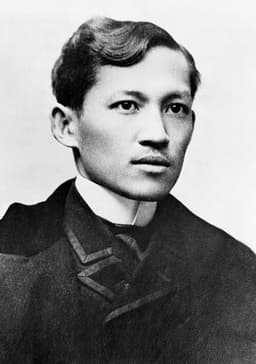
Jose Rizal
Revolutionary · Modern
46.7Total
Basic Information
Born
1879
1861
Died
1919
1896
Era
Modern
Modern
Nationality
Mexico
Philippines
Occupation
Revolutionary
Revolutionary
Civilization
Western
Eastern
Score Comparison
Military (10%)
40.0
11.9
Political (20%)
68.0
33.6
Influence (20%)
58.0
62.0
Legacy (20%)
54.0
58.0
Leadership (15%)
54.2
40.4
Strategy (15%)
60.0
44.5
TOTAL
56.3
46.7
Emiliano Zapata — Complete Timeline
1911 AD
Plan of AyalaPolitical Action
Zapata issued the Plan of Ayala, denouncing Francisco I. Madero for failing to implement land reform. The plan called for the return of land to peasants and became the ideological foundation of the Zapatista movement.
Land ReformAgrarian MovementRevolution
Impact: nationalprogressive
1914 AD
Occupation of Mexico CityWar◆ Major
Zapata's forces, allied with Villa's Division of the North, occupied Mexico City. They held the capital for several weeks but failed to establish lasting control, highlighting the limits of their coalition.
Military OccupationRevolutionary AllianceCapital
Impact: national
Convention of AguascalientesPolitical Action◆ Major
Zapata attended the Convention of Aguascalientes, where revolutionary factions attempted to unify. He allied with Pancho Villa against Venustiano Carranza, but the convention failed to produce a stable government.
Revolutionary AlliancePolitical DivisionCivil War
Impact: national
1919 AD
Assassination at ChinamecaPolitical Action
Zapata was lured to the Hacienda de Chinameca by Colonel Jesus Guajardo, who pretended to defect. Guajardo's troops ambushed and killed Zapata, ending his leadership of the agrarian rebellion.
AssassinationBetrayalEnd of Leadership
Impact: nationaltragic
Jose Rizal — Complete Timeline
1887 AD
Publication of Noli Me TangereCultural
Rizal published his first novel, Noli Me Tangere, in Berlin. The book exposed the corruption and abuses of Spanish colonial rule and the Catholic Church in the Philippines, sparking nationalist sentiment among Filipinos.
LiteratureNationalismColonial Critique
Impact: nationalprogressive
1891 AD
Publication of El FilibusterismoCultural◆ Major
Rizal published his second novel, El Filibusterismo, in Ghent, Belgium. A darker sequel to Noli Me Tangere, it advocated for revolution and further criticized Spanish oppression, intensifying calls for reform and independence.
LiteratureRevolutionColonial Critique
Impact: nationalprogressive
1892 AD
Exile to DapitanPolitical Action◆ Major
Rizal was exiled by Spanish authorities to Dapitan in Mindanao for his alleged involvement in revolutionary activities. During his four-year exile, he practiced medicine, taught, and conducted scientific research, but remained under surveillance.
ExileSpanish ColonialismDapitan
Impact: nationaltragic
1896 AD
Execution of José RizalPolitical Action
Rizal was executed by firing squad in Manila on charges of sedition and rebellion, following a trial by Spanish military court. His martyrdom galvanized the Philippine Revolution, making him a national hero and symbol of resistance.
ExecutionMartyrdomPhilippine Revolution
Impact: nationaltragic
Expert Analysis
Jose Rizal vs Emiliano Zapata
# The Pen and the Plow: Two Paths to Revolution
On a cold December morning in 1896, José Rizal stood before a Spanish firing squad in Manila, his hands bound, his glasses still perched on his nose. He had refused to be blindfolded. He turned his back to the executioners—a final act of defiance, or perhaps of mercy, sparing them the sight of his face. Twenty-three years later, in the dusty hacienda of Chinameca, Mexico, Emiliano Zapata was lured into a trap. A bugle sounded a prearranged signal, and a volley of bullets cut him down. He was 39. Both men died for the land and the people they loved. But one died with a book in his pocket, the other with a pistol in his hand.
Origins
José Rizal was born in 1861 into a prosperous Filipino *ilustrado* family—educated, well-connected, and deeply Catholic. He studied in Manila, then in Madrid, Paris, and Heidelberg. He was a novelist, poet, ophthalmologist, sculptor, and linguist who spoke over a dozen languages. His world was one of libraries, lecture halls, and salons. He believed in reason, reform, and the power of ideas to reshape society.
Emiliano Zapata, born in 1879 in the village of Anenecuilco, Mexico, came from a different world. His family were *campesinos*—peasant farmers of Nahua and Spanish descent. He learned to read and write, but his true education came from the land: the dry soil, the droughts, the haciendas that swallowed communal fields. He saw his neighbors evicted, their rights erased by legal documents written in a language they could not read. His revolution was not born in a library, but in a cornfield.
Rise to Power
Rizal entered history through the written word. In 1887, at age 25, he published *Noli Me Tangere* in Berlin. The novel was a scalpel, dissecting Spanish colonial society—the corrupt friars, the abusive officials, the hypocrisy of the Church. It was banned, but Filipinos passed it from hand to hand, reading it by candlelight. In 1891, he followed with *El Filibusterismo*, a darker, more desperate book that questioned whether reform was even possible. These novels did not call for armed rebellion, but they lit a fuse.
Zapata entered history through the land. By 1909, he was a respected leader in his village, elected to defend communal lands against encroaching sugar plantations. When diplomacy failed, he took up arms. In 1911, after the fall of dictator Porfirio Díaz, he issued the Plan of Ayala—a document as sharp as any novel. It denounced the new president, Francisco Madero, for betraying the peasants. "Land and Liberty" became his cry. Unlike Rizal's novels, the Plan of Ayala ended with a call to arms.
Leadership & Governance
Rizal never led an army. His military score of 24.6 reflects a man who disavowed violence. When the secret revolutionary society Katipunan sought his support, he refused, believing the Philippines was not ready for an armed uprising. He was arrested, exiled to Dapitan in 1892, and lived quietly as a doctor and teacher. His leadership was moral, not martial. He governed through persuasion, not command.
Zapata, with a military score of 55.8, was a guerrilla commander. He led the Liberation Army of the South, a force of peasants on horseback who knew every ravine and arroyo. At the Convention of Aguascalientes in 1914, he allied with Pancho Villa, and together they occupied Mexico City. For weeks, the capital was ruled by men in sombreros and bandoliers. Zapata governed simply: he redistributed land, abolished debt peonage, and burned the records that bound peasants to haciendas. His political score of 57.6 reflects a man who could inspire but not administer—his agrarian reforms were local, not national.
Triumph & Tragedy
Rizal's greatest moment was his death. On December 30, 1896, he was executed at age 35. His martyrdom transformed him from a reformer into a symbol. The Philippine Revolution erupted weeks later, and his name became a battle cry. His tragedy was that he never saw the revolution he inspired. He died believing his work had failed.
Zapata's greatest moment was the occupation of Mexico City—a peasant army holding the capital of a nation. His tragedy was the trap at Chinameca. In 1919, Colonel Jesús Guajardo feigned defection, inviting Zapata to a meeting. As Zapata crossed the threshold, the bugle sounded. He died in the dust, his body photographed and displayed to prove he was dead. His tragedy was not just his death, but the incomplete revolution—land reform would take decades more.
Character & Destiny
Rizal was a man of the mind. He believed in education, reason, and gradual change. His strategy score of 49.6 suggests a thinker who understood the long game but misjudged the timing. He wrote to awaken, not to arm. His character was patient, analytical, reluctant to embrace violence. Destiny made him a martyr, not a general.
Zapata was a man of the soil. He trusted his instincts, his people, and his horse. His strategy score of 58.9 reflects a tactician who understood terrain and morale but not politics. He was suspicious of alliances, stubborn in his demands, and unwilling to compromise. Destiny made him a legend, but also a target. His character was fierce, direct, and ultimately fatal: he trusted a man who betrayed him.
Legacy
Rizal's legacy, with an influence score of 70.6 and legacy score of 72.2, is that of a national saint. His face appears on the Philippine peso. His novels are required reading. Every year, December 30 is Rizal Day. He is remembered not as a revolutionary leader, but as a martyr who lit the fire.
Zapata's legacy, with an influence score of 72.8 and legacy score of 67.6, is more contested. He is a hero to landless peasants, a symbol of resistance. His image adorns murals, T-shirts, and revolutionary posters. The Zapatista Army of National Liberation, which rose up in Chiapas in 1994, took his name. But he is also a figure of unfinished business—a reminder that land reform in Mexico was partial and violent.
Conclusion
The pen and the plow: two tools, two revolutions, two deaths. Rizal wrote books that could not be killed. Zapata fought for land that could not be stolen. One changed minds; the other changed borders. Both were betrayed by the very forces they sought to reform. In the end, they remind us that revolution has many faces—some in spectacles, some in sombreros. And that the most dangerous weapon is not a rifle or a novel, but the idea that a people deserve to be free.
Rankings
🥇
Emiliano ZapataLeader
Mil: 40.0Pol: 68.0Inf: 58.0
56.3
🥈
Jose Rizal
Mil: 11.9Pol: 33.6Inf: 62.0
46.7
+9.6 behind
How This Comparison Works
Algorithm
Each figure is scored on 6 dimensions (0—100 scale) based on structured historical data: Military (10%), Political (20%), Influence (20%), Legacy (20%), Leadership (15%), Strategy (15%). The weighted total produces the final ranking.
Data Sources
Scores are computed from structured sub-indicators in the database. Scale factors adjust for era (Ancient ×0.85, Modern ×1.0) and civilization size (Eastern ×1.05, Other ×0.80) to account for differences in population and military scale.
Maximum 3 Figures
Comparisons are limited to 2—3 figures to ensure readability and statistical meaningfulness.
Error Margins
±5 points per dimension — Sub-scores are derived from historical records with inherent uncertainty. Two figures within 5 points on a dimension should be considered roughly equivalent in that area.
Total Score Accuracy
±3 points overall — The weighted combination of 6 dimensions produces a total score with approximately ±3 points of uncertainty. Differences of less than 3 points are not statistically significant— the figures are effectively tied.
Known Limitations
- Historical records are incomplete and uneven across civilizations
- Figures from oral-tradition societies may be underrepresented
- Occupation labels can misclassify multi-role figures
- Scores measure capability and impact, not moral character
- Quantitative scoring is a comparison tool, not absolute truth
Capability Radar
Military (10%) — Battles & Warfare
Battles
45
14
Win Rate
50
21
Expansion
35
22
Political (20%) — Governance & Reform
Reform
70
15
Diplomacy
40
20
Economy
35
5
Influence (20%) — Cultural & Global Reach
Cultural
65
75
Global
55
65
Legacy (20%) — Historical Impact
Historical
70
80
Longevity
65
75
Leadership (15%) — Power & Stability
Tenure
30
0
Stability
25
5
Strategy (15%) — Tactics & Innovation
Strategy
50
27
Tactics
55
28
Reform
60
28
Similar Comparisons
Comments & Discussion
PlowPen6/16/2026
As a military historian, Zapata wins the pragmatist prize every time. Rizal’s high-minded novels inspired intellectuals, but Zapata’s Plan of Ayala actually redrew borders and redistributed land by force. Rizal died facing the firing squad in a frock coat; Zapata died leading cavalry charges with a Mauser carbine. One wrote about oppression, the other burned the deeds of oppressors. Give me a peasant general with a horse over a poet with a fountain pen. Revolutions aren’t won with metaphors.
文字剑客6/16/2026
作为数据考古学家,我发现一个关键问题:里萨尔的"不流血改革"在1896年菲律宾革命面前彻底破产。超过一百万人死亡,这数字不是理论。而萨帕塔的"土地与自由"直接导致了墨西哥南部2.3万平方英里的土地归还农民——有案可查。说理不能替代土地丈量,理想不能填饱肚子。萨帕塔用实际数字证明,有时暴力比文字更诚实。
ClassicalEcho6/16/2026
Both men were martyrs, but Rizal embodied the Socratic ideal—he transformed a nation through dialogue, not daggers. His novels *Noli Me Tángere* and *El Filibusterismo* didn’t just critique colonialism; they created a Filipino national consciousness from scratch. Zapata’s revolution was local, visceral, reactive. Rizal’s was universal, philosophical, proactive. He died with a book in his pocket, yes—but that book outlasted every bullet. Ideas are the only weapons that survive centuries.
接地气学者6/16/2026
历史爱好者都知道一件事:萨帕塔死时赤贫,里萨尔死时依然有地主亲戚。扎帕塔从没离开过农民,甚至拒绝墨西哥城的总统职位;里萨尔在欧洲沙龙里写"爱国诗篇",却劝革命者放下武器。现实是,扎帕塔的遗体被分成碎块,而里萨尔的墓碑成了旅游景点。一个是泥土里的英雄,一个是博物馆里的标本。别搞错了,群众更懂得跟谁走。