Loading...
Emiliano Zapata vs Sun Yat-sen
Emiliano Zapata leads by 3.8 pts · 2 figures compared
…
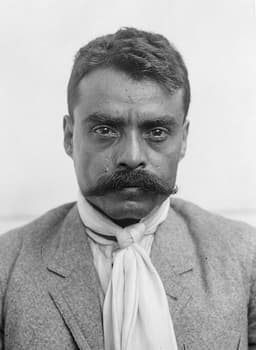
Emiliano Zapata
Revolutionary · Modern
56.3Total
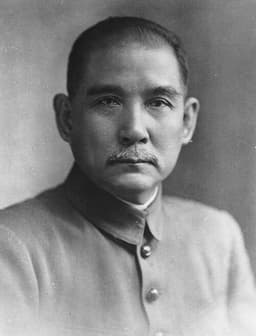
Sun Yat-sen
Revolutionary · Modern
52.5Total
Basic Information
Born
1879
1866
Died
1919
1925
Era
Modern
Modern
Nationality
Mexico
China
Occupation
Revolutionary
Revolutionary
Civilization
Western
Eastern
Score Comparison
Military (10%)
40.0
45.0
Political (20%)
68.0
68.0
Influence (20%)
58.0
61.0
Legacy (20%)
54.0
58.0
Leadership (15%)
54.2
33.5
Strategy (15%)
60.0
30.3
TOTAL
56.3
52.5
Emiliano Zapata — Complete Timeline
1911 AD
Plan of AyalaPolitical Action
Zapata issued the Plan of Ayala, denouncing Francisco I. Madero for failing to implement land reform. The plan called for the return of land to peasants and became the ideological foundation of the Zapatista movement.
Land ReformAgrarian MovementRevolution
Impact: nationalprogressive
1914 AD
Occupation of Mexico CityWar◆ Major
Zapata's forces, allied with Villa's Division of the North, occupied Mexico City. They held the capital for several weeks but failed to establish lasting control, highlighting the limits of their coalition.
Military OccupationRevolutionary AllianceCapital
Impact: national
Convention of AguascalientesPolitical Action◆ Major
Zapata attended the Convention of Aguascalientes, where revolutionary factions attempted to unify. He allied with Pancho Villa against Venustiano Carranza, but the convention failed to produce a stable government.
Revolutionary AlliancePolitical DivisionCivil War
Impact: national
1919 AD
Assassination at ChinamecaPolitical Action
Zapata was lured to the Hacienda de Chinameca by Colonel Jesus Guajardo, who pretended to defect. Guajardo's troops ambushed and killed Zapata, ending his leadership of the agrarian rebellion.
AssassinationBetrayalEnd of Leadership
Impact: nationaltragic
Sun Yat-sen — Complete Timeline
1894 AD
Founded the Revive China SocietyPolitical Action◆ Major
Sun Yat-sen founded the Revive China Society (Xingzhonghui) in Honolulu, the first modern revolutionary organization among overseas Chinese. The society aimed to overthrow the Qing dynasty and establish a republic, marking the beginning of organized revolutionary activity.
RevolutionOverseas ChineseRepublic
Impact: nationalconstructive
1911 AD
Led the Xinhai RevolutionPolitical Action
Sun Yat-sen's revolutionary activities culminated in the Wuchang Uprising of October 1911, which sparked the Xinhai Revolution. The uprising spread across China, leading to the abdication of the Qing emperor in 1912 and the end of 2,000 years of imperial rule.
RevolutionQing DynastyRepublic
Impact: globalconstructive
1912 AD
Proclaimed the Republic of ChinaPolitical Action
On January 1, 1912, Sun Yat-sen was inaugurated as the provisional president of the Republic of China in Nanjing. He proclaimed the establishment of the first republic in Asia, based on his Three Principles of the People: nationalism, democracy, and livelihood.
RepublicPresidencyThree Principles
Impact: globalconstructive
Resigned Presidency in Favor of Yuan ShikaiPolitical Action◆ Major
To secure the abdication of the Qing emperor and avoid civil war, Sun Yat-sen resigned the provisional presidency in February 1912 in favor of Yuan Shikai. This decision, while pragmatic, allowed Yuan to consolidate power and later attempt to restore the monarchy.
Power TransferYuan ShikaiCompromise
Impact: national
1919 AD
Reorganized the KuomintangPolitical Action◆ Major
Sun Yat-sen reorganized the Chinese Revolutionary Party into the Kuomintang (KMT) in 1919, with a more centralized structure. He later accepted Soviet aid and CCP members into the party under the policy of 'alliance with Russia and the Communists,' reshaping the revolutionary movement.
KuomintangSoviet AllianceCCP
Impact: nationalconstructive
Expert Analysis
Sun Yat-sen vs Emiliano Zapata
# The Revolutionary's Crossroads: Sun Yat-sen and Emiliano Zapata
On a spring morning in 1912, Sun Yat-sen stood before the provisional assembly in Nanjing, his hand raised in oath as the first president of the Republic of China. Two thousand years of imperial rule had crumbled. Half a world away, in the dusty hills of Morelos, Mexico, Emiliano Zapata watched a different dawn break—one that would soon turn him against the very revolution he had helped ignite. These two men, born a continent and a decade apart, both sought to tear down old orders and rebuild their nations from the ashes. Yet one became a founding father enshrined in textbooks, the other a martyr whose ghost still haunts Mexican politics. What drove them to such different fates?
Origins
Sun Yat-sen came into the world in 1866, in a Guangdong village where the sea breeze carried whispers of foreign ships and foreign ideas. His family had little—his father worked as a tenant farmer—but an older brother had made a modest fortune in Hawaii, allowing young Sun to receive a Western education. This exposure to liberal thought, to the mechanics of democracy and the humiliations of Qing weakness, planted a seed that would grow into obsession. He converted to Christianity, learned English, and began to see China not as a civilization but as a patient in need of radical surgery.
Emiliano Zapata was born in 1879, in Anenecuilco, a village so small it barely appeared on maps. Unlike Sun, Zapata came from a family that had once owned land—ancestors who had fought alongside José María Morelos in Mexico's war of independence. But by Zapata's childhood, the hacienda system had swallowed those ancestral plots. He grew up watching campesinos stripped of their ejidos, their communal lands, by powerful landlords who had the law on their side. Where Sun saw a nation in decay, Zapata saw a village betrayed.
Rise to Power
Sun's path to power was one of exile and fundraising. In 1894, at the age of 28, he founded the Revive China Society in Honolulu, the first modern revolutionary organization among overseas Chinese. For the next seventeen years, he moved through a diaspora of money and ideas—London, Tokyo, Vancouver—raising funds, plotting uprisings, and watching them fail. Ten insurrections, ten defeats. Sun was not a soldier; he was a propagandist, a networker, a man who could charm wealthy merchants into emptying their pockets for a cause that seemed impossible.
Zapata's rise was rooted in the soil itself. By 1909, he had become the leader of his village's defense committee, a role that required him to confront local hacendados with petitions and, when those failed, with rifles. When the Mexican Revolution erupted in 1910 under Francisco Madero's banner, Zapata joined not as an ideologue but as a man with a specific demand: give the land back. Madero promised reform, but once in power, he stalled. In November 1911, Zapata issued the Plan of Ayala, a document that denounced Madero as a traitor and called for the immediate redistribution of hacienda lands to the peasants. It was a declaration of war, not just against the old regime, but against anyone who would compromise.
Leadership & Governance
Sun Yat-sen's leadership was that of the visionary architect. His Three Principles of the People—nationalism, democracy, and livelihood—were not a detailed blueprint but a framework broad enough to inspire. When the Wuchang Uprising finally succeeded in October 1911, Sun was in Denver, Colorado, reading about it in a newspaper. He rushed back to China and was elected provisional president in January 1912, but he held the office for only 44 days. To secure the Qing emperor's abdication and avoid civil war, Sun resigned in favor of the powerful general Yuan Shikai. It was a pragmatic decision, but it revealed a fundamental truth: Sun was a revolutionary of ideas, not of armies. He could not hold power; he could only hand it over and hope.
Zapata governed differently. During the years of the revolution, he controlled Morelos like a peasant republic. Land was seized and redistributed. Local committees ran villages. There were no grand principles—just the simple, radical demand that those who worked the earth should own it. When Zapata's forces, allied with Pancho Villa's Division of the North, occupied Mexico City in December 1914, they did not set up a government. They looted the rich, burned mortgage records, and returned to the countryside. Zapata had no interest in ruling from a capital; he wanted the capital to leave him alone.
Triumph & Tragedy
Sun Yat-sen's greatest triumph was not a battle but a birth. The Republic of China, however fragile, was a reality. He spent his final years reorganizing the Kuomintang in 1919, forging an alliance with the Soviet Union, and building a party structure that would outlive him. His tragedy was that he never saw his vision realized. He died in 1925 of liver cancer, a disappointed man, watching China fragment into warlord fiefdoms.
Zapata's triumph was symbolic and immediate. The Plan of Ayala became the moral compass of the Mexican Revolution, forcing every subsequent leader to address land reform. His tragedy was his death—not in battle, but by betrayal. In April 1919, a colonel named Jesús Guajardo pretended to defect, luring Zapata to the Hacienda de Chinameca. As Zapata crossed the threshold, Guajardo's men opened fire. He was 39 years old. His body was displayed in Cuautla to prove he was dead, but the legend only grew.
Character & Destiny
Sun Yat-sen was a man of perseverance and adaptability. He failed ten times, yet never stopped believing. He could compromise with warlords, accept Soviet money, and reinvent his ideology to suit the moment. This flexibility kept him alive and relevant, but it also meant he was never fully in control. His destiny was to be a symbol—the "Father of the Nation"—rather than a ruler.
Zapata was the opposite: stubborn, local, and uncompromising. He told Madero, "I want to go back to my village and plant corn." He meant it. His refusal to negotiate, to accept half-measures, made him a hero to the dispossessed but a target for his enemies. His destiny was to die young, his face frozen in that iconic photograph with the wide sombrero and the unblinking eyes.
Legacy
Sun Yat-sen's legacy is written into the DNA of modern China—both the mainland and Taiwan claim him as their founding father. The Three Principles of the People are still taught, still invoked, still debated. His score of 72.2 in Legacy reflects a man whose ideas outlived his failures.
Zapata's legacy is more visceral. His name appears on Zapatista uprisings, on murals, on the lips of every Mexican who demands justice for the poor. His Legacy score of 67.6 is lower, but his Influence score of 72.8 is nearly equal to Sun's 77.6—because Zapata's power was not in institutions but in imagination. He proved that a peasant with a machete could shake an empire.
Conclusion
Standing at the crossroads of revolution, Sun Yat-sen and Emiliano Zapata chose different paths—one toward the nation, the other toward the village; one toward compromise, the other toward purity; one toward a long exile that ended in a hospital bed, the other toward a short life that ended in a hail of bullets. Both failed to see their dreams realized in their lifetimes, yet both reshaped the worlds they fought against. Sun gave China a new vocabulary for its future; Zapata gave Mexico a permanent wound that refuses to heal. In the end, perhaps the question is not which revolutionary was more successful, but which kind of failure we choose to remember.
Rankings
🥇
Emiliano ZapataLeader
Mil: 40.0Pol: 68.0Inf: 58.0
56.3
🥈
Sun Yat-sen
Mil: 45.0Pol: 68.0Inf: 61.0
52.5
+3.8 behind
How This Comparison Works
Algorithm
Each figure is scored on 6 dimensions (0—100 scale) based on structured historical data: Military (10%), Political (20%), Influence (20%), Legacy (20%), Leadership (15%), Strategy (15%). The weighted total produces the final ranking.
Data Sources
Scores are computed from structured sub-indicators in the database. Scale factors adjust for era (Ancient ×0.85, Modern ×1.0) and civilization size (Eastern ×1.05, Other ×0.80) to account for differences in population and military scale.
Maximum 3 Figures
Comparisons are limited to 2—3 figures to ensure readability and statistical meaningfulness.
Error Margins
±5 points per dimension — Sub-scores are derived from historical records with inherent uncertainty. Two figures within 5 points on a dimension should be considered roughly equivalent in that area.
Total Score Accuracy
±3 points overall — The weighted combination of 6 dimensions produces a total score with approximately ±3 points of uncertainty. Differences of less than 3 points are not statistically significant— the figures are effectively tied.
Known Limitations
- Historical records are incomplete and uneven across civilizations
- Figures from oral-tradition societies may be underrepresented
- Occupation labels can misclassify multi-role figures
- Scores measure capability and impact, not moral character
- Quantitative scoring is a comparison tool, not absolute truth
Capability Radar
Military (10%) — Battles & Warfare
Battles
45
15
Win Rate
50
10
Expansion
35
5
Political (20%) — Governance & Reform
Reform
70
85
Diplomacy
40
60
Economy
35
20
Influence (20%) — Cultural & Global Reach
Cultural
65
70
Global
55
65
Legacy (20%) — Historical Impact
Historical
70
80
Longevity
65
75
Leadership (15%) — Power & Stability
Tenure
30
30
Stability
25
15
Strategy (15%) — Tactics & Innovation
Strategy
50
20
Tactics
55
10
Reform
60
40
Similar Comparisons
Comments & Discussion
犁庭书生6/16/2026
拿孙文跟萨帕塔比?完全两码事!孙文大多时候在海外遥控,写文章募款,连辛亥革命都是别人先动手。萨帕塔可是骑着马扛着枪,跟农民兄弟一起抢地主的庄园。一个是西装革履的革命推销员,一个是草鞋斗笠的农民领袖。孙文本人连军队都没指挥过,拿什么跟血战十年的萨帕塔比?数据摆这儿:萨帕塔直接领导了数万农民军,孙文连黄花岗起义都失败得一塌糊涂。别扯什么“跨越时空”,根本不是一个量级的硬汉。
CaudilloWatcher6/16/2026
Anyone who puts Sun Yat-sen and Zapata side by side as equals is flattening history. Sun was a master of words, not war—his entire revolutionary career was a string of failed uprisings financed by overseas Chinese merchants, while Zapata led 25,000 armed campesinos in a land war that actually redistributed estates. One wrote manifestos from Tokyo hotels, the other burned haciendas in Morelos. Zapata didn’t just dream of revolution; he made it a physical reality on the ground. Sun got a Republic
六尘钓叟6/16/2026
从古典学角度看,这俩都是典型的“天命叙事”继承人,但结局天差地别。孙文采用了西方共和框架,把自己塑造成华盛顿式的“国父”,实际上他当总统才44天,政令不出南京城。萨帕塔拒绝任何个人崇拜,坚持“土地与自由”的集体理想,死后成了活的符号,比任何教科书都更有张力。一个虚位奠基,一个血祭长存。别拿传记吹出来的圣人跟真实殉道的农民比,中西方英雄史的写法本来就不同。
SkepticalScribe6/16/2026
I don't buy the myth of either man as pure revolutionary. Sun’s “Three Principles” were cobbled together from Western textbooks, and his fundraising relied on promising future concessions to foreign banks—hardly anti-imperialist. Zapata was more consistent, sticking to land reform even when betrayed by his own allies, but his Plan de Ayala was essentially localism dressed up as radicalism, never scalable to a nation. The comparison works only if we admit both were romantic failures who got canon
铁血笔杆6/16/2026
军事上说,萨帕塔完胜孙文。辛亥革命靠的是新军倒戈和立宪派投机,孙文本人连一枪都没开过。萨帕塔从1910到1919年,指挥了上百场战斗,在库奥特拉战役中甚至以五千农民军顶住联邦军八千正规军