Loading...
This comparison has not been analyzed yet.
One-time AI generation (~1 minute). Scores and timeline are already available below.
Emperor Daigo vs Leovigild
Leovigild leads by 8.0 pts · 2 figures compared
…
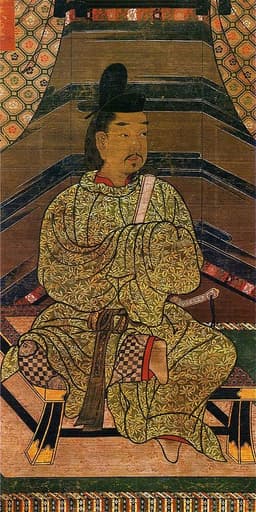
Emperor Daigo
Emperor · Medieval
58.0Total
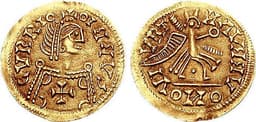
Leovigild
Emperor · Medieval
66.0Total
Basic Information
Born
885
519
Died
930
586
Era
Medieval
Medieval
Nationality
Japan
Visigothic Kingdom
Occupation
Emperor
Emperor
Civilization
Eastern
Western
Score Comparison
Military (10%)
54.1
78.0
Political (20%)
45.0
70.0
Influence (20%)
59.0
60.0
Legacy (20%)
54.0
52.0
Leadership (15%)
72.0
85.0
Strategy (15%)
67.7
69.1
TOTAL
58.0
66.0
Emperor Daigo — Complete Timeline
897 AD
Reign as a Strong EmperorPolitical Action◆ Major
Emperor Daigo ruled directly without a Fujiwara regent for much of his reign. He maintained imperial authority and is remembered as a capable ruler. His reign is often idealized as a period of strong imperial rule in the Heian period.
Imperial RuleHeianAuthority
Impact: nationalconstructive
905 AD
Patronage of Poetry and LiteratureCultural◆ Major
Emperor Daigo sponsored the compilation of the 'Kokin Wakashu', the first imperial anthology of Japanese poetry. He commissioned Ki no Tsurayuki and others to collect poems. This anthology set the standard for waka poetry and influenced Japanese literature for centuries.
Kokin WakashuPoetryAnthology
Impact: nationalconstructive
927 AD
Compilation of the EngishikiReform◆ Major
Emperor Daigo ordered the compilation of the Engishiki, a detailed legal code that expanded on the Taiho and Yoro codes. It contained regulations for government administration, ceremonies, and rituals. The Engishiki became a foundational text for Japanese law and Shinto practice.
EngishikiLegal CodeRitsuryo
Impact: nationalconstructive
Leovigild — Complete Timeline
568 AD
Accession as Visigothic KingPolitical Action◆ Major
Leovigild became king of the Visigoths after the death of his brother Athanagild. He inherited a kingdom weakened by internal strife and Byzantine incursions in southern Hispania. Leovigild immediately began a campaign to restore Visigothic power and unity.
Visigothic KingdomSuccessionRestoration
Impact: regional
578 AD
Military Reforms and Foundation of ReccopolisReform◆ Major
Leovigild founded the city of Reccopolis, named after his son Reccared, as a royal capital and administrative center. He also reformed the Visigothic army, introducing new tactics and equipment, and strengthened the monarchy's authority over the nobility.
Visigothic KingdomUrban FoundationMilitary Reform
Impact: regionalconstructive
579 AD
Revolt of HermenegildWar◆ Major
Leovigild's son Hermenegild converted to Catholicism and rebelled against his Arian father, establishing a rival kingdom in Seville. Leovigild suppressed the revolt, captured Hermenegild, and later executed him. This conflict deepened religious tensions within the Visigothic Kingdom.
Visigothic KingdomCivil WarReligious Conflict
Impact: regionaldestructive
585 AD
Conquest of the Suebi KingdomWar
Leovigild launched a military campaign against the Suebi kingdom in northwestern Hispania. He defeated the Suebi king Andeca, annexed their territory, and incorporated it into the Visigothic Kingdom. This conquest nearly unified the Iberian Peninsula under Visigothic rule.
Visigothic KingdomConquestIberian Unification
Impact: regional
This comparison has not been analyzed yet.
One-time AI generation (~1 minute). Scores and timeline are already available below.
Rankings
🥇
LeovigildLeader
Mil: 78.0Pol: 70.0Inf: 60.0
66.0
🥈
Emperor Daigo
Mil: 54.1Pol: 45.0Inf: 59.0
58.0
+8.0 behind
How This Comparison Works
Algorithm
Each figure is scored on 6 dimensions (0—100 scale) based on structured historical data: Military (10%), Political (20%), Influence (20%), Legacy (20%), Leadership (15%), Strategy (15%). The weighted total produces the final ranking.
Data Sources
Scores are computed from structured sub-indicators in the database. Scale factors adjust for era (Ancient ×0.85, Modern ×1.0) and civilization size (Eastern ×1.05, Other ×0.80) to account for differences in population and military scale.
Maximum 3 Figures
Comparisons are limited to 2—3 figures to ensure readability and statistical meaningfulness.
Error Margins
±5 points per dimension — Sub-scores are derived from historical records with inherent uncertainty. Two figures within 5 points on a dimension should be considered roughly equivalent in that area.
Total Score Accuracy
±3 points overall — The weighted combination of 6 dimensions produces a total score with approximately ±3 points of uncertainty. Differences of less than 3 points are not statistically significant— the figures are effectively tied.
Known Limitations
- Historical records are incomplete and uneven across civilizations
- Figures from oral-tradition societies may be underrepresented
- Occupation labels can misclassify multi-role figures
- Scores measure capability and impact, not moral character
- Quantitative scoring is a comparison tool, not absolute truth
Capability Radar
Military (10%) — Battles & Warfare
Battles
45
75
Win Rate
50
80
Expansion
49
80
Political (20%) — Governance & Reform
Reform
65
85
Diplomacy
55
65
Economy
60
70
Influence (20%) — Cultural & Global Reach
Cultural
55
55
Global
30
45
Legacy (20%) — Historical Impact
Historical
60
60
Longevity
55
50
Leadership (15%) — Power & Stability
Tenure
60
70
Stability
65
60
Strategy (15%) — Tactics & Innovation
Strategy
57
75
Tactics
59
70
Reform
59
85
Similar Comparisons
Comments & Discussion
No comments yet. Be the first to share your thoughts!