Loading...
Emperor Daigo vs Sundiata Keita
Sundiata Keita leads by 7.5 pts · 2 figures compared
…
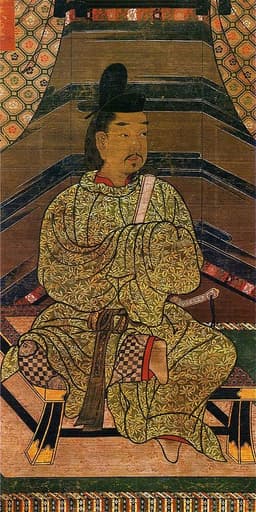
Emperor Daigo
Emperor · Medieval
58.0Total
Sundiata Keita
Emperor · Medieval
65.5Total
Basic Information
Born
885
1217
Died
930
1255
Era
Medieval
Medieval
Nationality
Japan
Mali Empire
Occupation
Emperor
Emperor
Civilization
Eastern
Other
Score Comparison
Military (10%)
54.1
72.0
Political (20%)
45.0
70.0
Influence (20%)
59.0
40.0
Legacy (20%)
54.0
80.0
Leadership (15%)
72.0
72.0
Strategy (15%)
67.7
70.0
TOTAL
58.0
65.5
Emperor Daigo — Complete Timeline
897 AD
Reign as a Strong EmperorPolitical Action◆ Major
Emperor Daigo ruled directly without a Fujiwara regent for much of his reign. He maintained imperial authority and is remembered as a capable ruler. His reign is often idealized as a period of strong imperial rule in the Heian period.
Imperial RuleHeianAuthority
Impact: nationalconstructive
905 AD
Patronage of Poetry and LiteratureCultural◆ Major
Emperor Daigo sponsored the compilation of the 'Kokin Wakashu', the first imperial anthology of Japanese poetry. He commissioned Ki no Tsurayuki and others to collect poems. This anthology set the standard for waka poetry and influenced Japanese literature for centuries.
Kokin WakashuPoetryAnthology
Impact: nationalconstructive
927 AD
Compilation of the EngishikiReform◆ Major
Emperor Daigo ordered the compilation of the Engishiki, a detailed legal code that expanded on the Taiho and Yoro codes. It contained regulations for government administration, ceremonies, and rituals. The Engishiki became a foundational text for Japanese law and Shinto practice.
EngishikiLegal CodeRitsuryo
Impact: nationalconstructive
Sundiata Keita — Complete Timeline
1235 AD
Battle of KirinaWar
Sundiata Keita led the Mandinka coalition against Soumaoro Kant
BattleMali EmpireSosso
Impact: regional
Proclamation as MansaPolitical Action◆ Major
After the Battle of Kirina, Sundiata was proclaimed Mansa (emperor) of the Mali Empire at the Kouroukan Fouga assembly. He established a constitution and divided the empire into provinces, laying the administrative foundation of Mali.
CoronationConstitutionAdministration
Impact: regionalconstructive
1240 AD
Conquest of GhanaWar◆ Major
Sundiata conquered the remnants of the Ghana Empire, incorporating its territory into Mali. This gave Mali control over the trans-Saharan gold trade routes, significantly increasing its wealth and power.
ConquestGhana EmpireGold Trade
Impact: regional
Establishment of Niani as CapitalPolitical Action
Sundiata established Niani as the capital of the Mali Empire. The city became a center of trade and governance, located near gold fields and on trade routes, facilitating the empire's economic growth.
CapitalNianiTrade Center
Impact: regionalconstructive
1245 AD
Introduction of Cotton CultivationReform
Sundiata promoted the cultivation of cotton and the weaving of cloth, which became a major industry in Mali. This economic reform diversified the empire's economy and increased its self-sufficiency.
AgricultureCottonEconomic Reform
Impact: regionalconstructive
Expert Analysis
Origins
Emperor Daigo (born 885) was the 60th emperor of Japan, ascending the throne in 897. He was the son of Emperor Uda and came from the Yamato line. His early education emphasized Chinese classics and Confucian governance. Daigo's reign occurred during the Heian period, when the Fujiwara clan increasingly dominated politics.
Sundiata Keita (born c. 1217) was a prince of the Mandinka people in West Africa. According to oral tradition, he was the son of King Nare Maghann Konaté and Sogolon Condé. Sundiata was crippled as a child but later regained strength. His early life was marked by exile after his father's death, as the kingdom fell to the Sosso under Soumaoro Kanté.
Rise to Power
Emperor Daigo ascended the throne at age 12 and initially had a Fujiwara regent, but after coming of age, he ruled directly from 909 to 930. He asserted imperial authority by appointing non-Fujiwara officials and reducing Fujiwara influence. His reign is noted for the absence of a regent, a rare occurrence in Heian politics.
Sundiata Keita rose by uniting Mandinka chiefdoms against Soumaoro Kanté. In the Battle of Kirina (c. 1235), Sundiata's forces defeated the Sosso army. After victory, he was proclaimed Mansa at the Kouroukan Fouga assembly, where he established a constitution and divided the empire into provinces.
Leadership & Governance
Emperor Daigo's leadership focused on legal codification and cultural patronage. He ordered the compilation of the Engishiki, a 50-volume legal code that detailed administrative procedures, ceremonies, and regulations. The code expanded on earlier Taiho and Yoro codes. Daigo also sponsored the 'Kokin Wakashu', the first imperial poetry anthology, commissioning Ki no Tsurayuki. His governance maintained imperial dignity but did not expand territory. His political score is 45.0, reflecting limited structural power.
Sundiata Keita's leadership was expansionist and administrative. He conquered the remnants of the Ghana Empire, gaining control of trans-Saharan gold routes. He introduced cotton cultivation and weaving, diversifying the economy. He established Niani as capital, a trading hub near gold fields. His political score of 70.0 reflects state-building. He scores 72.0 in military, 70.0 in strategy.
Triumph & Tragedy
Emperor Daigo's triumph was the compilation of the Engishiki, which standardized governance and survived as a key historical source. His cultural patronage enriched Japanese literature. However, his reign saw the rise of provincial unrest and the decline of imperial power after his death. The Engishiki, while comprehensive, did not prevent the Fujiwara from dominating later emperors.
Sundiata Keita's triumph was founding the Mali Empire, which became one of West Africa's largest empires. His Kouroukan Fouga constitution established laws and social structures that endured. However, his empire faced succession disputes and eventual decline. The gold trade brought wealth but also vulnerability to external pressures. His legacy score of 80.0 reflects enduring impact.
Character & Destiny
Emperor Daigo was methodical and cultured, prioritizing order and tradition. His decision to rule without a regent showed independence, but he lacked military ambition. His character shaped a stable but static reign. Historians view him as a capable administrator but not a transformative leader.
Sundiata Keita was charismatic and strategic, overcoming physical disability to lead. His determination united diverse groups. His character fostered loyalty and expansion. He is remembered as the 'Lion King' in oral epics, symbolizing resilience. His destiny was to create an empire that shaped West African history.
Legacy
Emperor Daigo's Engishiki remained influential in Japanese legal history, but his political impact was limited. The Kokin Wakashu influenced Japanese poetry for centuries. His score of 54.0 in legacy reflects cultural contributions but minimal political change.
Sundiata Keita's Mali Empire controlled trade routes and spread Mande culture. The Kouroukan Fouga influenced later governance. His legacy is celebrated in West Africa and beyond. His total score of 65.5 exceeds Daigo's 58.0.
Conclusion
Sundiata Keita had greater impact. He founded an empire that transformed West African trade and culture, scoring higher in military (72.0 vs 54.1), political (70.0 vs 45.0), and legacy (80.0 vs 54.0). Daigo's cultural achievements are notable, but Sundiata's state-building reshaped history more profoundly.
Rankings
🥇
Sundiata KeitaLeader
Mil: 72.0Pol: 70.0Inf: 40.0
65.5
🥈
Emperor Daigo
Mil: 54.1Pol: 45.0Inf: 59.0
58.0
+7.5 behind
How This Comparison Works
Algorithm
Each figure is scored on 6 dimensions (0—100 scale) based on structured historical data: Military (10%), Political (20%), Influence (20%), Legacy (20%), Leadership (15%), Strategy (15%). The weighted total produces the final ranking.
Data Sources
Scores are computed from structured sub-indicators in the database. Scale factors adjust for era (Ancient ×0.85, Modern ×1.0) and civilization size (Eastern ×1.05, Other ×0.80) to account for differences in population and military scale.
Maximum 3 Figures
Comparisons are limited to 2—3 figures to ensure readability and statistical meaningfulness.
Error Margins
±5 points per dimension — Sub-scores are derived from historical records with inherent uncertainty. Two figures within 5 points on a dimension should be considered roughly equivalent in that area.
Total Score Accuracy
±3 points overall — The weighted combination of 6 dimensions produces a total score with approximately ±3 points of uncertainty. Differences of less than 3 points are not statistically significant— the figures are effectively tied.
Known Limitations
- Historical records are incomplete and uneven across civilizations
- Figures from oral-tradition societies may be underrepresented
- Occupation labels can misclassify multi-role figures
- Scores measure capability and impact, not moral character
- Quantitative scoring is a comparison tool, not absolute truth
Capability Radar
Military (10%) — Battles & Warfare
Battles
45
75
Win Rate
50
85
Expansion
49
90
Political (20%) — Governance & Reform
Reform
65
80
Diplomacy
55
75
Economy
60
80
Influence (20%) — Cultural & Global Reach
Cultural
55
85
Global
30
80
Legacy (20%) — Historical Impact
Historical
60
90
Longevity
55
85
Leadership (15%) — Power & Stability
Tenure
60
70
Stability
65
75
Strategy (15%) — Tactics & Innovation
Strategy
57
85
Tactics
59
80
Reform
59
70
Similar Comparisons
Comments & Discussion
No comments yet. Be the first to share your thoughts!