Loading...
Emperor Kanmu vs Yusuf ibn Tashfin
Yusuf ibn Tashfin leads by 1.5 pts · 2 figures compared
…
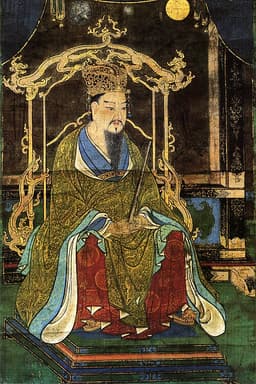
Emperor Kanmu
Emperor · Medieval
61.7Total
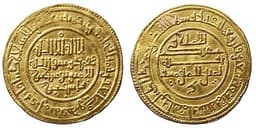
Yusuf ibn Tashfin
Emperor · Medieval
63.2Total
Basic Information
Born
737
1061
Died
806
1106
Era
Medieval
Medieval
Nationality
Japan
Almoravid Empire
Occupation
Emperor
Emperor
Civilization
Eastern
Middle Eastern
Score Comparison
Military (10%)
22.6
77.2
Political (20%)
72.0
60.0
Influence (20%)
72.0
57.7
Legacy (20%)
65.0
55.0
Leadership (15%)
72.0
78.0
Strategy (15%)
35.7
65.9
TOTAL
61.7
63.2
Emperor Kanmu — Complete Timeline
784 AD
Abandonment of Nagaoka-kyoPolitical Action
Emperor Kanmu abandoned the new capital at Nagaoka-kyo after only ten years, following a series of disasters and political intrigues, including the assassination of the chief architect. The move to Heian-kyo was motivated by a desire for a fresh start.
Nagaoka-kyoAbandonmentCapital
Impact: national
789 AD
Campaigns Against the EmishiWar◆ Major
Emperor Kanmu launched military campaigns to subdue the Emishi tribes in northern Honshu. Led by generals like Sakanoue no Tamuramaro, the campaigns expanded Japanese control into the Tohoku region. The Emishi were eventually defeated or assimilated.
EmishiNorthern ExpansionTohoku
Impact: national
794 AD
Transfer of the Capital to Heian-kyoPolitical Action◆ Major
Emperor Kanmu moved the imperial capital from Nagaoka-kyo to Heian-kyo (modern Kyoto). The new city was laid out on a grid pattern modeled after Chang'an. This move established Kyoto as the imperial capital for over a thousand years.
CapitalHeian-kyoKyoto
Impact: nationalconstructive
Yusuf ibn Tashfin — Complete Timeline
1070 AD
Unification of the MaghrebWar◆ Major
Yusuf ibn Tashfin conquered the remaining Berber kingdoms in the Maghreb, including the Zenata and the Barghawata. He unified the region under Almoravid rule, creating a vast empire stretching from Senegal to Algeria.
Almoravid EmpireMaghrebUnification
Impact: regionalconstructive
Foundation of MarrakechCultural◆ Major
Yusuf ibn Tashfin founded the city of Marrakech, which became the capital of the Almoravid Empire. The city grew into a major cultural and commercial center, serving as a hub for trans-Saharan trade.
Almoravid EmpireMarrakechFoundation
Impact: regionalconstructive
1080 AD
Reform of Islamic LawReform◆ Major
Yusuf ibn Tashfin enforced a strict Maliki interpretation of Islamic law across his empire. He suppressed non-orthodox practices and promoted religious scholars, strengthening the role of Islam in governance and society.
Almoravid EmpireIslamic LawReform
Impact: regional
1086 AD
Battle of Sagrajas (Zallaqa)War
Yusuf ibn Tashfin led the Almoravid army to victory over the Christian forces of King Alfonso VI of Le
Almoravid EmpireReconquistaBattle
Impact: regional
1090 AD
Annexation of Al-AndalusPolitical Action◆ Major
Yusuf ibn Tashfin annexed the Taifa kingdoms of Al-Andalus, incorporating them into the Almoravid Empire. He deposed the Muslim rulers who had failed to resist the Christian advance, establishing direct Almoravid control over the Iberian Peninsula.
Almoravid EmpireAl-AndalusAnnexation
Impact: regional
Expert Analysis
Origins
Emperor Kanmu (737–806) was born as Yamabe, the son of Prince Shirakabe, who later became Emperor Kōnin. His mother was a court noble, and he was trained in Chinese classics and governance. Kanmu ascended to the throne in 781 after his father's abdication, inheriting a state consolidating Chinese-style bureaucracy.
Yusuf ibn Tashfin (c. 1009–1106) was born in the Lamtuna tribe of the Sanhaja Berbers in the Sahara. His early life was nomadic, rooted in tribal warfare and strict Islamic practice. He rose as a military commander under his cousin Abu Bakr ibn Umar, leader of the Almoravid movement, which sought to purify Islam and expand territory.
Rise to Power
Kanmu became emperor in 781 after his father's death. His reign focused on centralizing power away from the powerful Buddhist monasteries and aristocratic clans. He moved the capital from Nara to Nagaoka-kyo in 784, but after a series of disasters, including floods and political assassinations, he abandoned it and relocated to Heian-kyo (Kyoto) in 794. This decisive move established Kyoto as Japan's capital for over a millennium.
Yusuf ibn Tashfin took command of the Almoravids in 1061 after Abu Bakr relinquished leadership to focus on the Sahara. He expanded the empire northward, defeating the Zenata and Barghawata Berbers. By 1086, he was invited by the Muslim taifa kings of Al-Andalus to help resist the Christian Reconquista. His victory at the Battle of Sagrajas (Zallaqa) in 1086 halted Alfonso VI's advance and established his reputation.
Leadership & Governance
Kanmu governed through a centralized bureaucracy modeled on Tang China. He promoted Confucian ideals, sponsored scholarship, and reduced the influence of Buddhist institutions. He appointed Sakanoue no Tamuramaro as shogun to lead campaigns against the Emishi, integrating military command into the imperial structure. Kanmu's political score of 72.0 reflects his effective consolidation of power, though his military score of 22.6 shows limited direct involvement in warfare.
Yusuf ibn Tashfin ruled with a blend of military authority and religious legitimacy. He enforced Maliki Islamic law, suppressing Sufi and Shia practices. He founded Marrakech as a capital, building a palace and mosque. His leadership score of 78.0 indicates strong command, but his political score of 60.0 suggests challenges in integrating diverse regions. He annexed the Taifa kingdoms in 1090–1094, deposing rulers who failed to defend against Christians.
Triumph & Tragedy
Kanmu's greatest triumph was establishing Heian-kyo, which became the cultural heart of Japan. He also subdued the Emishi, expanding Japan's northern frontier. However, his reign saw the assassination of his half-brother, Prince Sawara, and the abandonment of Nagaoka-kyo after costly failures. His legacy score of 65.0 reflects enduring impact but mixed personal success.
Yusuf's triumph was the Battle of Sagrajas, where his forces killed thousands of Christians and stabilized Al-Andalus. He unified the Maghreb and Al-Andalus under one rule. Yet his strict religious enforcement alienated many, and after his death, the Almoravid Empire declined due to internal revolts. His influence score of 57.7 shows limited lasting cultural impact outside North Africa.
Character & Destiny
Kanmu was pragmatic and patient, enduring political intrigue to secure his capital. He personally oversaw city planning and military campaigns. His decision to move to Kyoto was controversial but proved visionary. His strategy score of 35.7 suggests he was not a brilliant tactician but a steady administrator.
Yusuf was austere and devout, refusing luxury and leading from the front. He was decisive in battle but inflexible in governance. His strategy score of 65.9 shows competence, but his inability to adapt after initial victories led to stagnation. He died in 1106 at age 97, but his empire fractured within decades.
Legacy
Kanmu's legacy is the city of Kyoto, which remained Japan's imperial capital until 1868. He also established a precedent for imperial centralization. However, his military campaigns had no lasting territorial gains. His total score of 61.7 reflects a focused but narrow impact.
Yusuf's legacy includes Marrakech as a major city and the temporary halting of the Reconquista. But his empire collapsed, and his religious reforms were reversed. His total score of 63.2 edges Kanmu's, but his influence faded faster.
Conclusion
Yusuf ibn Tashfin scored higher overall (63.2 vs 61.7) due to his military and leadership strengths, but Kanmu's impact was more enduring. While Yusuf's victories were dramatic, they did not create lasting institutions. Kanmu's capital shaped Japanese history for over a thousand years. Therefore, Emperor Kanmu had greater long-term impact, despite lower scores. His political and legacy scores (72.0 and 65.0) outweigh Yusuf's military prowess (77.2).
Rankings
🥇
Yusuf ibn TashfinLeader
Mil: 77.2Pol: 60.0Inf: 57.7
63.2
🥈
Emperor Kanmu
Mil: 22.6Pol: 72.0Inf: 72.0
61.7
+1.5 behind
How This Comparison Works
Algorithm
Each figure is scored on 6 dimensions (0—100 scale) based on structured historical data: Military (10%), Political (20%), Influence (20%), Legacy (20%), Leadership (15%), Strategy (15%). The weighted total produces the final ranking.
Data Sources
Scores are computed from structured sub-indicators in the database. Scale factors adjust for era (Ancient ×0.85, Modern ×1.0) and civilization size (Eastern ×1.05, Other ×0.80) to account for differences in population and military scale.
Maximum 3 Figures
Comparisons are limited to 2—3 figures to ensure readability and statistical meaningfulness.
Error Margins
±5 points per dimension — Sub-scores are derived from historical records with inherent uncertainty. Two figures within 5 points on a dimension should be considered roughly equivalent in that area.
Total Score Accuracy
±3 points overall — The weighted combination of 6 dimensions produces a total score with approximately ±3 points of uncertainty. Differences of less than 3 points are not statistically significant— the figures are effectively tied.
Known Limitations
- Historical records are incomplete and uneven across civilizations
- Figures from oral-tradition societies may be underrepresented
- Occupation labels can misclassify multi-role figures
- Scores measure capability and impact, not moral character
- Quantitative scoring is a comparison tool, not absolute truth
Capability Radar
Military (10%) — Battles & Warfare
Battles
10
75
Win Rate
10
80
Expansion
15
82
Political (20%) — Governance & Reform
Reform
75
70
Diplomacy
60
72
Economy
65
68
Influence (20%) — Cultural & Global Reach
Cultural
75
60
Global
60
62
Legacy (20%) — Historical Impact
Historical
80
72
Longevity
85
65
Leadership (15%) — Power & Stability
Tenure
70
85
Stability
70
74
Strategy (15%) — Tactics & Innovation
Strategy
15
78
Tactics
10
70
Reform
20
65
Similar Comparisons
Comments & Discussion
No comments yet. Be the first to share your thoughts!