Loading...
Emperor Kanmu vs Ivan Alexander
Emperor Kanmu leads by 7.0 pts · 2 figures compared
…
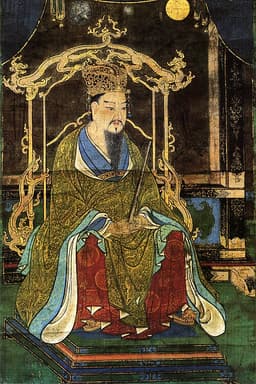
Emperor Kanmu
Emperor · Medieval
61.7Total
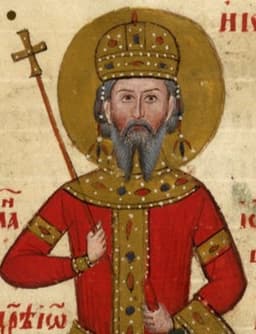
Ivan Alexander
Emperor · Medieval
54.7Total
Basic Information
Born
737
1300
Died
806
1371
Era
Medieval
Medieval
Nationality
Japan
Bulgaria
Occupation
Emperor
Emperor
Civilization
Eastern
Western
Score Comparison
Military (10%)
22.6
10.0
Political (20%)
72.0
68.0
Influence (20%)
72.0
56.7
Legacy (20%)
65.0
50.0
Leadership (15%)
72.0
74.0
Strategy (15%)
35.7
57.5
TOTAL
61.7
54.7
Emperor Kanmu — Complete Timeline
784 AD
Abandonment of Nagaoka-kyoPolitical Action
Emperor Kanmu abandoned the new capital at Nagaoka-kyo after only ten years, following a series of disasters and political intrigues, including the assassination of the chief architect. The move to Heian-kyo was motivated by a desire for a fresh start.
Nagaoka-kyoAbandonmentCapital
Impact: national
789 AD
Campaigns Against the EmishiWar◆ Major
Emperor Kanmu launched military campaigns to subdue the Emishi tribes in northern Honshu. Led by generals like Sakanoue no Tamuramaro, the campaigns expanded Japanese control into the Tohoku region. The Emishi were eventually defeated or assimilated.
EmishiNorthern ExpansionTohoku
Impact: national
794 AD
Transfer of the Capital to Heian-kyoPolitical Action◆ Major
Emperor Kanmu moved the imperial capital from Nagaoka-kyo to Heian-kyo (modern Kyoto). The new city was laid out on a grid pattern modeled after Chang'an. This move established Kyoto as the imperial capital for over a thousand years.
CapitalHeian-kyoKyoto
Impact: nationalconstructive
Ivan Alexander — Complete Timeline
1331 AD
Coronation as TsarPolitical Action◆ Major
Ivan Alexander was crowned Tsar of Bulgaria after overthrowing his predecessor. His reign marked the last period of cultural and political flourishing before the Ottoman conquest.
CoronationReignBulgarian Empire
Impact: nationalconstructive
1340 AD
Compilation of the Law CodeReform◆ Major
Ivan Alexander oversaw the compilation of a comprehensive law code, the 'Zakonik' (Law of the Tsar). This codified Byzantine and Bulgarian legal traditions, strengthening central authority.
Law CodeReformLegal System
Impact: nationalconstructive
1350 AD
Patronage of the Tarnovo Literary SchoolCultural◆ Major
Ivan Alexander patronized the Tarnovo Literary School, which produced illuminated manuscripts like the 'Manasses Chronicle' and the 'Gospels of Tsar Ivan Alexander'. This was the peak of medieval Bulgarian culture.
CulturalManuscriptsTarnovo School
Impact: regionalconstructive
1355 AD
Division of the EmpirePolitical Action◆ Major
Ivan Alexander divided Bulgaria between his two sons, Ivan Shishman and Ivan Sratsimir, weakening the state. This fragmentation facilitated the later Ottoman conquest.
DivisionSuccessionWeakening
Impact: nationaldestructive
Expert Analysis
Origins
Emperor Kanmu (737–806) was born as Yamabe, the son of Prince Shirakabe (later Emperor Konin). His mother was of Baekje royal descent, linking him to Korean peninsula nobility. He ascended the throne in 781 after his father's abdication. His early life was shaped by the political intrigues of the Nara period, including the influence of the powerful Buddhist clergy and the Fujiwara clan.
Ivan Alexander (died 1371) was born into the Sratsimir dynasty, a branch of the Shishman dynasty that ruled the Second Bulgarian Empire. His exact birth year is unknown, but he rose to power after overthrowing his predecessor, Ivan Stephen, in 1331. His family background was aristocratic, and he was educated in Byzantine and Slavic traditions, which influenced his later cultural patronage.
Rise to Power
Kanmu became emperor after his father's abdication, but his early reign was marked by consolidation. He faced a rebellion in 782 led by his half-brother Prince Sawara, which he suppressed. To reduce the influence of Buddhist monasteries, he moved the capital from Nara to Nagaoka-kyo in 784, but after a series of disasters and the assassination of his chief minister, he abandoned it and established Heian-kyo (modern Kyoto) in 794. This move centralized power and reduced clerical interference.
Ivan Alexander seized the throne in 1331 by deposing Ivan Stephen with the support of boyars. He quickly secured his position by marrying Theodora, a Wallachian princess, and later Sarah, a Jewish convert, to forge alliances. His rise was facilitated by the decline of the Byzantine Empire and the rise of Serbian power under Stefan Dušan, which he initially managed through diplomacy.
Leadership & Governance
Kanmu's governance focused on centralization and administrative reform. He appointed capable officials like Sakanoue no Tamuramaro, who led campaigns against the Emishi tribes in northern Honshu, expanding Japanese control. He also reformed the land tax system and promoted Confucian education. However, his military score of 22.6 reflects limited direct military involvement; his strategy score of 35.7 indicates moderate strategic planning. His political score of 72.0 shows effective governance.
Ivan Alexander's leadership emphasized cultural and legal consolidation. He compiled the 'Zakonik' (Law of the Tsar), blending Byzantine and Slavic legal traditions. He patronized the Tarnovo Literary School, producing manuscripts like the Manasses Chronicle and the Gospels of Tsar Ivan Alexander. His political score of 68.0 and leadership score of 74.0 reflect his ability to maintain stability, but his military score of 10.0 is very low, indicating reliance on diplomacy rather than force. His strategy score of 57.5 shows moderate strategic ability, but his decision to divide the empire between his sons (Ivan Shishman and Ivan Sratsimir) weakened Bulgaria, facilitating the Ottoman conquest.
Triumph & Tragedy
Kanmu's greatest triumph was the establishment of Heian-kyo, which became the cultural and political heart of Japan for over a millennium. His campaigns against the Emishi expanded Japanese territory and brought the Tohoku region under central control. However, his abandonment of Nagaoka-kyo after only ten years, due to political intrigues and natural disasters, was a setback. The execution of his chief minister, Fujiwara no Tanetsugu, and the exile of his brother highlighted the instability of his early reign.
Ivan Alexander's triumphs include the cultural flowering of the Second Bulgarian Empire, with the Tarnovo Literary School producing some of the finest Slavic manuscripts. His law code provided legal unity. However, his greatest tragedy was dividing the empire, which led to internal strife and made Bulgaria vulnerable to Ottoman attacks. His failure to form a strong coalition against the Ottomans, despite diplomatic efforts, resulted in the eventual conquest after his death.
Character & Destiny
Kanmu was a pragmatic and decisive ruler, willing to relocate capitals and suppress rebellions to consolidate power. His character was shaped by a desire to break free from Buddhist influence and establish a lasting imperial legacy. His destiny was to lay the foundation for the Heian period, which would see the flourishing of Japanese culture.
Ivan Alexander was a patron of arts and law, but his political decisions were cautious and sometimes short-sighted. He preferred diplomacy over war, which worked during his reign but left his successors unprepared. His character was that of a cultured but ultimately weak leader, whose division of the empire sealed Bulgaria's fate.
Legacy
Kanmu's legacy is immense: Heian-kyo became Kyoto, the imperial capital until 1868, and his administrative reforms influenced Japanese governance for centuries. He is remembered as a unifier and cultural founder. His overall score of 61.7 reflects balanced contributions across political, influence, and legacy dimensions.
Ivan Alexander's legacy is more mixed. He is celebrated for the cultural achievements of his reign, but his political fragmentation led to Bulgaria's subjugation. His total score of 54.7 is lower, reflecting his inability to secure his nation's future. The Tarnovo manuscripts remain treasures, but his strategic failure overshadows them.
Conclusion
Emperor Kanmu had a greater impact than Ivan Alexander. Kanmu's establishment of Kyoto created a stable capital that endured for over a millennium, shaping Japanese civilization. His total score of 61.7 versus Ivan Alexander's 54.7 reflects his more enduring contributions. While Ivan Alexander fostered a cultural golden age, his division of the empire led directly to Bulgaria's collapse, limiting his legacy. Kanmu's strategic and political decisions built a foundation for centuries of growth, whereas Ivan Alexander's choices, however well-intentioned, doomed his realm. Therefore, Kanmu emerges as the more historically significant figure.
Rankings
🥇
Emperor KanmuLeader
Mil: 22.6Pol: 72.0Inf: 72.0
61.7
🥈
Ivan Alexander
Mil: 10.0Pol: 68.0Inf: 56.7
54.7
+7.0 behind
How This Comparison Works
Algorithm
Each figure is scored on 6 dimensions (0—100 scale) based on structured historical data: Military (10%), Political (20%), Influence (20%), Legacy (20%), Leadership (15%), Strategy (15%). The weighted total produces the final ranking.
Data Sources
Scores are computed from structured sub-indicators in the database. Scale factors adjust for era (Ancient ×0.85, Modern ×1.0) and civilization size (Eastern ×1.05, Other ×0.80) to account for differences in population and military scale.
Maximum 3 Figures
Comparisons are limited to 2—3 figures to ensure readability and statistical meaningfulness.
Error Margins
±5 points per dimension — Sub-scores are derived from historical records with inherent uncertainty. Two figures within 5 points on a dimension should be considered roughly equivalent in that area.
Total Score Accuracy
±3 points overall — The weighted combination of 6 dimensions produces a total score with approximately ±3 points of uncertainty. Differences of less than 3 points are not statistically significant— the figures are effectively tied.
Known Limitations
- Historical records are incomplete and uneven across civilizations
- Figures from oral-tradition societies may be underrepresented
- Occupation labels can misclassify multi-role figures
- Scores measure capability and impact, not moral character
- Quantitative scoring is a comparison tool, not absolute truth
Capability Radar
Military (10%) — Battles & Warfare
Battles
10
45
Win Rate
10
40
Expansion
15
35
Political (20%) — Governance & Reform
Reform
75
55
Diplomacy
60
50
Economy
65
60
Influence (20%) — Cultural & Global Reach
Cultural
75
65
Global
60
30
Legacy (20%) — Historical Impact
Historical
80
55
Longevity
85
40
Leadership (15%) — Power & Stability
Tenure
70
60
Stability
70
45
Strategy (15%) — Tactics & Innovation
Strategy
15
55
Tactics
10
50
Reform
20
40
Similar Comparisons
Comments & Discussion
No comments yet. Be the first to share your thoughts!