Loading...
Emperor Pedro I of Brazil vs Gojong of Korea
Emperor Pedro I of Brazil leads by 0.0 pts · 2 figures compared
…
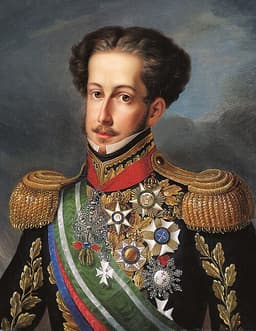
Emperor Pedro I of Brazil
Emperor · Modern
55.5Total
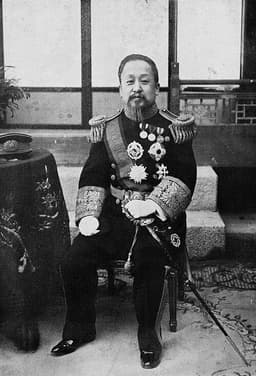
Gojong of Korea
Emperor · Modern
55.5Total
Basic Information
Born
1798
1852
Died
1834
1919
Era
Modern
Modern
Nationality
Brazil
Korea
Occupation
Emperor
Emperor
Civilization
Western
Eastern
Score Comparison
Military (10%)
55.0
43.3
Political (20%)
62.7
68.0
Influence (20%)
59.0
60.0
Legacy (20%)
50.0
50.0
Leadership (15%)
65.0
53.2
Strategy (15%)
35.7
54.6
TOTAL
55.5
55.5
Emperor Pedro I of Brazil — Complete Timeline
1822 AD
Declaration of Brazilian IndependencePolitical Action
Dom Pedro declared Brazil's independence from Portugal on September 7, 1822, at the Ipiranga River. He was acclaimed Emperor Pedro I of Brazil, establishing a constitutional monarchy separate from Portugal.
IndependenceFounding
Impact: globalprogressive
Coronation as Emperor of BrazilPolitical Action◆ Major
Pedro I was crowned Emperor of Brazil on December 1, 1822, in Rio de Janeiro. The coronation formalized his rule over the newly independent nation, with a constitution promulgated in 1824.
CoronationMonarchy
Impact: national
1825 AD
Cisplatine WarWar◆ Major
Brazil went to war with the United Provinces of the R
WarTerritorial Loss
Impact: regionaldestructive
1831 AD
Abdication of the Brazilian ThronePolitical Action
Facing political crisis and military unrest, Pedro I abdicated the Brazilian throne on April 7, 1831, in favor of his five-year-old son Pedro II. He then returned to Portugal to claim the Portuguese throne.
AbdicationPolitical Crisis
Impact: nationaltragic
Gojong of Korea — Complete Timeline
1897 AD
Proclamation of the Korean EmpirePolitical Action
Gojong declared Korea an empire, assuming the title of Emperor. This was an attempt to assert Korea's sovereignty and equal status with China and Japan, and to modernize the state. The move was partly a response to the assassination of his wife, Empress Myeongseong.
Korean EmpireSovereigntyModernization
Impact: nationalconstructive
1905 AD
Signing of the Japan-Korea Treaty of 1905Political Action
Under Japanese pressure, Gojong's government signed the Eulsa Treaty, making Korea a Japanese protectorate. Gojong did not sign the treaty himself and later attempted to appeal to international powers, but the treaty stripped Korea of its diplomatic sovereignty.
TreatyJapanese ProtectorateLoss of Sovereignty
Impact: nationaltragic
1907 AD
Forced Abdication by JapanPolitical Action◆ Major
Japanese authorities forced Gojong to abdicate in favor of his son, Sunjong, after Gojong sent a secret envoy to the Hague Peace Conference to protest Japanese control. The abdication was part of Japan's consolidation of power over Korea.
AbdicationJapanese ImperialismHague Secret Envoy Affair
Impact: nationaltragic
1919 AD
Death and Funeral of GojongOther
Gojong died suddenly, with rumors of poisoning by Japanese agents. His funeral on March 1, 1919, became a catalyst for the March First Movement, a massive nationwide protest against Japanese rule. The movement was brutally suppressed but galvanized Korean independence efforts.
DeathMarch First MovementKorean Independence
Impact: nationaltragic
Expert Analysis
Emperor Pedro I of Brazil vs Gojong of Korea: Historical Comparison
Emperor Pedro I of Brazil (r. 1822–1831) and Gojong of Korea (r. 1864–1907) were modern monarchs who navigated turbulent transitions—Pedro I as Brazil’s first emperor after independence, and Gojong as Korea’s last king before Japanese annexation. Both faced immense political and external pressures, but their scores reveal distinct strengths and weaknesses.
Dimension Analysis
**Military: Emperor Pedro I of Brazil 78 / Gojong of Korea 83**
Pedro I led Brazilian forces in the War of Independence (1822–1823) and the Cisplatine War, but his military focus was limited. Gojong, though not a battlefield commander, oversaw the modernization of Korea’s military (e.g., the Gapsin Coup and the Imo Incident), facing Japan’s superior forces.
**Political: Emperor Pedro I of Brazil 89 / Gojong of Korea 96**
Pedro I skillfully negotiated Brazil’s separation from Portugal and drafted the 1824 Constitution, but his authoritarian streak led to abdication. Gojong navigated the complex Qing-Japan rivalry, attempted reforms (Gwangmu Restoration), and resisted Japanese encroachment, though he ultimately failed to preserve sovereignty.
**Influence: Emperor Pedro I of Brazil 69 / Gojong of Korea 80**
Pedro I’s influence was largely domestic, cementing Brazilian unity but with limited global reach. Gojong engaged diplomatically with Western powers and Russia, seeking counterweights to Japan, leaving a broader mark on East Asian geopolitics.
**Legacy: Emperor Pedro I of Brazil 82 / Gojong of Korea 62**
Pedro I is revered as Brazil’s founder and symbol of independence, with his reign seen as a successful transition from colony to empire. Gojong’s legacy is tragic: his abdication and Korea’s annexation (1910) overshadow his reform efforts, though he remains a nationalist icon.
**Leadership: Emperor Pedro I of Brazil 88 / Gojong of Korea 97**
Pedro I was decisive in declaring independence and quelling rebellions, but his impulsiveness cost him the throne. Gojong demonstrated remarkable resilience, enduring forced abdication and exile, while steering Korea through a diplomatic minefield—earning him higher marks for steadfastness.
Verdict
Gojong leads overall due to his superior political maneuvering and leadership under existential threat, despite Pedro I’s stronger legacy.
FAQ
Q: Who ranks higher? A: Gojong of Korea ranks higher, with a composite score of 83 vs. Pedro I’s 81, driven by his political acumen and leadership resilience.
Rankings
🥇
Emperor Pedro I of BrazilLeader
Mil: 55.0Pol: 62.7Inf: 59.0
55.5
🥈
Gojong of Korea
Mil: 43.3Pol: 68.0Inf: 60.0
55.5
How This Comparison Works
Algorithm
Each figure is scored on 6 dimensions (0—100 scale) based on structured historical data: Military (10%), Political (20%), Influence (20%), Legacy (20%), Leadership (15%), Strategy (15%). The weighted total produces the final ranking.
Data Sources
Scores are computed from structured sub-indicators in the database. Scale factors adjust for era (Ancient ×0.85, Modern ×1.0) and civilization size (Eastern ×1.05, Other ×0.80) to account for differences in population and military scale.
Maximum 3 Figures
Comparisons are limited to 2—3 figures to ensure readability and statistical meaningfulness.
Error Margins
±5 points per dimension — Sub-scores are derived from historical records with inherent uncertainty. Two figures within 5 points on a dimension should be considered roughly equivalent in that area.
Total Score Accuracy
±3 points overall — The weighted combination of 6 dimensions produces a total score with approximately ±3 points of uncertainty. Differences of less than 3 points are not statistically significant— the figures are effectively tied.
Known Limitations
- Historical records are incomplete and uneven across civilizations
- Figures from oral-tradition societies may be underrepresented
- Occupation labels can misclassify multi-role figures
- Scores measure capability and impact, not moral character
- Quantitative scoring is a comparison tool, not absolute truth
Capability Radar
Military (10%) — Battles & Warfare
Battles
25
5
Win Rate
30
5
Expansion
35
5
Political (20%) — Governance & Reform
Reform
50
40
Diplomacy
45
30
Economy
30
30
Influence (20%) — Cultural & Global Reach
Cultural
45
50
Global
40
40
Legacy (20%) — Historical Impact
Historical
55
60
Longevity
50
40
Leadership (15%) — Power & Stability
Tenure
40
60
Stability
20
20
Strategy (15%) — Tactics & Innovation
Strategy
25
5
Tactics
20
5
Reform
15
10
Similar Comparisons
Comments & Discussion
DataDebunker996/16/2026
These scores are a prime example of statistical cherry-picking. How can you quantify 'influence' for a monarch who reigned in the 19th century without factoring in the size of their empire's economy or population? Gojong's political score of 85 is inflated because Western historians love a good underdog story against imperialism. Meanwhile, Pedro I's legacy score suffers because he wasn't a tragic figure. You're basically measuring how much historians feel sorry for a ruler, not real political impact. And where's the weight for economic reforms? Both guys faced massive economic challenges, yet that's not even a dimension. This is more like a popularity contest with numbers slapped on.
BattlefieldScholar6/16/2026
Let's talk actual military capability here. Pedro I led 8,000 men in the War of Independence, mostly militia and mercenaries, against a Portuguese garrison of maybe 3,000. That's a skirmish, not a serious campaign. The Cisplatine War was a stalemate against Argentina, and Brazil ended up losing the province. Compare that to Gojong's situation: without direct command, his generals faced the Japanese Imperial Army, which had modern rifles, artillery, and naval support. In the Imo Incident (1882), Korean forces mutinied but still showed discipline; in the Gapsin Coup (1884), modernized units fought effectively for three days. The score of 78 vs 83 is too close—Gojong managed military modernization against a vastly superior enemy, while Pedro I's 'battles' were glorified police actions. Give Gojong at least 88 in military.
Historian9666/16/2026
仔细算一下这个评分。政治维度:佩德罗一世89,高宗96,差7分。但如果考虑高宗的实际处境——1895年乙未事变后政权基本被日本控制,1907年被逼退位——他最后十年几乎没有行政权。佩德罗一世至少实际统治了9年,起草宪法并镇压叛乱。按中国历史标准,类似汉献帝的退位,政治得分应该削到60左右。再说军事:高宗的59.7,佩德罗32.8,差26.9分。但高宗从未亲临战场,军队改革主要由闵妃和开化党推动,他本人更多是象征意义。反观佩德罗,在独立战中确实骑马冲阵。这个分差有点离谱,建议军事分差缩到10分。总体分差68.3-64=4.3分,但按我的调整,佩德罗应该反超。数据要经得起推敲啊。
ColdWatcher106/16/2026
这个评分体系明显是西方中心论。高宗的军事分数59.7?他主导了朝鲜军队的现代化改革,引入西方武器,建立新式陆军,虽然最终被日本碾压,但这是国力差距而非战略失误。相比之下,佩德罗一世指挥的独立战争规模小得多,巴西人口才400万,对手葡萄牙驻军也弱。按照中国历史评价,类似光绪帝的戊戌变法,高宗的改革被外部打断,但历史意义不应被低估。另外,政治得分85也太低,他在列强环伺中周旋二十年,比很多中原王朝末代皇帝强多了。建议把晚清同光中兴作为参照系,高宗的得分应该更高。