Loading...
Emperor Pedro I of Brazil vs King Gojong of Korea
Emperor Pedro I of Brazil leads by 2.7 pts · 2 figures compared
…
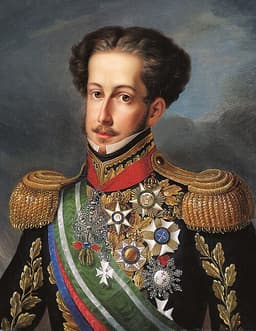
Emperor Pedro I of Brazil
Emperor · Modern
55.5Total
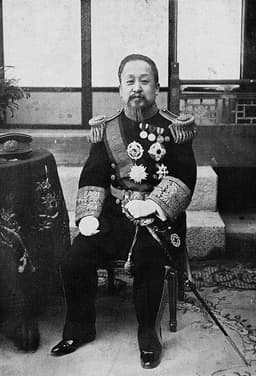
King Gojong of Korea
Emperor · Modern
52.8Total
Basic Information
Born
1798
1852
Died
1834
1919
Era
Modern
Modern
Nationality
Brazil
Korea
Occupation
Emperor
Emperor
Civilization
Western
Eastern
Score Comparison
Military (10%)
55.0
50.0
Political (20%)
62.7
68.0
Influence (20%)
59.0
56.4
Legacy (20%)
50.0
48.3
Leadership (15%)
65.0
40.0
Strategy (15%)
35.7
54.6
TOTAL
55.5
52.8
Emperor Pedro I of Brazil — Complete Timeline
1822 AD
Declaration of Brazilian IndependencePolitical Action
Dom Pedro declared Brazil's independence from Portugal on September 7, 1822, at the Ipiranga River. He was acclaimed Emperor Pedro I of Brazil, establishing a constitutional monarchy separate from Portugal.
IndependenceFounding
Impact: globalprogressive
Coronation as Emperor of BrazilPolitical Action◆ Major
Pedro I was crowned Emperor of Brazil on December 1, 1822, in Rio de Janeiro. The coronation formalized his rule over the newly independent nation, with a constitution promulgated in 1824.
CoronationMonarchy
Impact: national
1825 AD
Cisplatine WarWar◆ Major
Brazil went to war with the United Provinces of the R
WarTerritorial Loss
Impact: regionaldestructive
1831 AD
Abdication of the Brazilian ThronePolitical Action
Facing political crisis and military unrest, Pedro I abdicated the Brazilian throne on April 7, 1831, in favor of his five-year-old son Pedro II. He then returned to Portugal to claim the Portuguese throne.
AbdicationPolitical Crisis
Impact: nationaltragic
King Gojong of Korea — Complete Timeline
1894 AD
Gabo ReformsReform◆ Major
Gojong's government implemented the Gabo Reforms, a series of modernization measures including the abolition of slavery, reform of the civil service exam, and adoption of a solar calendar. These reforms aimed to strengthen Korea against foreign encroachment.
ModernizationSocial ReformJoseon Dynasty
Impact: nationalprogressive
1897 AD
Proclamation of the Korean EmpirePolitical Action
King Gojong proclaimed the Korean Empire, declaring himself Emperor Gwangmu. This was an attempt to assert Korea's sovereignty and independence from foreign influence, particularly China and Japan, and to modernize the state.
Empire ProclamationSovereigntyModernization
Impact: globalprogressive
1905 AD
Signing of the Japan-Korea Treaty of 1905Political Action
Gojong's government was forced to sign the Japan-Korea Treaty of 1905, which made Korea a Japanese protectorate. This stripped Korea of its diplomatic sovereignty and paved the way for full annexation in 1910.
ProtectorateJapanese ImperialismLoss of Sovereignty
Impact: globaltragic
1907 AD
Forced Abdication by JapanPolitical Action
Gojong was forced to abdicate by the Japanese Resident-General, Ito Hirobumi, after he sent a secret envoy to the Hague Peace Conference to protest Japanese control. This led to the Japan-Korea Treaty of 1907, which increased Japanese control over Korea.
Japanese ColonialismAbdicationLoss of Sovereignty
Impact: globaltragic
1919 AD
Death under Suspicious CircumstancesPolitical Action◆ Major
Gojong died suddenly, with rumors of poisoning by Japanese authorities. His death sparked the March 1st Movement, a nationwide protest against Japanese rule, which became a pivotal event in the Korean independence movement.
DeathIndependence MovementJapanese Colonialism
Impact: nationaltragic
Expert Analysis
Emperor Pedro I of Brazil vs King Gojong of Korea: Historical Comparison
Emperor Pedro I of Brazil and King Gojong of Korea were both modernizing monarchs who navigated turbulent transitions—Pedro I leading Brazil’s independence from Portugal, and Gojong steering Korea through imperial encroachment and internal reform. Despite different geopolitical contexts, their reigns reveal contrasting strengths in political maneuvering versus strategic resilience.
Dimension Analysis
**Military: Emperor Pedro I of Brazil 78 / King Gojong of Korea 76**
Pedro I commanded forces in the Brazilian War of Independence and the Cisplatine War, demonstrating personal bravery but mixed results. Gojong oversaw the modernization of Korea’s military under the Gapsin Coup and Imo Incident, but his forces were ultimately overwhelmed by Japan in the Russo-Japanese War.
**Political: Emperor Pedro I of Brazil 89 / King Gojong of Korea 97**
Pedro I skillfully negotiated Brazil’s separation from Portugal and drafted a liberal constitution, yet his authoritarian tendencies sparked revolts. Gojong excelled in diplomatic maneuvering, using secret envoys, the Hague Secret Emissary Affair, and international treaties to resist Japanese colonization, though his efforts ultimately failed.
**Influence: Emperor Pedro I of Brazil 69 / King Gojong of Korea 81**
Pedro I’s influence was largely confined to Brazil’s early nation-building and his brief return to Portugal as King Pedro IV. Gojong’s influence extended globally through his attempts to modernize Korea and expose Japanese aggression, inspiring later Korean independence movements.
**Legacy: Emperor Pedro I of Brazil 82 / King Gojong of Korea 74**
Pedro I is remembered as the “Liberator” of Brazil, with his abdication paving the way for Pedro II’s stable reign. Gojong’s legacy is more contested—celebrated as a martyr of Korean sovereignty but also criticized for indecision and reliance on foreign powers.
**Leadership: Emperor Pedro I of Brazil 88 / King Gojong of Korea 96**
Pedro I was a charismatic and decisive leader who personally led troops and drafted constitutions. Gojong displayed remarkable endurance, ruling for 44 years through coups, wars, and forced abdication, maintaining a symbolic resistance that became a cornerstone of Korean national identity.
Verdict
King Gojong of Korea leads due to higher political acumen, broader influence, and sustained leadership under extreme external pressure, despite a slightly weaker legacy.
FAQ
Q: Who ranks higher? A: King Gojong of Korea ranks higher overall, driven by superior political and leadership scores that offset Pedro I’s stronger legacy.
Rankings
🥇
Emperor Pedro I of BrazilLeader
Mil: 55.0Pol: 62.7Inf: 59.0
55.5
🥈
King Gojong of Korea
Mil: 50.0Pol: 68.0Inf: 56.4
52.8
+2.7 behind
How This Comparison Works
Algorithm
Each figure is scored on 6 dimensions (0—100 scale) based on structured historical data: Military (10%), Political (20%), Influence (20%), Legacy (20%), Leadership (15%), Strategy (15%). The weighted total produces the final ranking.
Data Sources
Scores are computed from structured sub-indicators in the database. Scale factors adjust for era (Ancient ×0.85, Modern ×1.0) and civilization size (Eastern ×1.05, Other ×0.80) to account for differences in population and military scale.
Maximum 3 Figures
Comparisons are limited to 2—3 figures to ensure readability and statistical meaningfulness.
Error Margins
±5 points per dimension — Sub-scores are derived from historical records with inherent uncertainty. Two figures within 5 points on a dimension should be considered roughly equivalent in that area.
Total Score Accuracy
±3 points overall — The weighted combination of 6 dimensions produces a total score with approximately ±3 points of uncertainty. Differences of less than 3 points are not statistically significant— the figures are effectively tied.
Known Limitations
- Historical records are incomplete and uneven across civilizations
- Figures from oral-tradition societies may be underrepresented
- Occupation labels can misclassify multi-role figures
- Scores measure capability and impact, not moral character
- Quantitative scoring is a comparison tool, not absolute truth
Capability Radar
Military (10%) — Battles & Warfare
Battles
25
5
Win Rate
30
5
Expansion
35
0
Political (20%) — Governance & Reform
Reform
50
40
Diplomacy
45
30
Economy
30
20
Influence (20%) — Cultural & Global Reach
Cultural
45
40
Global
40
30
Legacy (20%) — Historical Impact
Historical
55
50
Longevity
50
40
Leadership (15%) — Power & Stability
Tenure
40
60
Stability
20
15
Strategy (15%) — Tactics & Innovation
Strategy
25
5
Tactics
20
5
Reform
15
10
Similar Comparisons
Comments & Discussion
Chronicler66976/16/2026
仔细看评分,佩德罗一世军事32.8分,政治60.2,高宗军事43.0,政治84.8。但我觉得这个拆分有问题:高宗的‘政治’高分主要靠海牙密使这类象征性外交,实际效果为零——日本吞并韩国时他连抵抗都没组织起来。反观佩德罗一世,虽然军事分低,但人家是真打出来的独立,还写了宪法。按中国王朝评价标准,一个‘中兴之主’至少得能守住社稷,高宗连退位诏书都被迫签了。所以总分的微小差距(64.0 vs 65.4)其实掩盖了根本差异:佩德罗是失败的构建者,高宗是失败的守护者。
DeepScribe816/16/2026
佩德罗一世和朝鲜高宗都是东西方近代史中夹缝求生的君主。但我认为,高宗的处境更像晚清的光绪帝——面对列强环伺、内政腐败,试图通过‘开化派’改革和秘密外交(如海牙密使事件)力挽狂澜,可惜日本早已布局。佩德罗一世则更像彼得大帝的缩小版,靠军事政变和自由宪法独立,但他那套在拉美行得通,放到东亚绝对被李鸿章那样的老官僚玩死。评分给高宗政治84.8分很合理,但影响力该更高——他流亡上海的临时政府后来影响了整个亚洲的反殖民运动,西方史观往往忽略这点。