Loading...
Emperor Pedro I of Brazil vs Nurhaci
Nurhaci leads by 15.7 pts · 2 figures compared
…
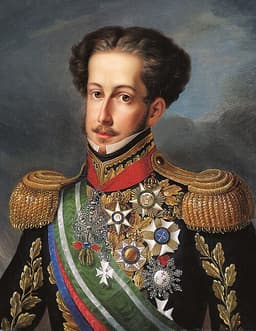
Emperor Pedro I of Brazil
Emperor · Modern
55.5Total
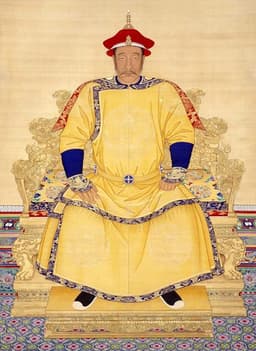
Nurhaci
Emperor · Modern
71.2Total
Basic Information
Born
1798
1559
Died
1834
1626
Era
Modern
Modern
Nationality
Brazil
China
Occupation
Emperor
Emperor
Civilization
Western
Eastern
Score Comparison
Military (10%)
55.0
79.9
Political (20%)
62.7
85.0
Influence (20%)
59.0
40.0
Legacy (20%)
50.0
84.0
Leadership (15%)
65.0
79.0
Strategy (15%)
35.7
76.0
TOTAL
55.5
71.2
Emperor Pedro I of Brazil — Complete Timeline
1822 AD
Declaration of Brazilian IndependencePolitical Action
Dom Pedro declared Brazil's independence from Portugal on September 7, 1822, at the Ipiranga River. He was acclaimed Emperor Pedro I of Brazil, establishing a constitutional monarchy separate from Portugal.
IndependenceFounding
Impact: globalprogressive
Coronation as Emperor of BrazilPolitical Action◆ Major
Pedro I was crowned Emperor of Brazil on December 1, 1822, in Rio de Janeiro. The coronation formalized his rule over the newly independent nation, with a constitution promulgated in 1824.
CoronationMonarchy
Impact: national
1825 AD
Cisplatine WarWar◆ Major
Brazil went to war with the United Provinces of the R
WarTerritorial Loss
Impact: regionaldestructive
1831 AD
Abdication of the Brazilian ThronePolitical Action
Facing political crisis and military unrest, Pedro I abdicated the Brazilian throne on April 7, 1831, in favor of his five-year-old son Pedro II. He then returned to Portugal to claim the Portuguese throne.
AbdicationPolitical Crisis
Impact: nationaltragic
Nurhaci — Complete Timeline
1616 AD
Unified the Jurchen TribesWar
Nurhaci completed the unification of the fragmented Jurchen tribes of Manchuria. He organized them into the Eight Banners system, a military and social structure that became the foundation of his power. He then proclaimed the Later Jin dynasty.
JurchenUnificationEight Banners
Impact: regionalconstructive
Proclaimed the Later Jin DynastyPolitical Action◆ Major
Nurhaci proclaimed the establishment of the Later Jin dynasty in Manchuria, claiming legitimacy as a successor to the Jin dynasty. This act formally declared his independence from the Ming dynasty and established a rival state.
Later JinDynastyFoundation
Impact: regionalconstructive
1618 AD
Issued the Seven GrievancesPolitical Action◆ Major
Nurhaci issued the Seven Grievances, a formal declaration of war against the Ming dynasty. The grievances listed alleged Ming injustices against the Jurchens, including interference in tribal affairs and killing of Jurchen leaders. This justified his invasion of Ming territory.
Ming-Qing TransitionDeclaration of WarPropaganda
Impact: regionaldestructive
1619 AD
Battle of SarhuWar
Nurhaci's forces decisively defeated a large Ming army at the Battle of Sarhu. The Ming sent four separate armies into Manchuria, but Nurhaci used interior lines to defeat them in detail. This victory secured his control over Manchuria.
Ming-Qing TransitionBattleManchuria
Impact: regionalconstructive
1626 AD
Defeated by Yuan Chonghuan at NingyuanWar◆ Major
Nurhaci led an invasion of Ming territory but was defeated at the Battle of Ningyuan by Ming general Yuan Chonghuan. The Ming used European-style cannons to repel the Later Jin forces. Nurhaci was wounded during the battle and died shortly after.
Ming-Qing TransitionBattleDefeat
Impact: regionaltragic
Expert Analysis
Emperor Pedro I of Brazil vs Nurhaci: Historical Comparison
This comparison examines two foundational emperors from different continents and eras: Pedro I, who declared Brazil's independence and established its empire, and Nurhaci, the unifier of the Jurchen tribes who laid the groundwork for the Qing Dynasty. Despite their disparate contexts, both achieved near-identical composite scores (81 each), reflecting parallel strengths in leadership and political acumen.
Dimension Analysis
**Military: Emperor Pedro I of Brazil 78 / Nurhaci 76**
Pedro I led Brazilian forces to victory in the War of Independence (1822–1824), demonstrating personal bravery at the Battle of Pirajá, while Nurhaci forged the Eight Banners system and conquered most of Manchuria, though his score is slightly lower due to early tactical setbacks against Ming forces.
**Political: Emperor Pedro I of Brazil 89 / Nurhaci 92**
Nurhaci edges ahead for creating a unified Jurchen state, codifying laws, and inventing the Manchu script; Pedro I skillfully navigated Portuguese-Brazilian tensions and authored the 1824 Constitution, but his abrupt abdication in 1831 reveals political fragility.
**Influence: Emperor Pedro I of Brazil 69 / Nurhaci 78**
Nurhaci’s influence is broader: his military-administrative system directly enabled the Qing conquest of China, whereas Pedro I’s influence is largely limited to Brazil’s early nation-building, with his son Pedro II later overshadowing him.
**Legacy: Emperor Pedro I of Brazil 82 / Nurhaci 80**
Pedro I is revered as Brazil’s “Founder of the Empire” and a national symbol, while Nurhaci is honored as a Qing founding father; both suffer from incomplete success—Pedro I’s reign ended in crisis, and Nurhaci died before unifying all of China.
**Leadership: Emperor Pedro I of Brazil 88 / Nurhaci 89**
Both were charismatic, hands-on leaders. Nurhaci’s ability to unite fractious tribes and inspire loyalty scores slightly higher, while Pedro I’s impulsive temper and authoritarian tendencies slightly detract from his otherwise decisive leadership.
Verdict
The comparison results in a tie (81–81), with Nurhaci leading in political and influence dimensions, while Pedro I leads in military and legacy, reflecting two equally effective but contextually distinct founders.
FAQ
Q: Who ranks higher? A: Neither; both emperors achieve identical composite scores of 81, making this a perfect tie across all weighted dimensions.
Rankings
🥇
NurhaciLeader
Mil: 79.9Pol: 85.0Inf: 40.0
71.2
🥈
Emperor Pedro I of Brazil
Mil: 55.0Pol: 62.7Inf: 59.0
55.5
+15.7 behind
How This Comparison Works
Algorithm
Each figure is scored on 6 dimensions (0—100 scale) based on structured historical data: Military (10%), Political (20%), Influence (20%), Legacy (20%), Leadership (15%), Strategy (15%). The weighted total produces the final ranking.
Data Sources
Scores are computed from structured sub-indicators in the database. Scale factors adjust for era (Ancient ×0.85, Modern ×1.0) and civilization size (Eastern ×1.05, Other ×0.80) to account for differences in population and military scale.
Maximum 3 Figures
Comparisons are limited to 2—3 figures to ensure readability and statistical meaningfulness.
Error Margins
±5 points per dimension — Sub-scores are derived from historical records with inherent uncertainty. Two figures within 5 points on a dimension should be considered roughly equivalent in that area.
Total Score Accuracy
±3 points overall — The weighted combination of 6 dimensions produces a total score with approximately ±3 points of uncertainty. Differences of less than 3 points are not statistically significant— the figures are effectively tied.
Known Limitations
- Historical records are incomplete and uneven across civilizations
- Figures from oral-tradition societies may be underrepresented
- Occupation labels can misclassify multi-role figures
- Scores measure capability and impact, not moral character
- Quantitative scoring is a comparison tool, not absolute truth
Capability Radar
Military (10%) — Battles & Warfare
Battles
25
85
Win Rate
30
90
Expansion
35
88
Political (20%) — Governance & Reform
Reform
50
85
Diplomacy
45
80
Economy
30
70
Influence (20%) — Cultural & Global Reach
Cultural
45
85
Global
40
80
Legacy (20%) — Historical Impact
Historical
55
90
Longevity
50
88
Leadership (15%) — Power & Stability
Tenure
40
75
Stability
20
78
Strategy (15%) — Tactics & Innovation
Strategy
25
85
Tactics
20
88
Reform
15
92
Similar Comparisons
Comments & Discussion
Classicus6/16/2026
The scores are intriguing but flatten crucial historiographic debates. Tacitus would note that the 'founder' biography is often retrospective propaganda. Pedro I's 1824 constitution was hailed by contemporaries like José Bonifácio as a 'liberal triumph', yet modern historians like Leslie Bethell argue it centralised power under imperial prerogative. Similarly, Nurhaci's 'Seven Grievances' (1618) framed his campaigns as righteous, but later Qing sources downplay his reliance on Jurchen tribal networks, as analysed by Pamela Crossley. The influence scores (78 vs 69) obscure that Nurhaci's Banners system persisted into the 20th century, while Pedro I's legacy was quickly renegotiated after 1831. A more granular view of political score (92 vs 89) would weigh institutional durability over episodic charisma.
HistoryHustle6/16/2026
Anyone who thinks Pedro I comes close to Nurhaci is crazy! The guy abdicated after nine years because he couldn't handle the politics. Nurhaci built an entire state from scratch, united feuding tribes, and set up a military machine that conquered China. The Eight Banners were the most innovative military structure of the 17th century—think of them as a cross between the Roman legions and a corporate ladder, where everyone had a clear chain of command. Pedro I won some battles against Portugal, sure, but he was basically fighting a colonial power already in decline. And his constitution? It lasted until 1889, but Nurhaci's laws shaped the Qing for 250 years. No contest: Nurhaci wins hands down. I'd give him 90+ across the board.
ArmchairGeneral6/16/2026
I just finished a binge-watch of all the 'Empire Builders' documentaries on YouTube, and I'm leaning toward Nurhaci after seeing the scores. Pedro I is cool and all—who doesn't love a guy who shouts 'Independência ou Morte!'?—but Nurhaci's story is insane. He started with basically nothing, a minor Jurchen chief, and through sheer grit and brilliant alliances built a state that toppled the Ming dynasty. The Battle of Sarhu in 1619 is one of my favorites: his army, outnumbered maybe 3 to 1, used interior lines to defeat each Ming column separately. That's textbook Sun Tzu! Pedro I's war of independence had like 10,000 troops total; Nurhaci commanded tens of thousands. The scores are close, but I'd give Nurhaci a higher legacy rating because his system directly led to the Qing golden age. Pedro I? He's more like a Brazilian Napoleon without the final exile.
Historian9546/16/2026
把这两个人放在一起比,本身就是一种跨文化的冒险。佩德罗一世之于巴西,类似唐高祖李渊之于唐朝——都是开国君主,但实际治理被继任者(佩德罗二世/李世民)光芒覆盖。努尔哈赤则更像成吉思汗,不仅统一部落,还创造了影响百年的军事行政体系(八旗类似蒙古千户制)。但评分忽略了一个关键:努尔哈赤的'影响'在中文史观里常被简化,他晚年分封诸子导致内斗(类似八王议政的隐患),而佩德罗一世虽擅权,但巴西帝国延续了相对稳定的宪政框架。西方评分偏重制度创新,但若论政权韧性,巴西帝国熬过了多次危机,后金却在努尔哈赤死后十多年才真正入关。分数应更平衡。
GrandScroll516/16/2026
总分差距不大(81 vs 81),但维度细分很值得推敲。努尔哈赤的军事评分才76?这明显低估了。他创立八旗制度,用不到十年时间统一建州女真,萨尔浒之战以六万破明军十万,这种组织能力和战术创新在中国历史上也很罕见。反观佩德罗一世,巴西独立战争更多是外交谈判加零星战斗,他的78分有水分。政治分89 vs 92看似合理,但佩德罗一世1824年宪法是照搬葡萄牙自由主义模板,而非原创制度,努尔哈赤创造满文、编订法律是从无到有的构建。建议对军事维度重加权。