Loading...
Emperor Saga vs Sejo of Joseon
Emperor Saga leads by 2.6 pts · 2 figures compared
…
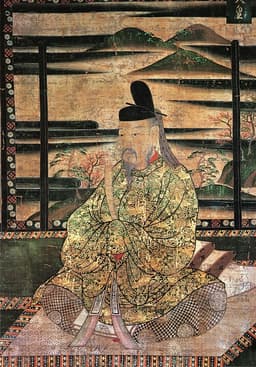
Emperor Saga
Emperor · Medieval
58.2Total
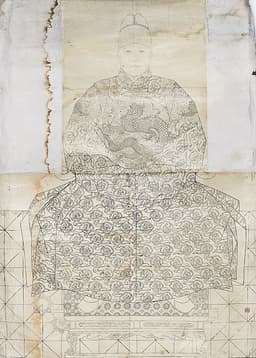
Sejo of Joseon
Emperor · Medieval
55.6Total
Basic Information
Born
786
1417
Died
842
1468
Era
Medieval
Medieval
Nationality
Japan
Korea
Occupation
Emperor
Emperor
Civilization
Eastern
Eastern
Score Comparison
Military (10%)
52.4
38.3
Political (20%)
68.0
68.0
Influence (20%)
58.3
55.7
Legacy (20%)
54.0
48.3
Leadership (15%)
53.2
64.0
Strategy (15%)
67.5
60.0
TOTAL
58.2
55.6
Emperor Saga — Complete Timeline
810 AD
Establishment of the Kurodo-dokoroReform◆ Major
Emperor Saga established the Kurodo-dokoro (Chamberlains' Office), a new administrative body that handled imperial documents and communications. This office bypassed the traditional bureaucracy and increased the emperor's direct control over government affairs.
Kurodo-dokoroAdministrationImperial Power
Impact: nationalconstructive
Promotion of Chinese Culture and CalligraphyCultural◆ Major
Emperor Saga was a noted patron of Chinese Tang dynasty culture, particularly calligraphy. He studied under the master Kukai and developed the Japanese style of calligraphy. His patronage helped establish calligraphy as a respected art form in the Japanese court.
CalligraphyChinese CultureArt
Impact: nationalconstructive
815 AD
Compilation of the Kojiki and Nihon Shoki CommentariesCultural
Emperor Saga ordered the compilation of the 'Shoku Nihongi', a continuation of the official history. He also sponsored commentaries on the Kojiki and Nihon Shoki, promoting the study of Japanese mythology and history in a Chinese scholarly framework.
HistoriographyShoku NihongiScholarship
Impact: nationalconstructive
Sejo of Joseon — Complete Timeline
1455 AD
Coup d'état against DanjongPolitical Action
Grand Prince Suyang (later Sejo) staged a coup, forcing his nephew King Danjong to abdicate. Sejo assumed the throne, initiating a reign marked by consolidation of power and elimination of rivals.
CoupUsurpationJoseon Dynasty
Impact: nationaldestructive
1456 AD
Execution of the Six Loyalist MinistersPolitical Action◆ Major
Sejo discovered a plot by six loyalist ministers to restore Danjong. He had them executed, along with their families, in a brutal purge that eliminated opposition to his rule.
PurgeLoyalistsJoseon Dynasty
Impact: nationaldestructive
1457 AD
Murder of DanjongPolitical Action◆ Major
Sejo ordered the murder of his deposed nephew Danjong, who was then 16. This act removed the last legitimate claimant to the throne and secured Sejo's dynasty.
AssassinationJoseon DynastyUsurpation
Impact: nationaldestructive
1460 AD
Military campaigns against the JurchensWar
Sejo led military campaigns against Jurchen tribes in the northern border regions. These campaigns secured Joseon's northern frontier and expanded territory.
Military CampaignBorder ConflictJoseon Dynasty
Impact: regional
Compilation of the Gyeongguk DaejeonReform◆ Major
Sejo initiated the compilation of the Gyeongguk Daejeon, a comprehensive legal code that would later be completed under Seongjong. This code systematized Joseon's government and laws.
Legal CodeReformJoseon Dynasty
Impact: nationalconstructive
Expert Analysis
Origins
Emperor Saga (786-842) was the second son of Emperor Kanmu, born into the imperial family of Heian-period Japan. He received a classical Chinese education and developed a deep appreciation for Tang dynasty culture, studying calligraphy under the master Kukai. His early life was shaped by the court's growing sinophilia and the consolidation of imperial power after the capital moved to Heian-kyo.
Sejo of Joseon (1417-1468) was born as Grand Prince Suyang, the second son of King Sejong the Great. Unlike Saga, he grew up in a Confucian court that emphasized military and administrative training. His father's reign was a golden age, but Sejo was overshadowed by his older brother Munjong and later his young nephew Danjong. His early experiences fostered ambition and a pragmatic ruthlessness.
Rise to Power
Emperor Saga ascended the throne in 809 after his brother Emperor Heizei abdicated due to illness. His rise was smooth, as he was the designated heir. Once emperor, he quickly consolidated power by establishing the Kurodo-dokoro (Chamberlains' Office) in 810, a new administrative body that bypassed traditional ministries and handled imperial documents directly. This move centralized authority and reduced the influence of the Fujiwara regents.
Sejo's rise was violent and calculated. In 1453, he orchestrated a coup against his nephew King Danjong, who had succeeded his father Munjong a year earlier. Sejo forced Danjong to abdicate, exiled him, and assumed the throne. He then purged opposition, most famously executing the 'Six Loyalist Ministers' who plotted to restore Danjong. In 1457, he ordered Danjong's murder, eliminating all legitimate claims. Sejo scored 38.3 in military and 60.0 in strategy, reflecting his effective but brutal power seizure.
Leadership & Governance
Emperor Saga ruled as a cultural patron and administrative reformer. He promoted Chinese poetry, calligraphy, and music, sponsoring the copying of Buddhist sutras and Chinese classics. His establishment of the Kurodo-dokoro was a lasting institutional reform that increased imperial efficiency. However, his reign was not marked by major military or territorial expansion; his military score is 52.4, indicating a focus on internal affairs.
Sejo governed with a firm hand. He initiated the compilation of the Gyeongguk Daejeon, a comprehensive legal code that systematized Joseon's laws and administration. He also led campaigns against Jurchen tribes in the north, securing borders and expanding territory. His leadership score of 64.0 reflects his decisive, often harsh rule. He centralized power, weakened the aristocracy, and strengthened the monarchy. However, his methods were tyrannical, earning him a legacy of controversy.
Triumph & Tragedy
Emperor Saga's greatest triumph was his patronage of culture, particularly calligraphy, which influenced Japanese aesthetics for centuries. His administrative innovation, the Kurodo-dokoro, remained a key institution. His tragedy was that his cultural contributions were overshadowed by later developments; his reign was stable but not transformative. He scored 54.0 in legacy.
Sejo's triumph was the Gyeongguk Daejeon, which became the foundation of Joseon law for 500 years. His military campaigns secured the northern frontier. His tragedy was his moral failure: usurping and murdering his nephew, which stained his reputation. He scored 48.3 in legacy, reflecting the mixed judgment of history.
Character & Destiny
Emperor Saga was a scholar and aesthete, more interested in art than power. His character fit the Heian ideal of a cultured aristocrat. His destiny was to be a peaceful, reform-minded ruler whose impact was cultural rather than political.
Sejo was ambitious, ruthless, and pragmatic. He believed that the ends justified the means, as seen in his coup and purges. His character drove him to seize power and rule forcefully, but it also led to his negative historical assessment. His fate was to be remembered as a usurper despite his administrative achievements.
Legacy
Emperor Saga's legacy lies in Japanese culture: he promoted calligraphy as an art form and his Kurodo-dokoro influenced court administration. He is remembered as a cultural hero, with a legacy score of 54.0.
Sejo's legacy is the Gyeongguk Daejeon, which shaped Joseon governance. However, his brutal methods overshadow his achievements. He scored 48.3 in legacy, lower than Saga. Both had political scores of 68.0, but Sejo's higher leadership (64.0 vs 53.2) did not translate into a better legacy due to his moral failures.
Conclusion
Emperor Saga had a greater overall impact than Sejo of Joseon, as reflected in his higher total score (58.2 vs 55.6) and legacy score (54.0 vs 48.3). While Sejo's administrative reforms were significant, Saga's cultural patronage and institutional innovation left a more positive and enduring mark. Sejo's brutality and usurpation tarnished his achievements, making Saga the more effective and admirable ruler. In the long view, cultural influence often outlasts political power.
Rankings
🥇
Emperor SagaLeader
Mil: 52.4Pol: 68.0Inf: 58.3
58.2
🥈
Sejo of Joseon
Mil: 38.3Pol: 68.0Inf: 55.7
55.6
+2.6 behind
How This Comparison Works
Algorithm
Each figure is scored on 6 dimensions (0—100 scale) based on structured historical data: Military (10%), Political (20%), Influence (20%), Legacy (20%), Leadership (15%), Strategy (15%). The weighted total produces the final ranking.
Data Sources
Scores are computed from structured sub-indicators in the database. Scale factors adjust for era (Ancient ×0.85, Modern ×1.0) and civilization size (Eastern ×1.05, Other ×0.80) to account for differences in population and military scale.
Maximum 3 Figures
Comparisons are limited to 2—3 figures to ensure readability and statistical meaningfulness.
Error Margins
±5 points per dimension — Sub-scores are derived from historical records with inherent uncertainty. Two figures within 5 points on a dimension should be considered roughly equivalent in that area.
Total Score Accuracy
±3 points overall — The weighted combination of 6 dimensions produces a total score with approximately ±3 points of uncertainty. Differences of less than 3 points are not statistically significant— the figures are effectively tied.
Known Limitations
- Historical records are incomplete and uneven across civilizations
- Figures from oral-tradition societies may be underrepresented
- Occupation labels can misclassify multi-role figures
- Scores measure capability and impact, not moral character
- Quantitative scoring is a comparison tool, not absolute truth
Capability Radar
Military (10%) — Battles & Warfare
Battles
47
30
Win Rate
46
40
Expansion
53
30
Political (20%) — Governance & Reform
Reform
55
60
Diplomacy
50
50
Economy
50
55
Influence (20%) — Cultural & Global Reach
Cultural
60
45
Global
30
30
Legacy (20%) — Historical Impact
Historical
55
50
Longevity
50
40
Leadership (15%) — Power & Stability
Tenure
60
55
Stability
60
40
Strategy (15%) — Tactics & Innovation
Strategy
57
40
Tactics
60
35
Reform
57
45
Similar Comparisons
Comments & Discussion
No comments yet. Be the first to share your thoughts!