Loading...
Emperor Saga vs Sukjong of Goryeo
Emperor Saga leads by 8.0 pts · 2 figures compared
…
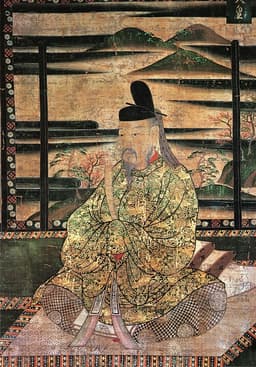
Emperor Saga
Emperor · Medieval
58.2Total

Sukjong of Goryeo
Emperor · Medieval
50.2Total
Basic Information
Born
786
1054
Died
842
1105
Era
Medieval
Medieval
Nationality
Japan
Korea
Occupation
Emperor
Emperor
Civilization
Eastern
Eastern
Score Comparison
Military (10%)
52.4
21.2
Political (20%)
68.0
68.0
Influence (20%)
58.3
54.9
Legacy (20%)
54.0
45.8
Leadership (15%)
53.2
68.0
Strategy (15%)
67.5
25.0
TOTAL
58.2
50.2
Emperor Saga — Complete Timeline
810 AD
Establishment of the Kurodo-dokoroReform◆ Major
Emperor Saga established the Kurodo-dokoro (Chamberlains' Office), a new administrative body that handled imperial documents and communications. This office bypassed the traditional bureaucracy and increased the emperor's direct control over government affairs.
Kurodo-dokoroAdministrationImperial Power
Impact: nationalconstructive
Promotion of Chinese Culture and CalligraphyCultural◆ Major
Emperor Saga was a noted patron of Chinese Tang dynasty culture, particularly calligraphy. He studied under the master Kukai and developed the Japanese style of calligraphy. His patronage helped establish calligraphy as a respected art form in the Japanese court.
CalligraphyChinese CultureArt
Impact: nationalconstructive
815 AD
Compilation of the Kojiki and Nihon Shoki CommentariesCultural
Emperor Saga ordered the compilation of the 'Shoku Nihongi', a continuation of the official history. He also sponsored commentaries on the Kojiki and Nihon Shoki, promoting the study of Japanese mythology and history in a Chinese scholarly framework.
HistoriographyShoku NihongiScholarship
Impact: nationalconstructive
Sukjong of Goryeo — Complete Timeline
1102 AD
Introduction of bronze coinageReform◆ Major
King Sukjong ordered the minting and circulation of bronze coins, known as 'haedong tongbo', to replace barter and cloth currency. This reform aimed to standardize trade and strengthen the Goryeo economy, though adoption was slow and limited to certain regions.
Economic ReformCurrencyGoryeo
Impact: nationalconstructive
1104 AD
Construction of the Namgyeong (Southern Capital)Political Action
Sukjong initiated the construction of a new secondary capital at Namgyeong (modern Seoul) to strengthen royal authority and counterbalance the influence of the Kaesong aristocracy. The project included palaces and defensive walls, but was not completed during his reign.
Urban PlanningCapitalGoryeo
Impact: nationalconstructive
1105 AD
Suppression of the Yi Ja-gyeom rebellionWar◆ Major
Sukjong faced a rebellion led by the powerful aristocrat Yi Ja-gyeom, who opposed the king's centralizing reforms. The rebellion was suppressed, but Sukjong died shortly after, leaving the conflict unresolved.
RebellionAristocracyGoryeo
Impact: nationaldestructive
Expert Analysis
Origins
Emperor Saga (786–842) was the 52nd emperor of Japan, born to Emperor Kanmu and a consort from the powerful Fujiwara clan. His early education emphasized Chinese classics and calligraphy, studying under the renowned monk Kukai. Saga's exposure to Tang dynasty culture profoundly shaped his aesthetic sensibilities.
Sukjong of Goryeo (1054–1105) was the 15th monarch of Goryeo, born to King Munjong and Queen Inye. He grew up amidst aristocratic factionalism and inherited a kingdom reliant on barter. His early reign focused on consolidating power against the influential Yi clan.
Rise to Power
Saga ascended the throne in 809 after his father's death, amid succession disputes. He skillfully navigated court politics, appointing loyalists and reducing the influence of Buddhist monasteries. His establishment of the Kurodo-dokoro in 810 centralized imperial communications, bypassing traditional ministerial channels.
Sukjong became king in 1095 after the death of his brother King Heonjong. He immediately faced opposition from the aristocracy, who resisted centralization. The 1096 rebellion led by Yi Ja-gyeom forced Sukjong to flee the capital; he regained control with loyal forces and suppressed the revolt in 1097, executing Yi.
Leadership & Governance
Saga's governance emphasized cultural patronage and administrative efficiency. He promoted Chinese-style reforms, including the adoption of Tang legal codes and the compilation of the 'Shoku Nihongi' (a historical chronicle). His Kurodo-dokoro became a model for later imperial secretariats. Saga scored 68.0 in political skill, reflecting his ability to maintain stability.
Sukjong focused on economic and monetary reform. He introduced bronze 'haedong tongbo' coins in 1102 to replace cloth and grain as currency, but the reform faced resistance and limited success. His military score of 21.2 reflects his inability to project power; the Yi rebellion exposed his vulnerability. However, his leadership score of 68.0 shows determination in centralizing authority.
Triumph & Tragedy
Saga's greatest triumph was elevating Chinese culture in Japan; his calligraphy, alongside Kukai's, formed the foundation of Japanese shodo. The Kurodo-dokoro strengthened imperial governance for centuries. His tragedy was the decline of imperial power after his reign, as the Fujiwara clan later dominated.
Sukjong's triumph was the introduction of coinage, which influenced Korean monetary history. The construction of Namgyeong (Seoul) laid groundwork for future capitals. His tragedy was the suppression of Yi Ja-gyeom's rebellion, which, while successful, entrenched aristocratic opposition and limited the reform's reach.
Character & Destiny
Saga was a cultured, strategic ruler who used soft power to strengthen the throne. His patronage of arts created a legacy of refined aesthetics. Historians note his diplomatic skill in balancing Buddhist and Confucian influences.
Sukjong was a determined reformer who overestimated his capacity to change entrenched systems. His character was more confrontational than Saga's, leading to violent conflicts. He scored 25.0 in strategy, indicating poor long-term planning for his monetary reforms.
Legacy
Saga's cultural impact endures: he is remembered as a calligraphy master and patron of the arts. The Kurodo-dokoro evolved into the imperial household agency. His total score of 58.2 reflects moderate but lasting influence.
Sukjong's coinage reform was eventually abandoned due to lack of acceptance, but his efforts inspired later monetary experiments. Namgyeong grew into Seoul, Korea's capital. His legacy is mixed; he scored 45.8 in legacy, lower than Saga's 54.0.
Conclusion
Emperor Saga had a greater impact than Sukjong of Goryeo. His cultural patronage shaped Japanese aesthetics and governance structures that persisted for centuries. Sukjong's reforms were bold but ultimately ineffective against aristocratic resistance. Saga's higher total score (58.2 vs 50.2) and superior cultural influence justify this position.
Rankings
🥇
Emperor SagaLeader
Mil: 52.4Pol: 68.0Inf: 58.3
58.2
🥈
Sukjong of Goryeo
Mil: 21.2Pol: 68.0Inf: 54.9
50.2
+8.0 behind
How This Comparison Works
Algorithm
Each figure is scored on 6 dimensions (0—100 scale) based on structured historical data: Military (10%), Political (20%), Influence (20%), Legacy (20%), Leadership (15%), Strategy (15%). The weighted total produces the final ranking.
Data Sources
Scores are computed from structured sub-indicators in the database. Scale factors adjust for era (Ancient ×0.85, Modern ×1.0) and civilization size (Eastern ×1.05, Other ×0.80) to account for differences in population and military scale.
Maximum 3 Figures
Comparisons are limited to 2—3 figures to ensure readability and statistical meaningfulness.
Error Margins
±5 points per dimension — Sub-scores are derived from historical records with inherent uncertainty. Two figures within 5 points on a dimension should be considered roughly equivalent in that area.
Total Score Accuracy
±3 points overall — The weighted combination of 6 dimensions produces a total score with approximately ±3 points of uncertainty. Differences of less than 3 points are not statistically significant— the figures are effectively tied.
Known Limitations
- Historical records are incomplete and uneven across civilizations
- Figures from oral-tradition societies may be underrepresented
- Occupation labels can misclassify multi-role figures
- Scores measure capability and impact, not moral character
- Quantitative scoring is a comparison tool, not absolute truth
Capability Radar
Military (10%) — Battles & Warfare
Battles
47
10
Win Rate
46
10
Expansion
53
10
Political (20%) — Governance & Reform
Reform
55
60
Diplomacy
50
50
Economy
50
70
Influence (20%) — Cultural & Global Reach
Cultural
60
40
Global
30
20
Legacy (20%) — Historical Impact
Historical
55
45
Longevity
50
30
Leadership (15%) — Power & Stability
Tenure
60
65
Stability
60
60
Strategy (15%) — Tactics & Innovation
Strategy
57
10
Tactics
60
10
Reform
57
15
Similar Comparisons
Comments & Discussion
No comments yet. Be the first to share your thoughts!