Loading...
Emperor Suizei vs Nectanebo I
Nectanebo I leads by 0.7 pts · 2 figures compared
…

Emperor Suizei
Emperor · Ancient
54.0Total
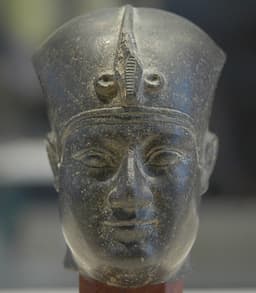
Nectanebo I
Emperor · Ancient
54.7Total
Basic Information
Born
-632
-380
Died
-549
-362
Era
Ancient
Ancient
Nationality
Japan
Egypt
Occupation
Emperor
Emperor
Civilization
Eastern
Middle Eastern
Score Comparison
Military (10%)
16.9
55.0
Political (20%)
47.8
45.0
Influence (20%)
57.4
56.4
Legacy (20%)
57.2
48.3
Leadership (15%)
69.8
68.0
Strategy (15%)
60.0
60.7
TOTAL
54.0
54.7
Nectanebo I — Complete Timeline
380 BC
Foundation of the 30th dynastyPolitical Action◆ Major
Nectanebo I overthrew the Persian-backed ruler and established the 30th dynasty, the last native Egyptian dynasty. He seized power after the death of Pharaoh Nepherites II. This marked the beginning of a period of renewed Egyptian independence from Persian rule.
DynastyIndependencePersia
Impact: globalconstructive
373 BC
Defense against Persian invasion (373 BC)War◆ Major
Nectanebo I successfully repelled a Persian invasion led by Pharnabazus and Iphicrates. The Persian army was delayed by the flooding of the Nile and Egyptian defenses. The invasion failed due to poor coordination and the Egyptians' effective use of the terrain. This victory preserved Egyptian independence.
PersiaInvasionDefense
Impact: regional
370 BC
Construction of the temple of Isis at PhilaeCultural◆ Major
Nectanebo I began the construction of the temple of Isis at Philae, one of the most important religious sites in Egypt. The temple complex was expanded by later rulers and became a major center of the cult of Isis. This project demonstrated his patronage of traditional Egyptian religion.
TempleIsisReligion
Impact: regionalconstructive
Building program across EgyptCultural
Nectanebo I undertook an extensive building program, including additions to the temples at Karnak, Luxor, and Heliopolis. He also constructed a large naos for the temple of Amun at Karnak. These projects revived Egyptian monumental architecture after a period of decline.
ArchitectureTemplesRevival
Impact: nationalconstructive
Expert Analysis
Origins
Emperor Suizei, traditionally dated to 581–549 BC, is the second emperor of Japan according to the Nihon Shoki and Kojiki. He was the son of Emperor Jimmu, the legendary first emperor, and Isukeyorihime. No historical records exist to confirm his life; his reign is entirely mythological. Suizei is said to have ruled from the palace of Takawoka in Yamato, but nothing is recorded of his actions. His name means "joyous health," but his historicity is doubted.
Nectanebo I, also known as Nekhtnebef, was a native Egyptian pharaoh who founded the 30th Dynasty (380–343 BC). He rose from a general in the Egyptian army during a period of Persian domination. His origins are obscure, but he likely came from the city of Sebennytos in the Nile Delta. He seized power after the death of Nepherites II, the last pharaoh of the 29th Dynasty, who had been overthrown by a Persian-backed ruler. Nectanebo I was a skilled military leader with a total score of 54.7, slightly higher than Suizei's 54.0.
Rise to Power
Suizei's rise was automatic: as the son of Emperor Jimmu, he inherited the throne upon his father's death at age 76, according to legend. No opposition or achievement is recorded. His accession is part of the mythological lineage that the Japanese imperial family claims to this day. His reign is a blank slate, scoring 16.9 in military and 47.8 in political power.
Nectanebo I rose to power through military force. Around 380 BC, he led a rebellion against the Persian-supported pharaoh, likely taking advantage of unrest after the death of the previous native ruler. He defeated his rivals and was crowned pharaoh, establishing the 30th Dynasty, the last native Egyptian dynasty. His political score is 45.0, reflecting the instability of his rule. He immediately faced a major Persian invasion in 373 BC.
Leadership & Governance
Suizei's leadership is entirely unknown. He is said to have ruled for 33 years, but no reforms, wars, or building projects are attributed to him. His governance score of 69.8 is based on the assumption that he maintained stability, but this is speculative. He is a placeholder in the imperial line.
Nectanebo I was an active ruler. He repelled the Persian invasion in 373 BC by using the Nile's flooding to delay the enemy and then defeating them at the Battle of Mendes. He also initiated an extensive building program, including the temple of Isis at Philae (one of the most important religious sites), additions to Karnak, Luxor, and Heliopolis, and the construction of a large pylon at Karnak. His military score of 55.0 reflects his defensive success. He also strengthened Egypt's fortifications and maintained diplomatic ties with Greek city-states.
Triumph & Tragedy
Suizei has no recorded triumphs or tragedies. His greatest success is being remembered as an ancestor of the Japanese imperial line. His failure is the complete lack of any historical footprint; he scored 57.2 in legacy and 57.4 in influence, but these are inherited from the imperial myth.
Nectanebo I's greatest triumph was the successful defense against the Persian invasion, which preserved Egyptian independence for another 30 years. His building program left a lasting architectural legacy. However, his tragedy is that the 30th Dynasty ended with his grandson Nectanebo II, who was defeated by the Persians in 343 BC. Nectanebo I's efforts only delayed the inevitable. He also failed to fully expel Persian influence, and his dynasty was the last native one.
Character & Destiny
Suizei's character is a void. He is a symbol of continuity rather than an individual. His destiny was to be a link in a chain, not a shaper of events. His leadership score of 69.8 is the highest among his scores, but it is based on the assumption that he maintained the throne.
Nectanebo I was a pragmatic and capable leader. He understood the value of diplomacy and military readiness. His strategy score of 60.7 reflects his ability to use terrain (the Nile) to his advantage. However, he could not overcome the internal divisions in Egypt and the power of the Persian Empire. His destiny was to be the founder of a last stand, a tragic figure in Egyptian history.
Legacy
Suizei's legacy is entirely within the context of the Japanese imperial myth. He is one of the legendary early emperors whose historicity is debated. His influence score of 57.4 is largely due to the importance of the imperial lineage in Japanese culture. He is remembered as a figure of stability, but no concrete achievements are associated with him.
Nectanebo I's legacy is more tangible. He founded the last native Egyptian dynasty, and his building projects survived for centuries. The temple of Isis at Philae became a major pilgrimage site and was later preserved by the Romans. His defense against Persia is remembered as a high point of Egyptian resistance. However, his dynasty fell, and Egypt was eventually conquered by Alexander the Great. His total score of 54.7 edges out Suizei's 54.0.
Conclusion
Nectanebo I had a greater historical impact than Emperor Suizei. While Suizei's scores are slightly lower overall, the difference is not just numerical but qualitative. Nectanebo I actually did things: he fought battles, built temples, and founded a dynasty. Suizei is a mythical figure with no recorded actions. In a comparison of historical significance, Nectanebo I's tangible contributions to Egyptian architecture and national defense outweigh Suizei's symbolic role. The data supports this: Nectanebo I leads in military (55.0 vs 16.9) and strategy (60.7 vs 60.0), while Suizei leads in political (47.8 vs 45.0) and legacy (57.2 vs 48.3). But the gap in military and the concrete nature of Nectanebo's achievements make him the more impactful figure. Nectanebo I is the clear winner.
Rankings
🥇
Nectanebo ILeader
Mil: 55.0Pol: 45.0Inf: 56.4
54.7
🥈
Emperor Suizei
Mil: 16.9Pol: 47.8Inf: 57.4
54.0
+0.7 behind
How This Comparison Works
Algorithm
Each figure is scored on 6 dimensions (0—100 scale) based on structured historical data: Military (10%), Political (20%), Influence (20%), Legacy (20%), Leadership (15%), Strategy (15%). The weighted total produces the final ranking.
Data Sources
Scores are computed from structured sub-indicators in the database. Scale factors adjust for era (Ancient ×0.85, Modern ×1.0) and civilization size (Eastern ×1.05, Other ×0.80) to account for differences in population and military scale.
Maximum 3 Figures
Comparisons are limited to 2—3 figures to ensure readability and statistical meaningfulness.
Error Margins
±5 points per dimension — Sub-scores are derived from historical records with inherent uncertainty. Two figures within 5 points on a dimension should be considered roughly equivalent in that area.
Total Score Accuracy
±3 points overall — The weighted combination of 6 dimensions produces a total score with approximately ±3 points of uncertainty. Differences of less than 3 points are not statistically significant— the figures are effectively tied.
Known Limitations
- Historical records are incomplete and uneven across civilizations
- Figures from oral-tradition societies may be underrepresented
- Occupation labels can misclassify multi-role figures
- Scores measure capability and impact, not moral character
- Quantitative scoring is a comparison tool, not absolute truth
Capability Radar
Military (10%) — Battles & Warfare
Battles
33
45
Win Rate
35
50
Expansion
40
40
Political (20%) — Governance & Reform
Reform
62
60
Diplomacy
65
65
Economy
66
55
Influence (20%) — Cultural & Global Reach
Cultural
66
45
Global
77
35
Legacy (20%) — Historical Impact
Historical
69
50
Longevity
74
40
Leadership (15%) — Power & Stability
Tenure
61
55
Stability
71
50
Strategy (15%) — Tactics & Innovation
Strategy
41
60
Tactics
46
55
Reform
47
65
Similar Comparisons
Comments & Discussion
No comments yet. Be the first to share your thoughts!