Loading...
Emperor Tenji vs Ghazan Khan
Ghazan Khan leads by 13.5 pts · 2 figures compared
…
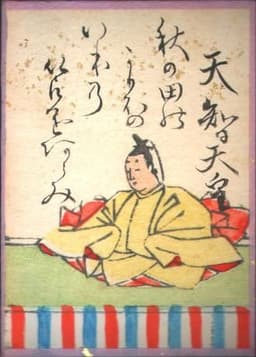
Emperor Tenji
Emperor · Medieval
49.7Total
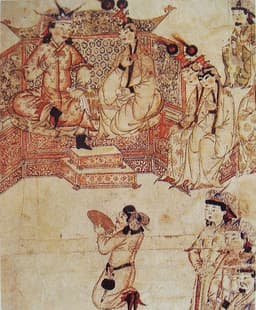
Ghazan Khan
Emperor · Medieval
63.2Total
Basic Information
Born
626
1271
Died
672
1304
Era
Medieval
Medieval
Nationality
Japan
Ilkhanate
Occupation
Emperor
Emperor
Civilization
Eastern
Middle Eastern
Score Comparison
Military (10%)
21.2
50.0
Political (20%)
45.0
70.0
Influence (20%)
58.0
72.0
Legacy (20%)
56.0
58.0
Leadership (15%)
62.0
68.0
Strategy (15%)
30.3
50.0
TOTAL
49.7
63.2
Emperor Tenji — Complete Timeline
645 AD
Taika Reforms ImplementationReform◆ Major
As Prince Naka no Oe, Tenji led a coup that eliminated the Soga clan and initiated the Taika Reforms. These reforms centralized government, established a Chinese-style bureaucracy, and nationalized land. They laid the foundation for the ritsuryo system.
Taika ReformsCentralizationSoga
Impact: nationalprogressive
663 AD
Battle of BaekgangWar◆ Major
Tenji, as prince, sent a Japanese fleet to aid the Korean kingdom of Baekje against the Silla-Tang alliance. The Japanese navy was decisively defeated at the Baekgang River. This ended Japanese ambitions on the Korean peninsula and led to a shift in foreign policy.
BaekjeDefeatKorea
Impact: regionaltragic
668 AD
Compilation of the Omi CodeReform◆ Major
Emperor Tenji ordered the compilation of the Omi Code, Japan's first comprehensive legal code. It established administrative laws and penal codes based on Chinese Tang dynasty models. This code formalized the ritsuryo system and strengthened imperial authority.
Legal CodeRitsuryoOmi
Impact: nationalconstructive
Ghazan Khan — Complete Timeline
1295 AD
Reforms of the Ilkhanate (Ghazan's Reforms)Reform◆ Major
Ghazan implemented a comprehensive reform program including tax reform, standardization of weights and measures, land redistribution, and the establishment of a new legal code. He also reformed the military and postal system, stabilizing the Ilkhanate after decades of instability.
ReformIlkhanateAdministration
Impact: regionalconstructive
Conversion to IslamCultural
Ghazan converted to Islam upon ascending the throne, becoming the first Ilkhan to adopt the faith. He publicly declared Islam the state religion, ordered the destruction of Buddhist temples and churches, and adopted the name Mahmud. This transformed the Ilkhanate's identity.
ReligionIlkhanateIslam
Impact: regionalconstructive
1297 AD
Patronage of Science and CultureCultural
Ghazan patronized scholars, historians, and scientists, including the vizier Rashid al-Din, who wrote the Jami' al-tawarikh, a world history. Ghazan also built observatories, hospitals, and mosques, contributing to the cultural flowering of the Ilkhanate.
CulturePatronageIlkhanate
Impact: regionalconstructive
1299 AD
Campaigns against the MamluksWar◆ Major
Ghazan led three major invasions of Mamluk Syria, capturing Damascus and Aleppo in 1299
Mongol InvasionSyriaMamluk Sultanate
Impact: regional
Battle of Wadi al-KhaznadarWar
Ghazan's Mongol army defeated the Mamluks under Sultan Al-Nasir Muhammad at Wadi al-Khaznadar near Homs. The victory allowed the Mongols to occupy Damascus and Aleppo, but they withdrew after a few months due to logistical problems and the need to return to Persia.
BattleMongol VictorySyria
Impact: regional
Expert Analysis
Origins
Emperor Tenji, born Prince Naka no Oe in 626 CE, was the son of Emperor Jomei and Empress Kōgyoku. He grew up in the Yamato court, witnessing the dominance of the Soga clan, which controlled the imperial family. His education included Chinese classics and Buddhist scriptures, fostering a vision of centralized governance modeled on Tang China.
Ghazan Khan, born in 1271 CE in the Ilkhanate, was the son of Arghun Khan and a Buddhist princess. He was raised in the Mongol tradition, trained in warfare and archery, but also exposed to Nestorian Christianity and Buddhism. His early years were marked by political intrigue, as his father and uncle struggled for power. He converted to Islam later, but his upbringing was syncretic.
Rise to Power
Tenji's rise came through a coup in 645 CE, when he and his ally Nakatomi no Kamatari assassinated Soga no Iruka in the Isshi Incident. This ended Soga dominance and allowed his mother, Empress Kōgyoku, to abdicate in favor of her brother, Emperor Kōtoku. Tenji served as crown prince, effectively ruling during Kōtoku's reign. After Kōtoku's death in 654, Tenji's mother reigned again as Empress Saimei, and Tenji continued as de facto ruler. He finally ascended the throne in 661 CE as Emperor Tenji.
Ghazan's path was more violent. After his father Arghun's death in 1291, his uncle Gaykhatu became Ilkhan, but was deposed and killed in 1295. Ghazan then rebelled against his cousin Baidu, who had seized power. With the support of the Mongol general Nawruz, Ghazan defeated Baidu in 1295 and became Ilkhan. To secure support from the Muslim majority, he converted to Islam before his coronation.
Leadership & Governance
Tenji's governance focused on the Taika Reforms, which centralized land ownership under the emperor, established a bureaucratic system with provincial governors, and implemented a census for tax purposes. He compiled the Omi Code in 668 CE, Japan's first legal code, blending Chinese Confucian principles with Japanese traditions. However, his reforms were gradual and faced resistance from local clans. His political score of 45.0 reflects moderate effectiveness.
Ghazan's reforms were more sweeping. He converted the Ilkhanate to Islam, ordering the destruction of Buddhist and Christian temples. He implemented tax reforms that reduced the burden on peasants and standardized weights and measures. He also established a postal system and built observatories and hospitals. His political score of 70.0 indicates strong administrative ability. He patronized the historian Rashid al-Din, who wrote the Jami' al-tawarikh, a world history that documented Mongol achievements.
Triumph & Tragedy
Tenji's greatest success was the Taika Reforms, which laid the foundation for Japan's imperial system and legal framework. His compilation of the Omi Code influenced later codes like the Taihō Code. However, his greatest failure was the Battle of Baekgang in 663 CE, where he sent a Japanese fleet to aid Baekje against the Silla-Tang alliance. The Japanese navy was annihilated, ending Japanese involvement in Korea and damaging his prestige. His military score of 21.2 reflects this disaster.
Ghazan's triumphs include his conversion to Islam, which unified the Ilkhanate's Muslim subjects and stabilized the realm. His reforms improved the economy and administration. He also led successful campaigns against the Mamluks, capturing Damascus and Aleppo in 1299-1300. However, he failed to hold Syria due to logistical problems and Mamluk counterattacks. His military score of 50.0 reflects mixed results. He also faced internal revolts from Mongol traditionalists opposed to Islamization.
Character & Destiny
Tenji was cautious and methodical, preferring gradual reform over radical change. He was a skilled politician but not a warrior. His decision to send the Baekgang expedition was a rare miscalculation. He died in 672 CE, after which a succession crisis led to the Jinshin War. His character shaped a legacy of centralized but fragile imperial authority.
Ghazan was pragmatic and ruthless, converting to Islam for political gain. He was intellectually curious, patronizing science and history. His reforms were bold but alienated some Mongols. He died in 1304 CE at age 33, possibly from illness. His early death prevented full consolidation of his reforms.
Legacy
Tenji's legacy endures in Japan's legal and administrative systems. The Taika Reforms are seen as the beginning of Japan's classical period. The Omi Code influenced later law codes. He is remembered as a reformer emperor, but his military failure is noted. His legacy score of 56.0 reflects moderate long-term impact.
Ghazan's legacy is more transformative. His conversion made Islam the permanent religion of Iran and the Ilkhanate. His reforms revitalized the economy and culture, leading to a Persian-Mongol synthesis. The Jami' al-tawarikh remains a key historical source. However, the Ilkhanate declined after his death, and his dynasty ended in 1335. His legacy score of 58.0 is slightly higher.
Conclusion
Ghazan Khan had greater impact than Emperor Tenji, with a total score of 63.2 vs 49.7. While Tenji's reforms were foundational for Japan, they were limited in scope and faced resistance. Ghazan's conversion of an entire empire to Islam and his comprehensive reforms reshaped the Middle East's political and cultural landscape. His patronage of scholarship produced enduring works. Tenji's failure at Baekgang also highlights his limitations. Thus, Ghazan's broader and more lasting influence gives him the edge.
Rankings
🥇
Ghazan KhanLeader
Mil: 50.0Pol: 70.0Inf: 72.0
63.2
🥈
Emperor Tenji
Mil: 21.2Pol: 45.0Inf: 58.0
49.7
+13.5 behind
How This Comparison Works
Algorithm
Each figure is scored on 6 dimensions (0—100 scale) based on structured historical data: Military (10%), Political (20%), Influence (20%), Legacy (20%), Leadership (15%), Strategy (15%). The weighted total produces the final ranking.
Data Sources
Scores are computed from structured sub-indicators in the database. Scale factors adjust for era (Ancient ×0.85, Modern ×1.0) and civilization size (Eastern ×1.05, Other ×0.80) to account for differences in population and military scale.
Maximum 3 Figures
Comparisons are limited to 2—3 figures to ensure readability and statistical meaningfulness.
Error Margins
±5 points per dimension — Sub-scores are derived from historical records with inherent uncertainty. Two figures within 5 points on a dimension should be considered roughly equivalent in that area.
Total Score Accuracy
±3 points overall — The weighted combination of 6 dimensions produces a total score with approximately ±3 points of uncertainty. Differences of less than 3 points are not statistically significant— the figures are effectively tied.
Known Limitations
- Historical records are incomplete and uneven across civilizations
- Figures from oral-tradition societies may be underrepresented
- Occupation labels can misclassify multi-role figures
- Scores measure capability and impact, not moral character
- Quantitative scoring is a comparison tool, not absolute truth
Capability Radar
Military (10%) — Battles & Warfare
Battles
10
55
Win Rate
10
60
Expansion
10
45
Political (20%) — Governance & Reform
Reform
70
85
Diplomacy
50
70
Economy
60
75
Influence (20%) — Cultural & Global Reach
Cultural
50
70
Global
30
55
Legacy (20%) — Historical Impact
Historical
60
65
Longevity
60
60
Leadership (15%) — Power & Stability
Tenure
60
60
Stability
50
65
Strategy (15%) — Tactics & Innovation
Strategy
10
55
Tactics
10
50
Reform
20
65
Similar Comparisons
Comments & Discussion
No comments yet. Be the first to share your thoughts!