Loading...
Emperor Tenji vs Julius Caesar
Julius Caesar leads by 33.1 pts · 2 figures compared
…
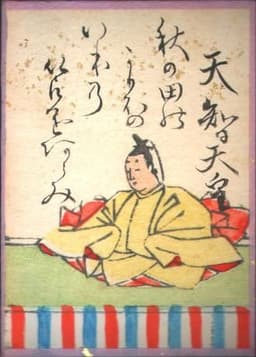
Emperor Tenji
Emperor · Medieval
49.7Total

Julius Caesar
General · Ancient
82.8Total
Basic Information
Born
626
-100
Died
672
-44
Era
Medieval
Ancient
Nationality
Japan
Roman Republic
Occupation
Emperor
General
Civilization
Eastern
Western
Score Comparison
Military (10%)
21.2
88.0
Political (20%)
45.0
78.0
Influence (20%)
58.0
85.0
Legacy (20%)
56.0
82.0
Leadership (15%)
62.0
80.0
Strategy (15%)
30.3
85.0
TOTAL
49.7
82.8
Emperor Tenji — Complete Timeline
645 AD
Taika Reforms ImplementationReform◆ Major
As Prince Naka no Oe, Tenji led a coup that eliminated the Soga clan and initiated the Taika Reforms. These reforms centralized government, established a Chinese-style bureaucracy, and nationalized land. They laid the foundation for the ritsuryo system.
Taika ReformsCentralizationSoga
Impact: nationalprogressive
663 AD
Battle of BaekgangWar◆ Major
Tenji, as prince, sent a Japanese fleet to aid the Korean kingdom of Baekje against the Silla-Tang alliance. The Japanese navy was decisively defeated at the Baekgang River. This ended Japanese ambitions on the Korean peninsula and led to a shift in foreign policy.
BaekjeDefeatKorea
Impact: regionaltragic
668 AD
Compilation of the Omi CodeReform◆ Major
Emperor Tenji ordered the compilation of the Omi Code, Japan's first comprehensive legal code. It established administrative laws and penal codes based on Chinese Tang dynasty models. This code formalized the ritsuryo system and strengthened imperial authority.
Legal CodeRitsuryoOmi
Impact: nationalconstructive
Julius Caesar — Complete Timeline
58 BC
Gallic WarsWar◆ Major
Caesar, as proconsul of Gaul, launched a series of campaigns that conquered all of Gaul (modern France, Belgium, and parts of Switzerland). He fought numerous battles, including against the Helvetii, the Belgae, and the Gallic chieftain Vercingetorix. The wars brought immense wealth and a loyal army to Caesar.
Gallic WarsConquestRoman Expansion
Impact: regional
49 BC
Crossing the RubiconPolitical Action◆ Major
Caesar led Legio XIII across the Rubicon River into Italy, defying the Roman Senate's order to disband his army. This act triggered a civil war against Pompey and the Optimates, ultimately leading to Caesar's dictatorship and the end of the Roman Republic.
Roman Civil WarEnd of RepublicPower Struggle
Impact: global
48 BC
Battle of PharsalusWar◆ Major
Caesar's outnumbered army defeated the larger forces of Pompey the Great at Pharsalus in Greece. Caesar's tactical use of a reserve line to counter Pompey's cavalry charge proved decisive. Pompey fled to Egypt, where he was assassinated, leaving Caesar as the undisputed master of the Roman world.
Roman Civil WarBattleDecisive Victory
Impact: regional
44 BC
Appointment as Dictator for LifePolitical Action◆ Major
The Roman Senate appointed Caesar dictator perpetuo (dictator for life), granting him unprecedented personal power. This move concentrated military, legislative, and judicial authority in one person, effectively ending the Roman Republic's traditional system of checks and balances and alarming many senators.
DictatorshipEnd of RepublicPower Consolidation
Impact: regionaldestructive
Assassination on the Ides of MarchPolitical Action◆ Major
A group of Roman senators, led by Marcus Junius Brutus and Gaius Cassius Longinus, stabbed Caesar to death at a meeting of the Senate in the Theatre of Pompey. The assassination was intended to restore the Republic, but instead triggered another civil war that led to the rise of the Roman Empire.
AssassinationRoman PoliticsEnd of Republic
Impact: globaldestructive
Expert Analysis
emperor-tenji-vs-julius-caesar
# The Crossroads of Power: Caesar and Tenji
On the Ides of March, 44 BCE, as daggers pierced the body of Gaius Julius Caesar, the Roman Republic shuddered into its death throes. Half a world away and seven centuries later, in 672 CE, Emperor Tenji lay on his deathbed in his palace at Ōtsu, having quietly codified laws that would shape Japan for generations. One man conquered continents and fell to conspiracy; the other reformed a kingdom and died in peace. What separates a figure whose name became synonymous with empire from one whose legacy remains a footnote in the East? The answer lies not merely in ambition, but in the worlds they inherited—and the choices they made within them.
Origins
Caesar was born into the twilight of the Roman Republic, a world of senatorial intrigue, civil wars, and a political system straining under the weight of its own expansion. His patrician family, the Julii, claimed descent from the goddess Venus, but their wealth and influence had dwindled. Young Caesar grew up in a Rome where men like Marius and Sulla had already shown that military glory could override constitutional norms. He learned early that in a republic rotting from within, a man of talent could seize what tradition denied him.
Tenji, by contrast, was born Prince Naka no Oe in 626 CE, into a Japan still emerging from tribal confederations. The Yamato court was dominated by the Soga clan, who controlled both the throne and the introduction of Buddhism from China. Tenji’s world was one of ritual, clan loyalty, and the slow absorption of Chinese bureaucracy. Where Caesar saw a republic to be conquered, Tenji saw a kingdom to be centralized. His era demanded not a conqueror, but a builder.
Rise to Power
Caesar’s path was forged through debt, danger, and military command. He fled Rome to avoid Sulla’s proscriptions, returned to climb the political ladder as a populist, and secured the governorship of Gaul through the First Triumvirate’s backroom deals. His conquest of Gaul (58–50 BCE) was not merely a military campaign—it was a personal power base. When the Senate ordered him to disband his army, Caesar crossed the Rubicon River in 49 BCE, igniting a civil war. He gambled everything on the loyalty of his legions and won.
Tenji’s rise was subtler, yet no less decisive. In 645 CE, as Prince Naka no Oe, he orchestrated a coup that eliminated the Soga clan’s leaders in the palace itself. This was not a march on Rome, but a carefully planned assassination that ended decades of clan dominance. He then initiated the Taika Reforms, a series of edicts that redistributed land, established a Chinese-style bureaucracy, and centralized tax collection. Unlike Caesar, Tenji did not seize dictatorial power—he ascended the throne in 668 CE as emperor, a position that already held sacred authority. His path was not confrontation with a republic, but reform from within a monarchy.
Leadership & Governance
Caesar governed as a military autocrat draped in republican forms. He reformed the calendar, granted citizenship to Gauls, and launched public works that transformed Rome. Yet his rule was always provisional, built on the fear of his legions and the resentment of the Senate. He pardoned enemies, but never trusted them. His famous clemency—*clementia Caesaris*—was a political tool, not a philosophy. When he accepted the title “dictator for life,” he shattered the Republic’s final illusion.
Tenji governed as a lawgiver. His greatest achievement, the Ōmi Code of 668 CE, was Japan’s first comprehensive legal system. It established administrative districts, court ranks, and tax collection modeled on Tang China. Where Caesar commanded armies, Tenji commanded scribes. His military score of 14.0 reflects a life spent not on battlefields but in council chambers. The Battle of Baekgang in 663 CE, where his fleet was crushed by the Silla-Tang alliance, was a rare military venture—and a humiliating failure. Tenji learned from it, turning inward to strengthen Japan’s institutions rather than expand its borders.
Triumph & Tragedy
Caesar’s triumph was Gaul: he conquered over 800 cities, fought countless battles, and brought immense wealth and glory to Rome. His tragedy was the Ides of March. He had centralized power but failed to centralize loyalty. His assassins were not enemies, but former allies and supposed friends—men like Brutus and Cassius, whom he had pardoned. Caesar’s death proved that military genius cannot substitute for political legitimacy in a system that no longer believes in itself.
Tenji’s triumph was the Ōmi Code, a quiet revolution that gave Japan its first unified legal framework. His tragedy was the succession crisis that followed his death. His son, Prince Ōtomo, was challenged by Tenji’s brother, leading to the Jinshin War of 672 CE. The code survived, but the dynasty did not. Tenji’s reforms outlasted his bloodline—a legacy of institutions, not individuals.
Character & Destiny
Caesar was driven by an insatiable need for glory—*ambitio* in the Roman sense of relentless public striving. He wrote his own commentaries, controlled his own narrative, and believed that his destiny was to rule. His personality was magnetic, ruthless, and ultimately self-destructive. He could not imagine a world where he was not the center.
Tenji was driven by duty—to his clan, his court, and his vision of a unified Japan. He was a reformer who worked within the system, not against it. His personality was patient, methodical, and perhaps cautious. He could not imagine a world where the throne itself did not command loyalty. Where Caesar’s ambition shattered the Republic, Tenji’s patience built a framework that would last centuries.
Legacy
Caesar’s legacy is the Roman Empire itself. His adopted heir, Octavian, became Augustus, and the Republic gave way to an imperial system that would dominate the Mediterranean for five centuries. Caesar’s name became a title—*Kaiser* and *Tsar*—and his life became a cautionary tale about ambition and liberty. He is remembered as a genius, a tyrant, and a martyr.
Tenji’s legacy is the Japanese state. The Ōmi Code influenced later legal systems, and the Taika Reforms laid the groundwork for the centralized government that would define Japan’s classical period. He is remembered not as a conqueror, but as a founder—a figure who gave his people laws rather than battles. His political score of 74.1 and influence of 73.2 reflect a quiet but enduring impact.
Conclusion
Caesar and Tenji stand at opposite ends of the spectrum of power. One conquered the known world and died by the sword; the other codified a kingdom and died in bed. Their differences are not merely personal, but civilizational. Caesar’s Rome was a republic collapsing under its own ambition, demanding a man who would break it to save it. Tenji’s Japan was a kingdom emerging from clan rule, demanding a man who would build it to last. In the end, both succeeded—one in glory, the other in governance. And both remind us that history’s greatest figures are not those who simply act, but those who act in perfect alignment with the needs of their age.
Rankings
🥇
Julius CaesarLeader
Mil: 88.0Pol: 78.0Inf: 85.0
82.8
🥈
Emperor Tenji
Mil: 21.2Pol: 45.0Inf: 58.0
49.7
+33.1 behind
How This Comparison Works
Algorithm
Each figure is scored on 6 dimensions (0—100 scale) based on structured historical data: Military (10%), Political (20%), Influence (20%), Legacy (20%), Leadership (15%), Strategy (15%). The weighted total produces the final ranking.
Data Sources
Scores are computed from structured sub-indicators in the database. Scale factors adjust for era (Ancient ×0.85, Modern ×1.0) and civilization size (Eastern ×1.05, Other ×0.80) to account for differences in population and military scale.
Maximum 3 Figures
Comparisons are limited to 2—3 figures to ensure readability and statistical meaningfulness.
Error Margins
±5 points per dimension — Sub-scores are derived from historical records with inherent uncertainty. Two figures within 5 points on a dimension should be considered roughly equivalent in that area.
Total Score Accuracy
±3 points overall — The weighted combination of 6 dimensions produces a total score with approximately ±3 points of uncertainty. Differences of less than 3 points are not statistically significant— the figures are effectively tied.
Known Limitations
- Historical records are incomplete and uneven across civilizations
- Figures from oral-tradition societies may be underrepresented
- Occupation labels can misclassify multi-role figures
- Scores measure capability and impact, not moral character
- Quantitative scoring is a comparison tool, not absolute truth
Capability Radar
Military (10%) — Battles & Warfare
Battles
10
95
Win Rate
10
92
Expansion
10
97
Political (20%) — Governance & Reform
Reform
70
90
Diplomacy
50
85
Economy
60
82
Influence (20%) — Cultural & Global Reach
Cultural
50
88
Global
30
94
Legacy (20%) — Historical Impact
Historical
60
95
Longevity
60
96
Leadership (15%) — Power & Stability
Tenure
60
75
Stability
50
60
Strategy (15%) — Tactics & Innovation
Strategy
10
94
Tactics
10
96
Reform
20
88
Similar Comparisons
Comments & Discussion
墨守成规6/17/2026
说恺撒比天智伟大纯粹是西方中心论。罗马兵锋所至,高卢血流成河;天智推大化改新,没有大规模屠杀,却有日本首个成文法典《近江令》。和平改革者不如征服者?那是用剑比秤更有重量的荒谬逻辑。
侠义武士6/17/2026
天智天皇的《近江令》是抄袭唐朝律令的山寨货,连人名官职都照搬,毫无独创性。恺撒写的《高卢战记》可是文学与军事的双重巅峰,至今仍被西点军校研究。一个临摹工匠,一个开创大师,高下立判。
黄昏的史官6/17/2026
如果天智没弑叔夺位(乙巳之变),他这辈子就是个默默无闻的皇子。而恺撒哪怕没做独裁官,光凭征服高卢和不列颠、首创跨海作战,就已是罗马史上最耀眼的将星之一。把弑君者与征服者并列,本身就是对历史的轻薄。
Chronicler38286/17/2026
Caesar wasn't a visionary—he was a gambler who got lucky crossing the Rubicon. His land reforms and calendar? Just propaganda tools. He bankrupted the state funding his civil wars, then masked it with bread and circuses. Tenji quietly fixed Japan's tax code and centralized power without a single coup. That's real statecraft.
Chronicler36256/17/2026
Let's stop romanticizing Tenji's Taiwan Code—historical sources suggest it was mostly a top-down edict, barely enforced outside the capital. Caesar's Gallic conquests, for all their brutality, gave Rome a structured province system that lasted centuries. Tenji's reforms died with him; Caesar's reshaped Europe. Scale matters.