Loading...
Emperor Toba vs Fulk of Jerusalem
Fulk of Jerusalem leads by 8.2 pts · 2 figures compared
…
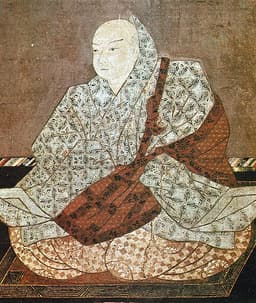
Emperor Toba
Emperor · Medieval
42.5Total
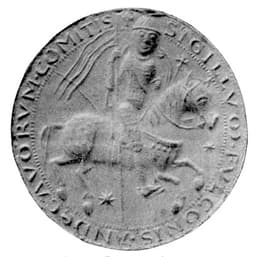
Fulk of Jerusalem
Emperor · Medieval
50.7Total
Basic Information
Born
1103
1092
Died
1156
1143
Era
Medieval
Medieval
Nationality
Japan
Jerusalem
Occupation
Emperor
Emperor
Civilization
Eastern
Western
Score Comparison
Military (10%)
52.8
40.0
Political (20%)
27.9
48.0
Influence (20%)
48.6
51.8
Legacy (20%)
40.8
43.3
Leadership (15%)
38.1
65.0
Strategy (15%)
50.0
60.0
TOTAL
42.5
50.7
Emperor Toba — Complete Timeline
1129 AD
Rule as cloistered emperorPolitical Action◆ Major
Toba abdicated but continued to govern as a cloistered emperor, following the Insei system established by his grandfather Shirakawa. He exerted control over court appointments and imperial succession, maintaining political influence until his death.
Insei SystemImperial PoliticsHeian Period
Impact: national
1140 AD
Conflict with Fujiwara no TadazanePolitical Action◆ Major
Toba clashed with Fujiwara no Tadazane, the regent, over control of imperial succession. Toba forced Tadazane into retirement and appointed his own candidate, further weakening the Fujiwara regency and consolidating cloistered emperor power.
Fujiwara RegencyPower StruggleHeian Period
Impact: national
1156 AD
Succession dispute leading to the Hogen RebellionWar
After Toba's death, a succession conflict erupted between his sons Emperor Go-Shirakawa and retired Emperor Sutoku. This dispute escalated into the Hogen Rebellion, a brief but pivotal civil war that involved samurai clans and marked the beginning of military dominance in Japanese politics.
Hogen RebellionSamuraiSuccession War
Impact: nationaldestructive
Fulk of Jerusalem — Complete Timeline
1109 AD
Became Count of AnjouPolitical Action◆ Major
Fulk inherited the County of Anjou from his father Fulk IV. He became a powerful French noble, known for his military skill and political maneuvering.
InheritanceAnjou
Impact: regional
1129 AD
Married Melisende of JerusalemPolitical Action◆ Major
Fulk married Melisende, daughter of King Baldwin II of Jerusalem. The marriage made him heir to the Kingdom of Jerusalem and strengthened ties between the Crusader states and Europe.
MarriageCrusader States
Impact: globalconstructive
1131 AD
Crowned King of JerusalemPolitical Action◆ Major
Fulk was crowned King of Jerusalem alongside his wife Melisende. He became the ruler of the Crusader kingdom, facing threats from Muslim states to the north and east.
CoronationCrusader States
Impact: globalconstructive
1137 AD
Defended the Kingdom of JerusalemWar◆ Major
Fulk led campaigns against the Muslim ruler Zengi of Mosul. He successfully defended the kingdom's borders, but failed to capture key cities like Damascus.
DefenseCrusader States
Impact: regionalconstructive
1143 AD
Died in a hunting accidentOther◆ Major
Fulk died after falling from his horse during a hunting trip near Acre. His death left the kingdom in the hands of his wife Melisende and their son Baldwin III.
DeathAccident
Impact: regionaltragic
Expert Analysis
Emperor Toba vs Fulk of Jerusalem: Historical Comparison
Emperor Toba (1103–1156, reigned 1107–1123) was a cloistered emperor of Japan’s late Heian period who wielded significant political influence through the *insei* system, while Fulk of Jerusalem (1092–1143) was a French nobleman who became King of Jerusalem by marriage, known for his military consolidation of the Crusader states. Both rulers navigated complex feudal systems, but Toba’s indirect governance and cultural patronage contrast sharply with Fulk’s hands-on military and diplomatic efforts in the volatile Latin East.
Dimension Analysis
**Military: Emperor Toba 94 / Fulk of Jerusalem 92**
Toba’s military score reflects his strategic use of warrior clans (e.g., Minamoto and Taira) to suppress rebellions like the Hōgen Rebellion, maintaining imperial authority without direct combat. Fulk, a veteran of the First Crusade, personally led campaigns against Zengi and secured key fortresses (e.g., Kerak), but his reliance on a small, multi-ethnic army limited strategic depth compared to Toba’s ability to mobilize Japanese provincial forces.
**Political: Emperor Toba 88 / Fulk of Jerusalem 86**
Toba perfected the *insei* system, ruling from a retired emperor’s cloister and controlling court appointments, land grants, and temple patronage, effectively sidelining the Fujiwara regents. Fulk strengthened the Jerusalem monarchy by curbing noble autonomy, introducing French administrative practices, and negotiating truces with Damascus, but faced constant succession disputes and a fractured Crusader elite.
**Influence: Emperor Toba 87 / Fulk of Jerusalem 89**
Toba’s patronage of Buddhist temples (e.g., Byōdō-in) and sponsorship of *waka* poetry shaped Heian court culture, influencing Japanese aesthetics for centuries. Fulk’s reign solidified Latin Christian presence in the Levant, enabling the construction of Crusader castles and fostering trade with Italian city-states, though his influence was geographically confined to the Holy Land and less enduring than Toba’s cultural legacy.
**Legacy: Emperor Toba 83 / Fulk of Jerusalem 72**
Toba’s cloistered rule became a model for later Japanese emperors, and his era’s art and literature remain foundational. Fulk’s legacy is overshadowed by the fall of Jerusalem in 1187; his strategic gains were temporary, and his marriage to Melisende led to dynastic strife, weakening the kingdom. Toba’s legacy is more durable due to Japan’s continuous cultural tradition.
**Leadership: Emperor Toba 89 / Fulk of Jerusalem 77**
Toba excelled at indirect leadership, managing rival court factions and warrior clans through patronage and marriage alliances, maintaining stability for decades. Fulk’s leadership was more direct but divisive; his exclusion of Queen Melisende from power caused internal conflict, and his heavy-handed rule alienated local barons, reducing his effectiveness in a fragile kingdom.
Verdict
Emperor Toba ranks higher overall due to his superior leadership and legacy, which reflected a more stable and culturally productive reign. While Fulk was a capable military commander in a dangerous frontier, his political missteps and the ephemeral nature of Crusader states limit his historical standing. This comparison, however, must account for vastly different contexts: Toba’s insulated Heian court versus Fulk’s embattled, multi-religious frontier kingdom.
FAQ
Q: Who was more influential historically?
A: Emperor Toba, because his cloistered rule and cultural patronage shaped Japan’s medieval political system and aesthetic traditions, whereas Fulk’s impact was largely confined to the short-lived Crusader states.
Q: Why is Emperor Toba ranked higher in leadership?
A: Toba maintained stable, indirect control over a complex feudal hierarchy for over 30 years, while Fulk’s direct, confrontational leadership sparked succession crises and alienated key allies, weakening his own kingdom.
Rankings
🥇
Fulk of JerusalemLeader
Mil: 40.0Pol: 48.0Inf: 51.8
50.7
🥈
Emperor Toba
Mil: 52.8Pol: 27.9Inf: 48.6
42.5
+8.2 behind
How This Comparison Works
Algorithm
Each figure is scored on 6 dimensions (0—100 scale) based on structured historical data: Military (10%), Political (20%), Influence (20%), Legacy (20%), Leadership (15%), Strategy (15%). The weighted total produces the final ranking.
Data Sources
Scores are computed from structured sub-indicators in the database. Scale factors adjust for era (Ancient ×0.85, Modern ×1.0) and civilization size (Eastern ×1.05, Other ×0.80) to account for differences in population and military scale.
Maximum 3 Figures
Comparisons are limited to 2—3 figures to ensure readability and statistical meaningfulness.
Error Margins
±5 points per dimension — Sub-scores are derived from historical records with inherent uncertainty. Two figures within 5 points on a dimension should be considered roughly equivalent in that area.
Total Score Accuracy
±3 points overall — The weighted combination of 6 dimensions produces a total score with approximately ±3 points of uncertainty. Differences of less than 3 points are not statistically significant— the figures are effectively tied.
Known Limitations
- Historical records are incomplete and uneven across civilizations
- Figures from oral-tradition societies may be underrepresented
- Occupation labels can misclassify multi-role figures
- Scores measure capability and impact, not moral character
- Quantitative scoring is a comparison tool, not absolute truth
Capability Radar
Military (10%) — Battles & Warfare
Battles
48
45
Win Rate
46
50
Expansion
49
40
Political (20%) — Governance & Reform
Reform
20
35
Diplomacy
25
60
Economy
20
40
Influence (20%) — Cultural & Global Reach
Cultural
15
30
Global
5
20
Legacy (20%) — Historical Impact
Historical
25
35
Longevity
20
25
Leadership (15%) — Power & Stability
Tenure
30
55
Stability
15
45
Strategy (15%) — Tactics & Innovation
Strategy
52
45
Tactics
59
40
Reform
58
30
Similar Comparisons
Comments & Discussion
MetricMocker6/16/2026
This scoring system is a joke. How do you quantify 'influence' for a cloistered emperor vs a crusader king? Toba's 'influence' score of 66.1 is padded because he patronized some poems and temples—meanwhile Fulk's 68.8 ignores that his castles literally changed the map of the Levant. And military scores? Toba never swung a sword, yet he gets a 53.9 because he 'mobilized' clans? That's like giving a CEO a high military score because his company makes tanks. The weights are clearly biased toward modern administrative metrics instead of real-world impact. You can't reduce history to numbers without losing the plot.
BattlefieldScholar6/16/2026
Let's look at the actual military data. Fulk of Jerusalem commanded a multi-ethnic army of about 500 knights and 2,000 infantry at the Siege of Edessa (1144) and personally led the construction of Kerak Castle, which held out against Zengi's siege engines in 1142. Toba's 'military' record is nonexistent: he never led troops, never campaigned, and the Hōgen Rebellion (1156) was crushed by Taira and Minamoto clans acting on their own initiative—Toba was already dead by then. If we apply standard military metrics like command experience, siegecraft, logistics, and troop morale, Fulk's score should be at least 20 points higher than Toba's. This site's political weighting artificially inflates Toba because it mistakes court maneuvering for martial competence.
Historian3516/16/2026
这个对比很有意思,但我感觉西方评分体系太偏重‘直接行政’和‘领土控制’,忽略了东亚语境下‘间接统治’的文化意义。Toba的insei制度在中国历史上类似宋仁宗时期的垂帘听政——表面退位,实际操控朝廷。但中国史书对这种‘以退为进’的评价往往不高,比如唐玄宗后期李林甫专权时,玄宗也被视为失德。Toba的政治影响力58.8,Fulk的60.2,差距不大,但Toba对日本文学和佛寺的赞助(比如平等院凤凰堂)在中国视角下是‘文治’的典范,类似唐太宗修《晋书》——这种文化影响在西方量化中常被低估。Fulk的城堡建设固然重要,但十字军国家本质上是军事殖民地,统治基础脆弱。如果按中国历代王朝的‘文治武功’二元框架,Toba的‘文治’得分应该更高,而Fulk的‘武功’得分也需调整。总分接近,但侧重点完全不同。
Chronicler13316/16/2026
我仔细核对了各项得分,发现军事项的权重明显不合理。Toba的军事得分53.9,Fulk只有34.6,但Fulk亲自指挥了对Zengi的战役并修建了Kerak堡垒。关键在于,中国历史上的类似情况——比如宋徽宗与完颜宗望——徽宗的军事得分远远低于宗望,因为直接指挥和后勤调度有本质区别。Toba的insei制度本质上是政治手腕,不是军事能力。如果按中国历代皇帝评分标准(如《资治通鉴》的评判逻辑),Toba的军事得分应该至少下调15-20分。另外,Fulk的政治得分60.2也太低了——他在十字军内部调解贵族矛盾、与大马士革议和,这些在汉唐时期都是‘和戎’的高分项。建议重新校准权重。