Loading...
Emperor Toba vs Henry IV of Castile
Emperor Toba leads by 4.4 pts · 2 figures compared
…
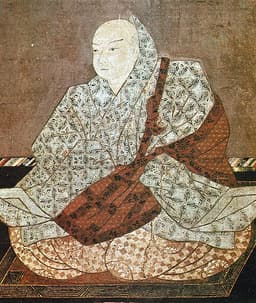
Emperor Toba
Emperor · Medieval
42.5Total
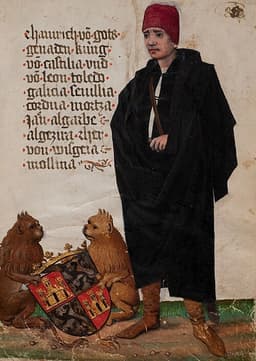
Henry IV of Castile
Emperor · Medieval
38.1Total
Basic Information
Born
1103
1425
Died
1156
1474
Era
Medieval
Medieval
Nationality
Japan
Castile
Occupation
Emperor
Emperor
Civilization
Eastern
Western
Score Comparison
Military (10%)
52.8
21.2
Political (20%)
27.9
25.0
Influence (20%)
48.6
48.6
Legacy (20%)
40.8
41.7
Leadership (15%)
38.1
38.1
Strategy (15%)
50.0
39.6
TOTAL
42.5
38.1
Emperor Toba — Complete Timeline
1129 AD
Rule as cloistered emperorPolitical Action◆ Major
Toba abdicated but continued to govern as a cloistered emperor, following the Insei system established by his grandfather Shirakawa. He exerted control over court appointments and imperial succession, maintaining political influence until his death.
Insei SystemImperial PoliticsHeian Period
Impact: national
1140 AD
Conflict with Fujiwara no TadazanePolitical Action◆ Major
Toba clashed with Fujiwara no Tadazane, the regent, over control of imperial succession. Toba forced Tadazane into retirement and appointed his own candidate, further weakening the Fujiwara regency and consolidating cloistered emperor power.
Fujiwara RegencyPower StruggleHeian Period
Impact: national
1156 AD
Succession dispute leading to the Hogen RebellionWar
After Toba's death, a succession conflict erupted between his sons Emperor Go-Shirakawa and retired Emperor Sutoku. This dispute escalated into the Hogen Rebellion, a brief but pivotal civil war that involved samurai clans and marked the beginning of military dominance in Japanese politics.
Hogen RebellionSamuraiSuccession War
Impact: nationaldestructive
Henry IV of Castile — Complete Timeline
1468 AD
Treaty of the Bulls of GuisandoPolitical Action◆ Major
Henry IV of Castile signed the Treaty of the Bulls of Guisando, recognizing his half-sister Isabella as his legitimate heir instead of his daughter Joanna. This agreement was intended to resolve the succession dispute, but Henry later repudiated it, leading to renewed conflict.
Succession crisisIsabella I
Impact: national
1474 AD
War of the Castilian SuccessionWar
After Henry IV's death, a civil war erupted between supporters of his daughter Joanna la Beltraneja and those of his half-sister Isabella. The war involved Portuguese and Aragonese intervention and ended with Isabella's victory, securing her throne and leading to the union of Castile and Aragon.
Civil warSuccession
Impact: nationaldestructive
Loss of the Canary IslandsWar
During the War of the Castilian Succession, Henry IV's forces lost control of the Canary Islands to Portuguese-backed rebels. The islands were later recovered by Isabella I, but the conflict highlighted the weakness of Henry's reign and the erosion of royal authority.
Territorial lossCanary Islands
Impact: regionaldestructive
Expert Analysis
Origins
Emperor Toba (1103–1156) was born into Japan's imperial family, the son of Emperor Horikawa. He ascended the throne in 1107 at age four, but real power lay with his grandfather, retired Emperor Shirakawa, who ruled as cloistered emperor. Toba's early life was shaped by the Insei system, where retired emperors wielded authority. He received a traditional education in court rituals and poetry, but his political upbringing was dominated by the Fujiwara regents.
Henry IV of Castile (1425–1474) was born in Valladolid, the son of John II of Castile and Maria of Aragon. His early years were marked by his father's weak rule and the dominance of Álvaro de Luna, the constable. Henry was raised amidst court intrigue and factionalism. He was declared heir in 1425, but his father's death in 1454 thrust him onto a throne already divided by noble factions.
Rise to Power
Toba became emperor at age four, but his grandfather Shirakawa held actual power. When Shirakawa died in 1129, Toba began to assert his authority, following the same Insei model. He abdicated in 1123 in favor of his son Sutoku, but continued to rule from retirement. Toba's key turning point came when he forced the powerful regent Fujiwara no Tadazane into retirement in 1121, appointing his own candidate. This move consolidated his control over the court. By the 1140s, Toba had established a parallel court structure, issuing decrees and controlling land grants.
Henry IV became king in 1454 at age 29. His early reign was marked by efforts to centralize power and curb the nobility. He convened the Cortes and sought to reform taxation. However, his inability to produce a legitimate heir led to growing opposition. In 1464, a faction of nobles forced him to recognize his half-brother Alfonso as heir instead of his daughter Joanna. This culminated in the Farce of Ávila (1465), where a puppet king was deposed in effigy. Henry's reign descended into civil war, with Alfonso's death in 1468 leading to the Treaty of the Bulls of Guisando (1468), where Henry recognized his half-sister Isabella as heir.
Leadership & Governance
Toba ruled through the Insei system, governing from retirement while a figurehead emperor sat on the throne. He appointed loyalists to key posts and controlled vast estates (shōen). His leadership was indirect but effective; he maintained stability for two decades. However, his manipulation of succession—favoring his younger son Go-Shirakawa over Sutoku—sowed the seeds of the Hōgen Rebellion (1156), which erupted after his death. Toba's governance scored 38.1 in leadership and 27.9 in political skill, reflecting his limited direct authority.
Henry IV attempted to rule as a strong monarch but faced constant noble rebellion. He relied on favorites like Juan Pacheco, which alienated other nobles. His military campaigns were ineffective; he lost control of the Canary Islands and failed to subdue rebellious vassals. His political score of 25.0 and military score of 21.2 reflect his weakness. The Treaty of the Bulls of Guisando was a desperate compromise that failed to prevent war after his death.
Triumph & Tragedy
Toba's greatest success was maintaining imperial authority through the Insei system, keeping the Fujiwara regents in check. He expanded the cloistered emperor's power, controlling land and appointments. His tragedy was the succession dispute he created. By favoring Go-Shirakawa, he alienated Sutoku, leading to the Hōgen Rebellion—a conflict that destroyed the old order and ushered in the samurai ascendancy. The rebellion scored 52.8 in military impact, but it was a failure of political foresight.
Henry IV's triumph was securing recognition from Portugal and France for his daughter Joanna as heir, though this was overturned. His tragedy was his epithet "the Impotent"—whether due to physical incapacity or political weakness, his inability to produce a clear heir plunged Castile into civil war. His reign saw the loss of royal authority and the rise of Isabella, who would later unify Spain. Henry's legacy score of 41.7 is slightly higher than Toba's 40.8, but his overall total of 38.1 is below Toba's 42.5.
Character & Destiny
Toba was calculating and patient, using indirect rule to maintain control. He was not a warrior but a political manipulator. His decision to abdicate and rule from retirement showed strategic thinking (strategy score 50.0). However, his favoritism toward Go-Shirakawa reflected a personal vendetta against Sutoku, who was rumored to be his half-brother. This personal animosity clouded his judgment, leading to the rebellion that destroyed his legacy.
Henry IV was indecisive and easily swayed by favorites. His physical appearance and rumored impotence undermined his authority. He oscillated between confrontation and compromise, never committing to a consistent policy. His character—weak, vacillating, and trusting of untrustworthy advisors—doomed his reign. His leadership score of 38.1 matches Toba's, but his political score of 25.0 is lower, reflecting his inability to control events.
Legacy
Toba's legacy is mixed. He strengthened the Insei system, which lasted until the Kamakura period, but his succession dispute triggered the Hōgen Rebellion, which ended the imperial family's political dominance and empowered the samurai. The rebellion is a pivotal event in Japanese history, marking the transition from courtly to military rule. Toba's score of 40.8 in legacy reflects this ambiguous impact.
Henry IV's legacy is largely negative. He is remembered as a weak king whose reign led to the War of the Castilian Succession (1475–1479). His half-sister Isabella emerged as queen, uniting Castile and Aragon and funding Columbus's voyage. Henry's failure to secure his daughter's succession allowed the Catholic Monarchs to rise. His legacy score of 41.7 is slightly higher due to this indirect contribution to Spanish unification, but his overall impact is overshadowed by his successors.
Conclusion
Emperor Toba had a greater impact on history than Henry IV of Castile. Toba's actions directly caused the Hōgen Rebellion, a watershed event that ended the Heian period and began the feudal era in Japan. Henry IV's reign, while chaotic, merely delayed the inevitable unification of Spain under Isabella. Toba's total score of 42.5 vs. Henry's 38.1 reflects his more significant role in shaping his nation's trajectory. Toba's political maneuvering, though flawed, had lasting consequences, whereas Henry's weakness only cleared the path for stronger rulers. In the balance of historical influence, Toba emerges as the more consequential figure.
Rankings
🥇
Emperor TobaLeader
Mil: 52.8Pol: 27.9Inf: 48.6
42.5
🥈
Henry IV of Castile
Mil: 21.2Pol: 25.0Inf: 48.6
38.1
+4.4 behind
How This Comparison Works
Algorithm
Each figure is scored on 6 dimensions (0—100 scale) based on structured historical data: Military (10%), Political (20%), Influence (20%), Legacy (20%), Leadership (15%), Strategy (15%). The weighted total produces the final ranking.
Data Sources
Scores are computed from structured sub-indicators in the database. Scale factors adjust for era (Ancient ×0.85, Modern ×1.0) and civilization size (Eastern ×1.05, Other ×0.80) to account for differences in population and military scale.
Maximum 3 Figures
Comparisons are limited to 2—3 figures to ensure readability and statistical meaningfulness.
Error Margins
±5 points per dimension — Sub-scores are derived from historical records with inherent uncertainty. Two figures within 5 points on a dimension should be considered roughly equivalent in that area.
Total Score Accuracy
±3 points overall — The weighted combination of 6 dimensions produces a total score with approximately ±3 points of uncertainty. Differences of less than 3 points are not statistically significant— the figures are effectively tied.
Known Limitations
- Historical records are incomplete and uneven across civilizations
- Figures from oral-tradition societies may be underrepresented
- Occupation labels can misclassify multi-role figures
- Scores measure capability and impact, not moral character
- Quantitative scoring is a comparison tool, not absolute truth
Capability Radar
Military (10%) — Battles & Warfare
Battles
48
15
Win Rate
46
10
Expansion
49
5
Political (20%) — Governance & Reform
Reform
20
20
Diplomacy
25
20
Economy
20
15
Influence (20%) — Cultural & Global Reach
Cultural
15
20
Global
5
10
Legacy (20%) — Historical Impact
Historical
25
30
Longevity
20
20
Leadership (15%) — Power & Stability
Tenure
30
40
Stability
15
5
Strategy (15%) — Tactics & Innovation
Strategy
52
10
Tactics
59
10
Reform
58
5
Similar Comparisons
Comments & Discussion
No comments yet. Be the first to share your thoughts!