Loading...
Emperor Xiaowen of Northern Wei vs Ibbit-Lim
Emperor Xiaowen of Northern Wei leads by 20.2 pts · 2 figures compared
…
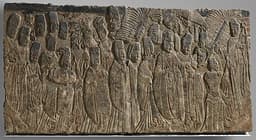
Emperor Xiaowen of Northern Wei
Emperor · Ancient
59.4Total

Ibbit-Lim
Emperor · Ancient
39.2Total
Basic Information
Born
467
-2000
Died
499
-1970
Era
Ancient
Ancient
Nationality
China
Ebla
Occupation
Emperor
Emperor
Civilization
Eastern
Middle Eastern
Score Comparison
Military (10%)
55.0
25.9
Political (20%)
72.0
35.1
Influence (20%)
56.7
45.5
Legacy (20%)
52.0
35.0
Leadership (15%)
66.0
48.4
Strategy (15%)
60.0
39.6
TOTAL
59.4
39.2
Emperor Xiaowen of Northern Wei — Complete Timeline
485 AD
Land Equalization SystemReform◆ Major
Emperor Xiaowen implemented the Land Equalization System, which allocated land to peasant households based on the number of able-bodied men. This reform aimed to increase agricultural productivity and tax revenue, and it became a model for later Chinese dynasties.
Land ReformEconomic Policy
Impact: regionalconstructive
490 AD
Implementation of Sinicization ReformsReform◆ Major
Emperor Xiaowen enacted a series of reforms to adopt Chinese culture, including banning Xianbei clothing and language at court, promoting intermarriage between Xianbei and Chinese elites, and adopting Chinese surnames. These reforms aimed to strengthen the dynasty but also caused resentment among some Xianbei nobles.
Cultural ReformSinicization
Impact: regionalconstructive
494 AD
Move of Capital to LuoyangPolitical Action
Emperor Xiaowen moved the Northern Wei capital from Pingcheng (modern Datong) to Luoyang, a traditional Chinese capital. This move was part of his Sinicization reforms, aimed at integrating the Xianbei elite into Chinese culture and administration.
Capital MoveSinicization
Impact: regionalconstructive
496 AD
Adoption of Chinese SurnamesReform
Emperor Xiaowen ordered Xianbei nobles to adopt Chinese surnames, with the imperial family taking the surname Yuan. This was a key part of his Sinicization policy, intended to erase ethnic distinctions and integrate the Xianbei into Chinese society.
Cultural ReformSinicization
Impact: nationalconstructive
Ibbit-Lim — Complete Timeline
2340 BC
Destruction of Ebla by AkkadWar
The Akkadian Empire under Sargon or Naram-Sin conquered and destroyed Ebla, burning its royal palace. Ishar-Damu's reign ended with the city's fall, marking the end of the first Eblaite kingdom.
Akkadian ConquestDestruction of EblaWar
Impact: regionaldestructive
Expert Analysis
Origins
**Emperor Xiaowen of Northern Wei** (born 467 CE, personal name Yuan Hong) was the son of Emperor Xianwen, though his mother was of Xianbei descent. He ascended the throne at age five in 471 CE, with his grandmother, Empress Dowager Feng, acting as regent. Growing up in the Northern Wei court at Pingcheng (modern Datong), he received a Confucian education, which influenced his later Sinicization policies. The Northern Wei was a Xianbei-ruled dynasty that had conquered northern China, but its ruling elite maintained distinct nomadic customs.
**Ibbit-Lim** (fl. early 2nd millennium BCE) was an Amorite king who ruled Ebla (modern Tell Mardikh in Syria) after the city's destruction by the Akkadian Empire. Little is known of his early life; he emerged as a local ruler during the chaotic period following Akkadian collapse. He is known primarily from a single inscribed statue found at Ebla, which identifies him as "king of Ebla" and records his restoration of the city's temple of Ishtar. His reign likely occurred around 2000 BCE, though exact dates are uncertain.
Rise to Power
Xiaowen became emperor as a child, but his real rise to power came after Empress Dowager Feng's death in 490 CE. At age 23, he assumed personal rule and began implementing sweeping reforms. His key turning point was the decision to move the capital from Pingcheng to Luoyang in 493 CE, which he presented as a military campaign against the Southern Qi dynasty. Once the court reached Luoyang, he revealed his true intention: to establish a permanent capital in the traditional Chinese heartland. This move faced opposition from conservative Xianbei nobles, whom he overcame by offering them land and positions in the new capital.
Ibbit-Lim's rise is less documented. He likely came to power after Ebla's destruction by the Akkadian king Naram-Sin (c. 2250 BCE). The city had been a major commercial center, and its fall left a power vacuum. Ibbit-Lim, as an Amorite chieftain, probably seized control and initiated rebuilding. His claim to kingship is attested by the statue inscription, which states he "restored Ebla." He may have ruled as a vassal of the Ur III dynasty or independently, but his authority was limited to the city and its immediate hinterland.
Leadership & Governance
Xiaowen's leadership was transformative. He implemented the **Land Equalization System** (485 CE), which allocated state-owned land to peasant households based on the number of able-bodied men, aiming to ensure tax revenue and reduce social unrest. He also adopted Chinese-style bureaucracy, promoted Confucian rituals, and banned Xianbei language and clothing at court. Intermarriage between Xianbei and Chinese elites was encouraged. His reforms scored 72.0 in political leadership, reflecting his systematic approach to governance.
Ibbit-Lim's governance focused on restoration. He rebuilt the temple of Ishtar, Ebla's main deity, and likely reestablished trade routes. However, his political score of 35.1 indicates limited scope. Unlike Xiaowen, he left no evidence of administrative reforms or territorial expansion. His rule was localized, and his authority probably didn't extend beyond Ebla's walls.
Triumph & Tragedy
Xiaowen's greatest triumph was the successful **Sinicization of the Northern Wei**, which integrated the Xianbei elite into Chinese civilization and laid the foundation for later reunification under the Sui and Tang dynasties. However, his reforms also created resentment among conservative Xianbei nobles, leading to revolts after his death. The forced adoption of Chinese customs weakened Xianbei military traditions, contributing to the dynasty's decline. His move to Luoyang, while symbolically important, exposed the dynasty to southern threats.
Ibbit-Lim's triumph was restoring Ebla after its destruction, preserving the city's cultural identity. His statue inscription is a rare surviving record of his reign. However, his failure was the impermanence of his work: Ebla was destroyed again by the Hittites or other invaders within a few centuries. His legacy is confined to a single artifact, with no lasting political or cultural impact.
Character & Destiny
Xiaowen was a determined reformer, willing to uproot his own culture to achieve his vision. His character was shaped by Confucian ideals, and he personally led by example, adopting Chinese dress and language. This single-mindedness drove his success but also alienated his own people. His early death at age 32 (499 CE) cut short his reforms, leaving them incomplete.
Ibbit-Lim appears as a restorer rather than an innovator. His character is inferred from the brief inscription: he was pious (rebuilding a temple) and proud of his role. His destiny was to be a footnote in Ebla's history, overshadowed by earlier and later kings.
Legacy
Xiaowen's Sinicization reforms had a profound impact: they transformed the Northern Wei from a nomadic state into a Chinese-style dynasty, and the Land Equalization System influenced later dynasties. His adoption of Chinese surnames (the imperial family took Yuan) made the Xianbei elite indistinguishable from Chinese aristocrats. His political score of 72.0 reflects this lasting influence. However, his military score of 55.0 indicates limited conquests.
Ibbit-Lim's legacy is minimal. His statue is a key archaeological find for understanding Ebla's post-Akkadian period, but his reign had no broader historical significance. His influence score of 45.5 is inflated by the rarity of sources; his actual impact was negligible.
Conclusion
Emperor Xiaowen of Northern Wei had a far greater impact than Ibbit-Lim. With a total score of 59.4 against Ibbit-Lim's 39.2, Xiaowen's reforms shaped Chinese history for centuries, while Ibbit-Lim's restoration was a temporary local achievement. Xiaowen's political and institutional innovations (Land Equalization, Sinicization) created models that outlasted his dynasty, whereas Ibbit-Lim's work vanished with Ebla's second destruction. The historical record clearly favors Xiaowen as the more consequential figure.
Rankings
🥇
Emperor Xiaowen of Northern WeiLeader
Mil: 55.0Pol: 72.0Inf: 56.7
59.4
🥈
Ibbit-Lim
Mil: 25.9Pol: 35.1Inf: 45.5
39.2
+20.2 behind
How This Comparison Works
Algorithm
Each figure is scored on 6 dimensions (0—100 scale) based on structured historical data: Military (10%), Political (20%), Influence (20%), Legacy (20%), Leadership (15%), Strategy (15%). The weighted total produces the final ranking.
Data Sources
Scores are computed from structured sub-indicators in the database. Scale factors adjust for era (Ancient ×0.85, Modern ×1.0) and civilization size (Eastern ×1.05, Other ×0.80) to account for differences in population and military scale.
Maximum 3 Figures
Comparisons are limited to 2—3 figures to ensure readability and statistical meaningfulness.
Error Margins
±5 points per dimension — Sub-scores are derived from historical records with inherent uncertainty. Two figures within 5 points on a dimension should be considered roughly equivalent in that area.
Total Score Accuracy
±3 points overall — The weighted combination of 6 dimensions produces a total score with approximately ±3 points of uncertainty. Differences of less than 3 points are not statistically significant— the figures are effectively tied.
Known Limitations
- Historical records are incomplete and uneven across civilizations
- Figures from oral-tradition societies may be underrepresented
- Occupation labels can misclassify multi-role figures
- Scores measure capability and impact, not moral character
- Quantitative scoring is a comparison tool, not absolute truth
Capability Radar
Military (10%) — Battles & Warfare
Battles
30
10
Win Rate
30
10
Expansion
20
10
Political (20%) — Governance & Reform
Reform
95
30
Diplomacy
75
30
Economy
70
30
Influence (20%) — Cultural & Global Reach
Cultural
85
20
Global
60
10
Legacy (20%) — Historical Impact
Historical
80
20
Longevity
75
10
Leadership (15%) — Power & Stability
Tenure
70
30
Stability
65
30
Strategy (15%) — Tactics & Innovation
Strategy
40
10
Tactics
25
10
Reform
60
5
Similar Comparisons
Comments & Discussion
No comments yet. Be the first to share your thoughts!