Loading...
Emperor Xiaowen of Northern Wei vs Marcian
Emperor Xiaowen of Northern Wei leads by 4.4 pts · 2 figures compared
…
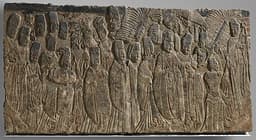
Emperor Xiaowen of Northern Wei
Emperor · Ancient
59.4Total

Marcian
Emperor · Ancient
55.0Total
Basic Information
Born
467
392
Died
499
457
Era
Ancient
Ancient
Nationality
China
Byzantine Empire
Occupation
Emperor
Emperor
Civilization
Eastern
Western
Score Comparison
Military (10%)
55.0
47.5
Political (20%)
72.0
61.3
Influence (20%)
56.7
56.4
Legacy (20%)
52.0
48.3
Leadership (15%)
66.0
65.7
Strategy (15%)
60.0
50.0
TOTAL
59.4
55.0
Emperor Xiaowen of Northern Wei — Complete Timeline
485 AD
Land Equalization SystemReform◆ Major
Emperor Xiaowen implemented the Land Equalization System, which allocated land to peasant households based on the number of able-bodied men. This reform aimed to increase agricultural productivity and tax revenue, and it became a model for later Chinese dynasties.
Land ReformEconomic Policy
Impact: regionalconstructive
490 AD
Implementation of Sinicization ReformsReform◆ Major
Emperor Xiaowen enacted a series of reforms to adopt Chinese culture, including banning Xianbei clothing and language at court, promoting intermarriage between Xianbei and Chinese elites, and adopting Chinese surnames. These reforms aimed to strengthen the dynasty but also caused resentment among some Xianbei nobles.
Cultural ReformSinicization
Impact: regionalconstructive
494 AD
Move of Capital to LuoyangPolitical Action
Emperor Xiaowen moved the Northern Wei capital from Pingcheng (modern Datong) to Luoyang, a traditional Chinese capital. This move was part of his Sinicization reforms, aimed at integrating the Xianbei elite into Chinese culture and administration.
Capital MoveSinicization
Impact: regionalconstructive
496 AD
Adoption of Chinese SurnamesReform
Emperor Xiaowen ordered Xianbei nobles to adopt Chinese surnames, with the imperial family taking the surname Yuan. This was a key part of his Sinicization policy, intended to erase ethnic distinctions and integrate the Xianbei into Chinese society.
Cultural ReformSinicization
Impact: nationalconstructive
Marcian — Complete Timeline
450 AD
Refused tribute to Attila the HunPolitical Action
Upon becoming Eastern Roman Emperor, Marcian reversed the policy of paying tribute to Attila the Hun. He declared that he had gold for his friends but iron for his enemies. This defiance marked a shift in Eastern policy and contributed to Attila's decision to invade the West.
Foreign PolicyHunnic Wars
Impact: regionalconstructive
451 AD
Convened the Council of ChalcedonCultural
Marcian convened the Council of Chalcedon, the fourth ecumenical council. The council condemned the Monophysite heresy and defined the Chalcedonian Creed, which affirmed the two natures of Christ. This decision had lasting theological and political consequences for the Christian world.
Ecumenical CouncilChristian TheologyReligious Policy
Impact: globalconstructive
452 AD
Stabilized the Eastern Empire's financesReform◆ Major
Marcian implemented fiscal reforms that stabilized the Eastern Roman Empire's economy. He abolished the tax on the city of Constantinople and reduced state expenditures, leaving a substantial treasury surplus upon his death.
Economic ReformFiscal Policy
Impact: nationalconstructive
Expert Analysis
Origins
Emperor Xiaowen of Northern Wei was born in 467 CE as Tuoba Hong, a member of the Xianbei Tuoba clan that had founded the Northern Wei dynasty in 386 CE. He ascended the throne at age five in 471 CE, with his grandmother Empress Dowager Feng serving as regent until her death in 490 CE. His early education under Chinese tutors steeped him in Confucian classics, shaping his vision of a unified, Sinicized empire.
Marcian was born around 392 CE in Thrace or Illyria, likely of humble origins. He served as a soldier and later as a domesticus (staff officer) under the general Aspar. His military career included service in the Persian wars and possibly in Africa. By 450 CE, he had risen to become a senator and was chosen as emperor by Aspar after the death of Theodosius II.
Rise to Power
Xiaowen's rise was gradual: after Empress Dowager Feng's death in 490 CE, he assumed full power at age 23. His first major act was moving the capital from Pingcheng (modern Datong) to Luoyang in 493 CE, a strategic decision to place the court in the heart of traditional Chinese civilization. This move faced opposition from Xianbei nobles, but Xiaowen enforced it resolutely.
Marcian came to power suddenly in 450 CE when Theodosius II died in a hunting accident. Aspar, the powerful general, chose Marcian as a compromise candidate. Marcian married Theodosius's sister Pulcheria to legitimize his rule. His first major test was dealing with Attila the Hun, who had extracted tribute from the Eastern Empire. Marcian refused to continue payments, declaring he had gold for friends but iron for enemies.
Leadership & Governance
Xiaowen's governance was transformative: he implemented the Land Equalization System (485 CE), which allocated state-owned land to peasants based on the number of able-bodied men, ensuring tax revenue and reducing aristocratic power. He also imposed Sinicization: banning Xianbei clothing and language at court, ordering intermarriage between Xianbei and Chinese elites, and adopting Chinese surnames (the imperial family became Yuan). His political score of 72.0 reflects these sweeping reforms.
Marcian's governance focused on fiscal stability and religious unity. He abolished the tax on Constantinople (chrysargyron) and reduced state expenditures, stabilizing the Eastern Empire's finances. He convened the Council of Chalcedon in 451 CE, which defined Christ's dual nature (human and divine) and condemned Monophysitism. This council reinforced imperial control over the Church but also deepened divisions with Egypt and Syria.
Triumph & Tragedy
Xiaowen's greatest triumph was the successful Sinicization of Northern Wei, which integrated Xianbei and Chinese cultures and laid the foundation for the later Sui and Tang dynasties. The Land Equalization System boosted agricultural productivity and state revenues. However, his reforms alienated the Xianbei military elite, leading to rebellions after his death. The Northern Wei split into Eastern and Western Wei in 534 CE, partly due to these tensions. His military score of 55.0 reflects his lack of personal military campaigns.
Marcian's triumph was defying Attila: by stopping tribute, he saved the Eastern Empire's treasury and maintained sovereignty. Attila turned west instead, invading Gaul and Italy. Marcian also stabilized the economy and convened a major ecumenical council. His tragedy was that the Council of Chalcedon exacerbated religious conflicts, creating lasting schisms with Coptic and Syrian churches. His military score is 47.5, partly because he did not lead armies himself.
Character & Destiny
Xiaowen was a determined reformer, willing to uproot his own culture to strengthen his state. His character is reflected in his leadership score of 66.0: he personally enforced reforms, executing opponents when necessary. His destiny was to be remembered as a great Sinicizer, but his reforms were too rapid, causing instability.
Marcian was pragmatic and fiscally conservative. His leadership score of 65.7 shows his ability to govern effectively without military glory. He died in 457 CE of natural causes, leaving a stable empire but unresolved religious divisions.
Legacy
Xiaowen's legacy is profound: the Sinicization of the Xianbei paved the way for the reunification of China under the Sui (581 CE) and Tang (618 CE) dynasties. The Land Equalization System influenced later land reforms. However, his dynasty collapsed soon after his death. His influence score is 56.7.
Marcian's legacy includes the Chalcedonian Definition, which remains the standard for most Christian denominations. His fiscal policies set a precedent for conservative imperial finance. The Eastern Empire survived Attila and remained intact for another millennium. His influence score is 56.4.
Conclusion
Emperor Xiaowen had a greater long-term impact on world history. His Sinicization reforms transformed a nomadic dynasty into a Chinese imperial state, directly enabling the golden age of the Tang dynasty. Marcian's achievements were significant but more contained: he preserved the Eastern Empire and shaped Christian doctrine, but did not fundamentally alter the trajectory of civilization. Xiaowen's total score of 59.4 vs Marcian's 55.0 reflects his broader influence, even though his military score is lower. Xiaowen's reforms created a template for cultural integration that resonated for centuries, while Marcian's work was largely reactive. Thus, Emperor Xiaowen stands as the more consequential figure.
Rankings
🥇
Emperor Xiaowen of Northern WeiLeader
Mil: 55.0Pol: 72.0Inf: 56.7
59.4
🥈
Marcian
Mil: 47.5Pol: 61.3Inf: 56.4
55.0
+4.4 behind
How This Comparison Works
Algorithm
Each figure is scored on 6 dimensions (0—100 scale) based on structured historical data: Military (10%), Political (20%), Influence (20%), Legacy (20%), Leadership (15%), Strategy (15%). The weighted total produces the final ranking.
Data Sources
Scores are computed from structured sub-indicators in the database. Scale factors adjust for era (Ancient ×0.85, Modern ×1.0) and civilization size (Eastern ×1.05, Other ×0.80) to account for differences in population and military scale.
Maximum 3 Figures
Comparisons are limited to 2—3 figures to ensure readability and statistical meaningfulness.
Error Margins
±5 points per dimension — Sub-scores are derived from historical records with inherent uncertainty. Two figures within 5 points on a dimension should be considered roughly equivalent in that area.
Total Score Accuracy
±3 points overall — The weighted combination of 6 dimensions produces a total score with approximately ±3 points of uncertainty. Differences of less than 3 points are not statistically significant— the figures are effectively tied.
Known Limitations
- Historical records are incomplete and uneven across civilizations
- Figures from oral-tradition societies may be underrepresented
- Occupation labels can misclassify multi-role figures
- Scores measure capability and impact, not moral character
- Quantitative scoring is a comparison tool, not absolute truth
Capability Radar
Military (10%) — Battles & Warfare
Battles
30
20
Win Rate
30
30
Expansion
20
10
Political (20%) — Governance & Reform
Reform
95
50
Diplomacy
75
65
Economy
70
30
Influence (20%) — Cultural & Global Reach
Cultural
85
55
Global
60
45
Legacy (20%) — Historical Impact
Historical
80
60
Longevity
75
50
Leadership (15%) — Power & Stability
Tenure
70
40
Stability
65
45
Strategy (15%) — Tactics & Innovation
Strategy
40
35
Tactics
25
25
Reform
60
10
Similar Comparisons
Comments & Discussion
No comments yet. Be the first to share your thoughts!